
Hendersonville’s housing market sits at the intersection of Nashville metro accessibility and suburban cost structure. With a median home value of $364,700 and median rent of $1,407 per month, the city reflects a pricing environment where ownership remains within reach for middle-income households, but where location choices within the city create meaningful differences in day-to-day cost exposure. The market rewards intentional selection—not just of housing type, but of proximity to the commercial corridors where grocery stores, clinics, and services cluster.
What distinguishes Hendersonville from peer suburbs is the way its mixed urban form creates variation in convenience costs. Residential neighborhoods and commercial land use coexist, but errands and services concentrate along specific corridors rather than distributing evenly. For renters and buyers alike, this means where money goes depends heavily on where you live within city boundaries. A household near a commercial corridor can walk or make short trips for groceries and routine needs; a household in a purely residential pocket will drive more, plan more, and spend more time managing logistics.
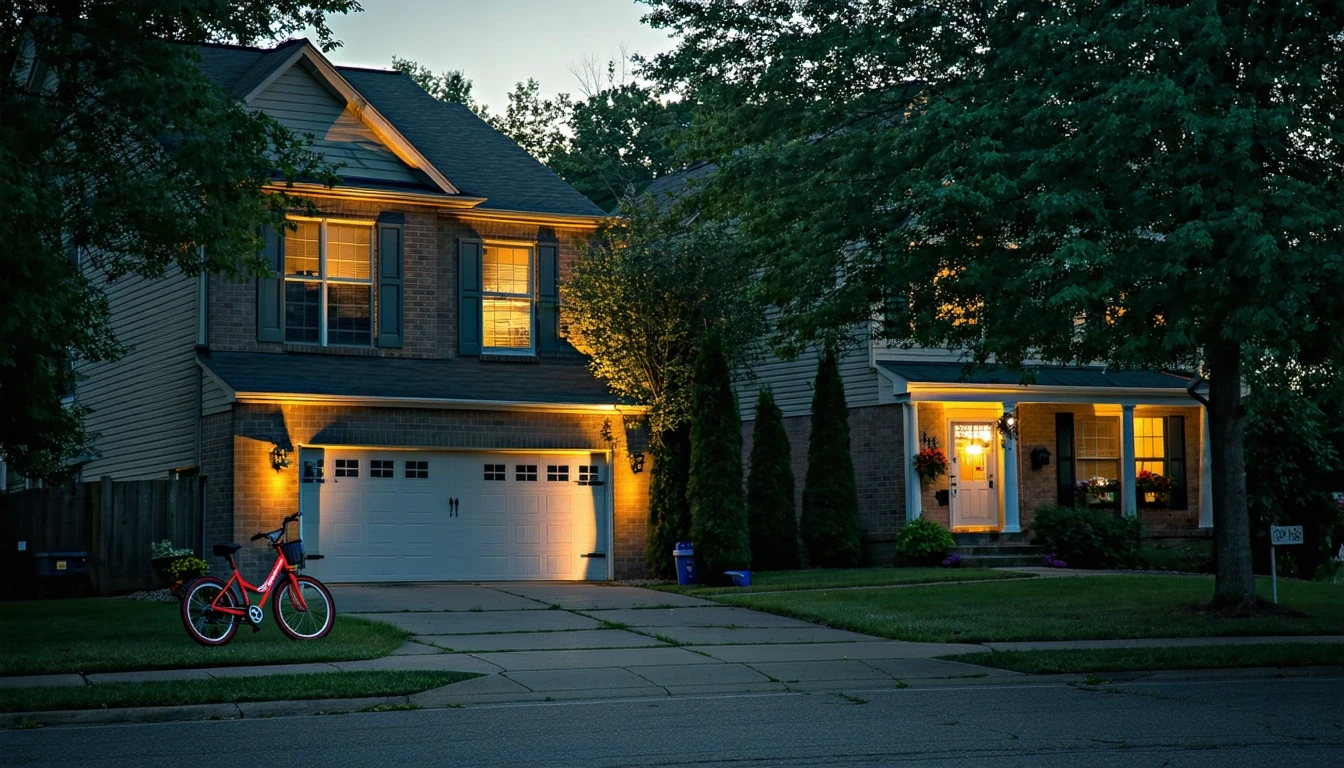
The Housing Market in Hendersonville Today
Hendersonville functions as a commuter suburb within the Nashville metro, and that role shapes its housing market distinctly. The city’s median household income of $86,954 per year positions it as a middle-to-upper-middle-income community, and the unemployment rate of 2.8% reflects a stable employment base. Home values here are not bargains, but they are accessible relative to income in a way that distinguishes Hendersonville from closer-in Nashville neighborhoods where price-to-income ratios tighten further.
The regional price parity index of 97 indicates that Hendersonville’s overall cost level sits slightly below the national baseline, but housing itself does not follow that discount uniformly. Home values reflect demand from households seeking suburban space, school access, and distance from urban density, even as the city’s infrastructure remains car-oriented with limited transit options beyond bus service. Buyers here are typically choosing predictability and space over walkability and transit access.
What newcomers often misunderstand is that Hendersonville is not a uniform suburb. The presence of both residential and commercial land use creates pockets of convenience and pockets of isolation. A home near a commercial corridor reduces friction in daily errands; a home in a residential enclave increases planning burden and transportation dependence. This variation does not always show up in listing prices, but it governs the lived cost experience over time.
Renting in Hendersonville
At $1,407 per month, median rent in Hendersonville represents a substantial budget commitment—roughly 19% of median household income before utilities, parking, or fees. For single earners or early-career households, that share climbs higher, and the limited availability of transit alternatives means renters must budget for a car, insurance, fuel, and maintenance on top of rent itself.
Rental housing in Hendersonville tends to cluster near commercial corridors and major roads, which offers some logistical advantage but also exposes renters to traffic noise and less green space. The city’s park density sits in the moderate range, and water features are present, but access to outdoor space varies by neighborhood. Renters without flexibility in location choice may find themselves in areas where every errand requires a car trip, compounding transportation costs.
Rental increases are not governed by rent control here, and lease renewals reflect landlord discretion and market pressure. In a stable employment environment with low vacancy, landlords face little pressure to discount, and renters face limited leverage to negotiate. The result is a rental market where cost predictability is low and where moving frequently to chase better deals becomes its own expense.
Owning a Home in Hendersonville
Ownership in Hendersonville offers cost predictability that renting does not, particularly for households planning to stay long enough to absorb transaction costs. A $364,700 home value translates to a mortgage payment that, for a household earning the median income, falls within traditional affordability heuristics—but only when property taxes, insurance, and maintenance are included in the analysis.
Property tax obligations are not disclosed in available data, but Tennessee’s state-level tax structure and Sumner County’s governance create a tax environment that owners must research carefully. Taxes here are not negligible, and they do not remain static. Reassessments, rate changes, and special assessments can shift annual obligations in ways that erode the predictability ownership is supposed to provide.
Maintenance exposure in Hendersonville reflects the city’s climate and housing stock. Summers bring extended heat that stresses air conditioning systems and roofing materials; winters are mild but not maintenance-free. Homes here require routine HVAC servicing, and older housing stock may carry deferred maintenance that buyers inherit. The mixed building height profile suggests a range of housing ages and conditions, and buyers should budget for systems replacement and exterior upkeep as part of ownership cost structure.
Homeowners associations are common in newer developments, and while HOA fees are not itemized in available data, their presence adds a layer of governance and cost that varies widely. Some HOAs bundle landscaping, exterior maintenance, and amenity access; others simply enforce rules without reducing owner obligations. Buyers must verify what HOA fees cover and whether they reduce or simply redistribute maintenance costs.
Apartment vs House in Hendersonville — Cost Behavior Comparison
The table below isolates cost categories where apartments and single-family houses behave differently in Hendersonville, based on local climate, infrastructure, and housing stock characteristics. Rows are included only where the distinction is meaningful in this market.
| Expense Category | Apartment | House |
|---|---|---|
| Cooling Costs | Lower per-unit exposure; shared walls reduce heat gain | Higher exposure; standalone structure with full envelope exposed to summer heat |
| Heating Costs | Moderate; shared walls provide some insulation | Moderate to higher; depends on insulation quality and square footage |
| Exterior Maintenance | Typically covered by landlord or HOA | Owner responsibility; includes roof, siding, gutters, and yard upkeep |
| Water/Sewer | Sometimes included in rent; if separate, lower usage | Always separate; higher usage for irrigation and larger households |
| Transportation Interaction | More likely near commercial corridors; shorter errand trips possible | More likely in residential pockets; longer trips and higher fuel costs |
Methodology note: This comparison reflects Hendersonville’s corridor-clustered commercial access, moderate climate exposure, and mixed urban form. Categories like insurance, internet, and trash service are omitted because they do not vary meaningfully by housing type in this market. The transportation interaction row reflects the city’s land use pattern, where apartments cluster near services and houses predominate in residential enclaves.
Utilities & Upkeep Differences
Utility exposure in Hendersonville is shaped by the city’s climate and housing stock, and the difference between apartments and houses is not trivial. At 12.87¢/kWh, electricity rates are moderate, but summer cooling dominates usage. A standalone house with full sun exposure and older insulation will run air conditioning longer and harder than an apartment with shared walls and shaded orientation. The difference is not marginal—it is a structural cost gap that persists every summer.
Natural gas, priced at $13.18/MCF, serves heating and sometimes water heating. Winters here are mild relative to northern climates, but heating season is not negligible. Houses with larger square footage, older windows, and minimal insulation face noticeable heating costs, while apartments benefit from shared walls and smaller conditioned space. The gap widens in older housing stock, where deferred envelope improvements compound exposure.
Maintenance cost behavior diverges sharply by housing type. Apartment renters face minimal direct maintenance obligations; landlords or property management handle repairs, though responsiveness varies. Homeowners carry the full burden: HVAC servicing, roof replacement, gutter cleaning, exterior painting, and yard upkeep. In Hendersonville’s climate, these are not optional—deferred maintenance accelerates deterioration. A roof that might last 20 years in a temperate climate may need replacement sooner under sustained summer heat and occasional severe weather.
The city’s moderate park density and water feature presence offer some outdoor amenity access, but homeowners with yards must budget for irrigation, mowing, and landscaping. Apartments with limited or no private outdoor space reduce this obligation but also reduce flexibility for households with children or pets.
Rent vs Buy: Long-Term Exposure in Hendersonville
The rent-versus-buy decision in Hendersonville is not a simple math problem—it is a tradeoff between cost predictability, flexibility, and control over living conditions. Renters face annual lease renewals where rent can rise without constraint, and in a low-vacancy, stable-employment market, landlords hold pricing power. Over time, rent increases compound, and renters build no equity. The flexibility to move is valuable, but it comes at the cost of perpetual exposure to market-driven rent growth.
Ownership locks in the largest component of housing cost—the mortgage principal and interest—but it does not eliminate volatility. Property taxes can rise through reassessments or rate changes. Insurance premiums respond to regional risk and claims history. Maintenance costs are episodic and unpredictable: a failed HVAC system or roof leak does not wait for budget planning. Owners gain equity and control, but they absorb all structural risk.
In Hendersonville, the interaction between housing location and transportation costs creates a secondary layer of long-term exposure. A renter or buyer who prioritizes low housing cost but ends up far from commercial corridors will spend more on fuel, vehicle wear, and time. Over years, those costs accumulate, and they do not build equity. A household that pays slightly more for proximity to services reduces transportation friction and gains time—a tradeoff that becomes more valuable as commutes lengthen and household logistics grow more complex.
The decision also hinges on household stability. Buyers who stay long enough to absorb transaction costs and benefit from equity accumulation come out ahead; buyers who move within a few years pay closing costs twice and may sell into unfavorable market conditions. Renters who move frequently pay application fees, deposits, and moving costs repeatedly, but they avoid the capital risk of ownership.
FAQs About Housing Costs in Hendersonville
Is Hendersonville affordable for first-time homebuyers?
Hendersonville’s median home value of $364,700 is accessible for households earning near the city’s median income of $86,954, particularly with stable employment and moderate debt. Affordability depends on property taxes, insurance, and maintenance costs, which vary by neighborhood and home condition. First-time buyers should budget for upfront costs and verify total monthly obligations before committing.
How much does location within Hendersonville affect housing costs?
Location creates meaningful cost differences, not just in purchase or rental price, but in transportation and time costs. Homes near commercial corridors reduce errand trip length and frequency; homes in residential pockets increase car dependency and fuel costs. The city’s corridor-clustered grocery and service access means proximity matters more here than in cities with evenly distributed retail.
What drives utility costs for homeowners in Hendersonville?
Cooling costs dominate summer utility bills due to extended heat, and electricity at 12.87¢/kWh is the primary energy source for air conditioning. Heating costs are moderate, with natural gas priced at $13.18/MCF. Older homes with poor insulation or inefficient HVAC systems face substantially higher bills. Utility exposure is structural, not discretionary, and varies more by home condition than by household behavior.
Are rental costs in Hendersonville stable over time?
Rental costs are not stable. Lease renewals allow landlords to adjust rent based on market conditions, and in a low-vacancy environment with strong employment, upward pressure is common. Renters have limited leverage to negotiate, and moving to avoid increases carries its own costs. Rental cost predictability is low compared to ownership.
Does Hendersonville’s housing market favor renters or buyers?
The market favors buyers who plan to stay long enough to absorb transaction costs and build equity. Renters gain flexibility but face ongoing rent risk and build no equity. For households with stable income and long-term plans, ownership offers better cost predictability. For households with uncertain timelines or limited capital, renting preserves flexibility despite higher long-term cost exposure.
Making Housing Choices in Hendersonville
Housing costs in Hendersonville are shaped by the city’s role as a Nashville metro suburb, its mixed urban form, and its corridor-based commercial access. Home values and rents are substantial but accessible for middle-income households, and ownership offers cost predictability that renting does not. The tradeoff is not just rent versus mortgage—it is flexibility versus control, and proximity versus price.
Location within Hendersonville matters more than many buyers and renters expect. The city’s land use pattern creates pockets of convenience and pockets of isolation, and transportation costs compound over time for households far from commercial corridors. Families with children face additional complexity due to limited school and playground density, making neighborhood selection more consequential.
For readers weighing monthly expenses and long-term financial exposure, housing is the largest and least flexible cost category. The decision to rent or buy, and where to live within the city, governs not just shelter cost but transportation, time, and household logistics. Hendersonville rewards households who research carefully, prioritize proximity to services, and plan for the full cost structure of ownership or renting—not just the headline price.
How this article was built: In addition to public economic data, this article incorporates location-based experiential signals derived from anonymized geographic patterns—such as access density, walkability, and land-use mix—to reflect how day-to-day living actually feels in Hendersonville, TN.