
Housing in Chicago operates on a different cost logic than many other major metros. The city’s $304,500 median home value sits well below coastal markets, but ownership here isn’t just about the purchase price—it’s about navigating property tax exposure, heating a home through long, cold winters, and managing an older housing stock that demands consistent upkeep. Renters face their own calculus: median gross rent of $1,314 per month represents moderate pressure against the city’s $71,673 median household income, but location choice dramatically changes the cost experience. Chicago’s substantial pedestrian infrastructure in certain pockets, rail transit presence, and high density of food and grocery options mean that where you live determines whether you’re absorbing car costs or leveraging walkability to reduce daily friction.
This article breaks down Chicago’s housing pressure by examining rent, ownership, and the structural differences between apartments and houses. It explains which costs are predictable, which are volatile, and how local conditions—climate, infrastructure, and urban form—shape the financial experience over time.
—
The Housing Market in Chicago Today
Chicago’s housing market reflects its role as a major inland metro with a legacy of industrial growth, neighborhood diversity, and a complex governance structure. Unlike coastal cities where land scarcity drives prices into the stratosphere, Chicago’s housing stock is shaped by its sprawling footprint, aging infrastructure, and the interplay between dense urban cores and car-dependent outer neighborhoods. The city’s mixed building heights and land-use patterns create pockets of walkability alongside areas where car ownership is non-negotiable.
What newcomers often misunderstand is that Chicago’s housing affordability isn’t uniform. The $304,500 median home value looks accessible compared to New York or San Francisco, but property taxes, heating costs, and maintenance demands on older homes shift the total cost picture. Renters benefit from a relatively stable rental market in the context of a major metro, but they also face the reality that Chicago’s 5.4% unemployment rate and economic volatility can influence rent renewal behavior and landlord pricing power.
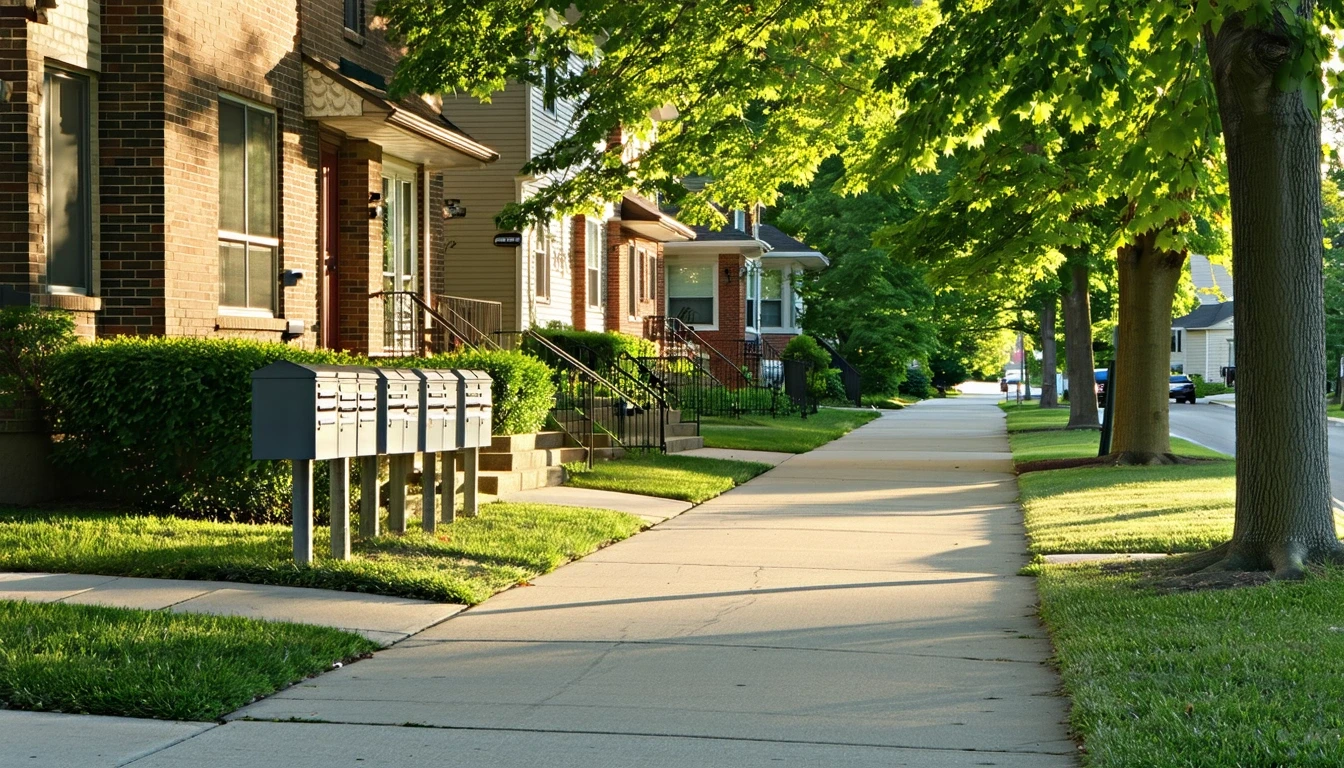
The city’s experiential texture matters more than many expect. Chicago’s rail transit system and high pedestrian-to-road ratio in certain areas mean that housing location isn’t just about commute time—it’s about whether you’re paying for a car, parking, and fuel, or whether you can run errands on foot and take transit to work. Households that prioritize walkable pockets with integrated park access and high grocery density face a fundamentally different cost structure than those in car-oriented neighborhoods.
—
Renting in Chicago
Renting in Chicago at $1,314 per month median gross rent places moderate financial pressure on households earning the city’s median income of $71,673 annually. That rent figure represents roughly 22% of gross income before utilities, which leaves room for other expenses but still requires careful budgeting in a city where heating costs spike during the long winter and where car ownership adds hundreds of dollars monthly for those outside transit-accessible areas.
Rental availability and pressure vary sharply by neighborhood. Areas with rail transit access, high food and grocery density, and substantial pedestrian infrastructure attract renters who want to minimize car dependency and daily logistics friction. These neighborhoods often command higher rents, but they also reduce transportation costs and time spent managing errands. Renters in car-dependent pockets may pay less in base rent but absorb the cost of vehicle ownership, fuel at $2.99 per gallon, and the time burden of a 34-minute average commute.
Chicago’s older housing stock also shapes the rental experience. Many rental units are in buildings constructed decades ago, which can mean variable heating efficiency, older appliances, and maintenance issues that landlords address inconsistently. Renters should expect that utility bills—particularly for natural gas heating—will fluctuate with the season, and that older units may lack the insulation and efficiency features common in newer construction.
Rent volatility in Chicago tends to be lower than in rapidly growing Sun Belt metros, but it’s not static. Lease renewals can bring increases tied to neighborhood demand, property tax changes passed through by landlords, or shifts in the local economy. Renters gain flexibility and avoid the long-term exposure of ownership, but they also surrender control over cost predictability and the ability to stabilize housing expenses over time.
—
Owning a Home in Chicago
Owning a home in Chicago means taking on a different set of exposures than renting. The $304,500 median home value is the entry point, but the ongoing costs—property taxes, heating, maintenance, and insurance—are where ownership reveals its true financial texture. Chicago’s property tax structure, governed by Cook County and local municipalities, creates a recurring cost that rises over time as assessments adjust and as local governments respond to budget pressures. Owners don’t control this cost, and it doesn’t disappear when the mortgage is paid off.
Heating a home in Chicago’s climate is a dominant cost driver. The city’s long, cold winters mean that natural gas heating—priced at $10.56 per MCF—runs for months, and older homes with less insulation or aging furnaces face higher usage. Owners of single-family houses bear this exposure more acutely than apartment dwellers, who benefit from shared walls and smaller square footage. Electricity at 18.31¢ per kWh is moderate, but cooling costs in summer are secondary to the heating burden that defines the annual utility cycle.
Maintenance is another ownership-specific exposure that intensifies in Chicago. The city’s housing stock skews older, and homes built decades ago require ongoing attention: roofs, siding, windows, plumbing, and HVAC systems all age and fail. Owners must budget for these irregular but inevitable expenses, and they can’t defer them without risking larger failures. Renters avoid this burden entirely, while owners gain the ability to control upgrades and improvements but also absorb the financial and logistical weight of managing a physical asset.
Ownership in Chicago also involves navigating local governance. Some neighborhoods have active homeowner associations that impose fees and rules; others operate with minimal oversight. Property tax appeals, assessment cycles, and municipal service quality all vary by location, and owners must engage with these systems to protect their investment. This isn’t a passive financial arrangement—it’s an ongoing relationship with local government and infrastructure.
—
Apartment vs House in Chicago — Cost Behavior Comparison
The cost structure of apartments versus houses in Chicago diverges sharply due to climate, housing stock age, and the city’s mixed urban form. The table below isolates the categories where meaningful differences emerge, omitting generic distinctions that apply everywhere.
| Expense Category | Apartment | House |
|---|---|---|
| Base Housing Cost | Median rent $1,314/month; exposure to lease renewal increases | Median value $304,500; exposure to property tax increases and assessment cycles |
| Heating/Cooling | Lower usage due to shared walls and smaller square footage; heating season still dominates | Higher usage due to larger size and older construction; natural gas heating exposure intensifies in harsh winters |
| Maintenance | Landlord responsibility; quality varies by building age and management | Owner responsibility; older Chicago housing stock requires consistent attention to roofs, HVAC, plumbing |
| Flexibility | Rent volatility tied to neighborhood demand and landlord behavior; easier to relocate | Property tax and assessment volatility; harder to exit but cost stabilizes relative to rent over long term |
| Transportation Trade | More likely in walkable pockets with transit access; reduces car dependency | More likely in car-dependent areas; requires vehicle ownership and fuel costs |
Methodology note: This table reflects cost behavior differences driven by Chicago’s climate (long heating season), housing stock (older construction), and urban form (walkable pockets vs car-dependent areas). Categories omitted—such as insurance or HOA fees—either lack local differentiation or depend on individual property characteristics not captured in aggregate data.
—
Utilities & Upkeep Differences
Utility and maintenance exposure in Chicago is shaped by the city’s harsh winter climate and older housing stock. Heating dominates the annual utility cycle, with natural gas usage spiking from November through March. Apartments benefit from shared walls and smaller square footage, which reduces heating demand, while single-family houses face substantially higher usage due to greater surface area exposed to cold air and, often, less efficient insulation in older construction.
Electricity costs at 18.31¢ per kWh are moderate, and cooling in summer is a secondary concern compared to heating. Air conditioning runs for a shorter season, and even during hot stretches, the cooling load is far less intense than the heating burden. Households in apartments typically see lower electricity bills year-round, while house owners absorb higher costs for both heating and cooling due to size and building age.
Maintenance exposure is where ownership in Chicago diverges sharply from renting. The city’s housing stock includes many homes built decades ago, and these structures require ongoing attention. Roofs deteriorate under snow load and freeze-thaw cycles, siding and windows age, and HVAC systems fail after years of heavy winter use. Owners must budget for these irregular but inevitable expenses, and deferring maintenance often leads to larger, more expensive failures. Renters avoid this burden entirely, though they may experience inconsistent responsiveness from landlords when issues arise.
The intensity of Chicago’s winter also affects upkeep in ways that don’t show up in monthly bills. Snow removal, ice management, and the wear on driveways and walkways from freeze-thaw cycles all add to the logistical and financial load of owning a house. Apartment dwellers typically have these services managed by the building, while house owners handle them directly or pay for snow removal services during heavy winters.
—
Rent vs Buy: Long-Term Exposure in Chicago
The decision to rent or buy in Chicago isn’t about calculating a breakeven point—it’s about choosing between two different risk profiles and cost behaviors over time. Renting offers flexibility and predictability in the short term but exposes households to rent increases that compound over years. Buying shifts the exposure to property taxes, maintenance, and the long-term behavior of the housing market, but it also provides cost stability once the mortgage is fixed and the ability to control the physical asset.
Renters in Chicago face the reality that lease renewals can bring increases tied to neighborhood demand, landlord behavior, and broader economic conditions. While Chicago’s rental market is less volatile than rapidly growing metros, rent doesn’t stay static, and over a decade, cumulative increases can significantly raise monthly expenses. Renters avoid property tax exposure, maintenance costs, and the risk of housing market downturns, but they also surrender the ability to lock in a fixed housing cost and build equity.
Owners absorb a different set of long-term exposures. Property taxes in Chicago rise over time as assessments adjust and as local governments respond to budget pressures. These increases are structural, not discretionary, and they persist even after the mortgage is paid off. Maintenance costs also accumulate—roofs, HVAC systems, and other major components fail on predictable timelines, and owners must budget for these irregular but inevitable expenses. Heating costs remain a dominant annual burden, and older homes face higher exposure than newer, more efficient construction.
The tradeoff is control and stability. Owners can renovate, upgrade, and manage their housing costs by improving efficiency or refinancing when rates drop. They also benefit from the long-term stability of a fixed mortgage payment, which doesn’t rise with inflation or neighborhood demand. Renters retain the flexibility to relocate without transaction costs, avoid the risk of housing market losses, and escape the logistical burden of managing a physical asset.
Chicago’s urban form adds another layer to this decision. Households that prioritize walkable neighborhoods with rail transit access and high grocery density may find that renting in these areas offers a better cost-to-convenience ratio than buying in car-dependent suburbs. Conversely, families seeking space, stability, and control over their environment may find that ownership—despite its exposures—provides the predictability and long-term cost structure they need.
—
FAQs About Housing Costs in Chicago
Is renting or buying more affordable in Chicago?
Affordability depends on time horizon and household priorities. Renting at $1,314 per month offers lower upfront costs and flexibility but exposes households to rent increases over time. Buying at a $304,500 median home value requires navigating property taxes, heating costs, and maintenance on older housing stock, but it provides long-term cost stability and control. Neither option is universally cheaper—each fits different risk profiles and lifestyle needs.
How much do property taxes add to homeownership costs in Chicago?
Property taxes in Chicago are a recurring, non-discretionary cost that rises over time as assessments adjust and local governments respond to budget pressures. While specific rates aren’t provided here, owners should expect that property taxes represent a significant portion of total housing costs and that they persist even after the mortgage is paid off. This exposure is structural and varies by neighborhood and municipality within the metro area.
Does Chicago’s climate significantly affect housing costs?
Yes. Chicago’s long, cold winters create dominant heating exposure, particularly for owners of single-family houses. Natural gas heating runs for months, and older homes with less insulation face higher usage. Cooling costs in summer are secondary. Renters in apartments benefit from shared walls and smaller square footage, which reduces heating demand, while house owners absorb substantially higher utility costs due to size and building age.
Are walkable neighborhoods in Chicago more expensive to live in?
Walkable neighborhoods with rail transit access, high grocery density, and substantial pedestrian infrastructure often command higher rents or home prices, but they also reduce or eliminate car ownership costs. Households in these areas avoid fuel, parking, insurance, and maintenance expenses, which can offset higher base housing costs. The total cost picture depends on whether you’re comparing rent-plus-car in a car-dependent area versus rent-only in a walkable pocket.
What should renters know about lease renewals in Chicago?
Lease renewals in Chicago can bring rent increases tied to neighborhood demand, landlord behavior, and local economic conditions. While the city’s rental market is less volatile than rapidly growing metros, rent doesn’t stay static. Renters should expect that over time, cumulative increases will raise monthly costs, and they should budget for the possibility of needing to relocate if renewal terms become unaffordable.
—
Making Housing Choices in Chicago
Housing costs in Chicago are shaped by the city’s climate, older housing stock, and the interplay between walkable urban pockets and car-dependent neighborhoods. Renters at $1,314 per month face moderate pressure against median income but gain flexibility and avoid the long-term exposures of ownership. Buyers at $304,500 median home value take on property tax risk, heating costs, and maintenance demands but gain control, stability, and the ability to lock in a fixed housing cost over time.
The decision isn’t about finding the cheaper option—it’s about matching housing structure to household needs. Families seeking stability, space, and control may find that ownership fits despite its exposures. Remote workers and those prioritizing walkability may find that renting in transit-accessible neighborhoods with high grocery density offers a better cost-to-convenience ratio. Households that value flexibility and want to avoid the logistical burden of managing a physical asset will find renting aligns with their priorities.
Chicago’s housing market rewards those who understand how location, climate, and infrastructure interact to shape cost behavior. The city’s substantial pedestrian infrastructure in certain areas, rail transit presence, and integrated park access mean that where you live determines not just your housing cost but your total cost of living. Choosing housing in Chicago means choosing a cost structure, a risk profile, and a daily logistics experience—not just a place to sleep.
How this article was built: In addition to public economic data, this article incorporates location-based experiential signals derived from anonymized geographic patterns—such as access density, walkability, and land-use mix—to reflect how day-to-day living actually feels in Chicago, IL.