
Happy Valley sits in the southeastern corner of the Portland metro, shaped by steady growth, strong school districts, and a suburban structure that blends single-family neighborhoods with pockets of walkable infrastructure. The housing market here reflects both regional demand and local characteristics: home values are elevated, rental inventory is competitive, and ownership brings exposure to property taxes, maintenance cycles, and the long-term cost behavior of a maturing suburb. Understanding what shapes the cost of living in Happy Valley starts with recognizing how housing dominates household budgets and how the structure of ownership versus renting plays out over time.
This article explains housing cost structure in Happy Valley—what drives rent and ownership expenses, how apartments and houses differ in cost behavior, and which tradeoffs matter most when choosing between renting and buying in this market.
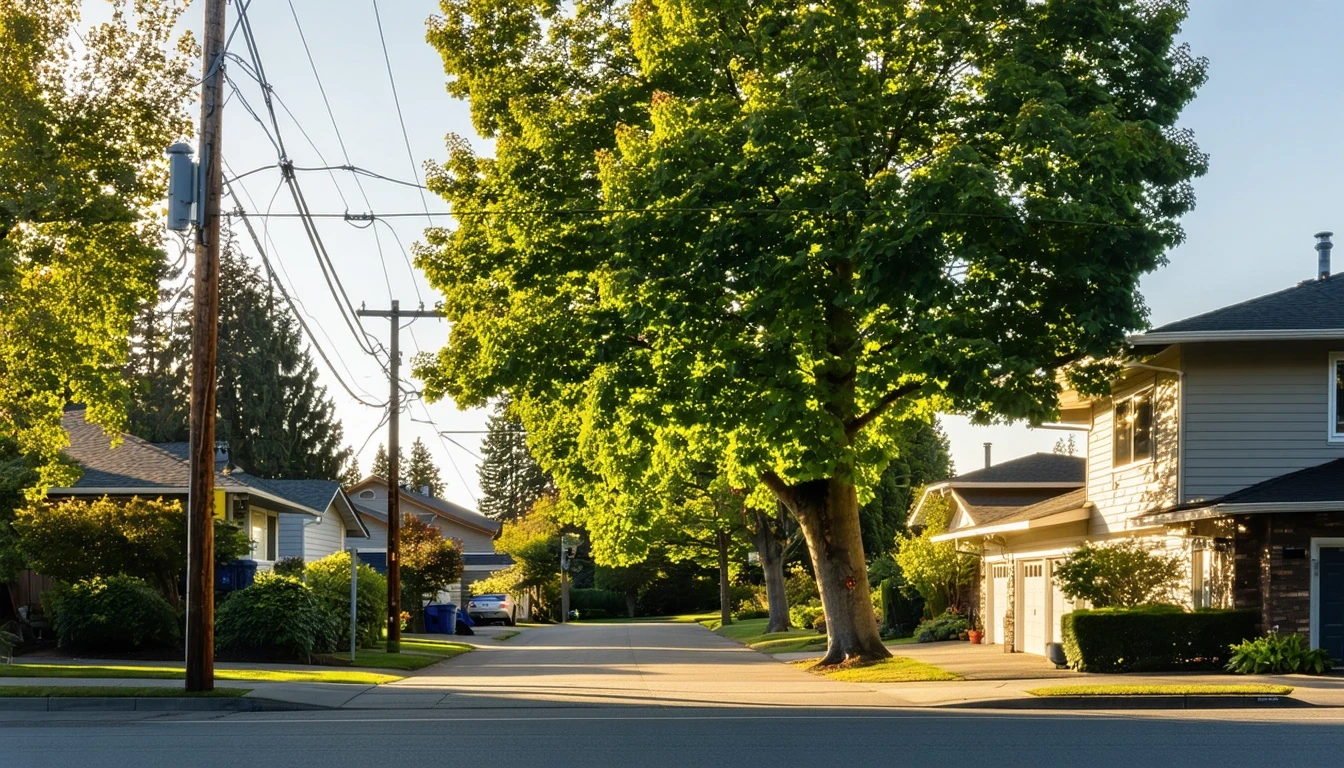
The Housing Market in Happy Valley Today
Happy Valley’s housing market is defined by its role as a family-oriented suburb with strong schools, access to green space, and proximity to employment centers in Portland and Clackamas County. The median home value stands at $633,100, reflecting sustained demand and limited inventory in a region where suburban space commands a premium. Rental pressure is notable as well, with median gross rent at $1,954 per month—a figure that reflects competition for quality housing in neighborhoods with good schools and park access.
What newcomers often misunderstand is that Happy Valley’s housing costs are not uniform across the city. Location within the city affects daily logistics significantly. Walkable pockets with higher pedestrian infrastructure density exist alongside car-dependent corridors. Errands and grocery access cluster along certain routes rather than spreading evenly, meaning proximity to these corridors reduces the friction of daily tasks. Integrated green space access is strong throughout the city, which supports quality of life but also correlates with higher property desirability and cost. The presence of bus service without rail transit reinforces car dependence for most households, particularly those commuting outside the immediate area.
The housing market here rewards those who prioritize space, school quality, and long-term equity over urban density or transit convenience. It penalizes those seeking walkable urban living or low-cost entry points.
Renting in Happy Valley
Rental inventory in Happy Valley skews toward single-family homes and townhomes rather than large apartment complexes, which tightens availability and keeps rent levels elevated. At $1,954 per month for median gross rent, renters face significant housing pressure, particularly single-income households or those without dual earners near the city’s median household income of $126,108 per year.
Rental experience varies by location within the city. Proximity to corridors with clustered food and grocery options reduces the need for frequent longer trips, which matters in a city where bus-only transit and moderate commute times (averaging 28 minutes) make car ownership nearly essential. Renters in neighborhoods with walkable pockets benefit from reduced daily driving, though these areas may command higher rent due to desirability.
Renters should expect variation in utility responsibility depending on housing type. Single-family rentals often pass heating, cooling, and water costs directly to tenants, while some townhome or apartment arrangements may bundle utilities or cap responsibility. Given the region’s heating season and moderate cooling needs, utility exposure can add noticeable monthly pressure, particularly in older or less-efficient units.
Renting in Happy Valley offers flexibility and avoids the volatility of ownership costs, but it does so at a price point that demands strong income stability and limits savings capacity for households below median earnings.
Owning a Home in Happy Valley
Ownership in Happy Valley centers on single-family homes, with a median value of $633,100. This figure reflects not just the structure but the land, school access, park proximity, and the broader desirability of the southeastern Portland metro. Ownership here is a long-term commitment shaped by property taxes, maintenance cycles, and the cost behavior of suburban infrastructure.
Property taxes in Oregon are governed by Measure 5 and Measure 50, which cap assessed value growth and limit tax rates, but the base value at purchase still drives annual obligations. Buyers entering at current market values face higher tax exposure than long-term owners whose assessed values lag behind market appreciation. This creates a bifurcated ownership experience: established owners enjoy predictable, slowly rising taxes, while new buyers absorb the full weight of recent price growth.
Maintenance and upkeep in Happy Valley follow suburban norms but are influenced by the region’s climate—wet winters, dry summers, and moderate temperature swings. Roofs, siding, and exterior wood require attention due to moisture exposure. Heating systems dominate winter utility bills, while cooling costs remain moderate. Yards, landscaping, and exterior work are standard expectations for single-family ownership and represent ongoing time and cost commitments.
Homeowners associations exist in some neighborhoods, particularly newer developments, and may bundle services like landscaping, street maintenance, or community amenities. HOA fees vary widely and are not universally present, but where they exist, they add a fixed monthly obligation that persists regardless of home value or income changes.
Ownership in Happy Valley rewards those who can absorb upfront costs, manage ongoing maintenance, and benefit from equity accumulation in an appreciating market. It exposes households to volatility in taxes, insurance, and repair costs that renters avoid.
Apartment vs House in Happy Valley — Cost Behavior Comparison
| Expense Category | Apartment | House |
|---|---|---|
| Base Housing Cost | Rent near $1,954/month reflects limited apartment inventory and competition for quality units near schools and parks | Ownership at median $633,100 requires mortgage, property taxes, and insurance; total monthly obligation typically exceeds rent but builds equity |
| Utilities (Heating/Cooling) | Often included or capped in multi-unit buildings; smaller square footage reduces heating exposure during wet, cool winters | Tenant-responsible in single-family homes; larger square footage and older construction increase heating costs; cooling remains moderate |
| Maintenance & Upkeep | Landlord-responsible for major systems, exterior, and structural work; tenant handles minor interior issues | Owner-responsible for all systems, roof, siding, HVAC, and appliances; moisture exposure from wet winters accelerates exterior maintenance cycles |
| Yard & Exterior Work | Not applicable or minimal; landscaping handled by property management | Ongoing obligation for mowing, trimming, seasonal cleanup, and irrigation during dry summers; time and cost commitment varies by lot size |
| Flexibility & Mobility | Lease terms allow exit with notice; easier to relocate for job changes or family needs | Sale process requires time, transaction costs, and market timing; less responsive to short-term income or employment changes |
Methodology note: The table above includes only categories where cost behavior differs meaningfully in Happy Valley due to housing stock, climate, or local infrastructure. Insurance and parking were omitted because they do not vary significantly between apartments and houses in this suburban context. Differences shown reflect Happy Valley’s wet winters, moderate cooling needs, suburban yard expectations, and limited apartment inventory.
Utilities & Upkeep Differences
Utility and maintenance exposure in Happy Valley is shaped by the region’s climate and housing stock. Wet winters drive heating costs, particularly in single-family homes with larger square footage and older insulation. Cooling costs remain moderate due to mild summer temperatures, though dry conditions require irrigation for landscaping. Apartment dwellers benefit from smaller square footage and shared-wall insulation, which reduces heating exposure. Many multi-unit buildings include or cap utilities, shifting volatility to landlords rather than tenants.
Maintenance cycles in single-family homes are influenced by moisture exposure. Roofs, gutters, siding, and exterior wood require regular attention to prevent rot and water intrusion. HVAC systems, water heaters, and appliances follow standard replacement schedules but represent significant one-time costs when they fail. Homeowners must budget for these cycles or face financial strain when multiple systems age out simultaneously.
Renters avoid these exposures entirely, though they sacrifice control over efficiency upgrades and long-term cost reduction. Owners gain control but absorb volatility and must manage both predictable and surprise expenses.
Rent vs Buy: Long-Term Exposure in Happy Valley
The choice between renting and buying in Happy Valley is a tradeoff between flexibility and equity, predictability and control. Renting offers mobility and shields households from maintenance volatility, property tax shifts, and the risk of market downturns. Buying offers equity accumulation, fixed mortgage payments, and control over housing quality and upgrades, but exposes households to taxes, insurance, maintenance, and the illiquidity of real estate.
Over time, renters face the risk of rent increases driven by market demand, though Oregon’s statewide rent control limits annual increases to a fixed percentage plus inflation. Owners face the risk of rising property taxes, insurance premiums, and deferred maintenance costs, but benefit from equity growth if the market appreciates. In Happy Valley, where home values have risen steadily, ownership has historically rewarded those who could afford entry and weather short-term volatility.
The decision hinges on income stability, savings capacity, and time horizon. Households with strong dual incomes, long-term job stability, and the ability to absorb upfront costs benefit from ownership. Those with variable income, short-term plans, or limited savings capacity benefit from renting. The structure of monthly spending in Happy Valley reflects this tension: ownership locks in predictable mortgage payments but introduces unpredictable maintenance and tax exposure, while renting caps housing costs but limits wealth accumulation.
FAQs About Housing Costs in Happy Valley
What is the median home price in Happy Valley, OR?
The median home value in Happy Valley is $633,100, reflecting demand for suburban space, strong schools, and proximity to Portland employment centers. This figure represents the middle of the market and varies by neighborhood, lot size, and home age.
How much does it cost to rent in Happy Valley?
Median gross rent in Happy Valley is $1,954 per month. Rental inventory skews toward single-family homes and townhomes rather than large apartment complexes, which tightens availability and keeps rent levels elevated.
Are property taxes high in Happy Valley, OR?
Property taxes in Oregon are capped by state measures that limit assessed value growth and tax rates. However, buyers entering at current market values face higher tax obligations than long-term owners whose assessed values lag behind market appreciation. Exact rates depend on local levies and school district funding.
Is Happy Valley a good place to buy a home?
Happy Valley rewards homebuyers who prioritize space, school quality, and long-term equity in an appreciating market. It is a strong fit for dual-income families with stable employment and the capacity to absorb upfront costs and ongoing maintenance. It is less suitable for those seeking urban density, walkable living without a car, or low-cost entry points.
How do utilities differ between renting and owning in Happy Valley?
Renters in apartments often have utilities included or capped, reducing exposure to seasonal heating costs. Single-family renters and homeowners typically pay utilities separately, with heating dominating winter bills due to the region’s wet, cool climate. Homeowners gain control over efficiency upgrades but absorb the full cost of consumption and system maintenance.
Making Housing Choices in Happy Valley
Housing costs in Happy Valley are shaped by suburban structure, regional demand, and the tradeoffs between renting and owning. Home values at $633,100 and median rent at $1,954 per month reflect a market where space, schools, and quality of life command a premium. Ownership offers equity and control but exposes households to taxes, maintenance, and illiquidity. Renting offers flexibility and shields households from volatility but limits wealth accumulation and long-term cost predictability.
The daily experience of living in Happy Valley depends not just on housing type but on location within the city. Walkable pockets reduce car dependence, corridor-clustered errands require planning, and integrated green space access supports quality of life. These factors interact with housing costs to shape household logistics, time allocation, and financial pressure.
Households with strong dual incomes, long-term stability, and the capacity to manage maintenance fit ownership well. Those with variable income, short-term plans, or limited savings benefit from renting. The decision is not universal—it depends on income, time horizon, and tolerance for volatility. Understanding how housing costs behave in Happy Valley allows households to choose the structure that aligns with their financial capacity and lifestyle priorities.
How this article was built: In addition to public economic data, this article incorporates location-based experiential signals derived from anonymized geographic patterns—such as access density, walkability, and land-use mix—to reflect how day-to-day living actually feels in Happy Valley, OR.