
Deciding whether to rent or buy in Henderson means understanding how this retirement-oriented suburb structures housing costs differently than nearby Las Vegas. With a median home value of $427,900 and median rent of $1,641 per month, Henderson sits slightly below regional price averages—but the tradeoffs between renting and owning here aren’t just about the numbers. They’re shaped by a car-dependent landscape, corridor-clustered errands, and a market built more for long-term owners than transient renters.
This article explains how housing costs behave in Henderson, which expenses stay predictable and which don’t, and how local infrastructure and climate affect the ownership experience over time.
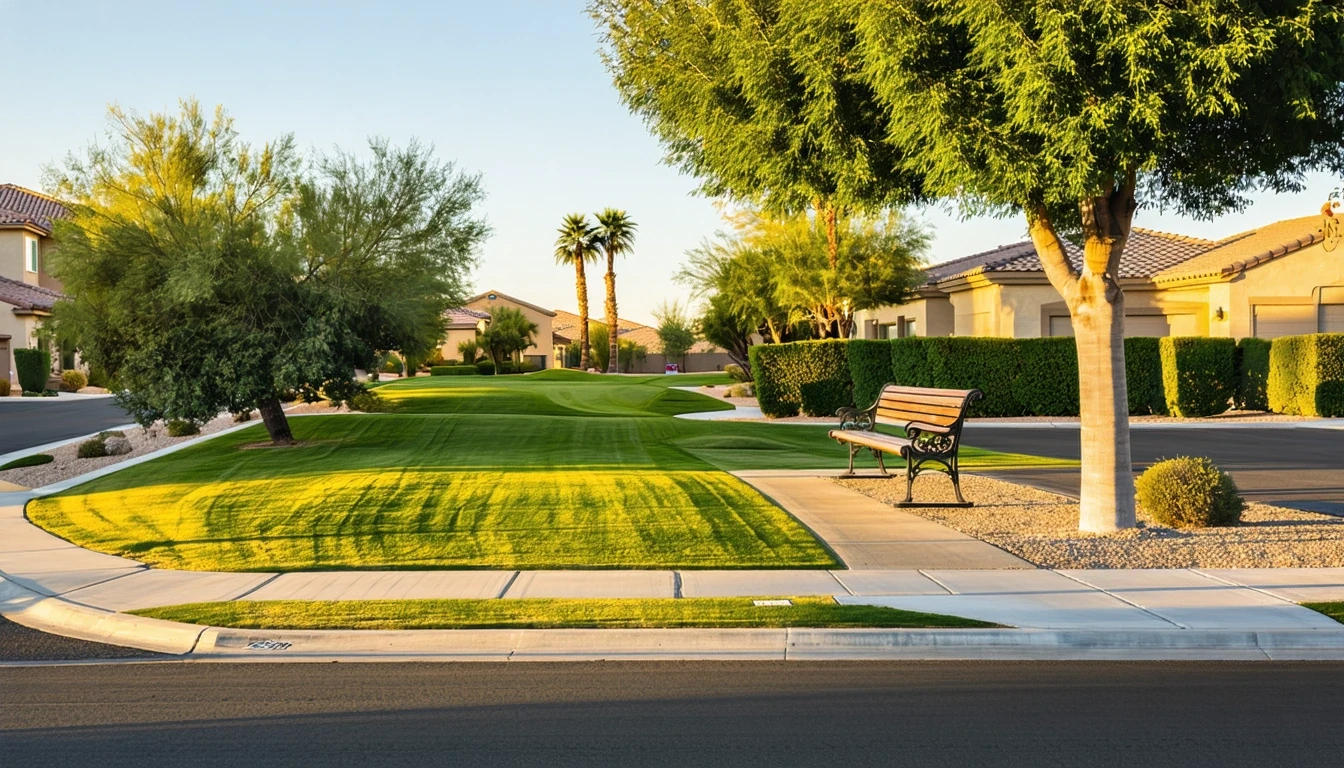
The Housing Market in Henderson Today
Henderson’s housing market reflects its role as a planned, family-and-retiree suburb within the Las Vegas metro. The city grew rapidly in the 1990s and 2000s, and much of its housing stock consists of single-family homes in master-planned communities. Ownership dominates; rental inventory tends to concentrate in specific apartment corridors rather than spreading evenly across neighborhoods.
The median home value of $427,900 positions Henderson as moderately priced within the metro, but that figure masks variation. Older neighborhoods closer to the city center often feature lower-priced homes with mature landscaping, while newer developments on the city’s edges push values higher. Buyers accustomed to urban density or walkable access may find Henderson’s layout—wide arterials, setback retail, and limited transit—unfamiliar. The city’s infrastructure prioritizes car travel, and that affects both where you can afford to live and how you’ll navigate daily life once you’re there.
Median household income in Henderson is $85,311 per year, which suggests a market where ownership is achievable but tight under traditional affordability guidelines. The unemployment rate of 5.8% reflects post-pandemic labor market softness, and that can affect both rental demand and buyer confidence. Newcomers often underestimate how much Henderson’s car dependency and corridor-based errands add to the true cost of living here—not in rent or mortgage alone, but in transportation, time, and logistics.
Renting in Henderson
At $1,641 per month, median rent in Henderson reflects a market where rental housing exists but doesn’t define the city’s character. Most rental inventory sits in apartment complexes along major corridors—places like Stephanie Street, Green Valley Parkway, and Eastern Avenue—rather than scattered throughout residential neighborhoods. That clustering means renters often face a tradeoff: lower rent in older complexes farther from amenities, or higher rent in newer buildings closer to shopping and dining.
Because Henderson lacks rail transit and offers only bus service, renters without cars face significant friction. Errands cluster along commercial strips rather than within walking distance of most apartment complexes, and the pedestrian-to-road ratio—while higher in pockets—doesn’t translate to walkable daily life across the city. Renters who rely on transit or ride-sharing will find themselves spending more time and money on mobility than they would in denser metros.
Rental pressure in Henderson tends to follow the broader Las Vegas market, which swings with tourism, construction cycles, and migration patterns. Lease renewals can be volatile, especially in complexes owned by large property management firms. Renters should expect less predictability than they’d find in ownership, and less leverage to control costs over time. For households planning to stay in Henderson long-term, [renting vs owning](/henderson-nv/cost-overview/) becomes a question of whether you’re willing to trade flexibility for stability.
Owning a Home in Henderson
Ownership in Henderson means taking on a different set of exposures. The $427,900 median home value represents the entry point, but the ongoing costs—property taxes, insurance, maintenance, and utilities—vary widely depending on home age, location, and whether the property sits within a homeowners association.
Many Henderson neighborhoods are governed by HOAs, which bundle services like landscaping, community amenities, and sometimes even exterior maintenance. HOA fees can range from minimal to substantial, and they’re not always disclosed clearly during the buying process. Buyers should verify what’s included and whether the HOA has a history of special assessments or fee increases.
Property taxes in Nevada are relatively low compared to other states, but they’re not zero, and they can rise as home values appreciate or as local governments adjust rates. Insurance costs in Henderson are shaped by desert conditions—wildfire risk is lower than in forested areas, but wind, dust, and occasional flash flooding can drive premiums higher than buyers expect. Older homes may also face higher maintenance costs due to aging HVAC systems, roofing, and landscaping stress from extended heat exposure.
Ownership in Henderson also means navigating a car-dependent lifestyle. Homes in walkable pockets—areas where the pedestrian-to-road ratio is higher—are less common, and most daily errands require driving. That increases transportation costs and limits the flexibility renters have to relocate closer to work or services. For retirees or households planning to stay long-term, that tradeoff may be acceptable. For younger buyers or those uncertain about their tenure, it’s a meaningful constraint.
Apartment vs House in Henderson — Cost Behavior Comparison
The table below compares cost behavior between apartments and single-family houses in Henderson, focusing only on categories where local conditions create meaningful differences. Rows are included only where Henderson’s climate, infrastructure, or housing stock justify the distinction.
| Expense Category | Apartment | House |
|---|---|---|
| Cooling Costs | Lower exposure due to shared walls and smaller square footage; landlord may control thermostat access in some complexes | Higher exposure due to larger square footage and full perimeter sun exposure; triple-digit summer heat drives dominant seasonal cost |
| Water & Landscaping | Typically included in rent or covered by property management; no direct exposure | Owner responsibility; desert landscaping and water costs can be significant, especially for older homes with grass lawns |
| Maintenance Volatility | Landlord covers repairs; renter exposure limited to lease terms and renewal increases | Owner absorbs all repair costs; HVAC, roofing, and pool maintenance (if present) can be expensive and unpredictable |
| HOA Fees | Rare in apartment leases; occasionally embedded in rent | Common in master-planned communities; fees vary widely and can increase over time |
| Parking & Storage | Assigned or covered parking often included; storage limited to unit or small locker | Garage and driveway standard; more space for vehicles and storage, reducing need for off-site units |
Why these categories? Henderson’s extended cooling season and desert climate make cooling costs the dominant utility driver, and the difference between apartment and house exposure is substantial. Water and landscaping costs reflect the city’s arid environment and the prevalence of HOA-governed communities. Maintenance volatility and HOA fees are included because they vary significantly with housing type and ownership structure in Henderson. Parking and storage are relevant because car dependency is near-universal, and single-family homes offer more flexibility. Categories like heating, trash, or internet were omitted because they don’t vary meaningfully by housing type in this market.
Utilities & Upkeep Differences
Utility exposure in Henderson is dominated by cooling costs. The city experiences triple-digit summer heat for extended periods, and air conditioning isn’t optional—it’s a baseline cost of living here. Electricity rates in Henderson are 14.20¢ per kWh, which is moderate nationally but becomes significant when cooling a house through June, July, August, and often into September.
Apartment dwellers benefit from shared walls and smaller square footage, which reduces cooling load. Houses, especially older single-story homes with full sun exposure, face much higher cooling costs. Homes with pools add another layer of expense: pumps, heating (for year-round use), and chemical maintenance. Natural gas is priced at $11.96 per MCF, but heating exposure is minor—most Henderson homes use gas primarily for water heating and cooking, not space heating.
Upkeep differences between apartments and houses in Henderson are shaped by the desert environment. Landscaping in houses requires either drought-tolerant xeriscaping or expensive irrigation for grass. Dust and wind can accelerate exterior wear, and older homes may need more frequent roof and HVAC replacement than in milder climates. Apartment renters avoid these costs entirely, though they may face less control over indoor climate and maintenance timelines.
For owners, the combination of cooling exposure, landscaping costs, and HOA fees (if applicable) creates a cost structure that’s more predictable than rent over time but less flexible. Renters trade that predictability for the ability to relocate without selling, but they absorb lease renewal volatility and have less control over utility efficiency upgrades.
Rent vs Buy: Long-Term Exposure in Henderson
The decision between renting and buying in Henderson isn’t just about monthly payments—it’s about which risks you’re willing to manage and which you’d rather avoid. Renters face lease renewal volatility, limited control over housing quality, and no equity accumulation, but they also avoid property tax changes, maintenance surprises, and the transaction costs of selling. Owners gain stability and control, but they absorb all cost increases and take on the risk that Henderson’s market may not appreciate as quickly as other metros.
Over time, ownership in Henderson tends to favor households planning to stay five years or longer. The city’s retirement-oriented character and car-dependent infrastructure make it less suited to transient renters or households uncertain about their tenure. Families with school-age children face additional complexity: the limited density of schools and playgrounds—evident in local infrastructure patterns—means [finding a place](/henderson-nv/monthly-budget/) that minimizes commute and logistics burden requires careful location choice, and that’s easier to optimize when buying than when renting.
Renters in Henderson should expect their costs to rise with the broader Las Vegas market, which is influenced by tourism cycles, construction activity, and migration from California. Owners face different pressures: property tax adjustments, insurance rate changes, and the need to fund maintenance reserves for HVAC, roofing, and landscaping. Neither path is universally cheaper—the right choice depends on how long you’ll stay, how much control you need, and whether you’re prepared to manage the logistics of car-dependent suburban life.
How this article was built: In addition to public economic data, this article incorporates location-based experiential signals derived from anonymized geographic patterns—such as access density, walkability, and land-use mix—to reflect how day-to-day living actually feels in Henderson, NV.
FAQs About Housing Costs in Henderson
Is it cheaper to rent or buy in Henderson, NV?
At $1,641 per month median rent and $427,900 median home value, the answer depends on how long you plan to stay. Renters avoid maintenance and property tax exposure but face lease renewal volatility. Owners gain stability and equity but absorb all cost increases and take on transaction risk. Households staying five years or longer typically find ownership more predictable, while shorter-term residents benefit from renting’s flexibility.
What drives housing costs in Henderson higher than expected?
Henderson’s car-dependent infrastructure and corridor-clustered errands increase transportation and time costs, which aren’t captured in rent or mortgage alone. HOA fees, cooling costs during extended summer heat, and landscaping expenses in the desert climate add layers of cost that newcomers often underestimate. Limited rental inventory also reduces competition, which can keep rents elevated even when home values moderate.
How does Henderson’s climate affect homeownership costs?
Triple-digit summer heat drives dominant cooling costs, especially in single-family homes with full sun exposure. Older HVAC systems may struggle with efficiency, and desert conditions accelerate wear on roofing, exterior paint, and landscaping. Homes with pools face additional maintenance and energy costs. Apartment dwellers avoid most of these exposures, but owners must budget for them as ongoing, non-negotiable expenses.
Are HOA fees common in Henderson, and what do they cover?
Many Henderson neighborhoods—especially master-planned communities—are governed by HOAs. Fees vary widely and may cover landscaping, community amenities, exterior maintenance, or even roofing in some cases. Buyers should verify what’s included, review the HOA’s financial health, and ask about the history of special assessments or fee increases. HOA fees are not always disclosed clearly during the buying process, and they can rise over time.
Does Henderson’s housing market favor retirees over families?
Henderson is designated a retirement city, and its housing market reflects that character: ownership-heavy, car-dependent, and built around predictable, low-density neighborhoods. Families with school-age children face logistics challenges due to limited school and playground density, and the lack of rail transit increases car dependency for all household types. Retirees may find Henderson’s structure more aligned with their preferences for stability and lower density, while younger families may struggle with the planning burden and infrastructure gaps.
Making Housing Choices in Henderson
Housing costs in Henderson are shaped by a market that prioritizes ownership, car dependency, and long-term stability over flexibility and walkability. Renters face moderate baseline costs but limited inventory and lease renewal volatility. Owners gain control and predictability but absorb cooling exposure, maintenance risk, and the logistics of navigating a car-oriented suburb.
The right choice depends on how long you’ll stay, whether you’re prepared to manage the costs of desert homeownership, and how much you value control over your housing environment. Families should weigh infrastructure gaps against affordability, while retirees may find Henderson’s character well-suited to fixed-income planning. For both groups, understanding how housing costs interact with transportation, utilities, and daily logistics is essential to making a decision that fits not just your budget, but your life.