
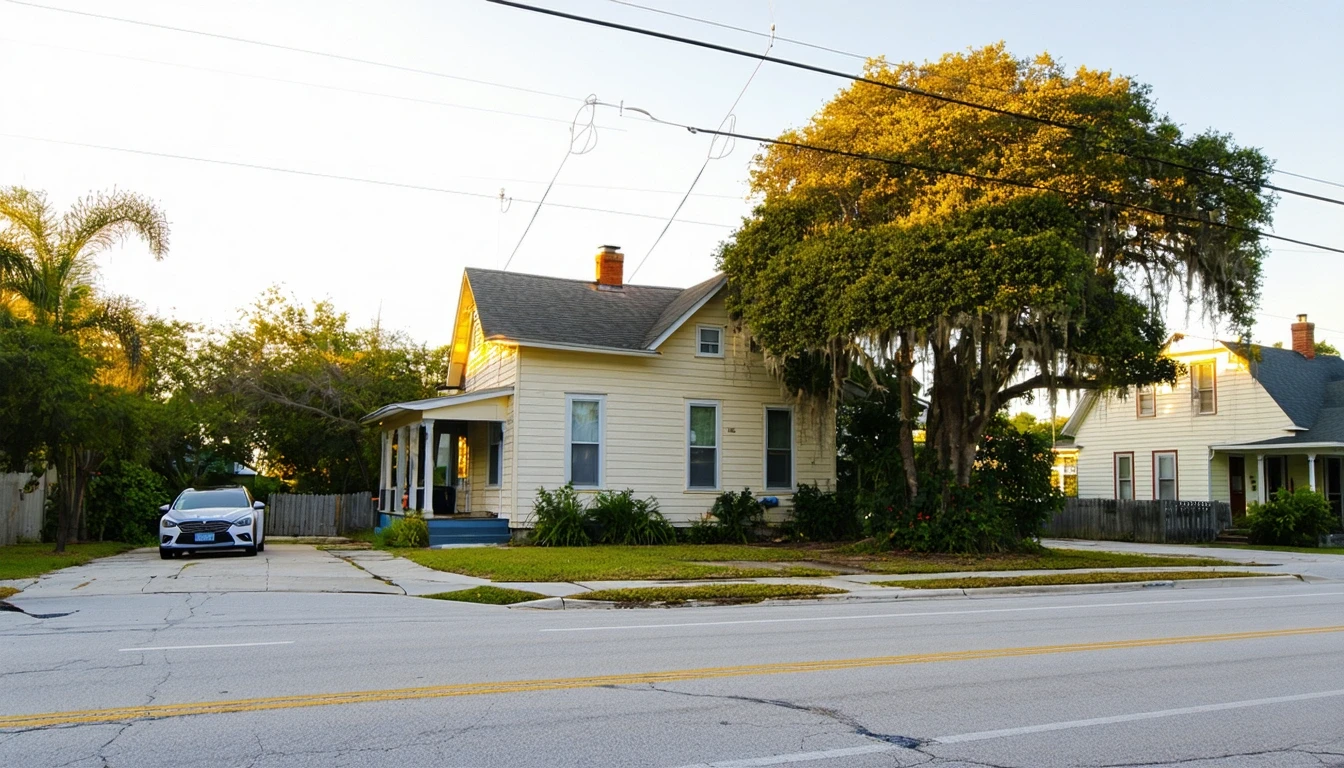
Apartment vs House in Lakeland — Monthly Cost Comparison
| Expense Category | Apartment | House |
|---|---|---|
| Base Housing Cost | $1,217/month (median rent) | $207,800 median value (principal/interest varies by loan) |
| Cooling Exposure | Lower — shared walls reduce heat gain, landlord may control system efficiency | Higher — standalone structure, full envelope exposure, extended AC season drives dominant utility cost |
| Storm Prep & Insurance | Renters insurance only; building structure covered by landlord | Homeowners + flood/windstorm coverage; Florida storm exposure increases premiums and prep costs |
| Maintenance Volatility | Landlord responsible; renter avoids HVAC replacement, roof repair, humidity-driven exterior work | Owner absorbs all — HVAC stress from heat/humidity, exterior paint/siding degradation, yard upkeep in wet climate |
| Property Tax Exposure | None directly (embedded in rent) | Annual obligation; rate and assessment rules not provided but typical Florida homestead provisions may apply |
Why these categories differ in Lakeland: The extended cooling season and humid subtropical climate drive a meaningful gap in utility and maintenance exposure between apartments and houses. Apartments benefit from shared-wall insulation and landlord-managed systems, while standalone homes face full envelope heat gain and owner-borne HVAC strain. Florida’s storm risk elevates insurance complexity for owners, and humidity accelerates exterior maintenance cycles. Property tax and insurance costs are structured differently but both ultimately reflect Florida’s regulatory and environmental context.
Omitted categories: Water, trash, and basic services were excluded because they vary more by provider and building age than by housing type in Lakeland. HOA fees were not included due to lack of prevalence data, though they exist in some neighborhoods and would add a fixed monthly obligation for owners.
The Housing Market in Lakeland Today
Lakeland’s housing market sits at the intersection of accessibility and Florida-specific cost exposure. The median home value of $207,800 remains meaningfully lower than coastal metros in the state, drawing buyers who want ownership without the price floor of Tampa or Orlando but still need to account for the insurance, tax, and maintenance realities that come with any Florida property. The city functions as a regional hub between larger metros, and its retirement city designation shapes both housing stock and neighborhood character — you’ll find communities built with older adults in mind alongside traditional family subdivisions.
What newcomers often misunderstand is that the lower entry price doesn’t mean lower total ownership exposure. Florida’s insurance environment, storm prep costs, and the climate’s effect on building systems mean that the gap between purchase price and true cost of ownership is wider here than in many comparably priced markets outside the state. Lakeland’s housing market rewards buyers who budget for the full ownership picture, not just the mortgage.
The city’s urban form shows more vertical building character than typical suburban sprawl, with both residential and commercial land use present throughout. This creates pockets of walkability and access to rail transit, but the overall mobility texture remains car-oriented. That means housing pressure isn’t just about the rent or mortgage — it’s also about where you live relative to errands, work, and services, because most daily movement still requires a vehicle even if some neighborhoods support walking for specific tasks.
Renting in Lakeland
Median gross rent in Lakeland is $1,217 per month, a figure that reflects moderate pressure relative to income but varies significantly depending on location and building type. Renters face a market where access to daily errands is corridor-clustered — grocery and food options concentrate along certain routes rather than spreading evenly across the city. That means your rent might look similar across two neighborhoods, but your day-to-day convenience and transportation costs can differ substantially based on whether you’re near one of those corridors or farther out in a car-dependent pocket.
The rental experience here also reflects Lakeland’s position as a retirement city. Some apartment communities cater specifically to older adults, while others serve younger workers commuting into Tampa or Orlando. Rental stock includes both low-rise complexes and taller buildings, and the more vertical urban form means apartments aren’t always isolated on the city’s edges — some sit within mixed-use areas where you can walk to a few services, though rail transit access remains limited to specific corridors.
Renters avoid the direct cost of Florida homeownership — property taxes, storm insurance, and the maintenance burden of a humid climate — but those costs are embedded in rent to some degree. The key advantage for renters isn’t avoiding those expenses entirely; it’s avoiding the volatility and unpredictability that come with them. A landlord absorbs the cost of a failed AC unit in July or a roof repair after a storm. A renter pays a fixed amount and limits exposure to the climate’s effect on housing systems.
Owning a Home in Lakeland
Owning a home in Lakeland means taking on the full cost structure of a Florida property. The median home value of $207,800 is the starting point, not the total picture. Ownership here includes property taxes, homeowners insurance, flood or windstorm coverage depending on location and lender requirements, and the ongoing cost of maintaining a structure in a climate that stresses building systems year-round.
Cooling exposure dominates the utility side of ownership. Lakeland’s extended summer heat and high humidity mean air conditioning isn’t seasonal — it’s a baseline cost from late spring through early fall, and often into October. A typical household using around 1,000 kWh per month would face roughly $158 in electricity costs before fees and taxes, and that figure rises during peak heat when systems run longer. Standalone homes bear the full load of that exposure, unlike apartments where shared walls and landlord-controlled systems reduce individual burden.
Maintenance costs in Lakeland aren’t just about age or neglect — they’re about climate. Humidity accelerates exterior paint degradation, promotes mold growth, and stresses HVAC systems that run far more than in temperate regions. Roofs, siding, and seals around windows and doors require more frequent attention than in drier or cooler climates. Owners also face the reality of storm preparation and recovery, which can mean anything from minor yard cleanup to significant repair costs depending on the severity of a given hurricane season.
Property tax and insurance costs vary by neighborhood, home value, and coverage needs, but both are recurring obligations that can shift over time. Florida’s regulatory environment and storm risk mean insurance premiums can rise or carriers can exit the market, leaving owners to navigate changes they don’t control. Ownership in Lakeland offers stability in housing cost structure — no landlord can raise your rent — but it replaces rent volatility with exposure to taxes, insurance, and maintenance, all of which behave unpredictably over time.
Utilities & Upkeep Differences
Utility exposure in Lakeland is shaped almost entirely by cooling demand. The electricity rate of 15.78¢ per kWh is the baseline, but the real cost driver is how much you use, and in Lakeland, you use a lot. Extended heat and humidity mean air conditioning isn’t optional, and the difference between an apartment and a house isn’t just square footage — it’s building envelope. A house with full sun exposure, an attic, and standalone walls loses conditioned air faster and works the AC harder than an apartment insulated by neighboring units.
Natural gas is priced at $32.82 per MCF, but heating demand in Lakeland is minimal. Rare cold snaps might require a furnace for a few days in January or February, but the climate doesn’t impose the kind of heating exposure that defines winter costs in northern or mountain regions. The cost asymmetry here is stark: cooling is a dominant, recurring expense, while heating is negligible.
Upkeep differences between apartments and houses in Lakeland come down to who absorbs the climate’s toll on building systems. Renters in apartments avoid direct responsibility for HVAC repairs, roof maintenance, and exterior work, all of which happen more frequently here than in less humid regions. Homeowners face the full cycle: air conditioning systems stressed by long run times, exterior surfaces that degrade faster, and the need for proactive moisture management to prevent mold and structural issues.
Yard maintenance is another ownership-specific exposure. Lakeland’s wet climate supports fast-growing vegetation, which means lawns, shrubs, and trees require regular attention. Homeowners either pay for landscaping services or invest time and equipment into upkeep. Apartment renters avoid this entirely, though they may face restrictions on outdoor space or storage.
Rent vs Buy: Long-Term Exposure in Lakeland
The rent-versus-buy decision in Lakeland isn’t about which option costs less in year one — it’s about which cost structure fits your tolerance for volatility and your ability to manage Florida-specific ownership exposure over time. Renting offers predictability within a lease term and transfers responsibility for maintenance, insurance, and climate-driven repairs to the landlord. Buying offers control and stability in monthly housing payments, but replaces rent increases with property tax shifts, insurance premium changes, and the unpredictable cost of maintaining a home in a humid, storm-prone climate.
Renters face the risk that rent will rise at lease renewal, especially if the local market tightens or if the landlord’s own costs (insurance, taxes, maintenance) increase. But renters avoid the risk of a $5,000 HVAC replacement in July, a roof repair after a storm, or a sudden jump in homeowners insurance premiums due to carrier exits or policy changes. The renter’s exposure is to housing cost inflation; the owner’s exposure is to the volatility of building systems, weather events, and Florida’s insurance market.
Ownership in Lakeland rewards those who can absorb irregular, high-cost maintenance events and who plan to stay long enough that the stability of a fixed mortgage offsets the unpredictability of everything else. The $207,800 median home value is accessible relative to the $58,290 median household income, but ownership isn’t just about qualifying for a loan — it’s about having reserves for the costs that don’t appear in a monthly payment but define the ownership experience in Florida.
Over time, owners build equity and gain control over their housing situation, but they also take on the full responsibility of a structure that requires more attention here than in many other climates. Renters maintain flexibility and avoid large, unexpected costs, but they give up control and remain exposed to the landlord’s decisions about rent, renewals, and property management.
How this article was built: In addition to public economic data, this article incorporates location-based experiential signals derived from anonymized geographic patterns—such as access density, walkability, and land-use mix—to reflect how day-to-day living actually feels in Lakeland, FL.
FAQs About Housing Costs in Lakeland
Is $1,217 per month typical for rent in Lakeland, FL?
$1,217 per month is the median gross rent in Lakeland, meaning half of renters pay more and half pay less. Actual rent depends on location, building age, and proximity to corridors where errands and services cluster. Renters closer to walkable pockets or rail transit may pay more for convenience, while those in car-dependent areas may find lower rents but face higher transportation costs.
What makes homeownership in Lakeland different from other cities at similar price points?
Lakeland’s $207,800 median home value is accessible, but Florida-specific costs — storm insurance, flood coverage, extended cooling season utility bills, and humidity-driven maintenance — create a wider gap between purchase price and total ownership exposure than in comparably priced markets outside the state. Buyers need to budget for the full ownership picture, not just the mortgage.
Do apartments in Lakeland save money on utilities compared to houses?
Yes, meaningfully. Apartments benefit from shared walls that reduce heat gain and landlord-managed HVAC systems, lowering cooling exposure. Standalone houses face full envelope sun exposure and longer AC run times, which drives higher electricity costs during Lakeland’s extended hot season. The difference isn’t just square footage — it’s building structure and climate interaction.
How does Lakeland’s climate affect long-term maintenance costs for homeowners?
Lakeland’s humid subtropical climate accelerates wear on building systems and exterior surfaces. HVAC units run longer and fail sooner, exterior paint and siding degrade faster, and moisture management becomes a recurring task to prevent mold and structural issues. Homeowners face more frequent maintenance cycles than in drier or cooler regions, and storm seasons add unpredictable repair costs.
Does Lakeland’s walkability affect housing decisions?
Yes, but selectively. Lakeland has walkable pockets and rail transit in specific areas, but the overall mobility texture remains car-oriented. Where you live determines whether you can walk to errands or need a car for every trip. Renters and buyers near corridor-clustered grocery and food options gain convenience, while those in car-dependent neighborhoods face higher transportation costs and more time behind the wheel.
Making Housing Choices in Lakeland
Housing costs in Lakeland reflect a market where entry prices remain accessible but ownership exposure includes the full weight of Florida’s climate, insurance environment, and maintenance demands. Renters at the $1,217 median pay moderate amounts relative to income and avoid the volatility of ownership, but they give up control and remain exposed to rent increases and landlord decisions. Buyers at the $207,800 median home value gain stability in monthly housing payments but take on property taxes, storm insurance, cooling-driven utility costs, and the ongoing burden of maintaining a structure in a humid, storm-prone climate.
The decision between renting and buying in Lakeland isn’t about which option costs less — it’s about which cost structure you can manage and which risks you’re willing to absorb. Renters fit well if they value flexibility, want to avoid large maintenance events, or plan to move within a few years. Buyers fit well if they can budget for irregular ownership costs, plan to stay long enough to benefit from equity growth, and want control over their housing situation despite the unpredictability of Florida-specific expenses.
Location within Lakeland matters as much as housing type. Walkable pockets and rail transit access exist, but most of the city requires a car for daily errands. Families face limited school and playground density, meaning neighborhood selection becomes more critical. Retirees benefit from housing stock and services oriented toward older adults, but they still navigate the same climate and insurance realities as everyone else.
Lakeland’s housing market rewards careful planning and a clear understanding of what ownership or renting actually costs here, not just what the rent or purchase price suggests. For more on how housing fits into overall cost structure, see Lakeland Cost Reality: The Big Pressure Points. If you’re planning a move, Best Moving Companies Guide offers logistics support.