
Deciding whether to rent or buy in Gresham means understanding how this Portland suburb’s housing market actually works—not just what the sticker price says. Gresham sits east of Portland with rail transit access, a low-rise residential character, and a cost structure that reflects both its proximity to the metro core and its own suburban identity. The median home value here is $411,700, while median rent runs $1,452 per month. Those figures tell you what housing costs, but not how it behaves once you’re living here—or which option leaves you more exposed over time.
This article breaks down the cost structure of renting versus owning in Gresham, explains what drives housing expenses beyond the lease or mortgage, and clarifies which tradeoffs matter most depending on how you plan to live here.
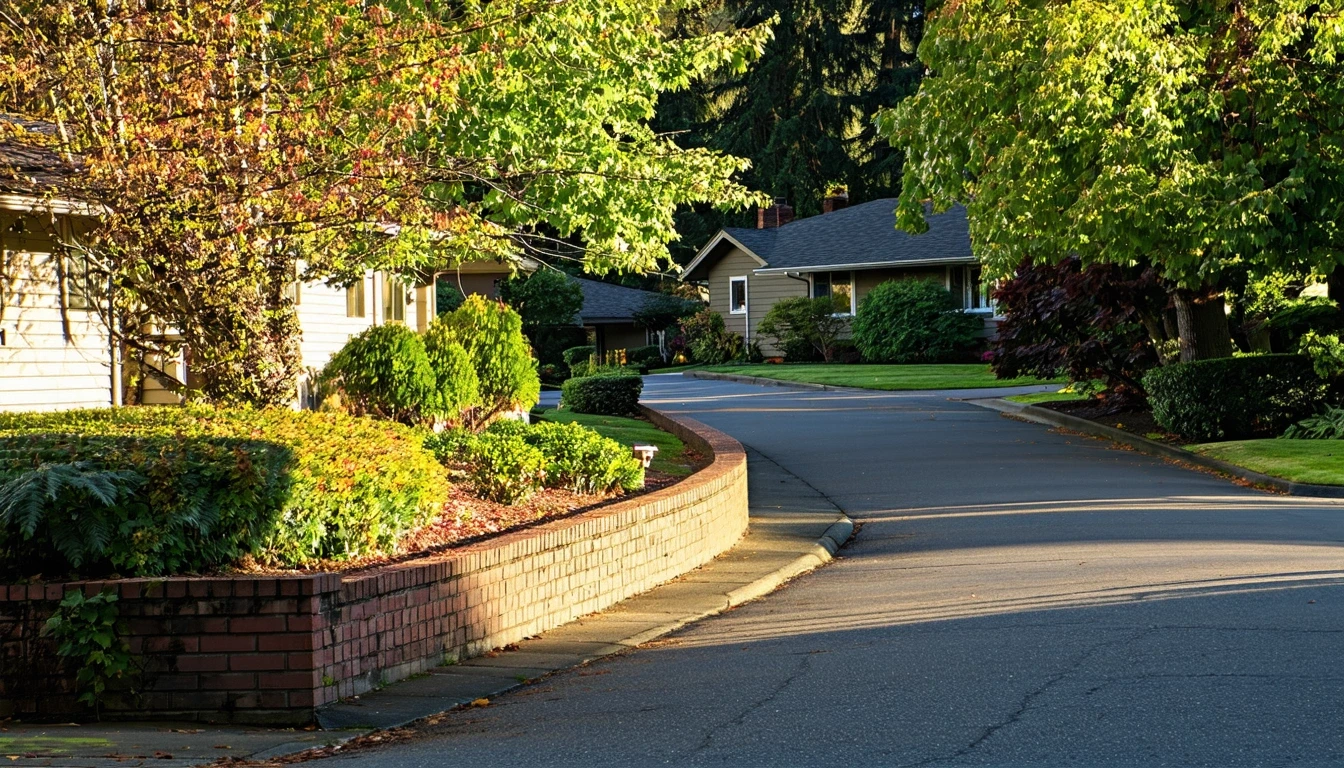
The Housing Market in Gresham Today
Gresham’s housing market reflects its role as an established suburb within the Portland metro area. It’s not a bedroom community in the strictest sense—there’s notable cycling infrastructure, rail service, and high grocery and food establishment density—but the low-rise building profile and mixed pedestrian-to-road ratio mean most residents still rely on cars for flexibility, even if some errands and commutes can happen without one.
What shapes the market here is the combination of metro access and suburban form. Home values sit well above the national median, but they’re lower than inner Portland, which makes Gresham a common landing point for buyers priced out closer in. Rental stock exists across apartment complexes and single-family homes, and the presence of both residential and commercial land use throughout the city means you’re not locked into purely residential corridors. The regional price parity index of 107 signals that costs here run about 7% above the national baseline, a reflection of broader Pacific Northwest price pressure rather than Gresham-specific premiums.
Newcomers often misread Gresham as “cheaper Portland,” but the cost experience here isn’t just a discount—it’s a different structure. You’re trading some walkability and transit frequency for more space and lower entry costs, but you’re not escaping the broader housing pressure that defines the metro area.
Renting in Gresham
At $1,452 per month for median gross rent, Gresham’s rental market sits in the middle tier for the Portland metro. That figure includes rent and utilities, but the actual cost experience depends heavily on where you land within the city. Proximity to the MAX light rail line, access to grocery-dense corridors, and distance from major commute routes all influence how much you’ll pay and how much flexibility you’ll have without a car.
Rental pressure here isn’t as severe as inner Portland, but it’s not soft either. The combination of rail access and relatively lower rents compared to the urban core makes Gresham attractive to renters who work downtown or in the metro area but want more space or lower monthly costs. That demand keeps vacancy rates tight in well-connected neighborhoods, especially near transit stops and areas with strong park access.
Renters in Gresham benefit from the city’s high density of food and grocery options, which reduces the logistical burden of daily errands. The integrated park access and strong family infrastructure also make it easier to live here without constantly driving to recreation or school drop-offs. But the mixed walkability means you’ll still want a car for trips outside your immediate area, and parking availability varies widely depending on whether you’re in an apartment complex or renting a house.
Rental increases here tend to follow metro-wide trends rather than Gresham-specific shocks. Lease renewals typically bring modest annual bumps, but the volatility is lower than in cities with rapid development or severe housing shortages. If you’re renting in Gresham, your main exposure is to regional market pressure, not local policy or supply constraints.
Owning a Home in Gresham
At $411,700 for the median home value, ownership in Gresham requires significant upfront capital, especially relative to the median household income of $69,437 per year. That gap between income and home prices is a defining feature of the market here—it’s not insurmountable, but it does mean most buyers need either dual incomes, substantial savings, or willingness to stretch their housing budget.
Ownership in Gresham exposes you to costs that don’t appear in the purchase price. Property taxes, home insurance, and maintenance all add to the monthly burden, and because Gresham sits in a region with mild, wet winters and dry summers, you’ll face different upkeep demands than in climates with harsher extremes. Roof and gutter maintenance matters here due to consistent rainfall, and exterior paint and siding hold up better than in freeze-thaw zones but still require attention over time.
The low-rise building character means most ownership opportunities are single-family homes or townhomes rather than condos, which shifts the maintenance burden entirely onto the homeowner. There’s no HOA to cover exterior work or shared systems, but that also means no monthly fees eating into your budget. Governance here is relatively light compared to newer master-planned suburbs, so you’re not navigating restrictive covenants or mandatory landscaping rules in most neighborhoods.
Ownership in Gresham also means exposure to property tax changes over time. While the specific rate isn’t provided in the data, Oregon’s property tax structure includes voter-approved levies and bonds that can shift your annual bill. Buyers should expect taxes to rise periodically, not from assessed value spikes but from new funding measures. That’s a different risk profile than in states with strict caps or rapid reassessment cycles.
The long-term appeal of ownership here is stability and control. Once you’re in, your principal and interest payment stays fixed (assuming a standard mortgage), and you’re insulated from rent increases. But you’re also locked into a market where home values move with metro-wide trends, and selling quickly isn’t always easy if the broader region softens.
Apartment vs House in Gresham — Cost Behavior Comparison
| Expense Category | Apartment | House |
|---|---|---|
| Heating & Cooling | Lower exposure; shared walls reduce heat loss; smaller square footage limits cooling load in dry summers | Higher exposure; standalone structure increases heating demand in wet, cool months; larger square footage drives cooling costs in summer |
| Water & Sewer | Often included in rent or billed as flat fee; limited control over usage | Billed separately; outdoor watering in dry summers can add noticeable seasonal variance |
| Exterior Maintenance | Covered by landlord; no direct cost or time burden | Homeowner responsibility; roof, gutter, and siding upkeep necessary due to consistent rainfall |
| Parking | Varies; some complexes charge separately, especially near transit corridors | Typically included; driveway or garage standard in low-rise neighborhoods |
Why these categories: The table above reflects cost behaviors that differ meaningfully in Gresham due to climate (mild, wet winters and dry summers), housing stock (low-rise, standalone homes vs. apartment complexes), and infrastructure (transit access and mixed walkability). Categories like property taxes and insurance were omitted because they don’t vary by housing type in a way that’s specific to Gresham’s structure—they apply uniformly to ownership regardless of form. The focus here is on costs that change based on how you live, not just what you own.
Utilities & Upkeep Differences
Utility and maintenance costs in Gresham are shaped by the Pacific Northwest climate and the city’s low-rise housing character. Winters here are mild and wet, not freezing, so heating demand is moderate but consistent. Summers are dry and can bring warm stretches, which drives cooling costs for a few months but not at the intensity of inland or desert climates. Electricity rates sit at 15.59¢/kWh, and natural gas runs $16.82 per MCF, both of which are mid-range for the region.
In apartments, utility exposure is lower because shared walls reduce heat loss, and smaller square footage limits both heating and cooling loads. Many complexes also bundle water and sewer into rent, which removes variability but also limits your control over usage. In houses, you’re paying separately for everything, and the standalone structure increases heating costs during the wet, cool months. Outdoor watering in summer adds a noticeable bump to water bills, especially if you’re maintaining a lawn or garden during the dry season.
Maintenance exposure in houses is dominated by exterior upkeep. Consistent rainfall means gutters and downspouts need regular clearing to prevent water damage, and roofs require periodic inspection. Exterior paint and siding hold up better here than in freeze-thaw climates, but moisture still accelerates wear over time. Apartments shift all of that to the landlord, which reduces both cost and time burden but also removes your ability to control timing or quality of repairs.
The difference in upkeep between apartments and houses in Gresham isn’t just about dollars—it’s about exposure to volatility. Apartment renters face predictable monthly costs with occasional bumps at lease renewal. Homeowners face lower monthly averages but periodic spikes when a roof needs replacement or a furnace fails. That tradeoff matters more here than in climates with extreme weather, where maintenance costs are both higher and more frequent.
Rent vs Buy: Long-Term Exposure in Gresham
The rent-versus-buy decision in Gresham isn’t about which option costs less in total—it’s about which risk profile fits your situation. Renting gives you predictability in the short term and flexibility to leave without transaction costs, but it exposes you to rent increases that track metro-wide demand. Buying locks in your principal and interest payment but exposes you to property tax changes, maintenance spikes, and the risk that home values stagnate or decline if the broader Portland market softens.
Renters in Gresham face moderate but persistent upward pressure on rent, driven by the city’s role as a relatively affordable entry point into the Portland metro. Lease renewals typically bring annual increases, but the volatility is lower than in cities with severe housing shortages or rapid development. The main risk is that over time, rent increases outpace income growth, which squeezes your budget without giving you any equity or control in return.
Homeowners face a different set of exposures. Property taxes in Oregon can rise due to voter-approved levies and bonds, which means your annual housing cost isn’t fully fixed even after you’ve paid off the mortgage. Maintenance costs are episodic rather than monthly, but they’re unavoidable—roofs, furnaces, and water heaters all have finite lifespans, and the wet climate here accelerates some types of wear. Home insurance costs can also rise over time, especially if the region experiences wildfire smoke events or other climate-related risks that affect underwriting.
The long-term advantage of ownership in Gresham is stability and control. Once you’re in, you’re insulated from rent increases, and you can modify your home to fit your needs without landlord approval. But you’re also locked into a market where home values move with metro-wide trends, and selling quickly isn’t always easy if the broader region softens. Renters retain flexibility and avoid maintenance risk, but they’re exposed to ongoing cost increases with no equity accumulation.
For households planning to stay in Gresham for five years or more, ownership typically offers better long-term stability, assuming you can manage the upfront costs and periodic maintenance spikes. For those who value flexibility or expect to relocate within a few years, renting avoids transaction costs and keeps your options open. The decision hinges on how much volatility you can absorb and whether you prioritize control over mobility.
FAQs About Housing Costs in Gresham
Is renting or buying cheaper in Gresham over five years?
It depends on how much rent increases during that period and what maintenance costs you face as a homeowner. Renting avoids upfront costs and maintenance spikes, but you’re exposed to annual rent increases that compound over time. Buying locks in your principal and interest payment, but property taxes, insurance, and maintenance add ongoing costs that vary. Neither option is universally cheaper—it’s about which risk profile fits your financial situation and how long you plan to stay.
How much do property taxes add to homeownership costs in Gresham?
The specific property tax rate isn’t provided in the data, but Oregon’s system includes voter-approved levies and bonds that can shift your annual bill over time. Buyers should expect taxes to rise periodically, not from rapid reassessment but from new funding measures. That’s a different exposure than in states with strict caps or frequent revaluations, and it means your housing cost isn’t fully fixed even after the mortgage is paid off.
Are utilities more expensive in a house or apartment in Gresham?
Houses typically cost more because they’re standalone structures with larger square footage, which increases both heating and cooling loads. Apartments benefit from shared walls and smaller spaces, which reduce energy use. Water and sewer costs also tend to be higher in houses, especially in summer when outdoor watering is common. The difference isn’t extreme, but it’s noticeable enough to matter in your monthly budget.
Does Gresham’s climate make homeownership more expensive?
Not dramatically, but the mild, wet winters and dry summers do create specific maintenance demands. Consistent rainfall means gutters and roofs require regular attention to prevent water damage, and exterior paint and siding wear faster in moist conditions. Heating costs are moderate but persistent through the cool months, and summer cooling costs are lower than in hotter climates. The climate doesn’t drive extreme expenses, but it does require ongoing upkeep that renters avoid entirely.
Is Gresham a good place to buy if I work in Portland?
It depends on your commute tolerance and whether you value space over proximity. Gresham has rail transit access, which makes commuting to downtown Portland feasible without driving, but the mixed walkability here means you’ll still want a car for flexibility. Home values are lower than inner Portland, which makes entry easier, but you’re still exposed to metro-wide market trends and property tax changes. If you’re willing to trade some convenience for lower upfront costs and more space, Gresham can work well. If you prioritize walkability and short commutes, you’ll face tradeoffs.
Making Housing Choices in Gresham
Housing costs in Gresham are shaped by its position as a Portland suburb with rail access, low-rise residential character, and a cost structure that reflects both metro proximity and suburban form. Renting here offers flexibility and predictable monthly costs, but exposes you to ongoing rent increases tied to regional demand. Buying locks in your principal and interest payment and gives you control, but exposes you to property tax changes, maintenance spikes, and market risk if the broader metro softens.
The decision between renting and buying isn’t about which option costs less in total—it’s about which risk profile fits your situation and how long you plan to stay. Renters benefit from mobility and avoid maintenance risk, but they’re exposed to compounding rent increases with no equity accumulation. Homeowners gain stability and control, but they’re locked into a market where values move with metro-wide trends and selling quickly isn’t always easy.
For households planning to stay in Gresham for five years or more, ownership typically offers better long-term stability, assuming you can manage the upfront costs and periodic maintenance spikes. For those who value flexibility or expect to relocate within a few years, renting avoids transaction costs and keeps your options open. The key is understanding which costs are predictable, which are volatile, and which tradeoffs matter most for how you plan to live here.
For a broader look at where your money goes in Gresham, including how housing fits into the larger cost structure, see the full cost overview. If you’re planning a move and need to understand logistics and timing, the guide to moving company costs and options covers what to expect. And for a detailed breakdown of monthly spending in Gresham, including how rent or ownership costs interact with other expenses, the monthly budget guide provides the full picture.
How this article was built: In addition to public economic data, this article incorporates location-based experiential signals derived from anonymized geographic patterns—such as access density, walkability, and land-use mix—to reflect how day-to-day living actually feels in Gresham, OR.