
National transit riders who switch from driving can save upward of $10,000 annually when factoring in fuel, insurance, and parking—but that calculation only works if transit actually gets you where you need to go. In Bolingbrook, the question isn’t whether public transit exists; it’s whether it fits the way most people here actually live, work, and move through their day.
Bolingbrook sits in the outer ring of the Chicago metro, where suburban sprawl, car-oriented development, and long commutes define the transportation landscape. For households commuting into downtown Chicago or nearby employment hubs, transit can play a supporting role—but for daily errands, school runs, and local jobs, driving remains the default. Understanding transportation options in Bolingbrook means recognizing that mobility here is shaped more by infrastructure gaps than by personal preference.
How People Get Around Bolingbrook
Bolingbrook is a car-first suburb. The street grid, commercial corridors, and residential subdivisions were designed with driving in mind, and that structure shapes how people move. Most households own at least one vehicle, and many own two or more—not as luxury, but as necessity. The average commute here runs around 30 minutes, and with just 12.3% of workers operating from home, the majority are on the road daily.
What newcomers often misunderstand is that Bolingbrook isn’t a place where you can easily “go car-free” unless your life is tightly centered around a single transit-accessible corridor. The layout is spread out, destinations are dispersed, and the infrastructure assumes you’re driving. That doesn’t mean transit is absent—it means transit works best as a supplement, not a replacement.
Public Transit Availability in Bolingbrook
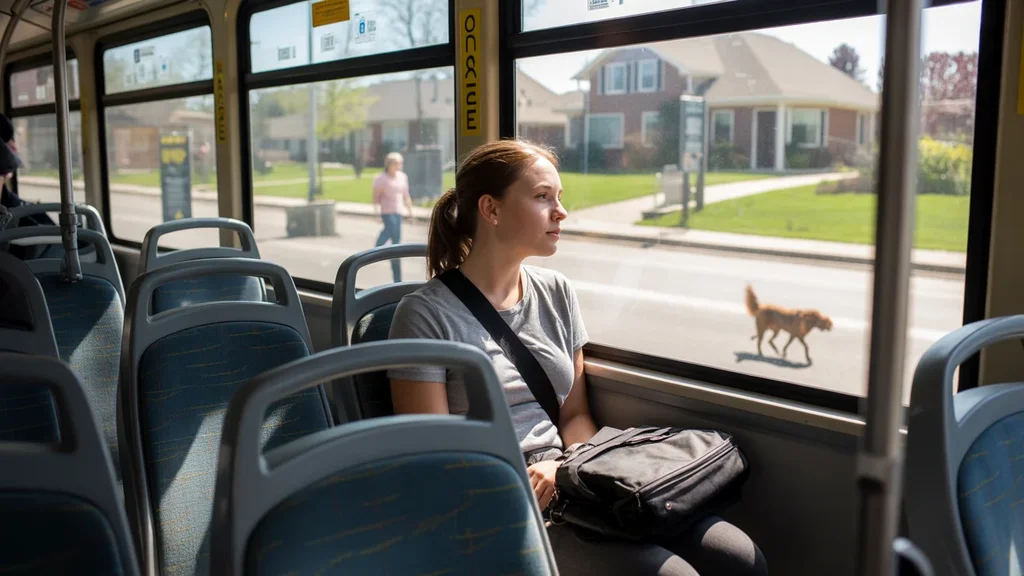
Public transit in Bolingbrook often centers around systems such as Pace suburban bus service, which connects the village to nearby transit hubs and employment centers. Regional rail access typically requires a drive or bus connection to stations in neighboring communities, where Metra lines offer routes into downtown Chicago.
Transit tends to work best for commuters heading into the city core during peak hours. If your job is in the Loop or near a major Metra stop, and you live near a Pace route with reasonable frequency, transit can reduce driving exposure and parking costs. But coverage thins out quickly in residential subdivisions, and evening or weekend service is often sparse. For errands, appointments, or multi-stop trips, transit becomes impractical.
The role transit plays here is targeted: it serves a subset of commuters well, but it doesn’t provide the kind of all-day, all-purpose mobility that reduces car dependence across the board.
Driving & Car Dependence Reality
In Bolingbrook, driving isn’t just convenient—it’s structurally necessary for most households. Grocery stores, medical offices, schools, and retail centers are spread across commercial strips and shopping plazas that aren’t easily walkable or transit-connected. Parking is abundant and typically free, which removes one of the friction points that makes driving costly in denser cities.
Car dependence here is a function of geography. Subdivisions are separated from commercial corridors by arterial roads designed for speed, not pedestrian access. Sidewalks exist in many neighborhoods, but they often lead to cul-de-sacs rather than destinations. The infrastructure assumes you’ll drive to the grocery store, the gym, the pharmacy—and then drive home.
For families managing multiple schedules, driving offers flexibility that transit can’t match. You can chain errands, adjust timing on the fly, and handle emergencies without waiting for the next bus. That flexibility comes with costs—fuel, insurance, maintenance—but in Bolingbrook’s layout, those costs are harder to avoid than in transit-rich environments.
Commuting Patterns & Daily Mobility
Commuting in Bolingbrook varies widely depending on where you work. For those employed locally or in nearby suburbs, commutes are often car-based and relatively short. For those working in downtown Chicago or other regional hubs, commutes stretch longer—around 21.1% of workers here face what’s classified as a long commute—and transit becomes a more viable option, particularly for avoiding downtown parking costs and highway congestion.
Daily mobility here isn’t just about the commute to work. It’s about getting kids to school, running errands, attending appointments, and managing household logistics. Transit doesn’t cover that range of movement effectively, which is why even households with one transit commuter often maintain a second vehicle for local trips.
The structure of monthly expenses in Bolingbrook reflects this reality: transportation isn’t a single line item, it’s a layered exposure that includes vehicle ownership, fuel volatility, and the time cost of longer commutes.
Who Transit Works For — and Who It Doesn’t
Transit in Bolingbrook works best for single commuters heading into downtown Chicago on a predictable schedule. If you live near a Pace route, can walk or bike to a bus stop, and work near a Metra station or Loop office, transit can reduce your driving burden significantly. You’ll avoid highway stress, downtown parking fees, and some of the wear-and-tear costs of daily driving.
Transit works less well for families managing multiple stops, shift workers with non-peak schedules, or households located in subdivisions far from bus routes. It also struggles to serve people whose jobs are in other suburbs, where transit connections are indirect or nonexistent. In those cases, driving isn’t a preference—it’s the only practical option.
Renters closer to main corridors may find transit more accessible than homeowners in peripheral subdivisions, but even then, the coverage and frequency limitations mean most households still need at least one car.
Transportation Tradeoffs in Bolingbrook
The tradeoff between transit and driving in Bolingbrook isn’t about cost alone—it’s about control, predictability, and flexibility. Transit offers relief from highway congestion and parking hassles, but it limits your ability to adjust timing, handle emergencies, or manage multi-stop trips. Driving offers freedom and convenience, but it exposes you to fuel price swings, maintenance schedules, and the time drain of long commutes.
For households with two working adults, the calculus often lands on “one car minimum, two cars preferred.” One partner might use transit for a downtown commute while the other drives locally. That hybrid approach balances exposure and flexibility, but it also means you’re carrying both the cost of vehicle ownership and the constraints of transit schedules.
The key insight is that transportation in Bolingbrook isn’t a binary choice. It’s a layered system where most households use driving as the backbone and transit as a targeted tool for specific trips.
FAQs About Transportation in Bolingbrook (2026)
Is public transit usable for daily commuting in Bolingbrook?
Public transit in Bolingbrook is usable for commuters heading into downtown Chicago or nearby transit hubs, particularly during peak hours. Pace bus service connects to Metra stations and regional employment centers, but coverage is limited in residential subdivisions and service frequency drops outside rush periods. For local jobs or multi-stop trips, driving remains more practical.
Do most people in Bolingbrook rely on a car?
Yes. Bolingbrook’s suburban layout, dispersed destinations, and limited transit coverage make car ownership necessary for most households. Even residents who use transit for work commutes typically maintain a vehicle for errands, family logistics, and local travel.
Which areas of Bolingbrook are easiest to live in without a car?
Areas near major Pace bus routes and closer to commercial corridors offer the most transit access, but even in those zones, car-free living is challenging. Bolingbrook’s infrastructure assumes vehicle ownership, and daily errands, appointments, and household logistics are difficult to manage without driving.
How does commuting in Bolingbrook compare to nearby cities?
Bolingbrook’s average commute of 30 minutes reflects its position in the outer Chicago suburbs. Commutes are longer than in closer-in communities with better transit access, but shorter than in more rural areas. The key difference is that Bolingbrook offers some transit connectivity for downtown commuters, while many nearby suburbs rely almost entirely on driving.
Can you get by with one car in Bolingbrook?
Single-person households or couples with aligned schedules can manage with one car, especially if one partner uses transit for commuting. Families with children, multiple work locations, or complex schedules typically find two vehicles necessary to handle daily logistics without constant coordination.
How Transportation Fits Into the Cost of Living in Bolingbrook
Transportation in Bolingbrook isn’t just a budget line—it’s a structural factor that shapes where you live, how you work, and how much flexibility you have in daily life. Car dependence here is a cost multiplier: it affects housing choice (proximity to transit vs. subdivision affordability), time allocation (commute length vs. local job access), and financial exposure (fuel volatility, insurance, maintenance).
For households evaluating Bolingbrook, the transportation question isn’t “Can I avoid owning a car?” but rather “How many cars do I need, and what role will transit play?” The answer depends on where you work, where you live within Bolingbrook, and how much schedule flexibility you require.
Transit can reduce some of the pressure for downtown commuters, but it doesn’t eliminate the need for vehicle ownership. The infrastructure here rewards driving, and most households build their budgets and routines around that reality. Understanding that structure—and planning accordingly—makes the difference between transportation feeling like a manageable trade-off and a constant source of friction.
About the author: Travis Meyers specializes in commutes, vibe, and lifestyle dynamics in suburban and metro environments. This article reflects his expertise in how transportation infrastructure shapes daily life and household decision-making.