
Owning a home in Clearwater means managing costs that don’t appear on the purchase contract. Property insurance in coastal Florida carries exposure that inland buyers rarely face. Cooling bills stretch across eight or nine months, not three. Maintenance timelines compress under humidity and salt air. And while the sticker price might look manageable, the recurring expenses—some predictable, others volatile—reshape what ownership actually costs year after year.
This article breaks down the full cost structure of housing in Clearwater, including rent, ownership, taxes, insurance, and long-term exposure. It’s written for people deciding whether to rent or buy here, and what that choice means as costs shift over time.
The Housing Market in Clearwater Today
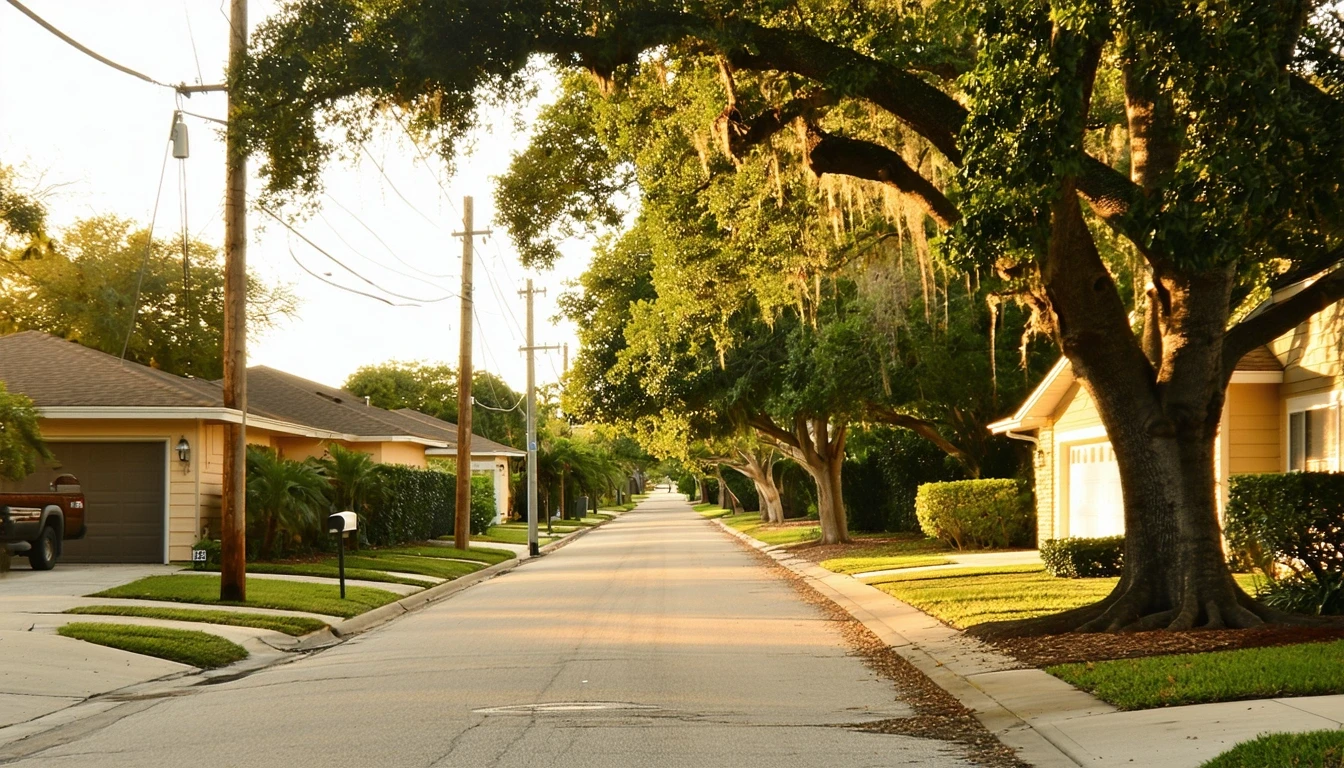
Clearwater sits within the Tampa metro, but it functions as a distinct submarket. The median home value is $287,900, and median gross rent is $1,389 per month. The city draws retirees, families, and workers commuting into Tampa, which creates competing demand across different housing types. Inventory includes older single-family homes, mid-rise condos near the waterfront, and suburban-style developments farther inland.
What newcomers often miss is that Clearwater’s housing costs are shaped as much by climate and insurance markets as by the real estate market itself. Coastal proximity increases wind and flood exposure, even for properties not directly on the water. That exposure doesn’t always show up in the listing price, but it governs the total cost of ownership once insurance, maintenance, and utility cycles are factored in.
The unemployment rate is 3.3%, and the regional price parity index is 103, meaning overall costs run slightly above the national baseline. But the real cost pressures in Clearwater come from the expenses that don’t stabilize—insurance renewals, storm preparation, and cooling-season electricity—not from wages or grocery prices.
Renting in Clearwater
Rental housing in Clearwater spans older garden-style complexes, newer mid-rise buildings, and single-family homes offered by individual landlords. At $1,389 per month for the median gross rent, renters face steady baseline costs, but availability and lease terms vary depending on proximity to the coast, walkability, and building age.
Renters avoid property tax and insurance volatility, but they inherit exposure to landlord cost pass-throughs. When property insurance premiums spike—common in coastal Florida—lease renewals often reflect that increase. Renters also face less control over utility efficiency. Older buildings with single-pane windows and minimal insulation drive up cooling costs during the extended summer season, and tenants can’t authorize efficiency upgrades.
For people who value mobility or aren’t ready to absorb ownership risk, renting in Clearwater makes sense. But it’s not a cost-stable position long-term. Rent increases tend to track insurance markets and landlord operating costs, not just demand.
Owning a Home in Clearwater
At $287,900 for the median home value, ownership in Clearwater is accessible compared to other coastal Florida markets. But the purchase price is only the entry cost. Ownership here means taking on recurring expenses that vary with climate, regulation, and market conditions.
Property insurance is the largest unpredictable cost. Florida’s insurance market has seen carrier exits, premium increases, and policy restrictions in recent years, particularly for wind and flood coverage. Buyers often discover that their insurance costs more annually than their property taxes, and that renewals bring double-digit percentage increases with little warning.
Property taxes in Florida are governed by Save Our Homes caps for primary residents, which limit assessment increases on homesteaded properties. But new buyers pay taxes based on purchase price, not the previous owner’s capped assessment. That reset can be significant, especially in neighborhoods where longtime owners have been insulated from market-rate taxation.
Maintenance costs in Clearwater are also climate-driven. Humidity accelerates wood rot, mold growth, and HVAC wear. Exterior paint degrades faster. Roofs face wind and UV exposure that shortens replacement cycles. Buyers coming from drier or cooler climates often underestimate how much more frequently systems and surfaces need attention here.
Homeowners associations are common in newer developments and condo buildings. Fees vary widely, but they typically cover exterior maintenance, landscaping, and shared amenities. In some cases, they also include master insurance policies, which can reduce individual premiums but add governance complexity and fee volatility.
Apartment vs House in Clearwater — Cost Behavior Comparison
| Expense Category | Apartment | House |
|---|---|---|
| Cooling Costs | Lower total usage due to smaller square footage and shared-wall insulation, but less control over efficiency upgrades in older buildings | Higher total usage due to larger conditioned space and greater exterior surface exposure; owner controls insulation, windows, and HVAC replacement |
| Storm Preparation | Building management typically handles exterior shutters, drainage, and structural prep; tenant responsibility limited to interior securing | Owner responsible for all storm prep including shutters, roof integrity, drainage systems, and yard debris removal |
| Insurance Structure | Renter’s insurance covers contents only; building structure covered by landlord or HOA master policy | Owner carries full property insurance including structure, wind, and often separate flood policy; premiums reflect full replacement cost and coastal exposure |
| Exterior Maintenance | Landlord or HOA handles roof, siding, paint, and landscaping; costs embedded in rent or fees | Owner schedules and funds all exterior work; humidity and salt air accelerate paint, wood, and roof degradation |
| Property Tax Exposure | No direct property tax; rent may reflect landlord’s tax costs but tenant doesn’t receive homestead exemption benefit | Owner pays property tax based on assessed value; new buyers pay market-rate taxes until homestead cap applies in subsequent years |
Why these categories? The table reflects cost distinctions that behave differently in Clearwater due to extended cooling seasons, coastal storm exposure, and Florida’s property tax and insurance structure. Categories like basic utilities or trash service were omitted because they don’t vary meaningfully between housing types here. The focus is on expenses where climate, governance, or ownership structure creates a real difference in how costs are experienced.
Utilities & Upkeep Differences
Utility exposure in Clearwater is dominated by cooling. The electricity rate is 15.70¢/kWh, and air conditioning runs from April through October—sometimes longer. A single-family home with 1,800 square feet of conditioned space will use significantly more electricity than a 900-square-foot apartment with shared walls, even if both are equally efficient.
Homeowners can invest in efficiency upgrades—programmable thermostats, attic insulation, reflective roofing, or newer HVAC systems—but those improvements require upfront capital and time to pay back. Renters in older buildings often face higher per-square-foot cooling costs without the ability to authorize changes.
Natural gas is less common in Clearwater than in northern climates. The natural gas price is $32.82/MCF, but most heating needs are minimal, and many homes rely on electric heat pumps or resistance heating during the brief cool season. Gas is more often used for water heating or cooking, where present.
Upkeep differences are driven by exposure. Houses face full sun, wind, and rain on all sides. Apartment buildings share structural loads and exterior maintenance responsibilities. In Clearwater’s climate, that difference translates to faster degradation cycles for houses—roofs, gutters, siding, and paint all require more frequent attention than in drier or less humid regions.
Rent vs Buy: Long-Term Exposure in Clearwater
Renting in Clearwater offers cost predictability within the lease term, but no protection from increases at renewal. Rent adjustments tend to track landlord operating costs, which in Florida means they follow insurance markets and property tax resets. Renters also remain exposed to displacement if the landlord sells, converts the property, or exits the rental market entirely.
Ownership shifts the risk profile. Monthly housing costs become more predictable once the mortgage is fixed, and property tax increases are capped under homestead rules after the first year. But owners absorb all insurance volatility, maintenance surprises, and storm-related repair costs. In Clearwater, that volatility is not hypothetical—it’s a recurring feature of the cost structure.
Over time, owners build equity, but that equity comes with exposure. Insurance costs can rise faster than home values, especially if the market softens or carriers restrict coverage. Maintenance costs don’t decline as the home ages—they increase. And selling costs (agent commissions, closing fees, repair concessions) can erase years of equity gains if the holding period is short.
For households planning to stay in Clearwater long-term, ownership makes sense if they can absorb cost swings and manage deferred maintenance. For households with shorter timelines, uncertain income, or low tolerance for surprise expenses, renting avoids the exposure even if it means paying more per month.
FAQs About Housing Costs in Clearwater
What’s the biggest hidden cost of owning a home in Clearwater?
Property insurance. Coastal Florida’s insurance market is volatile, and premiums often exceed property taxes. New buyers should budget for annual increases and plan for the possibility of needing surplus lines coverage if standard carriers exit the market.
Does renting in Clearwater protect you from cost increases?
Only within the lease term. At renewal, landlords can adjust rent to reflect their own cost increases, including insurance and taxes. Florida law doesn’t cap rent increases for market-rate units, so renters face exposure at every lease cycle.
How does Clearwater’s climate affect maintenance costs?
Humidity, heat, and salt air accelerate wear on roofs, exterior paint, wood trim, and HVAC systems. Maintenance cycles are shorter than in drier or cooler climates, and owners should expect to repaint, reseal, and replace components more frequently.
Are property taxes in Clearwater predictable?
For homesteaded owners, yes—Save Our Homes caps limit annual assessment increases. But new buyers pay taxes based on purchase price, which can be significantly higher than the previous owner’s capped assessment. The first year is the reset; subsequent years are more stable.
Is it better to rent or buy in Clearwater if you’re planning to stay five years?
It depends on your tolerance for cost volatility and your ability to handle maintenance and insurance surprises. Ownership builds equity, but it also concentrates risk. Renting costs more per month but avoids the exposure. Neither choice is universally better—it’s a tradeoff between control and predictability.
Making Housing Choices in Clearwater
Housing costs in Clearwater are shaped by climate, insurance markets, and the structure of ownership itself. The purchase price or monthly rent is only part of the picture. Cooling costs stretch across most of the year. Insurance premiums fluctuate with carrier behavior and storm history. Maintenance timelines compress under heat and humidity. And long-term cost exposure depends on whether you own or rent, not just on how much you pay upfront.
For retirees, Clearwater offers strong healthcare access, integrated park space, and a housing stock that includes both single-family homes and low-maintenance condos. But ownership here requires planning for insurance volatility and climate-driven upkeep. For families, the city provides solid school and playground infrastructure, walkable pockets, and access to grocery options—but a month of expenses in Clearwater will include higher cooling costs and maintenance reserves than in non-coastal markets.
Renters gain flexibility and avoid ownership risk, but they remain exposed to lease-term cost increases and landlord decisions. Buyers gain control and equity, but they absorb all volatility and deferred maintenance. The right choice depends on how long you’re staying, how much cost uncertainty you can manage, and whether you value predictability or control more.
For more on how housing fits into overall cost structure, see the real cost pressures in Clearwater. And if you’re planning a move, pods vs trucks: which move is best for you? covers logistics and cost tradeoffs.
How this article was built: In addition to public economic data, this article incorporates location-based experiential signals derived from anonymized geographic patterns—such as access density, walkability, and land-use mix—to reflect how day-to-day living actually feels in Clearwater, FL.