
Chula Vista sits in the heart of the San Diego metro, where housing demand reflects both regional job access and Southern California’s structural supply constraints. For newcomers weighing rent against ownership, the decision hinges less on monthly math and more on how Chula Vista’s cost structure—shaped by proximity, climate, and infrastructure—aligns with your household’s timeline and flexibility needs. This article breaks down what drives housing costs here, how renting and owning differ in practice, and which tradeoffs matter most depending on how you live.
The Housing Market in Chula Vista Today
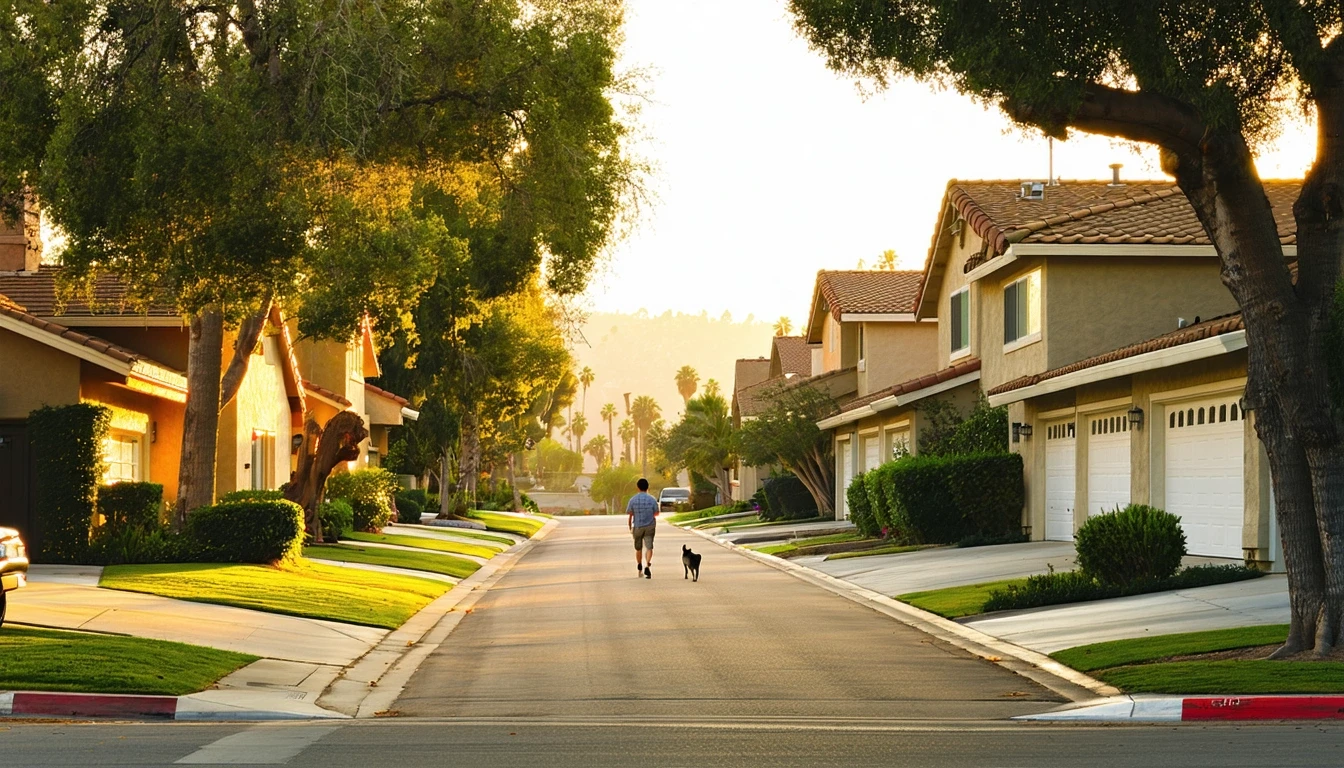
Chula Vista’s housing market operates under the gravitational pull of San Diego’s broader metro economy. The city functions as both a residential anchor for families seeking space and a commuter hub for workers tied to jobs throughout the region. That dual role keeps demand elevated even as the housing stock skews toward single-family homes and townhomes rather than high-density apartments. The result is a market where home values of $647,100 reflect not just local wages—median household income sits at $101,984—but the premium attached to access, climate, and infrastructure that extends well beyond city limits.
What newcomers often misunderstand is that Chula Vista’s cost structure isn’t driven by scarcity alone. The city’s mixed urban form, with both residential neighborhoods and commercial corridors, creates pockets of walkability and transit access that reduce car dependency for some households. Rail service connects residents to the broader metro, and the 29-minute average commute reflects a balance between proximity and affordability that many coastal California cities can’t offer. But the housing market prices in that access, and the regional price parity—11% above the national baseline—means every component of ownership, from utilities to maintenance, carries a corresponding markup.
Renting in Chula Vista
At $2,035 per month, median gross rent in Chula Vista represents a substantial but not unmanageable share of income for households earning near the city’s median. Renters here face the typical California tension: high upfront costs but insulation from property tax increases, maintenance surprises, and the long-term capital risk that comes with ownership. For households prioritizing flexibility—whether due to job uncertainty, family planning, or simply testing the region—renting preserves mobility while locking in predictable monthly exposure.
Rental availability and pressure vary significantly by neighborhood. Areas closer to rail stations or along commercial corridors with grocery and food access tend to command higher rents but reduce transportation and errand costs. Renters who choose car-oriented neighborhoods farther from transit trade lower rent for higher transportation exposure and more time spent managing logistics. The city’s integrated park access—among the highest density in the region—means renters don’t sacrifice outdoor space as dramatically as they might in denser urban cores, which shifts the rent-versus-ownership calculus for households without children or those who don’t prioritize private yards.
Renewal volatility remains the dominant risk for renters. California’s statewide rent control framework caps annual increases for many units, but turnover resets that protection, and landlords price new leases to reflect current market conditions. Renters who stay in place benefit from predictability; those who move frequently face the full weight of market adjustments.
Owning a Home in Chula Vista
Ownership in Chula Vista begins with a significant capital requirement. A home valued at $647,100 demands substantial savings for a down payment, and the ongoing cost structure extends well beyond the mortgage itself. Property taxes in California operate under Proposition 13, which limits assessed value increases to 2% annually for existing owners but resets to purchase price upon sale. That structure rewards long-term ownership and penalizes mobility, creating a cost experience that diverges sharply over time depending on how long you stay.
Insurance costs in Chula Vista reflect California’s wildfire and earthquake exposure, even though the city itself sits in a relatively lower-risk zone compared to inland or hillside communities. Premiums have risen across the state as insurers reassess climate risk, and while Chula Vista’s coastal proximity moderates some wildfire exposure, the regional insurance market doesn’t price at the neighborhood level. Homeowners here absorb that broader risk pool, and the cost trajectory remains upward without clear ceiling.
Maintenance exposure in Chula Vista is shaped by the city’s climate and housing stock age. Year-round mild temperatures reduce heating system stress but increase cooling demand during summer months. Homes built in earlier decades may lack modern insulation or efficient HVAC systems, which translates to higher utility bills and eventual retrofit costs. Exterior maintenance—roofing, landscaping, stucco repair—occurs on a more predictable schedule than in climates with freeze-thaw cycles or heavy storm seasons, but the labor and material costs reflect California’s elevated price environment. Homeowners in neighborhoods with homeowners associations face additional monthly fees that bundle some exterior maintenance and amenity access, though those fees themselves tend to rise over time.
The value of ownership in Chula Vista is highest for households that plan to stay long enough to absorb transaction costs and benefit from Proposition 13’s assessment cap. For families with children, the city’s strong school and playground infrastructure makes ownership particularly attractive, as it locks in access to those resources without exposure to rent increases that might force relocation. The mixed land use and integrated park access mean homeowners don’t need large private lots to access green space, which shifts the cost-benefit calculation toward smaller homes or townhomes that might otherwise feel constraining.
Apartment vs House in Chula Vista — Cost Behavior Comparison
The distinction between renting an apartment and owning a house in Chula Vista isn’t just about monthly totals—it’s about which costs you control, which you absorb passively, and how your household’s daily logistics change based on housing type and location.
| Expense Category | Apartment | House |
|---|---|---|
| Cooling costs | Lower per-unit exposure due to shared walls and smaller square footage; landlord controls system efficiency | Owner bears full cooling load in climate requiring year-round temperature management; efficiency upgrades are owner’s decision and cost |
| Transportation exposure | Apartments cluster near transit and commercial corridors, reducing car dependency for some households | Single-family neighborhoods skew car-oriented; rail access exists but requires intentional location choice |
| Outdoor access | No private yard, but Chula Vista’s high park density reduces need; proximity to green space often walkable | Private yard provides control and convenience, especially for families; reduces reliance on public parks but increases maintenance burden |
| Errand logistics | Corridor-clustered grocery and food access favors apartments near commercial zones; car still useful but not always essential | Houses in residential-only areas require car for most errands; time cost and fuel exposure higher |
| Long-term cost predictability | Rent increases occur annually and reset at turnover; no control over timing or magnitude within legal caps | Property tax growth capped at 2% annually under Proposition 13; insurance and maintenance rise but owner controls timing of some expenses |
Methodology note: This comparison reflects differences driven by Chula Vista’s specific housing stock distribution, climate (year-round cooling demand), transit infrastructure (rail present but limited), and park density (exceptionally high). Categories like utilities, landscaping, or HOA fees are omitted because they vary too widely within each housing type to generalize meaningfully without numeric data. The table isolates cost behaviors that differ structurally based on how people actually live in apartments versus houses in this city.
Utilities & Upkeep Differences
Utility exposure in Chula Vista is dominated by electricity, both because natural gas plays a smaller role in a cooling-driven climate and because the region’s electricity rate of 33.60¢/kWh sits well above the national average. Apartment renters benefit from smaller conditioned spaces and shared-wall insulation, which reduces cooling load even when systems are older or less efficient. Homeowners, particularly those in detached single-family houses, face the full cost of cooling larger square footage, and older housing stock without modern insulation or efficient HVAC systems can push summer bills substantially higher.
For many households moving from regions where heating dominates, the shift to cooling-driven costs feels less predictable. Air conditioning runs not just during peak summer but extends into shoulder seasons, and the cumulative exposure over the year often surprises newcomers who underestimate how much California’s mild reputation still translates to meaningful temperature management costs. Homeowners have the option to invest in efficiency upgrades—better insulation, modern HVAC, smart thermostats—but those improvements require upfront capital and time to pay off through lower bills.
Exterior maintenance in Chula Vista reflects the region’s dry climate and stucco-heavy housing stock. Homes here don’t face the freeze-thaw or moisture intrusion common in other regions, but stucco cracks, roof wear, and landscape irrigation still demand attention. The cost of labor and materials in California’s price environment means even routine upkeep carries a premium. Homeowners in neighborhoods with HOAs may see some exterior work bundled into monthly fees, but those fees themselves tend to rise as the housing stock ages and deferred maintenance accumulates.
How Daily Logistics Shape Housing Costs in Chula Vista
The way Chula Vista’s infrastructure is arranged—where grocery stores cluster, how far you walk to a park, whether your commute requires a car—directly changes what housing actually costs to live in, not just to pay for. The city’s corridor-clustered food and grocery access means that households near commercial zones can reduce transportation costs and time spent on errands, while those in residential-only neighborhoods absorb higher fuel expenses and more driving. Rail transit offers a genuine alternative for some commute patterns, but the mixed mobility texture means car ownership remains important for most households, especially those with children or jobs outside the transit corridor.
For renters, choosing an apartment near transit or commercial access reduces the need for a second vehicle, which shifts hundreds of dollars per month from transportation into housing budget capacity. For homeowners, the decision to buy in a car-oriented neighborhood versus a more walkable pocket changes not just fuel costs but also how much time you spend managing household logistics. Families benefit significantly from Chula Vista’s strong school and playground infrastructure, but accessing that infrastructure without a car requires intentional location choice during the housing search. The city’s integrated park access—exceptionally high density compared to similar suburbs—means private yard space matters less for outdoor recreation, which allows some households to choose smaller homes or townhomes and reduce both purchase price and maintenance exposure.
How this article was built: In addition to public economic data, this article incorporates location-based experiential signals derived from anonymized geographic patterns—such as access density, walkability, and land-use mix—to reflect how day-to-day living actually feels in Chula Vista, CA.
Rent vs Buy: Long-Term Exposure in Chula Vista
The rent-versus-buy decision in Chula Vista isn’t a question of which costs less in year one—it’s about which cost structure aligns with your household’s tolerance for volatility, timeline, and need for control. Renters face annual increases within legal caps and full market resets at turnover, but they avoid property tax reassessments, insurance premium spikes, and the capital risk of a housing market that can shift quickly in response to regional economic conditions. Owners lock in property tax growth at 2% annually under Proposition 13, but they absorb the full weight of insurance increases, maintenance surprises, and the opportunity cost of capital tied up in a home.
Over time, the cost structures diverge. Renters who stay in place benefit from California’s rent control framework, which limits annual increases and provides predictability as long as they don’t move. But that predictability comes at the cost of flexibility—moving resets rent to market rate, and the longer you stay, the wider the gap between your controlled rent and what new tenants pay. Owners, by contrast, see property taxes rise slowly and predictably, but insurance and maintenance costs follow regional trends that are harder to control. The value of ownership grows the longer you stay, both because transaction costs amortize over more years and because Proposition 13’s assessment cap creates a widening advantage over time.
For households with children, ownership in Chula Vista provides stability in neighborhoods with strong school and playground access, and it eliminates the risk of rent increases forcing relocation during critical school years. For younger households or those with uncertain job trajectories, renting preserves the ability to move without selling into a potentially unfavorable market. The decision hinges less on financial optimization and more on how much control and predictability you need, and whether you’re prepared to absorb the risks that come with each path.
FAQs About Housing Costs in Chula Vista
Is it better to rent or buy in Chula Vista right now?
The answer depends on your timeline and tolerance for volatility. Renting at $2,035/month provides flexibility and avoids property tax reassessments, insurance increases, and maintenance surprises. Buying locks in long-term predictability through Proposition 13’s tax cap and eliminates rent increase risk, but it requires substantial upfront capital and commits you to absorbing all ownership costs. If you plan to stay five years or more and can handle the capital requirement, ownership builds advantage over time. If your job or family situation might change, renting preserves mobility without forcing a sale into uncertain market conditions.
How do property taxes work for homeowners in Chula Vista?
California’s Proposition 13 limits property tax increases to 2% per year based on your purchase price, but the tax resets to current market value when the home is sold. That means long-term owners benefit from predictable, slow-growing tax bills, while new buyers pay taxes based on today’s $647,100 median home value. The structure rewards staying in place and penalizes frequent moves, which makes ownership particularly valuable for households planning to remain in Chula Vista for a decade or more.
What drives utility costs higher for homeowners in Chula Vista compared to renters?
Homeowners in detached single-family houses cool larger square footage in a climate that requires year-round temperature management, and they bear the full cost of older or less efficient HVAC systems. At 33.60¢/kWh, electricity rates in Chula Vista sit well above the national average, and the cumulative cooling load over the year often surprises newcomers. Apartment renters benefit from smaller spaces and shared-wall insulation, which reduces cooling demand even when systems aren’t optimized. Homeowners can invest in efficiency upgrades, but those improvements require upfront capital and time to pay off.
Does Chula Vista’s transit access reduce the need for car ownership?
For some households, yes—but location matters significantly. Rail transit connects parts of Chula Vista to the broader San Diego metro, and neighborhoods near stations or commercial corridors with walkable grocery access allow some households to reduce car dependency. But the city’s mixed mobility texture means most residential areas remain car-oriented, and families or workers with jobs outside the transit corridor still need vehicles. Renters near transit can avoid the cost of a second car, which shifts budget capacity toward housing. Homeowners in car-dependent neighborhoods absorb higher fuel and maintenance costs as part of the ownership package.
How does Chula Vista’s housing market compare to the rest of the San Diego metro?
Chula Vista offers relatively more accessible home values compared to coastal San Diego neighborhoods, but it still reflects the broader metro’s supply constraints and demand pressure. The city’s median home value of $647,100 sits below some nearby areas but well above inland alternatives farther from job centers. The tradeoff is between proximity, access, and cost—Chula Vista provides rail transit, strong family infrastructure, and integrated park access at a price point that balances regional access with more space than denser urban cores. Households willing to move farther inland can find lower purchase prices, but they trade transit access and shorter commutes for that savings.
Making Housing Choices in Chula Vista
Housing costs in Chula Vista reflect the city’s position within the San Diego metro: close enough to command a premium for access, large enough to offer neighborhood variety, and structured in a way that rewards intentional location choices. Renters who prioritize flexibility and want to avoid property tax resets and maintenance risk will find monthly expenses manageable at the median, especially if they choose neighborhoods near transit or commercial corridors that reduce car dependency. Owners who plan to stay long enough to benefit from Proposition 13’s tax cap and can absorb the upfront capital requirement will find the cost structure increasingly favorable over time, particularly for families seeking stability in areas with strong school and park access.
The decision isn’t about which path costs less in the short term—it’s about which cost structure aligns with how you live, how long you plan to stay, and which risks you’re prepared to manage. Chula Vista’s housing market doesn’t offer easy answers, but it does offer clarity: the costs are transparent, the tradeoffs are definable, and the outcomes depend on choices you can control. For more context on the real cost pressures in Chula Vista beyond housing, or if you’re planning a move and need to understand logistics, explore moving company costs and options to make the transition smoother.