
Brentwood’s housing market reflects its role as one of Nashville’s most affluent suburbs, where executive households and established professionals anchor demand. The median home value of $842,400 and median rent of $2,459 per month position this city well above national norms, but the median household income of $181,576 per year suggests the market has calibrated around high-earning buyers and renters. What distinguishes Brentwood is not just price level—it’s the mismatch between infrastructure that supports walkability in pockets and a commercial landscape that remains sparse for daily errands. That combination creates a housing cost structure where location within Brentwood matters more than many newcomers expect, and where ownership tradeoffs hinge on long-term income stability rather than market timing.
How this article was built: In addition to public economic data, this article incorporates location-based experiential signals derived from anonymized geographic patterns—such as access density, walkability, and land-use mix—to reflect how day-to-day living actually feels in Brentwood, TN.
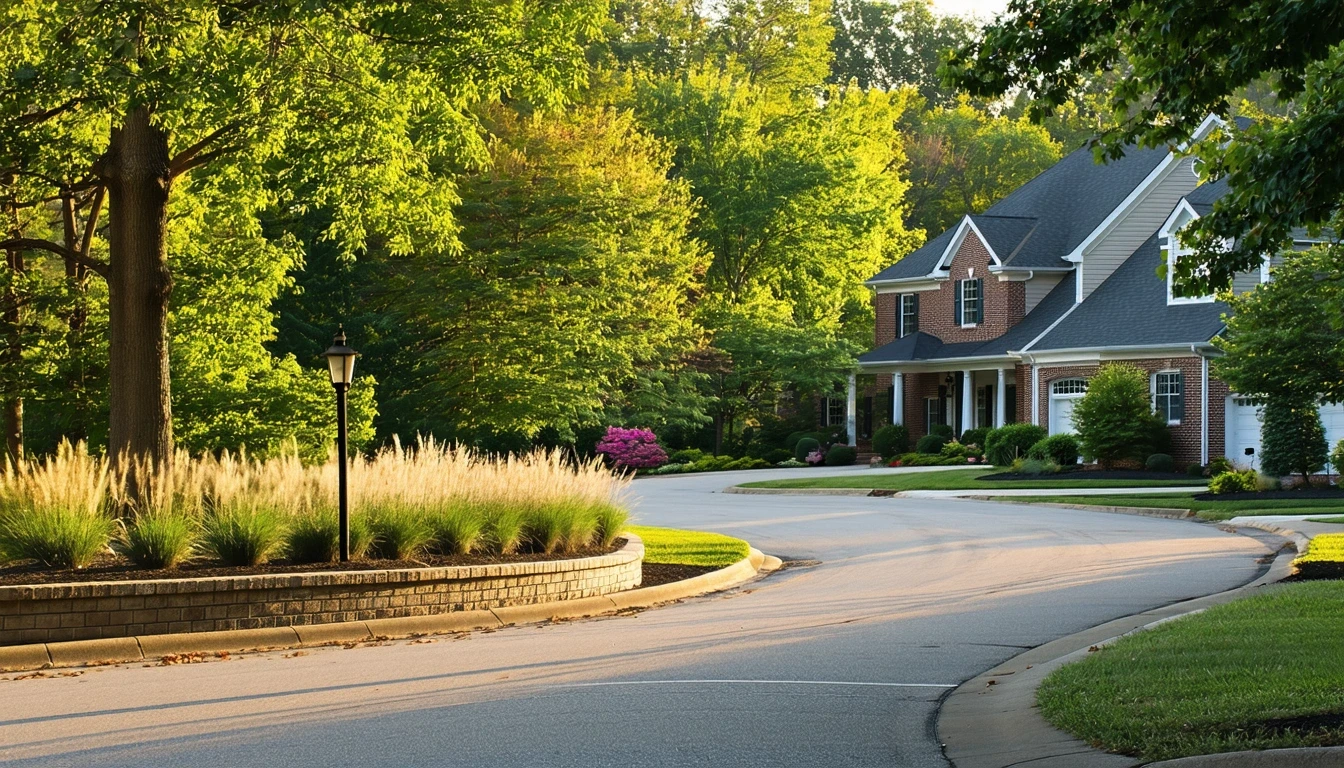
The Housing Market in Brentwood Today
Brentwood’s housing market is shaped by its proximity to Nashville’s corporate corridors, its reputation for highly rated schools, and a development pattern that prioritized large-lot single-family homes over dense multifamily construction. The result is a market where inventory remains constrained, turnover is slow, and price appreciation has historically outpaced both state and national averages. Buyers here are typically trading up from starter homes in surrounding counties or relocating from other high-cost metros where Brentwood’s price point feels familiar rather than shocking.
What surprises many newcomers is how Brentwood’s infrastructure doesn’t align with typical suburban expectations. The pedestrian-to-road ratio exceeds thresholds you’d associate with walkable neighborhoods, yet food and grocery density falls well below what would support car-free errands. This means that even in areas with sidewalks, greenways, and trail access, households still depend on vehicles for routine shopping and services. The mixed land use is present but spread thin, creating a lived experience where convenience requires planning rather than proximity.
The unemployment rate of 2.7% signals a tight labor market and stable employment base, which supports housing demand but also means that economic downturns tend to arrive later here and feel less severe. For buyers, this stability translates to less volatility in home values but also fewer distressed-sale opportunities. For renters, it means landlords face little pressure to discount or offer concessions outside of rare oversupply moments.
Renting in Brentwood
At $2,459 per month, Brentwood’s median gross rent reflects both the income profile of the area and the limited supply of purpose-built rental housing. Much of the rental inventory consists of single-family homes or townhomes rather than large apartment complexes, which creates a market where lease terms, maintenance responsiveness, and rent stability vary widely depending on whether you’re renting from an individual owner or a property management company.
Renters in Brentwood often face a tradeoff between location and space. Properties closer to commercial corridors or with easier access to I-65 command premiums, while homes in more secluded subdivisions may offer more square footage but require longer drives for groceries, dining, and services. The sparse accessibility of daily errands—evidenced by food and grocery establishment density falling below typical thresholds—means that renters without flexible schedules or reliable transportation will find routine tasks more time-intensive than the suburban setting might suggest.
Rent renewals in Brentwood tend to track income growth in the area rather than broader regional trends. Because the tenant base skews toward high earners, landlords have historically felt confident pushing rents upward during lease renewals, particularly in neighborhoods with top-rated school access. Renters should expect annual increases and should budget for the possibility that staying in place may cost more over time than moving to a comparable unit in a nearby city.
Owning a Home in Brentwood
Ownership in Brentwood begins with the $842,400 median home value, a figure that reflects both the quality of the housing stock and the competitive intensity among buyers. Most homes here are single-family detached properties on lots that exceed a quarter-acre, with build quality and finishes that cater to buyers accustomed to executive-grade housing. The market favors move-in-ready homes; fixer-uppers are rare, and when they do appear, they’re often purchased by investors or builders rather than individual buyers looking to renovate.
Property taxes in Tennessee are structured around locally assessed values and county millage rates, and while Williamson County’s rates are moderate relative to the state, the high assessed values in Brentwood mean that annual tax bills represent a significant ongoing cost. Homeowners should expect taxes to adjust as assessments are updated, and because Brentwood’s home values have appreciated consistently, tax exposure tends to rise over time even when rates remain stable.
Homeowners associations are common in Brentwood, particularly in subdivisions developed after 1990. These HOAs typically manage common areas, enforce architectural standards, and in some cases provide amenities like pools, tennis courts, or greenway access. Fees vary widely depending on the neighborhood, but they represent a fixed cost that doesn’t fluctuate with home value and must be factored into long-term ownership budgets. Some HOAs also impose special assessments for capital improvements, which can create unexpected expenses during years when roads, landscaping, or facilities require major work.
Maintenance and repair costs in Brentwood are influenced by the age of the housing stock and the expectations of the market. Homes here are expected to remain in excellent condition, which means that deferred maintenance can hurt resale value more than it would in less competitive markets. HVAC systems, roofing, and exterior finishes all face stress from Tennessee’s humid summers and occasional ice events in winter, and replacement costs reflect both the quality of materials expected and the labor rates in a high-income area.
Apartment vs House in Brentwood — Cost Behavior Comparison
| Expense Category | Apartment | House |
|---|---|---|
| Base Housing Cost | Rent near $2,459/month, includes structural maintenance | Mortgage on $842,400 median value, plus property taxes and insurance |
| Utilities (Cooling) | Smaller footprint reduces load; may share walls | Larger square footage and detached structure increase summer cooling costs in humid climate |
| Utilities (Heating) | Shared walls and smaller volume lower heating needs during occasional cold snaps | Higher volume and exposure increase natural gas or electric heating costs during winter cold |
| Maintenance Responsibility | Landlord handles HVAC, roofing, exterior; tenant handles interior only | Owner responsible for all systems, landscaping, and structural repairs; no cost ceiling |
| Errands & Logistics | Sparse grocery/food density requires driving regardless of unit type | Same sparse accessibility; larger homes may support bulk shopping to reduce trip frequency |
| HOA or Association Fees | Rare in rental apartments; typically included in rent if present | Common in subdivisions; adds fixed monthly cost independent of home value |
Why these categories differ in Brentwood: The table reflects Brentwood’s combination of humid subtropical climate (which drives cooling costs), sparse commercial density (which affects errands regardless of housing type), and a housing stock dominated by larger single-family homes with HOA governance. Categories like transportation or insurance were excluded because they don’t vary meaningfully between apartments and houses in this market—all households face similar car dependency and similar insurance rate structures.
Utilities & Upkeep Differences
Brentwood’s climate creates a utility cost profile where summer cooling dominates and winter heating remains secondary but noticeable. The electricity rate of 13.06¢/kWh is close to the state average, but the long cooling season—often running from May through September—means that air conditioning represents the largest single utility expense for most households. Larger homes with vaulted ceilings, bonus rooms, or poor insulation will see noticeable increases in summer bills, while smaller apartments or townhomes with shared walls and compact layouts face lower exposure.
Natural gas, priced at $20.33 per thousand cubic feet, is used primarily for heating and water heating in homes equipped with gas furnaces or tankless systems. Brentwood’s winters are generally mild, but occasional cold snaps—like the current 28°F temperature—require heating systems to cycle frequently for short periods. Homes with older or undersized HVAC systems may struggle with efficiency during these events, leading to higher-than-expected bills during winter months.
Maintenance exposure in Brentwood is shaped by humidity, which accelerates wear on exterior paint, siding, and roofing materials. Homeowners should expect to repaint or reseal exteriors more frequently than they would in drier climates, and should budget for roof replacements on a timeline that reflects both age and weather exposure. Landscaping costs are also higher here than in more arid regions, as lawns, shrubs, and trees require consistent watering and pest management to meet neighborhood standards.
Rent vs Buy: Long-Term Exposure in Brentwood
Renting in Brentwood offers predictability in the short term but exposes households to rent increases that track the area’s income growth rather than inflation. Because the rental market is supply-constrained and dominated by high-income tenants, landlords face little pressure to moderate increases, and renters should expect annual adjustments that reflect the competitive intensity of the market. Over a five- or ten-year period, cumulative rent increases can exceed what fixed-rate mortgage holders experience, but renters avoid exposure to property tax adjustments, special assessments, and major repair costs.
Ownership in Brentwood shifts risk from rent volatility to maintenance unpredictability and tax exposure. Property taxes will adjust as home values are reassessed, and because Brentwood’s values have appreciated consistently, owners should expect tax bills to rise over time even if rates remain stable. Maintenance costs are episodic rather than monthly, which means that owners must maintain reserves for HVAC replacement, roofing, and other capital expenses that can arrive suddenly and without warning.
The decision between renting and owning in Brentwood hinges on income stability and time horizon. Households with stable, high incomes and plans to stay for seven or more years will benefit from ownership’s fixed housing cost and the wealth-building potential of appreciation. Households with uncertain income trajectories, short time horizons, or limited reserves for unexpected repairs will find renting offers more flexibility and less downside risk, even if the monthly cost feels high relative to other markets.
FAQs About Housing Costs in Brentwood
Why are home values so high in Brentwood, TN?
Brentwood’s home values reflect its location within the Nashville metro, its school quality, and a housing stock that skews toward large, well-maintained single-family homes. The market has attracted high-income buyers for decades, and limited inventory has kept price appreciation strong even during broader market downturns.
Is renting in Brentwood more affordable than buying?
Renting avoids the upfront costs and maintenance exposure of ownership, but at $2,459 per month, rent consumes a significant share of income even for high earners. Over time, rent increases may exceed the fixed costs of a mortgage, making ownership more cost-effective for households planning to stay long-term.
What drives utility costs in Brentwood homes?
Summer cooling dominates utility expenses due to Brentwood’s humid climate and long warm season. Larger homes with poor insulation or older HVAC systems face the highest exposure, while smaller units or those with shared walls see lower bills. Winter heating costs are secondary but noticeable during cold snaps.
Are HOA fees common in Brentwood neighborhoods?
Yes, particularly in subdivisions built after 1990. HOA fees vary by neighborhood and typically cover common area maintenance, amenities, and architectural enforcement. Some HOAs also impose special assessments for capital projects, which can create unexpected costs during certain years.
How does Brentwood’s housing market compare to nearby Nashville suburbs?
Brentwood sits at the higher end of Nashville-area housing costs, with home values and rents exceeding most neighboring suburbs. The tradeoff is access to top-rated schools, low crime, and a stable, high-income community. Buyers and renters willing to consider nearby Franklin, Nolensville, or Spring Hill may find lower entry costs with similar suburban character.
Making Housing Choices in Brentwood
Brentwood’s housing market rewards households with high, stable incomes and long time horizons. The $842,400 median home value and $2,459 median rent are not outliers here—they reflect a market that has consistently attracted executive and professional households willing to pay for school quality, safety, and proximity to Nashville’s corporate centers. But the cost structure also creates pressure points: sparse daily errands accessibility means that convenience requires car ownership and planning, and the mismatch between walkable infrastructure and commercial density can frustrate households expecting a more integrated suburban experience.
For buyers, ownership in Brentwood is a bet on income stability and long-term appreciation. The market has delivered consistent value growth, but that growth comes with rising property taxes, HOA fees, and maintenance costs that don’t pause during economic uncertainty. For renters, the high cost of entry is offset by flexibility and freedom from repair exposure, but rent increases will track the area’s income growth rather than inflation, making long-term renting expensive relative to ownership.
Understanding where your money goes in Brentwood requires looking beyond the headline housing figures to the logistics, utilities, and time costs that shape daily life. Households that prioritize school access, safety, and proximity to Nashville’s job centers will find Brentwood’s housing costs justified. Those seeking walkable errands, diverse housing options, or lower entry costs should consider nearby alternatives before committing to this market.