
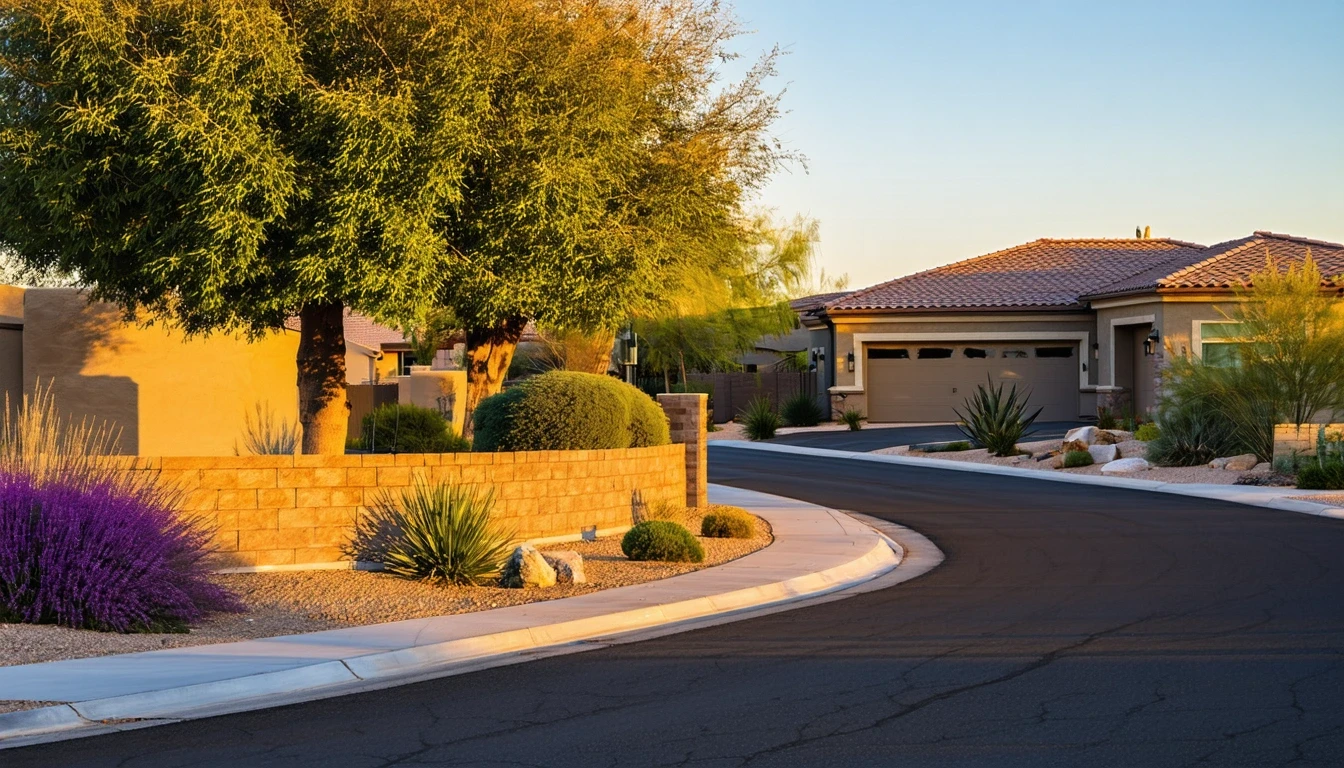
Apartment vs House: Monthly Cost Comparison in Boulder City
The table below illustrates how monthly housing expenses typically differ between apartments and single-family homes in Boulder City. Figures reflect local market conditions and desert climate exposure. This is a diagnostic snapshot, not a budget guarantee.
| Expense Category | Apartment | House |
|---|---|---|
| Base Housing Cost | $1,262/month median rent | Mortgage on $401,100 median home (varies by down payment and rate) |
| Cooling (Summer Dominance) | Lower square footage reduces load; may be included in some complexes | Higher square footage and sun exposure increase cooling costs substantially during extended desert summer |
| Exterior Maintenance | Managed by landlord or HOA | Owner responsible for desert landscaping, sun-damaged surfaces, and stucco or siding upkeep |
| Water & Landscaping | Often included or minimal; limited yard responsibility | Desert-appropriate landscaping and irrigation costs fall to owner; water bills reflect outdoor use |
Why these categories? Boulder City’s desert climate and low-rise housing stock create meaningful differences in cooling exposure, exterior maintenance, and water use. Categories like heating or snow removal are omitted because they don’t vary significantly here. Rent reflects the city’s limited rental inventory; ownership costs reflect the dominant single-family market and climate-driven upkeep.
—
The Housing Market in Boulder City Today
Boulder City operates as a small, master-planned community within the Las Vegas metro, but its housing pressure behaves differently than the broader region. With a median home value of $401,100 and median rent of $1,262 per month, the city reflects a stable, low-density market shaped by strict growth controls and a residential character that prioritizes single-family homes over high-density development.
What newcomers often misunderstand is how Boulder City’s structure—limited commercial density, sparse daily errands accessibility, and car-dependent logistics—shapes the housing decision. The city has pockets of walkable infrastructure, and both residential and commercial land use are present, but food and grocery establishment density falls below typical thresholds. This means that regardless of whether you rent or buy, your household will rely heavily on driving for routine errands, and trip planning becomes a regular part of weekly life.
The unemployment rate of 5.8% and median household income of $76,402 suggest a stable, middle-income population, but the housing market’s limited inventory—especially for renters—creates friction for newcomers trying to enter quickly. Boulder City is not a high-churn market; it’s a place where people stay, and housing turnover is slower than in more transient suburban nodes.
—
Renting in Boulder City
Rental inventory in Boulder City is constrained by the city’s low-rise, single-family-dominant housing stock. The median gross rent of $1,262 per month reflects a market where apartments and rental homes are less common than ownership units, and availability can tighten quickly during periods of regional in-migration.
Renters here face a tradeoff: flexibility and lower upfront costs come with limited choice and the reality that most rentals are older single-family homes or small apartment complexes rather than large multifamily buildings. The city’s sparse errands accessibility means renters will need a car and will spend time driving to grocery stores, pharmacies, and other daily needs. Bus service is present, but with only 4.2% of workers telecommuting and 35.8% facing long commutes, public transit does not meaningfully reduce car dependency for most households.
Rental pressure in Boulder City is less about rapid rent escalation and more about scarcity. When units turn over, they fill quickly, and renters should expect to move decisively when they find a suitable option. The city’s climate—characterized by extended cooling seasons and triple-digit summer heat—also means renters should clarify whether utilities are included and understand that summer electricity bills can spike substantially if cooling costs fall to the tenant.
—
Owning a Home in Boulder City
Ownership in Boulder City centers on single-family homes in a low-rise, mixed-use environment. The median home value of $401,100 positions the city as accessible relative to many parts of the Las Vegas metro, but ownership here comes with desert-specific exposures that renters avoid.
Homeowners are responsible for exterior maintenance in a climate where sun exposure, heat, and occasional wind create ongoing wear on roofing, stucco, paint, and landscaping. Desert-appropriate yards require irrigation management, and water costs reflect outdoor use. Cooling dominates summer utility bills, and homes with larger square footage or older HVAC systems face higher seasonal exposure. At 13.77¢ per kWh, electricity rates are moderate, but usage intensity during the extended cooling season drives total costs.
Ownership also means navigating Boulder City’s governance structure, which includes strict development controls and a community character that resists rapid change. Homeowners gain stability and control but take on long-term exposure to maintenance cycles, climate-driven wear, and the logistics burden created by sparse daily errands infrastructure. Unlike renting, ownership in Boulder City is a bet on staying put and managing a property in a low-density, car-dependent environment.
—
Utilities & Upkeep Differences
Utility and maintenance exposure in Boulder City is shaped by the desert climate and the city’s low-rise housing stock. Cooling is the dominant cost driver during the long summer season, and the difference between an apartment and a house is substantial. Apartments, with lower square footage and shared walls, reduce cooling loads and often benefit from some insulation effect. Houses, especially older or poorly insulated ones, face higher exposure due to larger conditioned space, direct sun on all sides, and the thermal stress of triple-digit heat.
For illustrative context, a typical household using around 1,000 kWh per month would see a summer electricity bill near $138 before fees and taxes, but actual usage in a larger home during peak heat can push consumption significantly higher. Owners of single-family homes should expect noticeable seasonal swings and plan for cooling to dominate the summer budget.
Maintenance differences are also climate-driven. Renters in apartments generally avoid exterior upkeep, while house renters may face some yard or landscaping responsibilities depending on lease terms. Homeowners carry the full burden: desert landscaping requires irrigation management, exterior paint and stucco degrade under intense sun, and roofing materials face shorter lifespans than in milder climates. These are not emergency costs, but they are recurring and predictable, and they compound over time.
Water costs in Boulder City reflect outdoor use more than indoor consumption. Homes with grass or non-native landscaping face higher bills, while properties using desert-appropriate plants and rock landscaping reduce exposure. Apartments typically minimize or eliminate this variable entirely.
—
Rent vs Buy: Long-Term Exposure in Boulder City
The rent-versus-buy decision in Boulder City is less about monthly payment math and more about exposure, control, and how long you plan to stay. Renting offers flexibility and insulates you from maintenance, climate-driven wear, and the logistics of managing a property in a car-dependent city. You avoid the risk of major systems failing, the cost of desert landscaping, and the long-term exposure to cooling and exterior upkeep. But you also accept limited inventory, slower turnover, and the reality that rental options in Boulder City are constrained by the city’s single-family-dominant housing stock.
Ownership provides stability and control but transfers all climate and maintenance exposure to you. Over time, homeowners in Boulder City face recurring costs tied to the desert environment: HVAC systems work harder and wear out faster, exterior surfaces degrade under sun and heat, and landscaping requires ongoing water and care. These costs are not catastrophic, but they are persistent, and they grow as the home ages. Ownership also locks you into Boulder City’s car-dependent logistics structure—sparse errands accessibility and limited family infrastructure mean you’ll drive frequently, and that pattern doesn’t change with tenure.
The long-term tradeoff is between predictability and flexibility. Renters face potential rent adjustments but avoid the compounding cost of ownership in a desert climate. Owners gain equity and stability but take on the full weight of maintaining a home in an environment that accelerates wear. Neither path is inherently better; the fit depends on how long you plan to stay, how much control you need, and whether you’re prepared to manage the ongoing exposure that comes with owning a home in Boulder City.
—
How Day-to-Day Living Shapes Housing Choices in Boulder City
Housing decisions in Boulder City are inseparable from how the city’s physical structure shapes daily life. The city has pockets of pedestrian infrastructure—some areas show a high ratio of sidewalks to roads—but food and grocery establishment density falls well below typical thresholds. This means that even in the more walkable parts of town, you’ll still need a car for routine errands. Bus service is present, but it doesn’t reduce car dependency for most households, and with over a third of workers facing long commutes, transportation becomes a recurring cost and time commitment regardless of whether you rent or own.
For families, the limited density of schools and playgrounds adds another layer of logistics. You’ll likely drive kids to activities, and the lack of nearby family infrastructure means more time spent coordinating trips. Renters and owners alike face this reality, but ownership amplifies it because you’re locked into a location, and if that location requires frequent driving, the cost and time burden compounds over years.
Clinics are present in Boulder City, but there’s no hospital, so medical needs beyond routine care require travel. The city’s low-rise, mixed-use character supports some neighborhood activity, but the sparse errands accessibility and limited transit viability mean that convenience is not a given. Housing here works best for households that accept car dependency as the baseline and plan their routines around driving, not walking or transit.
How this article was built: In addition to public economic data, this article incorporates location-based experiential signals derived from anonymized geographic patterns—such as access density, walkability, and land-use mix—to reflect how day-to-day living actually feels in Boulder City, NV.
—
FAQs About Housing Costs in Boulder City
Is Boulder City more affordable than the rest of the Las Vegas metro?
Boulder City’s median home value of $401,100 and median rent of $1,262 per month position it as moderately accessible within the broader metro, but affordability depends on household income and how you value stability versus convenience. The city’s limited rental inventory and car-dependent logistics add friction that purely numeric comparisons don’t capture.
What drives utility costs in Boulder City homes?
Cooling dominates summer utility bills due to the extended desert heat season. Larger homes, older HVAC systems, and poor insulation increase exposure. Electricity rates of 13.77¢ per kWh are moderate, but usage intensity during triple-digit heat drives total costs higher than milder climates.
Does Boulder City have enough rental options for newcomers?
Rental inventory is limited due to the city’s single-family-dominant housing stock. Turnover is slower than in higher-density suburban markets, and availability tightens during regional in-migration periods. Renters should expect to move quickly when suitable units become available.
How does Boulder City’s car dependency affect housing decisions?
Sparse daily errands accessibility and limited transit viability mean nearly all households rely on cars for groceries, errands, and commuting. This adds transportation costs and time burden regardless of whether you rent or own, and it’s a factor that persists throughout your time in the city.
What maintenance challenges do Boulder City homeowners face?
Desert climate accelerates wear on roofing, exterior paint, stucco, and landscaping. Sun exposure, heat, and occasional wind create recurring maintenance needs. HVAC systems work harder and require more frequent replacement. Water costs reflect outdoor irrigation, especially for non-native landscaping.
—
Making Housing Choices in Boulder City
Housing in Boulder City is shaped by the city’s small scale, strict growth controls, and desert environment. Renters gain flexibility but face limited inventory and must accept car dependency and sparse errands accessibility as baseline conditions. Owners gain stability and control but take on long-term exposure to climate-driven maintenance, cooling costs, and the logistics burden of living in a low-density, car-dependent city.
The decision comes down to how long you plan to stay, how much control you need, and whether you’re prepared to manage the recurring costs and time commitments that come with owning a home in this environment. Monthly spending in Boulder City reflects not just housing costs but the transportation and logistics friction created by the city’s structure. For households that value quiet, stability, and a slower pace, Boulder City offers a distinct alternative to the broader Las Vegas metro. For those who prioritize convenience, walkability, or transit access, the city’s tradeoffs may outweigh its affordability.
Understanding how Boulder City’s housing market, climate, and daily logistics interact is essential to making a decision that fits your household’s priorities and timeline. The numbers matter, but the structure of daily life—how you move, where you shop, and how you manage a home in the desert—shapes the true cost of living here.
—