
Carlsbad’s housing market in 2026 reflects the tension between coastal California desirability and the financial barriers that come with it. With a median home value of $1,070,500 and median rent at $2,477 per month, the city sits firmly in the high-cost tier of the San Diego metro area. But the cost structure here isn’t just about sticker prices—it’s about how housing location, infrastructure access, and long-term exposure shape what households actually experience. For newcomers weighing rent against ownership, or established residents reconsidering their position, understanding how Carlsbad’s housing costs behave over time is essential.
This article breaks down the mechanics of housing expense in Carlsbad: what drives rent and ownership costs, how apartments and houses differ in practice, and where households gain or lose control as market conditions shift. The goal is not to tell you what you can afford—that depends on income, savings, and priorities—but to explain what you’re exposed to if you choose to live here.
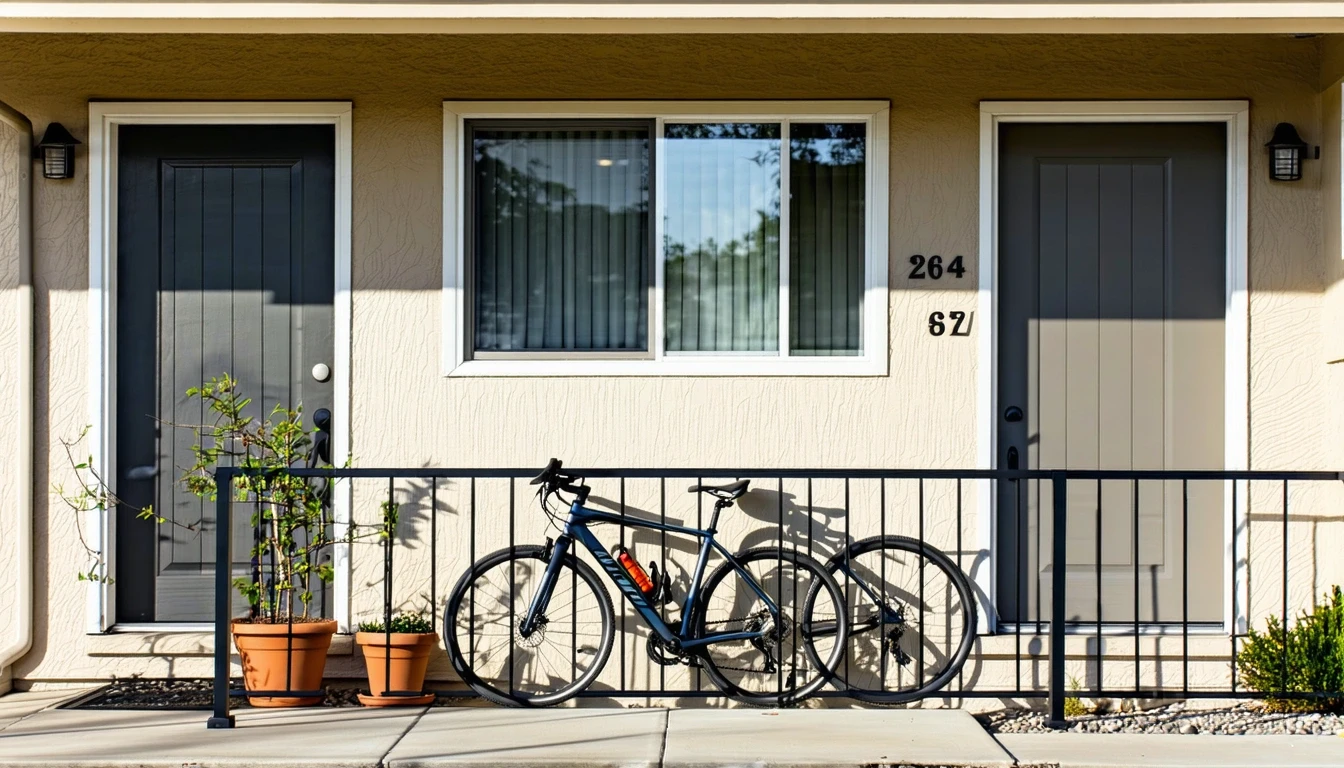
The Housing Market in Carlsbad Today
Carlsbad’s housing market is shaped by three forces that don’t always align: its position as a mature coastal suburb, its role as a retirement destination, and its integration into the broader San Diego economy. The city’s median household income of $134,139 per year is well above national norms, but even at that level, the median home value represents roughly eight times annual income—a ratio that places homeownership out of reach for many single-income households and stretches dual-income buyers.
What distinguishes Carlsbad from inland alternatives is not just price, but the infrastructure that comes with it. The city has rail transit service and walkable pockets with a high pedestrian-to-road ratio, meaning that some neighborhoods offer genuine alternatives to car dependency. Errands and groceries cluster along corridors rather than spreading evenly, so where you live within Carlsbad determines how much time and fuel you spend on daily logistics. For renters and buyers alike, this creates a secondary decision layer: proximity to transit and errands corridors can reduce transportation costs and time burden, but those locations often command a premium.
The city’s designation as a retirement community also signals something about housing stock and governance. Mature neighborhoods tend to have established HOAs, stricter maintenance standards, and older infrastructure—all of which affect long-term ownership costs. Buyers entering this market should expect that many properties come with governance structures that limit autonomy but enforce consistency.
Renting in Carlsbad
At $2,477 per month median gross rent, Carlsbad’s rental market sets a high floor. This figure reflects not just housing supply constraints common across coastal California, but also the city’s appeal to higher-income households and retirees who rent by choice rather than necessity. For newcomers, this means rental availability exists, but the market is not structured to accommodate cost-sensitive renters—those seeking below-median options will find limited inventory and significant competition.
Renting in Carlsbad offers one major advantage over ownership: it shifts long-term financial risk to the landlord. Property taxes, major maintenance, and insurance volatility are not the tenant’s problem. But renters face their own exposure: lease renewals in high-demand coastal markets can bring sharp increases, and rent control protections in California vary by jurisdiction and housing type. Tenants in newer buildings or single-family rentals may have less protection than those in older multifamily stock.
Location within the city matters more for renters than for owners, because renters typically stay shorter periods and have less control over their surroundings. A rental near the rail line or within walking distance of grocery corridors reduces the need for a second vehicle and cuts time spent on errands—a meaningful quality-of-life difference in a region where traffic congestion is routine. Renters who prioritize convenience should weigh the rent premium for transit-adjacent locations against the ongoing cost of car dependency in more isolated neighborhoods.
Owning a Home in Carlsbad
Ownership in Carlsbad begins with a significant capital commitment. A $1,070,500 median home value implies substantial down payment requirements and ongoing exposure to property taxes, insurance, and maintenance—all of which escalate over time in ways renters don’t experience. Buyers gain control and stability, but they also absorb the full cost of housing volatility, from tax assessments to storm damage to aging systems.
Property taxes in California are governed by Proposition 13, which caps assessed value increases for existing owners but resets the tax base at purchase. This means new buyers face higher tax bills than long-term residents, even for comparable homes. The structure rewards staying in place and penalizes mobility, a dynamic that matters in a city where many residents are retirees aging in place. First-time buyers should anticipate that their tax burden will be higher than their neighbors’ for years, until inflation and market growth bring others closer to their level.
Maintenance and upkeep in Carlsbad reflect the city’s coastal location and housing age. Salt air accelerates exterior wear, and many properties are decades old, meaning roofs, HVAC systems, and water heaters are often near or past replacement age. Buyers should budget for these capital expenses as routine rather than exceptional. HOAs, common in planned communities and condo developments, add another layer of cost—monthly fees that cover landscaping, exterior maintenance, and sometimes utilities, but also restrict what owners can do with their property.
The trade-off is predictability. Owners lock in their housing cost structure at purchase and control when and how they invest in improvements. Renters face uncertainty at every lease renewal. For households planning to stay in Carlsbad long-term, ownership shifts risk from volatility to magnitude.
Apartment vs House in Carlsbad — Cost Behavior Comparison
| Expense Category | Apartment | House |
|---|---|---|
| Cooling Costs (Summer) | Lower exposure; shared walls reduce heat gain, smaller square footage | Higher exposure; standalone structure, larger conditioned space, more sun exposure |
| Exterior Maintenance | Covered by landlord or HOA; tenant/owner pays indirectly through rent/fees | Owner’s responsibility; coastal salt air accelerates paint, roof, and trim wear |
| Governance & Fees | HOA fees common in condos; typically cover exterior, landscaping, sometimes utilities | HOA fees common in planned communities; often cover landscaping and common areas only |
| Transit & Errands Access | More likely to be near rail or errands corridors; reduces car dependency | More likely in residential-only zones; increases reliance on driving for daily needs |
| Parking & Storage | Limited or assigned; may incur separate fees; less space for vehicles or equipment | Garage and driveway standard; accommodates multiple vehicles and storage needs |
What drove these differences: Carlsbad’s housing stock includes both dense multifamily developments near transit and single-family neighborhoods in car-dependent areas. Coastal climate and mature infrastructure mean exterior maintenance and cooling exposure vary significantly by building type. The city’s corridor-clustered errands pattern makes location—and therefore housing type—a key determinant of daily logistics costs.
Why some categories were excluded: Heating costs are minimal in Carlsbad’s mild coastal climate and do not differ meaningfully by housing type. Water and trash costs are often bundled into rent or HOA fees regardless of structure. Insurance requirements vary more by ownership status than by apartment vs house distinction.
Utilities & Upkeep Differences
Utility exposure in Carlsbad is shaped by California’s above-average electricity rates—33.60¢/kWh—and the city’s coastal climate, which moderates temperature extremes but creates year-round cooling demand during inland heat events. Apartments, with shared walls and smaller square footage, face lower cooling costs than standalone houses. Natural gas, priced at $21.94/MCF, is rarely a major expense here; heating demand is minimal, and gas is more commonly used for water heating and cooking.
For house owners, exterior maintenance is a recurring cost that apartment dwellers avoid. Coastal salt air accelerates deterioration of paint, roofing materials, and metal fixtures, meaning repainting and roof replacement cycles are shorter than in inland areas. Landscaping in a region with limited rainfall often requires irrigation, adding to water bills. Apartment renters and condo owners typically offload these costs to landlords or HOAs, though they pay indirectly through rent or fees.
The difference in upkeep exposure is not just financial—it’s also about control and time. House owners decide when to replace an aging HVAC system or repaint trim; apartment residents wait for the landlord or HOA to act. The trade-off is between autonomy and obligation.
Rent vs Buy: Long-Term Exposure in Carlsbad
The rent-versus-buy decision in Carlsbad is not primarily about monthly cost—it’s about which risks you’re willing to carry and over what time horizon. Renters face lease renewal volatility and limited control over their housing situation, but they avoid property tax resets, major maintenance surprises, and the transaction costs of buying and selling. Owners gain stability and equity accumulation, but they absorb the full cost of housing system aging, tax increases, and market downturns.
In Carlsbad specifically, the ownership risk profile is amplified by high entry costs and the city’s mature housing stock. A buyer purchasing at the median home value takes on a large, illiquid asset in a market where prices are already elevated. If the market softens, the financial cushion is thin. If the property requires major repairs—roof, HVAC, foundation work—the owner pays the full cost, which can run tens of thousands of dollars. Renters avoid this exposure entirely, though they pay for it indirectly through higher rent over time.
The structural advantage of ownership in Carlsbad is predictability. California’s Proposition 13 limits property tax growth for existing owners, and fixed-rate mortgages lock in the largest component of housing cost. Renters, by contrast, are exposed to market-rate adjustments at every lease renewal, and in a high-demand coastal market, those adjustments can be significant. Over a decade, the renter’s cost trajectory is uncertain; the owner’s is mostly known.
For households planning to stay in Carlsbad long-term—retirees aging in place, families with school-age children—ownership offers control and stability that justify the upfront cost. For those with shorter time horizons, uncertain income, or a preference for mobility, renting avoids the risk of being locked into an expensive, illiquid asset in a market that may not appreciate as expected.
How Day-to-Day Living Shapes Housing Decisions in Carlsbad
Housing costs in Carlsbad extend beyond rent and mortgage payments—they include the time, fuel, and friction involved in daily errands and commuting. The city’s infrastructure creates meaningful variation in how households experience these costs depending on where they live. Neighborhoods with rail access and proximity to grocery and retail corridors allow residents to reduce car trips, shorten errand loops, and in some cases eliminate the need for a second vehicle. In contrast, homes in residential-only zones require driving for nearly every task, adding both direct costs (fuel, parking, vehicle wear) and indirect costs (time, scheduling complexity).
This pattern matters because Carlsbad’s errands and services cluster along corridors rather than distributing evenly across the city. A household located within walking or biking distance of these corridors can complete weekly shopping, pharmacy runs, and routine appointments without a car, reducing transportation expenses and freeing up time. A household in a more isolated neighborhood faces a different reality: every grocery trip, every doctor’s visit, every school pickup requires a vehicle and planning around traffic and parking.
For renters weighing housing tradeoffs, this dynamic is critical. A rental near transit or errands corridors may carry a higher monthly rent, but it can eliminate the cost of a second car—insurance, registration, fuel, maintenance—which often exceeds the rent premium. For buyers, the calculus is similar but more permanent: a home in a walkable pocket locks in lower transportation costs for as long as you own it, while a home in a car-dependent zone commits you to driving for the duration of ownership.
The city’s mixed building heights and land-use patterns mean these tradeoffs are not abstract—they are visible in the layout of neighborhoods and the density of services. Buyers and renters should evaluate housing options not just on price per square foot, but on how location affects daily logistics and long-term transportation exposure.
FAQs About Housing Costs in Carlsbad
Is Carlsbad’s housing market more expensive than other San Diego suburbs?
Carlsbad sits in the higher tier of San Diego County housing costs, reflecting its coastal location, mature infrastructure, and appeal to higher-income households. Median home values and rents are above many inland alternatives, but comparable to other coastal North County cities. The premium reflects access to beaches, rail transit, and established neighborhoods, not just housing scarcity.
How does Carlsbad’s retirement community status affect housing costs?
Carlsbad’s designation as a retirement city signals a mature housing stock, established HOAs, and infrastructure oriented toward aging-in-place households. This often translates to higher maintenance standards, stricter governance, and older homes requiring capital improvements. Buyers should anticipate that many properties come with HOA fees and deferred maintenance costs that newer developments in growth cities might not carry.
Do renters in Carlsbad have protection against large rent increases?
California’s statewide rent control laws cap annual increases at 5% plus inflation for buildings over 15 years old, with some exemptions. Renters in newer buildings or single-family homes may not have these protections. Lease terms and building age determine exposure, so renters should verify their specific situation before assuming protection.
What are the main hidden costs of owning a home in Carlsbad?
Beyond mortgage and property taxes, Carlsbad homeowners face coastal maintenance costs (salt air accelerates exterior wear), HOA fees in many neighborhoods, higher property tax resets under Proposition 13 for new buyers, and the cost of replacing aging systems in older homes. These expenses are predictable but often underestimated by first-time buyers.
Does living near Carlsbad’s rail line reduce overall housing costs?
Proximity to rail transit and errands corridors can reduce transportation costs—fewer car trips, potential to eliminate a second vehicle, lower fuel and maintenance expenses—but homes and rentals in these areas typically carry a location premium. The net effect depends on household size, commute patterns, and whether the household can actually reduce vehicle ownership. For car-dependent households, the premium may not pay off; for those who can walk or bike for errands, the savings can be substantial.
Making Housing Choices in Carlsbad
Carlsbad’s housing market rewards planning and punishes assumptions. The high cost of entry—whether renting at $2,477 per month or buying at $1,070,500—demands that households understand not just what they’re paying, but what they’re exposed to over time. Renters gain flexibility and avoid maintenance risk, but face lease renewal uncertainty in a high-demand market. Owners gain control and predictability, but absorb the full cost of taxes, upkeep, and market volatility.
What makes Carlsbad distinct is how location within the city affects the total cost of living. Housing near rail transit and errands corridors reduces transportation expenses and daily friction, while homes in car-dependent zones lock in higher ongoing costs for fuel, vehicle maintenance, and time. These differences are not marginal—they compound over years and affect household budgets as much as rent or mortgage payments.
For newcomers deciding whether Carlsbad fits their financial situation, the question is not just whether you can afford the rent or down payment, but whether the city’s cost structure aligns with your household’s priorities, time horizon, and tolerance for risk. The housing market here is expensive, but it is also structured in ways that reward strategic location choices and long-term commitment.
How this article was built: In addition to public economic data, this article incorporates location-based experiential signals derived from anonymized geographic patterns—such as access density, walkability, and land-use mix—to reflect how day-to-day living actually feels in Carlsbad, CA.