
If you’re weighing whether to rent or buy in Sammamish, you’re facing a decision shaped by one of the Eastside’s most family-focused suburban markets. Sammamish isn’t a city where renters and buyers compete on equal footing—ownership dominates the landscape, and the housing stock, governance structures, and cost behaviors reflect that. Understanding how housing costs work here means recognizing what drives demand, what adds ongoing expense, and how the market rewards or penalizes different household types over time.
This guide explains housing cost structure and tradeoffs in Sammamish, including what shapes rent and ownership exposure, how taxes and fees layer onto monthly obligations, and which housing decisions carry long-term financial consequences. Whether you’re comparing apartments to houses or trying to understand what ownership actually costs in this market, the goal is to help you see how housing works here—not just what it costs on paper.
The Housing Market in Sammamish Today
Sammamish’s housing market is defined by its role as a planned suburban community built largely after the 1990s, designed to attract families prioritizing schools, space, and proximity to Eastside tech employers. The city sits on the eastern shore of Lake Sammamish, connected to Bellevue and Redmond by major commute corridors, and its reputation as a high-performing school district has made it a magnet for households willing to pay a premium for stability and access.
What newcomers often misunderstand is how thoroughly ownership-oriented this market is. The housing stock skews heavily toward single-family homes in master-planned neighborhoods, many governed by homeowners associations. Multifamily housing exists but remains a small fraction of total inventory, and rental options are correspondingly limited. This isn’t a city where renting and buying offer comparable lifestyle flexibility—the market is structured to favor ownership, and renters face tighter competition and fewer choices as a result.
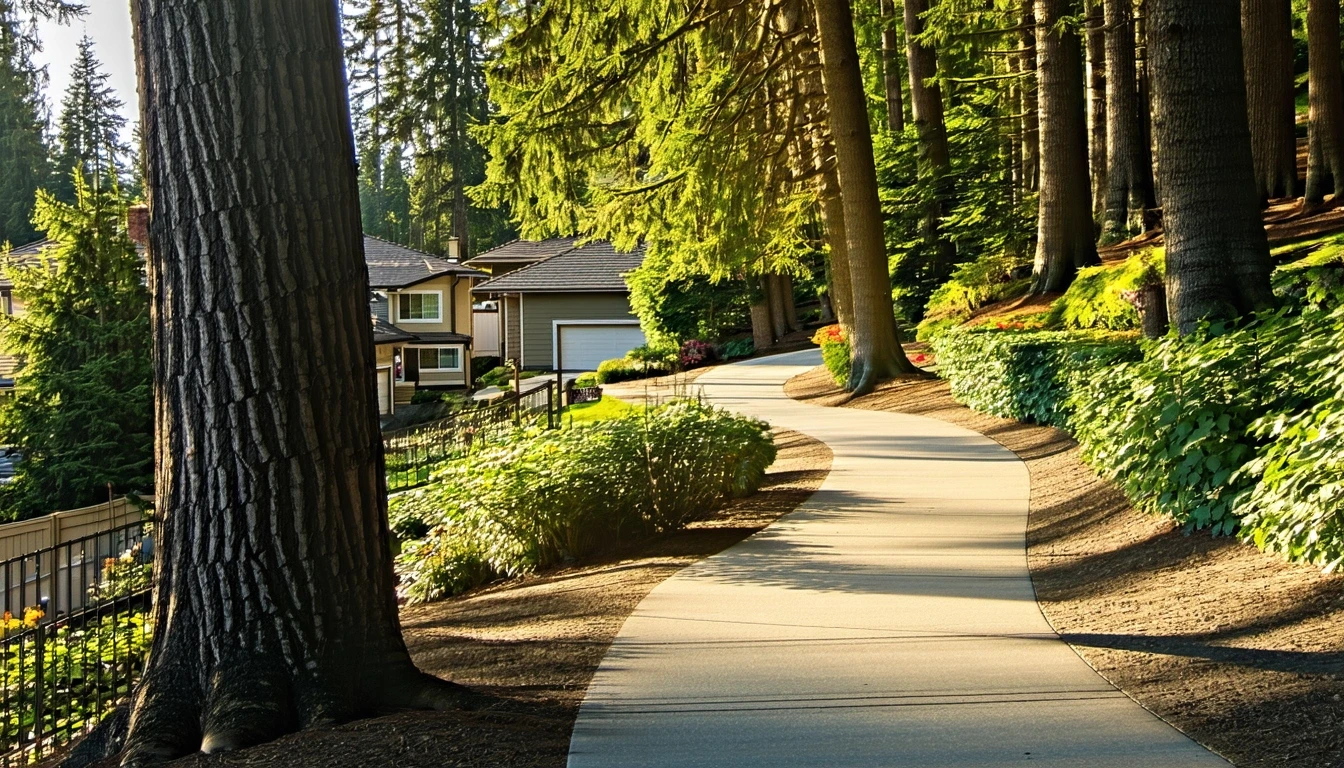
Demand is driven by families seeking space, school access, and a predictable suburban environment. That demand keeps pressure on both ownership and rental markets, but the scarcity of rental stock means renters experience that pressure more acutely. The wooded, hilly terrain that gives Sammamish its character also constrains development density, reinforcing the dominance of detached homes and limiting the supply of apartments and townhomes.
Compared to denser Eastside cities like Bellevue or Kirkland, Sammamish offers more space and a quieter, more residential feel. Compared to farther-out suburbs like Snoqualmie or Maple Valley, it trades some affordability for shorter commutes and stronger school reputations. The market reflects those tradeoffs clearly: it’s expensive, but the expense buys proximity, performance, and predictability.
Renting in Sammamish
Renting in Sammamish means competing for a limited pool of units in a market where most housing is designed for ownership. Apartments and rental homes exist, but they’re outnumbered by owner-occupied single-family houses, and that imbalance creates persistent pressure on availability and cost. Renters here are often households in transition—relocating for work, waiting to buy, or prioritizing flexibility over long-term roots—and the rental market reflects that transience with higher turnover and less diversity in housing types.
Rental pressure is amplified by Sammamish’s location. The city’s proximity to Bellevue, Redmond, and Issaquah makes it attractive to tech workers and professionals who want suburban space without sacrificing commute access. That demand keeps rental inventory tight, especially for single-family homes and townhomes, which are more commonly rented by families than by individuals or couples. Apartments, where they exist, tend to cluster near commercial areas or along major roads, and they fill quickly when turnover occurs.
Renters should expect variation in cost and availability based on location within the city, housing type, and proximity to schools or commute routes. Units closer to major employers or highly rated schools command premiums, while those farther from transit corridors or in older developments may offer more flexibility. The rental experience here is less about finding bargains and more about timing and tradeoffs—space versus location, lease flexibility versus stability, proximity versus cost.
What distinguishes renting in Sammamish from renting in denser Eastside cities is the lack of urban amenities within walking distance. This is a car-dependent suburb, and renters without vehicles face significant lifestyle constraints. Grocery stores, dining, and services are spread across commercial centers that require driving, and public transit options are limited compared to Seattle or Bellevue. Renting here works best for households who value space and schools over walkability and nightlife, and who are comfortable with the suburban rhythm of driving to most destinations.
Owning a Home in Sammamish
Ownership in Sammamish is the default housing path, and the market is structured to support long-term homeowners rather than speculative buyers or short-term residents. Most homes sit in master-planned neighborhoods governed by homeowners associations, which means ownership comes with ongoing fees, governance rules, and shared responsibility for common spaces and amenities. These HOAs are a defining feature of the Sammamish ownership experience—they provide predictability and maintain neighborhood standards, but they also add a recurring cost layer that renters don’t face.
Property taxes in King County apply to all homeowners and represent a significant ongoing expense. Unlike some states where tax growth is capped or exemptions are common, Washington’s property tax structure allows for adjustments based on assessed value and voter-approved levies, which means tax exposure can shift over time as the city, county, and school district adjust funding needs. Owners should expect taxes to be a substantial part of the monthly obligation, and they should understand that this exposure doesn’t disappear after a mortgage is paid off—it’s a permanent cost of ownership.
Maintenance exposure in Sammamish is shaped by the wooded environment and the age of the housing stock. Homes here are newer than in many older Seattle neighborhoods, which reduces some structural repair risks, but the terrain and vegetation create their own demands. Trees, slopes, and drainage require ongoing attention, and the Pacific Northwest’s wet climate means roofs, siding, and exterior surfaces face persistent moisture exposure. Owners in HOA communities may have some exterior maintenance handled collectively, but individual homes still require upkeep, and the wooded setting adds seasonal tasks like gutter clearing and vegetation management.
The ownership experience differs sharply from renting in Sammamish because it locks in long-term cost predictability in exchange for upfront capital and ongoing responsibility. Mortgage payments (if financed) remain stable, and property tax changes are gradual rather than sudden. HOA fees can adjust annually, but they’re governed by community budgets and member votes, which provides some transparency. Maintenance costs are variable but controllable—owners decide when to repair, upgrade, or defer work, and they capture any value those decisions create.
What ownership offers in this market is alignment with how Sammamish functions. The city is designed for families who plan to stay, who value school continuity and neighborhood stability, and who are willing to pay for governance and amenities that preserve those qualities. Renters can access the same schools and environment, but they do so without the cost predictability or long-term control that ownership provides. In a market where most households own, renting can feel like waiting in the lobby rather than settling in.
Apartment vs House in Sammamish — Cost Behavior Comparison
The cost behavior differences between apartments and houses in Sammamish are shaped by the city’s housing stock, governance structures, and environmental conditions. This table includes only categories where the distinction is meaningful in this market.
| Expense Category | Apartment | House |
|---|---|---|
| HOA Fees | Nearly universal; covers exterior, amenities, common areas | Common in planned neighborhoods; varies by community amenities |
| Maintenance Responsibility | Limited to interior; exterior and structural handled by HOA | Full responsibility; includes wooded lot management, drainage, exterior upkeep |
| Heating & Cooling Exposure | Lower due to smaller square footage and shared walls | Higher due to larger space, detached structure, and varied insulation quality |
| Parking & Storage | Assigned or limited; storage often constrained | Garage and driveway standard; ample storage in most homes |
Methodology note: This comparison reflects distinctions driven by Sammamish’s planned community structure, wooded terrain, and newer housing stock. Categories like property taxes (which apply to owners of both types) and water/sewer (which vary by provider and usage, not housing type) are excluded because they don’t differ meaningfully between apartments and houses in this market. The table focuses on cost behaviors shaped by housing form, governance, and environmental exposure specific to Sammamish.
Utilities & Upkeep Differences
Utility and maintenance exposure in Sammamish varies more by housing type and age than by location within the city, but the Pacific Northwest climate and wooded environment create consistent patterns that affect all households. Heating and cooling costs are shaped by mild, wet winters and dry summers—heating dominates the expense calendar, while cooling remains minor except during occasional summer heat. Homes with older or less efficient heating systems face higher exposure, and larger houses with vaulted ceilings or poor insulation amplify that difference.
Apartments benefit from smaller square footage and shared walls, which reduce heating demand and stabilize utility costs across seasons. Houses, especially detached single-family homes on wooded lots, face higher baseline exposure due to size, and they carry additional maintenance obligations tied to the environment. Trees and vegetation require seasonal management, gutters and drainage systems need regular clearing to handle wet-season runoff, and exterior surfaces face persistent moisture exposure that accelerates wear on roofs, siding, and decks.
The distinction between apartments and houses in Sammamish is less about whether utilities are expensive and more about predictability and control. Apartment dwellers face lower baseline costs and fewer maintenance surprises, but they have limited ability to improve efficiency or reduce exposure through upgrades. Homeowners face higher costs and more responsibility, but they can invest in insulation, heating system upgrades, or drainage improvements that reduce long-term exposure and increase comfort.
Upkeep differences are also shaped by HOA governance. Apartment residents in HOA communities typically have exterior maintenance handled collectively, which removes unpredictability but adds a recurring fee. Homeowners in HOA neighborhoods may have some landscaping or common area upkeep managed by the association, but individual lot maintenance—especially on wooded, sloped properties—remains the owner’s responsibility. Homes outside HOA governance face full maintenance exposure but avoid the fee layer entirely.
The wooded character that defines much of Sammamish creates a noticeable maintenance load for homeowners. Falling branches, moss growth, and seasonal debris are routine rather than exceptional, and homes near mature trees face ongoing gutter and roof management. This isn’t extreme compared to rural or heavily forested areas, but it’s more demanding than maintenance in flatter, less vegetated suburbs. Owners should expect this to be a recurring cost and time commitment, not a one-time adjustment.
Rent vs Buy: Long-Term Exposure in Sammamish
The long-term cost exposure difference between renting and buying in Sammamish is less about total dollars and more about volatility, control, and alignment with how the housing market functions here. Renting offers flexibility and lower upfront cost, but it leaves households exposed to rent increases driven by tight supply and sustained demand. Buying requires significant capital and ongoing responsibility, but it locks in predictable housing cost behavior and aligns with a market designed to reward ownership.
Renters face cost volatility at lease renewal, and in a market where rental inventory is limited and demand remains strong, that volatility can be sharp. Rent increases are driven by landlord discretion, market conditions, and the scarcity of alternatives, and renters have limited leverage to negotiate or control those changes. Over time, this creates cumulative exposure—not because rent grows at a fixed rate, but because the structural imbalance between supply and demand persists, and renters absorb that imbalance directly.
Owners face a different cost profile. Mortgage payments (if financed) remain fixed for the loan term, and property taxes adjust gradually based on assessed value and levy changes. HOA fees can increase annually, but those changes are transparent and governed by community budgets. Maintenance costs are variable and unpredictable in the short term, but owners control the timing and scope of most work, and they capture any value created by improvements. The cost structure is more complex than renting, but it’s also more stable and more responsive to household decisions.
The long-term tradeoff in Sammamish is between flexibility and stability. Renters maintain the ability to leave without selling, to avoid maintenance responsibility, and to defer the capital and credit requirements of ownership. Buyers gain cost predictability, build equity in a high-demand market, and align with a community where most households own and where ownership unlocks fuller participation in neighborhood governance and school continuity.
Over time, ownership in Sammamish tends to favor households who plan to stay, who value control over their housing environment, and who can absorb the upfront and ongoing costs without financial strain. Renting works for households in transition, those testing the market before committing, or those who prioritize flexibility over long-term cost stability. The market doesn’t penalize renters for choosing flexibility, but it doesn’t reward them either—the structure is built to support ownership, and renters operate at the margins of that structure.
FAQs About Housing Costs in Sammamish
Are HOA fees common in Sammamish, and what do they typically cover?
HOA fees are widespread in Sammamish due to the prevalence of master-planned neighborhoods. They typically cover exterior maintenance, landscaping of common areas, amenities like parks or trails, and sometimes water or garbage service. The scope and cost vary by community, but most homeowners in Sammamish should expect an HOA fee as part of ownership.
How does renting in Sammamish compare to renting in Bellevue or Redmond?
Renting in Sammamish offers more space and a quieter, more residential environment, but fewer housing options and less walkable access to urban amenities. Bellevue and Redmond have larger rental inventories, more apartment buildings, and better transit connections, but they’re denser and more expensive per square foot. Sammamish trades urban convenience for suburban space, and renters here need cars to access most services.
What drives property tax exposure in Sammamish?
Property taxes in Sammamish are set by King County, the city, and local districts, including schools. Assessed home values and voter-approved levies both influence tax obligations. Because Sammamish has highly rated schools and well-funded services, tax rates reflect that investment. Owners should expect property taxes to be a significant ongoing cost that adjusts over time based on assessed value and levy changes.
Is it harder to find a rental house or a rental apartment in Sammamish?
Both are challenging due to limited rental inventory, but rental houses are scarcer because most single-family homes are owner-occupied. Apartments, where they exist, turn over more frequently and are easier to find, though they’re still competitive. Families seeking rental houses face longer searches and fewer options than those willing to rent apartments or townhomes.
Does buying in Sammamish make sense if I’m not sure I’ll stay long-term?
Buying in Sammamish works best for households planning to stay at least several years, given the upfront costs, ongoing obligations, and transaction costs of selling. If you’re uncertain about long-term plans, renting preserves flexibility and avoids the capital and responsibility of ownership. The market rewards stability, and short-term ownership carries more risk in a suburb designed for families who stay.
Making Housing Choices in Sammamish
Housing costs in Sammamish reflect a market built for ownership, shaped by family demand, and sustained by proximity to Eastside employment and strong schools. Renters can access the same environment, but they do so within a limited and competitive inventory that offers less flexibility and more volatility than ownership. Buyers face higher upfront costs and ongoing responsibilities, but they gain predictability, control, and alignment with how the community functions.
The distinction between renting and buying here isn’t just financial—it’s structural. Sammamish is designed to support long-term homeowners, and the housing stock, governance, and cost behaviors all reflect that orientation. Renters operate at the edges of that structure, and while renting works for households in transition or those prioritizing flexibility, it doesn’t offer the same stability or integration that ownership provides.
Understanding housing costs in Sammamish means recognizing what drives demand, what adds ongoing expense, and which tradeoffs matter most for your household. Whether you’re comparing apartments to houses, weighing rent against ownership, or trying to understand how costs behave over time, the goal is to see how housing works in this market—not just what it costs today, but how that cost structure shapes your experience and options over the long term.
If you’re planning a move to the area, see our 2025 moving company picks to help you navigate the logistics of relocating to Sammamish.