
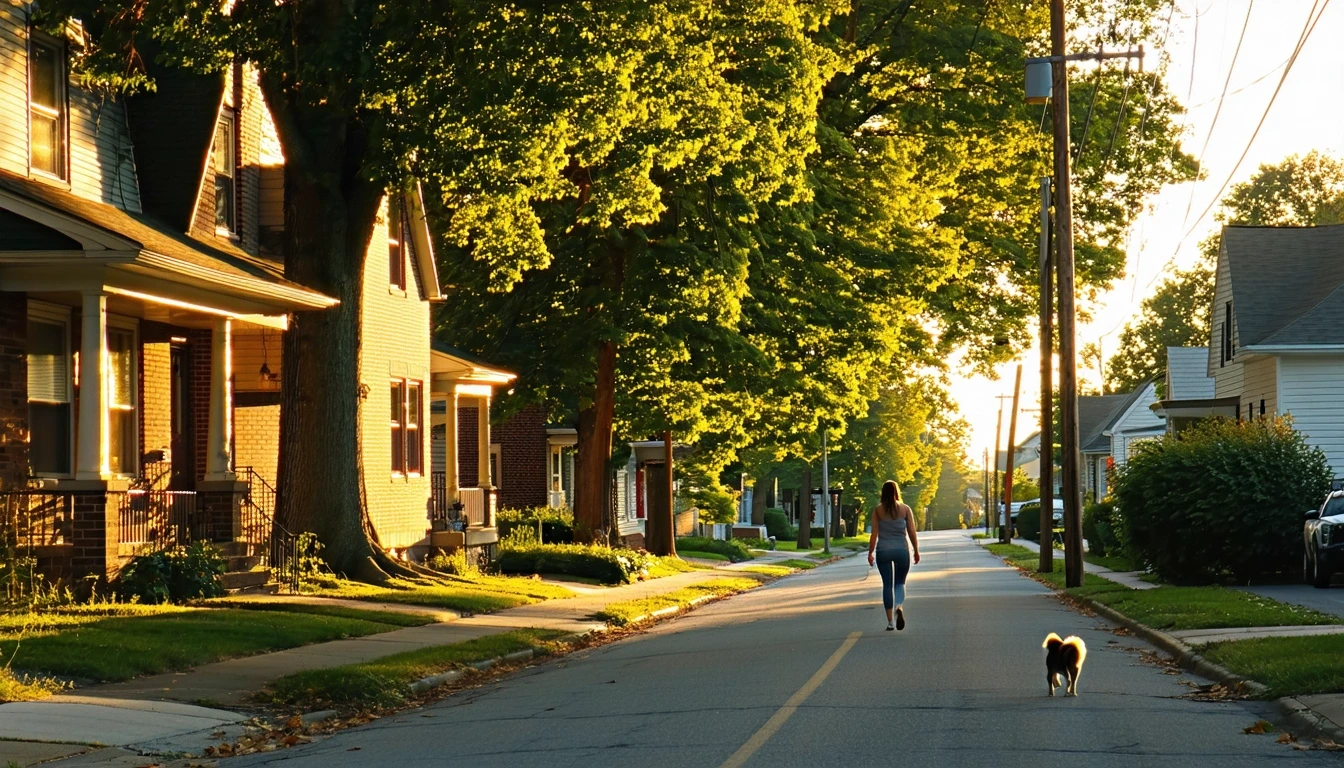
Belleville, IL vs. Fairview Heights, IL: Cost of Living Comparison (2025)
The Martinez family has been debating their Metro East move for weeks. Sarah wants Belleville’s historic neighborhoods and walkable downtown. Her husband Miguel prefers Fairview Heights’ newer construction and proximity to shopping centers. Their teenage daughter just wants to know which city leaves more room in the budget for college savings. This scenario plays out regularly across St. Clair County, where these two neighboring Illinois cities offer distinctly different lifestyles at surprisingly similar price points.
Both Belleville and Fairview Heights sit in the Metro East region, directly across the Mississippi River from St. Louis, Missouri. They share school district boundaries in some areas, similar commute times to downtown St. Louis, and access to the same regional amenities. Yet the cities have evolved differently—Belleville as the historic county seat with established neighborhoods and a revitalized downtown, Fairview Heights as a retail and commercial hub built largely after 1960. For families, young professionals, and retirees relocating to the Metro East in 2025, understanding the cost differences between these communities is essential to making a financially sound decision.
This comparison examines housing costs, utilities, groceries, taxes, and lifestyle factors that directly impact your monthly budget. Whether you’re drawn to Belleville’s tree-lined streets and century-old homes or Fairview Heights’ modern subdivisions and shopping convenience, the financial trade-offs between these cities will shape your quality of life for years to come.
Housing Costs in Belleville and Fairview Heights
Housing represents the single largest expense for most households, and the difference between Belleville and Fairview Heights reflects their distinct development patterns. Belleville’s housing stock spans from Victorian-era homes in the Cathedral District to post-war ranches in West Belleville to newer subdivisions near Scott Air Force Base. This diversity creates a wide pricing spectrum. Fairview Heights, by contrast, features predominantly newer construction from the 1970s onward, with a concentration of townhomes, condominiums, and single-family homes built in planned developments.
In 2025, median home prices in Belleville typically range from $165,000 to $195,000, depending on neighborhood and home age. Historic districts near downtown command premiums for renovated properties, while more affordable options exist in established neighborhoods south of Route 15. Fairview Heights median home prices generally fall between $180,000 and $210,000, reflecting the area’s newer housing stock and proximity to major retail corridors along Route 159. The price difference isn’t dramatic, but it reflects construction quality, lot sizes, and neighborhood amenities.
Rental markets in both cities serve different demographics. Belleville offers more diverse rental options, from downtown apartments above Main Street businesses to single-family home rentals near Southwestern Illinois College. Two-bedroom apartments in Belleville typically rent for $850 to $1,100 monthly, with variation based on age and location. Fairview Heights has fewer traditional apartment complexes but more townhome and condo rentals, with two-bedroom units generally ranging from $950 to $1,200 monthly. The rental inventory in Fairview Heights skews toward newer construction with included amenities like fitness centers and pools, which partially explains the premium.
| Housing Type | Belleville | Fairview Heights |
|---|---|---|
| 2-Bedroom Apartment (Monthly Rent) | $850–$1,100 | $950–$1,200 |
| 3-Bedroom Home (Monthly Rent) | $1,200–$1,500 | $1,350–$1,650 |
| Median Home Price | $165,000–$195,000 | $180,000–$210,000 |
| Estimated Monthly Mortgage (3BR, 20% down, 7% rate) | $1,050–$1,250 | $1,150–$1,350 |
For young professionals and first-time buyers, Belleville’s lower entry prices and diverse housing options provide more flexibility. A single person or couple can find affordable apartments near downtown amenities, while families can purchase starter homes in established neighborhoods with mature trees and walkable parks. Fairview Heights appeals more to buyers prioritizing modern construction, open floor plans, and turnkey condition—families willing to pay a modest premium for newer systems, updated kitchens, and subdivision amenities like pools and playgrounds.
The ownership versus rental split also differs. Belleville has a higher percentage of rental properties, particularly near the college and downtown, making it easier to find single-family home rentals. Fairview Heights leans more heavily toward owner-occupied housing, with rentals concentrated in specific condo and townhome developments. This affects availability and competition—renters may find more options and negotiating room in Belleville, while Fairview Heights renters face tighter inventory but often newer units.
Winner: Belleville for overall housing affordability. The city offers lower median home prices, more affordable rental options, and greater housing diversity. Buyers and renters willing to consider older construction or homes needing cosmetic updates can save $100–$200 monthly compared to equivalent housing in Fairview Heights. However, those prioritizing newer construction and modern amenities may find Fairview Heights’ premium worthwhile.
Utilities and Energy Costs
Utility expenses in both Belleville and Fairview Heights depend heavily on home age, insulation quality, and heating system efficiency. Both cities receive electricity from Ameren Illinois and natural gas from the same provider, so base rates remain identical. However, the age and construction quality of housing stock creates practical differences in monthly bills. Belleville’s older homes—particularly those built before 1980—often feature less insulation, single-pane windows, and aging HVAC systems that drive up heating and cooling costs. Fairview Heights’ predominantly newer construction typically includes better insulation, more efficient windows, and modern HVAC systems that reduce energy consumption.
For a typical three-bedroom home, residents in both cities can expect combined utility bills (electric, gas, water, sewer, trash) ranging from $200 to $300 monthly, with significant seasonal variation. Winter heating costs in older Belleville homes can push monthly bills toward the higher end of this range, particularly during January and February cold snaps. Summer cooling costs affect both cities similarly, though poorly insulated older homes in Belleville may see 15–20% higher electric bills during peak heat. Fairview Heights residents in homes built after 2000 often report more consistent year-round utility costs, with better insulation moderating both heating and cooling expenses.
Water and sewer rates differ slightly between the municipalities. Belleville’s water and sewer charges typically total $60–$80 monthly for average household usage, while Fairview Heights rates run slightly lower at $55–$75 monthly. Trash collection is included in property taxes in Belleville, while Fairview Heights residents pay a separate monthly fee of approximately $20–$25. These differences are modest but add up over a year—Belleville’s included trash service saves about $240–$300 annually, partially offsetting any higher heating costs in older homes.
Household size significantly impacts utility costs. Single professionals or couples in smaller apartments or townhomes in either city can keep combined utilities under $150 monthly with conscious energy use. Families with children in larger single-family homes, particularly those with teenagers taking long showers and leaving lights on, should budget $250–$350 monthly. The key variable remains home age and efficiency—a well-maintained 1960s ranch in Belleville with updated insulation and a modern furnace may cost less to heat than a poorly maintained 1990s home in Fairview Heights.
Winner: Fairview Heights by a narrow margin, primarily due to newer housing stock with better energy efficiency. Residents in modern homes can expect 10–15% lower heating and cooling costs compared to older Belleville properties. However, this advantage diminishes if comparing similarly aged homes or if Belleville buyers choose renovated properties with updated systems. The difference amounts to roughly $20–$40 monthly for most households—meaningful but not dramatic.
Everyday Costs: Groceries and Dining
Grocery and daily expense costs remain remarkably similar between Belleville and Fairview Heights, largely because residents of both cities shop at the same regional chains. Fairview Heights serves as the retail hub for the entire Metro East, with major grocery stores including Schnucks, Walmart Supercenter, Target, Aldi, and Save-A-Lot all located along the Route 159 corridor. Belleville residents frequently drive to Fairview Heights for major grocery shopping, though Belleville also has its own Schnucks, Ruler Foods, and several smaller grocers serving neighborhood needs.
For a family of four, weekly grocery expenses typically range from $150 to $220 regardless of which city you call home, assuming a mix of name-brand and store-brand items with occasional convenience foods. The presence of discount grocers like Aldi and Ruler Foods in both cities helps budget-conscious shoppers keep costs down. Fairview Heights offers slightly more shopping concentration—you can hit multiple stores in one trip without backtracking—which saves time and gas. Belleville shoppers enjoy more neighborhood markets and specialty stores, including ethnic grocers and local butchers that offer competitive pricing on specific items.
Dining out costs differ more noticeably. Fairview Heights concentrates chain restaurants along its commercial corridors—Olive Garden, Texas Roadhouse, Applebee’s, and dozens of fast-casual options. Meal prices follow national chain standards, with dinner for two averaging $40–$55 before tip at casual dining spots. Belleville’s restaurant scene includes more locally owned establishments, particularly downtown, where dinner for two at comparable quality restaurants typically runs $35–$50. The city’s revitalized Main Street features cafes, bistros, and ethnic restaurants that often provide better value than chain alternatives. Coffee culture also differs—Fairview Heights relies on Starbucks and Dunkin’, while Belleville supports several independent coffee shops charging $3–$4 for specialty drinks versus $5–$6 at chains.
Singles and young professionals experience these differences more acutely than families. Someone grabbing lunch near work several times weekly will spend noticeably less in Belleville’s downtown, where local sandwich shops and cafes charge $8–$10 for lunch versus $11–$14 at Fairview Heights chain restaurants. Families doing weekly grocery runs and cooking at home see minimal difference—perhaps $20–$30 monthly in fuel savings if living in Fairview Heights and avoiding separate trips for shopping.
Winner: Belleville for overall value, particularly for residents who dine out regularly or prefer local businesses. The combination of competitive grocery options, lower-priced local restaurants, and independent coffee shops creates modest but consistent savings. A household that dines out twice weekly and grabs coffee regularly could save $75–$125 monthly compared to relying exclusively on Fairview Heights chain options. However, families who rarely eat out and prefer one-stop shopping convenience may find Fairview Heights’ concentrated retail more practical despite marginally higher costs.
Taxes, Fees, and Hidden Costs
Property taxes represent a significant ongoing expense for homeowners in both cities, and the rates differ enough to impact long-term affordability calculations. St. Clair County assesses property taxes based on assessed value, with rates varying by municipality and school district. Belleville’s effective property tax rate typically ranges from 2.8% to 3.2% of assessed value, depending on specific location and school district boundaries. Fairview Heights rates generally fall between 2.6% and 3.0%. On a $180,000 home, this translates to annual property taxes of approximately $5,040–$5,760 in Belleville versus $4,680–$5,400 in Fairview Heights—a difference of $300–$400 annually, or roughly $25–$35 monthly.
Sales tax rates are identical in both cities, as both fall under Illinois state sales tax (6.25%) plus St. Clair County and Metro East Transportation District taxes, bringing the total to 8.25% on most purchases. This uniformity means your grocery, clothing, and household goods purchases cost the same regardless of which city you live in. However, where you shop matters—making major purchases at Fairview Heights retailers versus driving to Missouri (where sales tax on some items may be lower) can affect annual expenses for big-ticket items like furniture or appliances.
Municipal fees and assessments create additional cost differences. Belleville includes trash collection in property taxes, as mentioned earlier, while Fairview Heights charges separately. Belleville also assesses some neighborhoods for sidewalk maintenance and street lighting, adding $50–$150 annually in specific areas. Fairview Heights has more homeowners association (HOA) communities, particularly in newer subdivisions, where monthly fees range from $30 to $150 depending on amenities. These HOA fees typically cover common area maintenance, subdivision entrance landscaping, and sometimes snow removal or lawn care. Belleville has fewer HOA communities, giving homeowners more control over maintenance decisions but also more responsibility.
For renters, these tax differences matter less directly but still affect affordability. Landlords factor property taxes into rent calculations, so Belleville’s slightly higher tax rates may contribute to rental pricing. However, the rental market is competitive enough that location, condition, and amenities matter more than the underlying tax burden. Renters in either city should budget for renters insurance ($15–$25 monthly) and utilities, but won’t face property tax bills or HOA fees directly.
Vehicle-related costs remain similar between the cities. Both require Illinois vehicle registration and plates, and auto insurance rates depend more on individual driving records and coverage choices than municipality. However, Belleville’s denser, older neighborhoods may see slightly higher auto insurance rates due to higher traffic density and street parking, while Fairview Heights’ suburban layout with more off-street parking can result in marginally lower premiums.
Winner: Fairview Heights for homeowners prioritizing lower property taxes. The $300–$400 annual savings on property taxes outweighs the added cost of separate trash collection. However, buyers considering HOA communities in Fairview Heights should factor those fees carefully—a $100 monthly HOA fee ($1,200 annually) quickly erases any property tax advantage. For renters, the tax differences are negligible, making this category essentially a tie.
Monthly Cost of Living in Belleville vs Fairview Heights
| Expense Category | Belleville (Monthly) | Fairview Heights (Monthly) |
|---|---|---|
| Housing (3BR home, mortgage or rent) | $1,100–$1,350 | $1,200–$1,450 |
| Utilities (electric, gas, water, sewer, trash) | $220–$280 | $200–$260 |
| Groceries (family of four) | $650–$880 | $650–$900 |
| Transportation (gas, insurance, maintenance) | $350–$450 | $350–$450 |
| Dining Out & Entertainment | $250–$400 | $300–$450 |
| Property Taxes (monthly portion) | $420–$480 | $390–$450 |
| HOA Fees (if applicable) | $0–$50 | $30–$150 |
| Miscellaneous (personal care, household items) | $200–$300 | $200–$300 |
| Estimated Monthly Total | $3,190–$4,190 | $3,320–$4,410 |
These estimates reflect 2025 costs for a mid-size household in a three-bedroom home, using published regional data and local market benchmarks. Actual expenses will vary significantly with household size, lifestyle choices, housing age and condition, and specific neighborhood. Singles or couples in apartments will spend considerably less on housing and utilities, while larger families in newer homes may exceed these ranges.
The monthly cost difference between the two cities typically ranges from $130 to $220 for comparable households, with Belleville offering the lower cost of living. This difference stems primarily from housing costs and dining expenses, partially offset by Belleville’s slightly higher utility bills in older homes and modestly higher property taxes. Over a year, choosing Belleville could save a family $1,560 to $2,640—meaningful savings that could fund family vacations, accelerate debt repayment, or boost retirement contributions.
However, these numbers don’t tell the complete story. A family choosing a newer, energy-efficient home in Belleville would see utility costs similar to Fairview Heights, narrowing the gap. Conversely, a Fairview Heights buyer in an HOA community paying $150 monthly in fees would see costs exceed these estimates. The key insight is that Belleville generally offers more affordable entry points and better value for budget-conscious households, while Fairview Heights provides newer housing and concentrated amenities at a modest premium. Your specific situation—home age, lifestyle preferences, and spending patterns—will determine which city delivers better value.
Lifestyle Factors That Affect Your Budget
Beyond direct expenses, lifestyle differences between Belleville and Fairview Heights create indirect cost impacts that shape your actual cost of living. Belleville’s layout as a traditional city with a defined downtown core, established neighborhoods, and mixed-use areas creates different transportation and time costs than Fairview Heights’ suburban, auto-oriented development pattern. These differences affect everything from gas consumption to how often you eat out to whether you need a second vehicle.
Belleville offers significantly more walkability in certain neighborhoods, particularly downtown and in areas near Southwestern Illinois College. Residents in these areas can walk to restaurants, coffee shops, the public library, and some services, reducing vehicle trips and associated costs. The city maintains an interconnected street grid that makes short trips feasible on foot or bicycle. This walkability can save households $50–$100 monthly in fuel costs if it reduces the need for a second vehicle or allows one spouse to walk to work or errands. Belleville’s downtown has seen substantial revitalization since 2015, with new restaurants, breweries, and shops creating a genuine urban neighborhood feel rare in Metro East communities.
Fairview Heights, by contrast, is designed around automobile access. The city’s commercial areas along Route 159 and residential subdivisions require driving for virtually all errands and activities. This car dependency increases transportation costs—more fuel, more vehicle maintenance, and potentially the need for reliable second vehicles in two-income households. However, Fairview Heights’ concentrated retail means shorter overall driving distances for shopping. You can complete grocery shopping, pharmacy runs, and retail errands in one area without crisscrossing town. For families with busy schedules, this efficiency saves time even if it doesn’t dramatically reduce driving costs.
Commute patterns to St. Louis also differ slightly. Both cities offer similar access to Interstate 64 and Route 159/Illinois 15 for crossing into Missouri. Belleville residents in western neighborhoods may save 5–10 minutes on commutes to downtown St. Louis or Clayton, while Fairview Heights residents have quicker access to South County employment centers. These differences are modest—typically 10–15 minutes daily—but over a year, that’s 40–60 hours of commute time saved, which has real quality-of-life value even if it’s hard to quantify financially.
Recreation and entertainment costs also vary. Belleville maintains more public parks, a public pool, and free community events that provide low-cost family entertainment. The city’s Art on the Square festival, farmers market, and downtown events offer regular free or low-cost activities. Fairview Heights has fewer public gathering spaces but provides easy access to commercial entertainment—movie theaters, bowling alleys, and restaurants—that cost more but offer different experiences. Families with young children often find Belleville’s neighborhood parks and community programming more budget-friendly than relying on commercial entertainment options.
The housing stock differences also affect lifestyle costs beyond utilities. Belleville’s older homes often feature larger lots, mature landscaping, and established neighborhoods with character, but they also require more maintenance. Homeowners should budget for ongoing repairs, updates, and higher maintenance costs—older furnaces fail, historic windows need restoration, and vintage plumbing requires attention. Fairview Heights’ newer homes typically need less immediate maintenance but may come with HOA rules limiting DIY projects or requiring professional landscaping services. These trade-offs affect both your budget and your lifestyle—some people love the freedom and character of older homes, while others prefer the predictability and lower maintenance of newer construction.
Access to Scott Air Force Base, a major regional employer, is excellent from both cities, though Belleville’s eastern neighborhoods sit slightly closer. Military families stationed at Scott often choose based on school districts and housing preferences rather than commute distance, as both cities offer reasonable access. The base’s presence stabilizes both housing markets and supports local businesses, benefiting residents of both communities.
Frequently Asked Questions
Is Belleville more affordable than Fairview Heights in 2025?
Yes, Belleville generally offers lower overall living costs, primarily due to more affordable housing options and lower dining expenses. Most households can expect to save $130–$220 monthly in Belleville compared to equivalent lifestyles in Fairview Heights, though the gap narrows when comparing similarly aged homes or factoring in HOA fees.
Are rental prices lower in Belleville or Fairview Heights?
Belleville typically offers lower rental prices, with two-bedroom apartments ranging from $850–$1,100 monthly compared to $950–$1,200 in Fairview Heights. Belleville also provides more diverse rental options, including single-family homes and downtown apartments, while Fairview Heights rentals concentrate in newer townhome and condo developments with more amenities.
How do property taxes compare between Belleville and Fairview Heights in 2025?
Fairview Heights has slightly lower property tax rates, typically 2.6%–3.0% of assessed value compared to Belleville’s 2.8%–3.2%. On a $180,000 home, this translates to annual savings of $300–$400 in Fairview Heights. However, many Fairview Heights neighborhoods have HOA fees that can offset or exceed these tax savings.
Which city offers better value for families with children?
Belleville often provides better value for families due to lower housing costs, more affordable dining options, and abundant free community programming and parks. Families can save $150–$250 monthly compared to Fairview Heights while accessing quality schools and family-friendly neighborhoods. However, families prioritizing newer homes and modern amenities may find Fairview Heights’ premium worthwhile.
Do utility bills tend to be higher in Belleville or Fairview Heights during winter?
Belleville residents in older homes typically experience higher winter heating costs due to less insulation and aging HVAC systems. Homes built before 1980 may see utility bills 15–20% higher than comparable households in Fairview Heights’ newer construction. However, renovated Belleville homes with updated insulation and modern furnaces perform similarly to Fairview Heights properties, making home age more important than city location.
Making Your Decision: Which City Fits Your Budget?
The Martinez family ultimately chose Belleville. They found a renovated 1920s bungalow near downtown with original hardwood floors, a large yard, and walking distance to restaurants and parks—all for $15,000 less than comparable homes in Fairview Heights. Sarah got her walkable neighborhood and historic character, Miguel appreciated the lower mortgage payment, and their daughter gained a college fund boost from the monthly savings. Their story illustrates the core trade-off between these neighboring cities: Belleville offers better affordability and neighborhood character, while Fairview Heights provides newer construction and concentrated shopping convenience.
For budget-conscious buyers, young professionals, and families prioritizing value, Belleville emerges as the clear winner. The combination of lower housing costs, diverse rental options, affordable local dining, and walkable neighborhoods creates meaningful monthly savings without sacrificing quality of life. Households willing to consider older homes or those needing cosmetic updates can maximize these advantages, potentially saving $2,000–$3,000 annually compared to Fairview Heights. First-time homebuyers will find more accessible entry points, and renters enjoy better selection and negotiating power.
Fairview Heights makes more sense for buyers prioritizing modern construction, energy efficiency, and turnkey condition. The city’s newer housing stock, concentrated retail convenience, and suburban layout appeal to households willing to pay a 5–10% premium for these benefits. Families who value one-stop shopping, prefer HOA-maintained communities, and want predictable home maintenance costs will find Fairview Heights worth the additional expense. The property tax savings also benefit long-term owners, though HOA fees in many neighborhoods offset this advantage.
Ultimately, both cities offer solid value within the Metro East region, with cost differences modest enough that lifestyle preferences should weigh heavily in your decision. Visit both communities, explore neighborhoods at different times of day, and consider how each city’s layout and character align with your daily routines. Calculate your specific housing costs based on actual listings, factor in your commute, and think about how walkability or shopping convenience affects your lifestyle. The right choice depends on whether you value Belleville’s affordability and character or Fairview Heights’ modernity and convenience—both are financially viable options for Metro East living in 2025.
Ready to explore your housing options? IndexYard provides detailed neighborhood guides, moving company recommendations, and local insights to help you make confident relocation decisions. Compare listings, research schools, and discover which Metro East community fits your lifestyle and budget.