
“I spend about $70 a month on my bus pass, and honestly, it’s worth every penny,” says Marcus, a healthcare worker who’s been riding MetroLink and MetroBus between Belleville and downtown St. Louis for three years. “Between gas, parking downtown, and wear on my car, I’d be spending twice that easily.”
For residents and newcomers trying to understand public transportation costs in Belleville, Marcus’s experience reflects a broader reality: this Illinois suburb sits within Metro Transit’s service area, offering direct connections to St. Louis and surrounding communities at rates that often undercut the true cost of driving. With a cost of living index of 81.6, Belleville trends below the U.S. average in many expense categories, and transit costs follow suit—though the trade-offs between convenience and coverage matter significantly depending on where you live and work.
A standard one-way fare on Metro Transit runs $2.50 per ride, while a 30-day pass costs $78 for unlimited trips across the entire Metro system. For daily commuters crossing the river into Missouri or connecting to major employment hubs, that monthly pass represents substantial savings compared to fuel, tolls, and downtown parking fees that can exceed $15 per day.
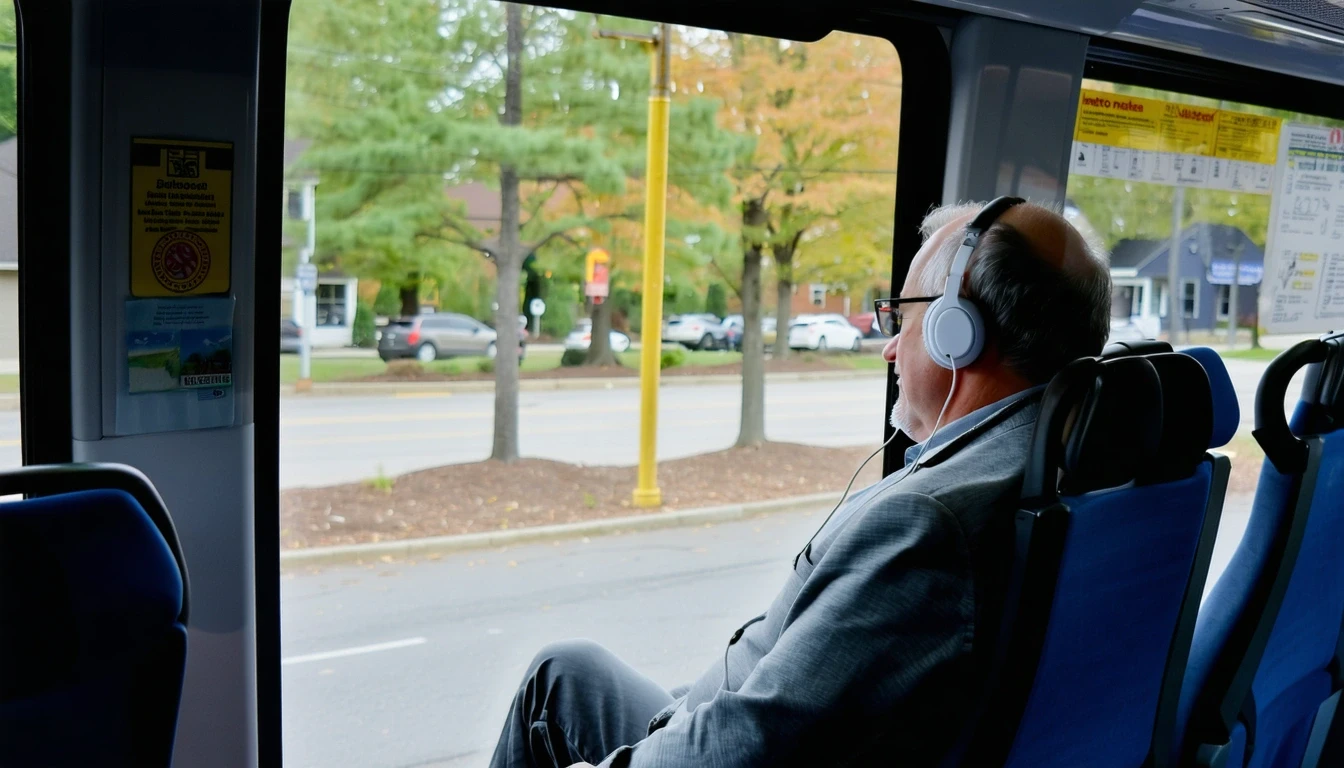
How to Get Around Belleville
Belleville’s transit landscape centers on Metro Transit, the regional system serving both sides of the St. Louis metropolitan area. The city benefits from direct MetroLink light rail access at three stations—Memorial Hospital, Belleville, and College—along with several MetroBus routes connecting neighborhoods to commercial districts, healthcare facilities, and educational institutions.
MetroLink’s Red Line provides the backbone of regional connectivity, running from Lambert Airport through downtown St. Louis and continuing east into Illinois with stops throughout Belleville and extending to Shiloh-Scott Air Force Base. This light rail service operates from early morning through late evening on weekdays, with reduced weekend schedules. MetroBus routes supplement rail coverage, reaching areas beyond the light rail corridor including West Belleville, Swansea, and connections to Southwestern Illinois College.
- MetroLink Red Line: Direct light rail service connecting Belleville to downtown St. Louis, Clayton, and Lambert Airport
- MetroBus local routes: Neighborhood circulation and connections to shopping, medical facilities, and educational campuses
- Call-A-Ride: Paratransit service for riders with disabilities who cannot use fixed-route transit
- Park & Ride lots: Free parking available at MetroLink stations for commuters driving to transit
Unlike some suburban communities that rely solely on limited bus service, Belleville’s MetroLink stations provide frequent, reliable rail connections—trains typically run every 10-15 minutes during peak hours and every 15-20 minutes during midday periods. This frequency makes transit genuinely competitive with driving for commuters heading to major employment centers, though evening and weekend service drops to 20-30 minute intervals.
Monthly Cost Breakdown
Understanding what you’ll actually spend depends heavily on your commuting pattern. A five-day-a-week commuter faces very different economics than someone who rides occasionally for errands or entertainment. The table below breaks down realistic monthly costs for three common rider profiles, assuming standard adult fares without discounts.
| Rider Profile | Usage Pattern | Monthly Cost |
|---|---|---|
| 5-Day Weekly Commuter | Round trip, 5 days/week (40-44 rides/month) | $78 (monthly pass) |
| Weekend-Only User | 4-6 round trips per month (8-12 rides) | $20-$30 (pay-per-ride) |
| Heavy Daily Commuter | 6-7 days/week plus occasional extra trips | $78 (monthly pass) |
Estimates reflect 2025 Metro Transit fares for standard adult riders. Monthly passes provide unlimited rides across all MetroLink and MetroBus services within the system. Actual costs may vary depending on discounts, pass types, and commuting frequency.
The math clearly favors monthly passes for anyone making more than 32 one-way trips per month—essentially 16 round trips. For regular commuters, that threshold gets crossed in less than four weeks of typical work schedules. Occasional riders who use transit fewer than three times weekly save money by paying per ride, though they sacrifice the flexibility of unlimited access for spontaneous trips.
Is Public Transit Worth It in Belleville?
The financial comparison between transit and driving extends well beyond the $78 monthly pass versus fuel costs. Downtown St. Louis parking alone runs $10-$20 daily at most lots and garages, adding $200-$400 monthly for five-day commuters. With gas prices around $2.87 per gallon in the Belleville area, a typical 20-mile round trip commute consuming a gallon every two days adds roughly $45 monthly in fuel—before accounting for vehicle wear, insurance increases from higher mileage, and the stress of navigating rush-hour traffic on I-64 and I-55/70.
Commute times tell a more nuanced story. MetroLink from Belleville Station to downtown St. Louis runs approximately 25-30 minutes, competitive with driving during peak hours when highway congestion adds unpredictable delays. However, riders living beyond walking distance of MetroLink stations face the added time of bus connections or driving to park-and-ride lots. The average transit commute in the St. Louis metro area runs about 48 minutes, reflecting these first-mile and last-mile challenges that pure rail commuters avoid.
Service frequency and coverage create the real trade-offs. Residents near MetroLink stations in central Belleville enjoy excellent access, while those in outlying neighborhoods like Signal Hill or near Scott Air Force Base depend on less frequent bus routes or must drive to transit. Evening and weekend schedules thin considerably—a 30-minute wait between trains on Sunday afternoon versus 10-minute peak weekday service fundamentally changes transit’s practicality for non-commute trips. For households considering whether to own one car instead of two, Belleville’s transit system makes that feasible for commuters working along the MetroLink corridor, but challenging for those needing flexibility across varied schedules and destinations.
Ways to Save on Transit
Metro Transit offers several discount programs that can cut monthly transportation costs significantly below standard fares. Seniors 65 and older, people with disabilities, and Medicare cardholders qualify for reduced fares—just $1.25 per ride and $39 for monthly passes, cutting costs in half. Students at participating colleges and universities often receive even deeper discounts or free passes through institutional partnerships, with some schools building transit access directly into tuition fees.
Employer-sponsored programs provide another major savings avenue. Many St. Louis-area employers offer pre-tax commuter benefits through programs like Commuter Choice, allowing workers to set aside up to $315 monthly in pre-tax dollars for transit expenses. This effectively reduces the cost of an $78 monthly pass to around $58 after typical tax savings. Some employers go further, subsidizing passes partially or fully as a recruitment and retention benefit, particularly in downtown St. Louis where parking costs make transit incentives financially attractive to both parties.
- Buy monthly passes if commuting regularly: Passes pay for themselves after 32 one-way trips, typically reached within three weeks of weekday commuting
- Use free transfers: Metro Transit allows two-hour transfers on pay-per-ride fares, enabling multi-leg trips on a single $2.50 fare
- Check employer benefits: Many area employers offer pre-tax commuter accounts or subsidized passes that reduce net costs by 20-30%
- Apply for reduced fare programs: Seniors, people with disabilities, and students can cut costs by 50% or more through Metro’s discount programs
- Combine park-and-ride with transit: Free parking at MetroLink stations lets drivers from outlying areas avoid downtown parking fees while still using transit for the expensive final miles
🏆 Tip: In Belleville, using a monthly pass instead of daily fares saves frequent commuters up to 38% per month compared to paying $2.50 each way for 40 rides. That’s $122 in pay-per-ride costs versus $78 for unlimited monthly access—a $44 monthly savings that compounds to over $500 annually.
FAQs About Transit in Belleville
What is the cheapest way to get around Belleville in 2025?
For regular commuters, a Metro Transit monthly pass at $78 provides the lowest per-trip cost with unlimited rides. Occasional riders save money paying $2.50 per ride, while seniors and people with disabilities should apply for reduced fare cards that cut all costs in half.
How much does the average commuter spend monthly on public transit in Belleville?
Most daily commuters spend $78 monthly for an unlimited Metro Transit pass, though this drops to $39 for seniors and riders with disabilities. Workers with employer subsidies or pre-tax commuter benefits often pay 20-30% less in after-tax dollars, bringing effective costs down to $55-$62 monthly.
Does Belleville offer park-and-ride or express bus options for commuters?
Yes, all three MetroLink stations in Belleville—Memorial Hospital, Belleville, and College—offer free park-and-ride lots for commuters. These lots fill quickly during weekday mornings, so arriving before 7:30 AM ensures parking availability, particularly at the busier Belleville Station.
How does the cost of public transportation in Belleville compare to driving?
With gas at $2.87 per gallon, a typical commuter spends $45-$60 monthly on fuel alone for a Belleville-to-downtown St. Louis commute, before adding $200-$400 for downtown parking. The $78 Metro Transit pass eliminates both expenses, saving most commuters $170-$380 monthly compared to driving and parking downtown.
Is public transit in Belleville considered reliable for daily work commutes?
MetroLink service to downtown St. Louis runs consistently every 10-15 minutes during weekday peak hours, making it highly reliable for traditional work schedules. Bus routes and off-peak rail service operate less frequently, and winter weather occasionally causes delays, but overall on-time performance makes transit viable for most daily commuters along the Red Line corridor.
Getting Around Smarter in Belleville
For residents evaluating their transportation budget, Belleville’s position within the Metro Transit system creates genuine opportunities to reduce monthly expenses significantly—particularly for commuters working in downtown St. Louis or along the MetroLink corridor. Plan to spend $78 monthly if you commute daily by transit, or $20-$40 if you ride occasionally for specific trips while maintaining a car for primary transportation. Seniors, students, and people with disabilities should factor in the reduced $39 monthly pass when comparing transit to vehicle ownership costs.
The real calculus extends beyond simple fare comparisons. With gas at $2.87 per gallon and downtown parking fees that can exceed the entire monthly transit pass in just four days, even a modest transit system like Metro delivers substantial savings for regular commuters. The trade-off comes in flexibility and coverage—transit works exceptionally well for predictable commutes to major employment centers, but less effectively for errands, off-peak travel, or destinations beyond the rail and bus network.
For households considering whether to maintain one vehicle instead of two, Belleville’s transit infrastructure makes that feasible for working adults with jobs accessible via MetroLink. The combination of reliable rail service, reasonable fares, and significant parking cost avoidance creates a compelling financial case that extends well beyond the monthly pass price. Understanding your specific commute pattern, work schedule, and lifestyle needs determines whether transit represents a minor convenience or a major budget advantage in your overall cost of living calculation.