
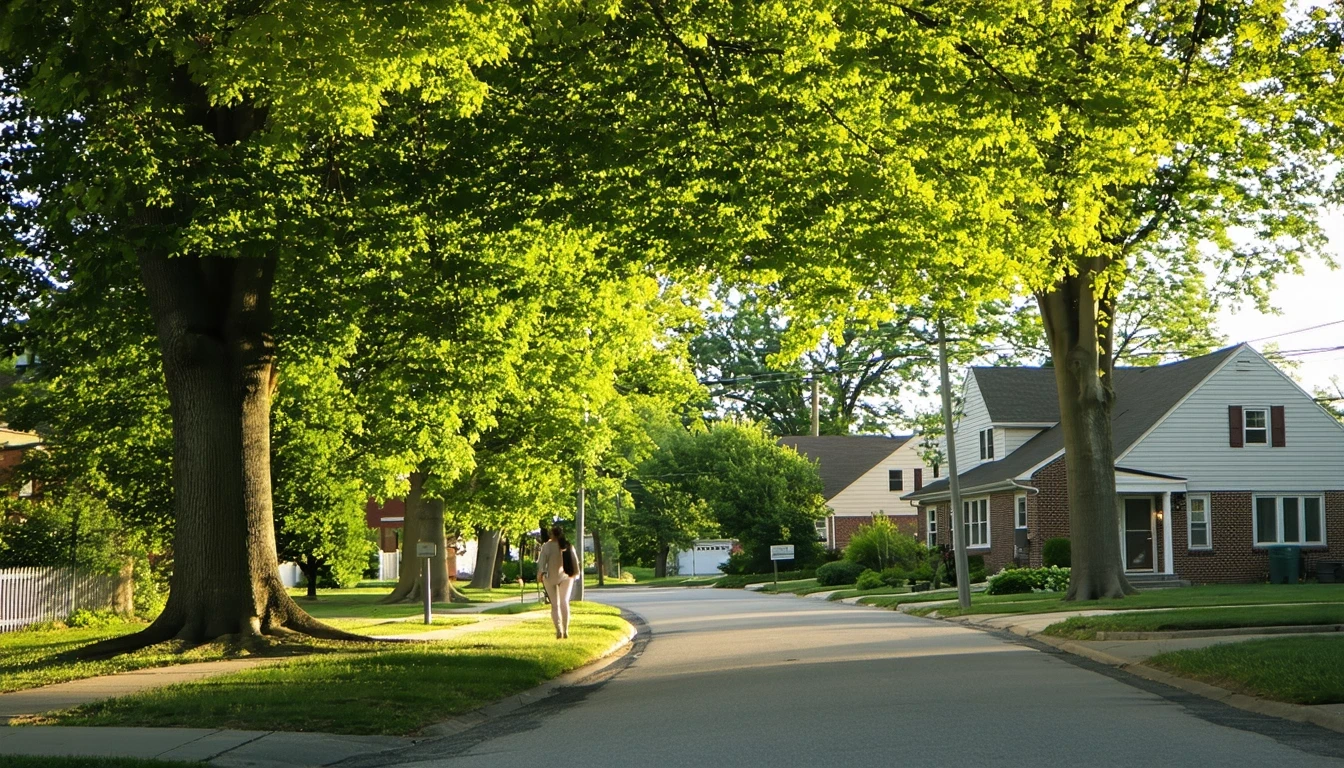
Let’s Set the Stage
When Sarah and Tom moved to Belleville from Chicago last spring, they thought their combined $5,800 monthly income would go much further than it did in the city. They were right—but only after they learned which trade-offs mattered most. Sarah wanted a three-bedroom house with a yard, while Tom prioritized keeping their dining-out budget intact. In the end, they found a comfortable middle ground, but not before realizing that “comfortable” means something different to every household.
Understanding how much it costs to live comfortably in Belleville in 2025 starts with defining what “comfortable” actually means. For most families, it’s more than just covering the essentials—it includes breathing room for savings, occasional entertainment, and the ability to handle unexpected expenses without panic. Belleville’s cost of living sits below the national average, with a median household income around $52,000, but the income you’ll need depends heavily on your household size, housing choices, and lifestyle expectations. A single professional might thrive on $3,500 per month, while a family of four typically needs closer to $6,500 or more to maintain similar comfort levels.
The key to planning your budget here lies in understanding local norms: housing costs are moderate compared to St. Louis proper, utilities can spike in summer due to air conditioning demands, and the region’s car-dependent layout means transportation expenses add up quickly. Whether you’re weighing a move across the river from Missouri or relocating from another state entirely, knowing these benchmarks helps you set realistic income targets and avoid the financial stress that comes from underestimating what “comfortable” truly costs.
Essential Monthly Costs
Before you can gauge what income level supports a comfortable lifestyle, you need to understand the baseline: the necessary expenses that every household faces. In Belleville, these include housing, utilities, groceries, transportation, and healthcare. For a single adult renting a one-bedroom apartment, these essentials form the foundation of any realistic budget. Let’s break down what these core costs look like in 2025.
| Expense Category | Estimated Monthly Cost |
|---|---|
| Rent (1-bedroom apartment) | $1,200–$1,800 |
| Utilities (electric, gas, water, trash) | $150–$250 |
| Groceries | $300–$500 |
| Transportation (gas, insurance, maintenance) | $250–$400 |
| Healthcare (insurance premiums, co-pays) | $200–$350 |
| Total Essential Costs | $2,100–$3,300 |
To live comfortably—meaning you’re not living paycheck to paycheck—financial advisors typically recommend that essential expenses consume no more than 60–70% of your gross income. For a single adult in Belleville, that translates to needing roughly $3,200 to $4,800 per month in gross income to cover these basics while leaving room for savings, discretionary spending, and emergencies. Keep in mind that these figures represent pre-tax earnings, so your take-home pay will be lower after federal and state withholdings.
🏆 Quick Stat: Average rent for a 1-bedroom apartment in Belleville hovers around $1,400 per month, making it more affordable than many metro areas but still a significant portion of a modest income.
Methodology: Estimates for 2025 in Belleville are based on local housing, utility, food, and transportation data where available. When exact values are missing, regional fallback ranges are used. All figures are expressed as gross monthly income (pre-tax) and rounded for clarity. Actual needs vary depending on lifestyle, household size, and neighborhood.
Comfortable Lifestyles by Household Type
Income needs scale quickly as household size grows. A single adult managing on $3,500 per month might feel comfortable, but add a partner, children, or both, and the financial picture changes dramatically. Childcare, larger housing, higher grocery bills, and increased transportation costs all compound. Here’s how monthly expenses and income requirements shift across three common household types in Belleville.
| Household Type | Essential Monthly Costs | Comfortable Gross Income Needed |
|---|---|---|
| Single Adult | $2,100–$3,300 | $3,200–$4,800 |
| Couple (no children) | $3,200–$4,800 | $4,800–$7,000 |
| Family of Four | $4,500–$6,800 | $6,500–$9,500 |
For couples without children, the jump in income needs reflects larger housing (typically a two-bedroom apartment or starter home), doubled grocery and healthcare costs, and often two vehicles. Many dual-income couples in Belleville find that combining incomes of $2,500 to $3,500 each provides a comfortable cushion, especially if one partner’s employer offers strong health benefits. Lifestyle choices—like dining out frequently or maintaining gym memberships—can push the comfortable threshold closer to $7,000 per month.
Families of four face the steepest climb. Childcare alone can add $800 to $1,500 per month per child, and school-age kids bring costs for activities, clothing, and food that grow as they do. A three-bedroom home, whether rented or owned, typically runs $1,600 to $2,400 monthly in Belleville, and grocery bills for a family easily hit $800 to $1,200. When you factor in the need for reliable transportation, health insurance for four, and the inevitable costs of raising children, most families need at least $6,500 per month gross to avoid financial strain—and many find $8,000 to $9,000 provides the breathing room that truly feels comfortable.
Hidden or Overlooked Costs
Even the most careful budgets can be derailed by expenses that don’t show up in the obvious categories. In Belleville, several costs tend to catch newcomers off guard, quietly raising the income threshold needed to maintain a comfortable lifestyle. Here are the most common culprits:
- Childcare: Full-time daycare for infants or toddlers can run $800 to $1,500 per month per child in the Metro East area. Even part-time or after-school care adds hundreds to the monthly budget, and many families underestimate this until they’re actively searching for providers.
- HOA Fees: If you buy a home in a newer subdivision or townhome community, homeowners association dues can range from $50 to $300 per month. These fees cover common area maintenance, landscaping, and sometimes amenities like pools or playgrounds—but they’re a fixed cost that doesn’t go away.
- Seasonal Utility Spikes: Belleville summers are hot and humid, and running air conditioning from June through September can push electric bills $100 to $150 higher than winter months. Conversely, natural gas heating costs rise in winter, though typically less dramatically. Budgeting for these swings is essential.
- Car Maintenance and Registration: Illinois vehicle registration fees, annual emissions testing (if applicable), and routine maintenance like oil changes, tire rotations, and brake work add up. Expect to set aside $100 to $200 per month per vehicle to cover these recurring costs.
- Insurance Premiums: Beyond health insurance, you’ll need auto insurance (Illinois requires it), and homeowners or renters insurance. Combined, these can easily total $300 to $500 per month, depending on coverage levels and driving records.
- Commuting Costs: While Belleville itself is compact, many residents commute to St. Louis or other parts of the Metro East for work. Gas, tolls, parking fees, and vehicle wear-and-tear can add $150 to $300 monthly, especially if your commute involves crossing the river daily.
These hidden costs don’t replace the essentials—they layer on top of them. For families, childcare alone can push the comfortable income threshold up by $1,000 to $2,000 per month. For homeowners, HOA fees and maintenance reserves add another few hundred. The lesson: always budget 10–15% above your estimated essentials to account for the expenses you didn’t see coming.
Ways to Stretch Your Budget in Belleville
Living comfortably doesn’t always mean earning more—it can also mean spending smarter. Belleville and the surrounding Metro East offer several strategies to reduce typical costs without sacrificing quality of life. Here’s how locals keep their budgets lean:
- Shop Local Grocers and Farmers Markets: Belleville’s farmers market (seasonal) and nearby discount grocers like Aldi or Save-A-Lot offer fresh produce and staples at lower prices than national chains. Meal planning around sales and seasonal items can cut grocery bills by 15–20%.
- Take Advantage of Utility Assistance Programs: Ameren Illinois offers budget billing to smooth out seasonal spikes, and income-eligible households may qualify for energy assistance through the Low Income Home Energy Assistance Program (LIHEAP). Even if you don’t qualify, enrolling in budget billing helps avoid summer sticker shock.
- Bundle Insurance Policies: Many insurers offer discounts if you bundle auto, home, and renters insurance. Shopping around annually and asking about multi-policy discounts can save $50 to $100 per month.
- Carpool or Adjust Commute Times: If you work in St. Louis, carpooling with a coworker or adjusting your schedule to avoid peak traffic can reduce gas consumption and vehicle wear. Some employers also offer transit subsidies or flexible work-from-home arrangements.
- Leverage Free Community Resources: Belleville Public Library offers free access to books, digital media, meeting spaces, and even passes to local attractions. Parks, trails, and community events provide low-cost entertainment that doesn’t strain the budget.
- Refinance or Negotiate Housing Costs: If you’re renting, ask about lease renewal discounts or offer to sign a longer lease in exchange for a lower monthly rate. Homeowners should periodically review mortgage rates and consider refinancing if rates drop significantly.
🏆 Tip: Belleville’s proximity to St. Louis means you can access big-city amenities—concerts, museums, sports—without paying big-city housing costs. Many residents find that living in Belleville and commuting for entertainment or work offers the best of both worlds.
Which Lifestyle Fits You Best?
Ultimately, the income you need to live comfortably in Belleville depends on your life stage, priorities, and willingness to make trade-offs. Here’s a snapshot of how different income levels translate to lifestyle realities:
Singles and Young Professionals ($3,200–$4,500/month): At this income level, you can afford a modest one-bedroom apartment, cover essentials, and still have room for occasional dining out, entertainment, and modest savings. You won’t be living lavishly, but you’ll avoid financial stress and can enjoy Belleville’s parks, local breweries, and community events without constantly checking your bank balance.
Couples Without Children ($4,800–$6,500/month): Dual-income couples in this range can comfortably rent a two-bedroom apartment or buy a starter home, maintain two vehicles, and enjoy a more active social life. You’ll have the flexibility to save for future goals—whether that’s a down payment, travel, or starting a family—while still indulging in regular date nights and hobbies.
Families of Four ($6,500–$9,500/month): This is where comfort truly begins for families. At the lower end, you’re covering essentials and childcare but may need to be selective about extracurriculars and vacations. At the higher end, you can afford a three-bedroom home in a good school district, enroll kids in sports or music lessons, take annual family trips, and build a meaningful emergency fund. Most families find that $8,000+ per month provides the breathing room that makes Belleville feel like a genuinely comfortable place to raise children.
The good news? Belleville’s cost of living is forgiving compared to larger metros. A family earning $7,500 here enjoys a lifestyle that might require $10,000 or more in St. Louis County or $12,000+ in a coastal city. The trade-off is fewer high-end amenities and a more car-dependent lifestyle, but for many households, that’s a worthwhile exchange for financial stability and a strong sense of community.
Frequently Asked Questions About Comfortable Living in Belleville
What is a comfortable salary in Belleville in 2025?
A comfortable salary depends on household size, but as a general benchmark, single adults typically need $3,200 to $4,800 per month gross, couples without children need $4,800 to $7,000, and families of four should aim for $6,500 to $9,500. These ranges allow you to cover essentials, save modestly, and enjoy discretionary spending without constant financial stress.
Can you live comfortably in Belleville on $4,000 per month?
Yes, if you’re a single adult or part of a dual-income couple without children. At $4,000 per month, you can afford a one-bedroom apartment, cover utilities and groceries, maintain a vehicle, and still have a few hundred dollars left for savings or entertainment. Families, however, will find this income level tight, especially once childcare and larger housing costs are factored in.
How much does a family of four need to live well in Belleville?
Most families of four need at least $6,500 per month gross to cover essentials comfortably, but $8,000 to $9,500 provides the cushion that truly feels secure. This range accounts for a three-bedroom home, childcare or school expenses, reliable transportation, health insurance, groceries, and enough left over for savings, activities, and occasional family outings.
Do childcare and HOA fees significantly raise income needs in Belleville?
Absolutely. Childcare alone can add $800 to $1,500 per month per child, which can push a family’s comfortable income threshold up by $2,000 or more. HOA fees, while less dramatic, still add $50 to $300 monthly for homeowners in managed communities. Both are easy to overlook when estimating budgets, but they have a real impact on how much income you’ll need to maintain comfort.
Is Belleville more affordable than nearby St. Louis for middle-class families?
Generally, yes. Belleville’s housing costs—both rent and home prices—tend to run 10–20% lower than many St. Louis County neighborhoods, and property taxes in Illinois can be more predictable than Missouri’s patchwork of municipal rates. However, Illinois has higher overall tax burdens in some categories, so the savings aren’t universal. For middle-class families prioritizing affordable housing and good schools, Belleville often offers better value, especially if one or both partners can work locally and avoid long commutes.
Final Thoughts
Living comfortably in Belleville in 2025 is achievable for a wide range of households, but it requires honest budgeting and clear priorities. Single adults can find their footing on $3,200 to $4,800 per month, couples thrive in the $4,800 to $7,000 range, and families of four should target $6,500 to $9,500 to maintain a lifestyle that feels secure and fulfilling. The median household income in Belleville sits around $52,000 annually—roughly $4,300 per month—but most families find they need 1.2 to 1.5 times that figure to truly live comfortably, especially once childcare, housing, and transportation costs are fully accounted for.
The beauty of Belleville lies in its balance: you get access to Metro East amenities, proximity to St. Louis, and a cost of living that doesn’t demand six-figure salaries to feel stable. Whether you’re a young professional testing the waters, a couple planning for the future, or a family seeking good schools and safe neighborhoods, understanding these income benchmarks helps you set realistic expectations and avoid the financial stress that comes from underestimating what comfort truly costs.
Ready to explore more? Check out our guides comparing Belleville to nearby cities, or dive into neighborhood-specific breakdowns to find the area that best matches your budget and lifestyle. And if you’re planning a move, don’t forget to see our 2025 moving company picks to make the transition as smooth as possible.