
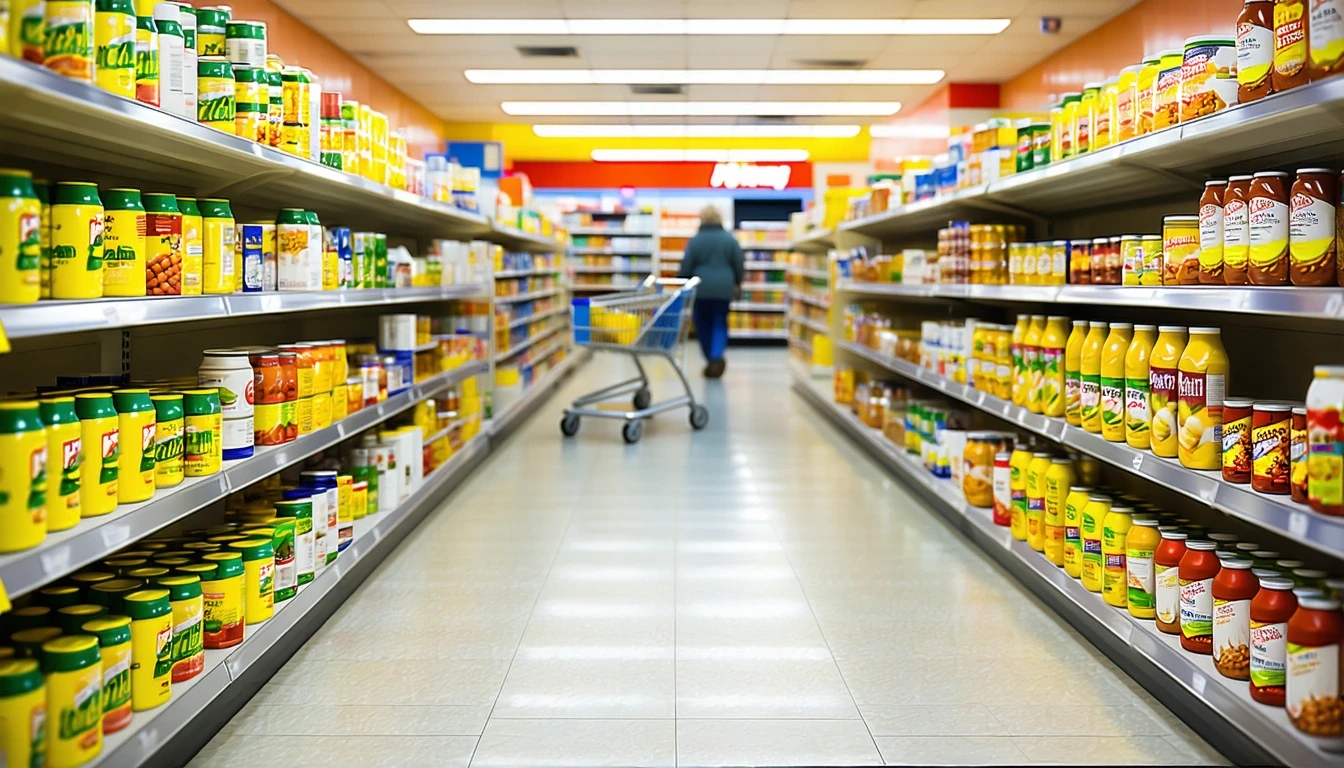
Setting the Grocery Baseline in Belleville
When planning a weekly meal rotation for two adults in Belleville, understanding grocery prices in Belleville becomes the foundation of realistic household budgeting. This metro-east city offers a balanced grocery landscape where national chains and regional players compete across several price tiers, creating opportunities for strategic shoppers to manage their food spending effectively. The typical household of two adults navigating Belleville’s supermarket aisles can expect moderate pricing that reflects the broader southwestern Illinois market, with some seasonal variation and notable differences between premium organic selections and conventional staples.
The average grocery bill for two adults in Belleville is about $650 per month. This estimate assumes a balanced diet with home-cooked meals five to six nights per week, a mix of fresh produce and pantry staples, and occasional convenience items. The range typically spans $500 to $800 depending on dietary preferences, brand loyalty, and shopping venue. Couples who prioritize organic produce, specialty proteins, or prepared foods will naturally trend toward the upper end, while those who focus on store brands, bulk purchases, and seasonal produce can comfortably operate near the lower threshold.
Belleville’s position in the St. Louis metropolitan statistical area means grocery pricing generally tracks regional patterns rather than showing dramatic local deviations. However, the concentration of discount grocers along Green Mount Road and near the Belleville Square area creates competitive pressure that benefits budget-conscious households. Organic and specialty items command the expected premium—often 20 to 40 percent above conventional equivalents—but the availability of multiple store formats within a short drive gives residents meaningful control over their monthly food expenditure.
Item-by-Item Price Snapshot
In cities like Belleville, a couple typically spends across a predictable basket of staples that form the backbone of weekly meal planning. While specific item-level pricing fluctuates with promotional cycles and seasonal availability, most pantry staples track national pricing, while fresh produce can vary by approximately 10 to 20 percent based on regional harvest schedules and distribution logistics. The metro-east location provides reasonable access to Midwest agricultural output, which helps stabilize prices on dairy, eggs, and grain-based products throughout most of the year.
Seasonal swings are most pronounced in the produce aisle, where local Illinois and Missouri farms contribute to summer and early fall abundance. Tomatoes, sweet corn, and stone fruits see noticeable price drops from June through September, while winter months bring higher costs for berries and delicate greens. Weekly specials and loss-leader promotions—particularly on proteins and dairy—can reduce the effective cost of a shopping trip by 15 to 25 percent for households willing to plan meals around advertised deals and stock freezers during favorable pricing windows.
Where People Shop (and How It Affects Your Bill)
Belleville’s grocery retail landscape divides naturally into three tiers, each serving distinct shopper priorities and budget profiles. The choice of primary shopping venue exerts more influence on monthly food spending than nearly any other variable, often creating a $150 to $200 monthly differential between the highest and lowest-cost options for identical baskets. Understanding these tiers and strategically splitting trips across multiple stores represents one of the most effective levers for cost management.
Premium tier stores emphasize curated selections, extensive organic and natural offerings, prepared foods, and specialty departments. These venues typically run 25 to 35 percent above discount competitors on comparable items, but offer conveniences like in-store dining, advanced online ordering systems, and broader selection in categories like international foods and dietary-specific products. Shoppers who value one-stop convenience and specialty ingredients often anchor their routine here while supplementing with discount runs for bulk staples.
Mid-range chains occupy the middle ground with balanced assortments, competitive weekly promotions, and loyalty programs that reward consistent patronage. These stores represent the default choice for many Belleville households, offering predictable quality and reasonable pricing without requiring extreme couponing or bulk purchasing commitments. Their promotional cycles—typically Wednesday through Tuesday—create opportunities for strategic shopping when combined with digital coupons and fuel rewards programs.
Discount grocers deliver the lowest everyday pricing through streamlined operations, limited selection, and high private-label penetration. A household willing to adapt meal planning around available inventory and accept smaller stores with fewer amenities can reduce grocery spending by 20 to 30 percent compared to premium venues. These stores excel at shelf-stable staples, dairy, eggs, and frozen items, though fresh produce selection may be narrower and turnover slightly slower than full-service competitors.
How We Built the Two-Adult Estimate
The $650 monthly baseline for two adults in Belleville reflects a moderate consumption pattern calibrated to typical dietary habits observed across similar Midwest metro markets. This estimate incorporates breakfast staples including eggs, bread, coffee, and dairy; lunch components such as deli proteins, sandwich materials, and salad ingredients; and dinner proteins rotating among chicken, ground beef, pork, and occasional fish, supported by fresh vegetables, rice, pasta, and cooking essentials. The model assumes approximately 85 percent of meals prepared at home, with remaining occasions covered by dining out or takeout.
Quantity assumptions build from USDA dietary guidelines adjusted for two-adult households: roughly three dozen eggs monthly, two gallons of milk, four pounds of coffee, eight to ten pounds of fresh produce weekly, and proteins averaging 12 to 15 pounds across categories. Pantry staples—flour, sugar, oils, condiments, spices—add incremental monthly costs that vary with depletion cycles but average $40 to $60 when annualized. Snack foods, beverages beyond water and coffee, and convenience items contribute another $80 to $120 depending on household preferences.
Estimates reflect 2025 prices from national sources such as USDA ERS, BLS CPI, and Census Bureau data, adjusted for local conditions; monthly totals are rounded and will vary by store, brand, and promotions. The methodology intentionally excludes alcohol, pet food, and non-food household items often purchased during grocery trips, focusing exclusively on human food and beverage consumption. Households with specific dietary requirements—gluten-free, keto, vegan—should anticipate 10 to 25 percent premiums due to specialty product pricing and potentially higher produce consumption.
Budget-Friendly Ways to Save
Reducing grocery expenditure in Belleville without sacrificing nutrition or variety requires strategic habits rather than extreme couponing or deprivation. The most impactful savings come from structural decisions—store selection, bulk purchasing for appropriate categories, and meal planning discipline—rather than marginal optimizations. A household implementing three or four core strategies can typically reduce monthly spending by $100 to $150 while maintaining or even improving dietary quality through increased home cooking and reduced reliance on processed convenience foods.
Loyalty programs and digital coupons deserve systematic attention despite their modest per-transaction impact. Most mid-range chains offer fuel rewards that effectively return 1 to 3 percent of grocery spending as gasoline discounts, while app-based coupons frequently target high-margin categories like snacks, beverages, and personal care items. Stacking manufacturer digital coupons with store promotions during cyclical sales—proteins often rotate on deep discount every four to six weeks—creates opportunities for freezer stocking that smooths costs across multiple months.
- Split shopping across tiers: Purchase shelf-stable staples and dairy at discount grocers, reserve premium stores for specialty items and prepared foods only.
- Buy bulk for non-perishables: Rice, beans, pasta, canned goods, and baking supplies offer 20 to 40 percent savings in larger formats with minimal storage burden.
- Follow weekly flyers: Plan meals around advertised loss leaders rather than shopping from predetermined lists; proteins and produce see the deepest cyclical discounts.
- Brew coffee at home: A daily café habit costs $120 to $180 monthly per person; home brewing reduces this to $15 to $25 with minimal effort.
- Embrace store brands: Private label products typically match national brand quality at 15 to 30 percent lower cost across most categories.
- Shop seasonally for produce: Summer and fall bring local abundance and lower prices; winter months favor frozen vegetables for better value.
- Minimize mid-week top-up trips: Unplanned visits generate impulse purchases; consolidated weekly shopping with detailed lists improves budget adherence.
Groceries vs Dining Out in Belleville
The cost differential between home cooking and restaurant meals in Belleville mirrors patterns across similar Midwest markets, with dining out typically costing three to four times the equivalent home-prepared meal when accounting for full ingredients and reasonable portion sizes. An average meal out in Belleville costs $15 to $25 per person at casual dining establishments, with fast-casual concepts occupying the $10 to $15 range and full-service restaurants with alcohol pushing toward $35 to $50 per person. These figures exclude tip, which adds another 18 to 20 percent to the effective cost.
For a two-adult household, substituting even two restaurant meals per week with home cooking generates monthly savings of $200 to $300, effectively reducing total food expenditure by 25 to 30 percent despite increased grocery spending. The calculus shifts somewhat for takeout, which eliminates tip and often features lower per-portion pricing than dine-in service, but still runs double to triple the cost of home preparation. Strategic households often reserve dining out for social occasions and convenience during genuinely busy periods, while relying on efficient home cooking—batch preparation, slow cooker meals, simple proteins with roasted vegetables—for routine weeknight dinners.
FAQs About Grocery Costs in Belleville (2025)
What’s a realistic monthly grocery budget for two adults in Belleville? Most couples spend between $500 and $800 monthly, with $650 representing a comfortable middle ground that accommodates varied proteins, fresh produce, and occasional convenience items. Households cooking most meals at home and shopping strategically across multiple store tiers can operate sustainably near the lower end of this range.
Is it cheaper to shop in bulk in Belleville? Bulk purchasing delivers meaningful savings on shelf-stable staples like rice, beans, pasta, canned goods, and baking supplies, often reducing per-unit costs by 20 to 40 percent. However, bulk buying fresh produce or proteins requires adequate freezer capacity and disciplined meal planning to avoid spoilage, which can negate savings if items go unused.
Which stores in Belleville are best for low prices? Discount-tier grocers consistently offer the lowest everyday pricing, particularly on dairy, eggs, bread, and private-label packaged goods. Mid-range chains become competitive during promotional cycles, especially for proteins and seasonal produce, making a split-shopping strategy—discount stores for staples, mid-range chains for weekly specials—the most cost-effective approach for many households.
How much more do organic items cost in Belleville? Organic products typically command premiums of 20 to 40 percent over conventional equivalents, with the differential most pronounced in produce, dairy, and eggs. Meat and specialty organic items can run 50 to 75 percent higher, making selective organic purchasing—prioritizing high-pesticide-residue produce while accepting conventional options for lower-risk items—a practical compromise for budget-conscious households.
What’s a good weekly grocery target if we cook most meals at home? Households preparing 85 to 90 percent of meals at home should target $140 to $180 weekly for two adults, which annualizes to the $600 to $750 monthly range. This allows for varied proteins, abundant fresh produce, quality pantry staples, and occasional treats without requiring extreme frugality or monotonous meal rotation.
Do grocery prices in Belleville change significantly by season? Seasonal variation primarily affects fresh produce, with summer and early fall bringing lower prices on local tomatoes, corn, stone fruits, and berries, while winter months see higher costs for delicate greens and out-of-season fruits. Proteins and shelf-stable goods show less seasonal fluctuation, though holiday periods often feature promotional pricing on baking supplies and traditional celebration foods.
How do Belleville grocery costs compare to nearby areas? Belleville’s grocery pricing aligns closely with the broader metro-east market and shows minimal variation from nearby communities like O’Fallon, Fairview Heights, and Swansea. The concentration of competing retailers along major corridors creates similar pricing dynamics across the region, with store choice and shopping strategy exerting far more influence than specific municipality location.
Smart Grocery Planning in Belleville
Navigating Belleville’s grocery landscape successfully requires understanding the interplay between store tiers, promotional cycles, and household consumption patterns. The $650 monthly baseline for two adults represents an achievable target for couples willing to invest modest planning effort—tracking weekly flyers, splitting trips across discount and mid-range venues, and building flexible meal rotations around seasonal availability and advertised specials. This approach balances cost management with dietary variety and quality, avoiding the extremes of either premium one-stop shopping or rigid deprivation-focused budgeting.
The most effective savings levers remain structural: selecting appropriate primary and secondary shopping venues, buying bulk for suitable categories, brewing coffee at home rather than relying on café purchases, and maintaining disciplined meal planning that minimizes food waste and impulse purchases. These habits compound over time, creating monthly savings of $100 to $200 compared to unstructured shopping patterns while often improving nutritional outcomes through increased home cooking and reduced reliance on restaurant meals.
For households seeking deeper insight into how grocery costs fit within broader monthly expenses and overall affordability in Belleville, comprehensive budget planning tools can help contextualize food spending alongside housing, transportation, and other essential categories. Understanding your complete cost structure enables more confident financial decisions and helps identify the most impactful areas for optimization as household circumstances evolve.