
Can you stay under $100 on a grocery run in Collinsville? The answer depends less on the city’s baseline prices—which trend modestly below national averages—and more on where you shop, what you buy, and how many people you’re feeding. Grocery costs in Collinsville sit in a comfortable middle zone for the St. Louis metro area, shaped by the city’s regional price parity index of 96 (meaning costs run about 4% below the national baseline) and its access to a full spectrum of grocery retailers across the Metro East. But that statistical advantage doesn’t translate uniformly: a family of four shopping premium organic lines will feel very different pressure than a couple splitting time between discount chains and meal planning around sales. Understanding how grocery prices actually feel here requires looking beyond averages and into the levers that households control—and the ones they don’t.
For residents and newcomers weighing Collinsville’s affordability, groceries represent one of the few major cost categories where behavior and strategy yield immediate, measurable control. Unlike housing or insurance, where prices are largely set by market forces, grocery spending responds directly to store choice, brand flexibility, and cooking habits. That makes it a critical pressure point for households operating on tight margins, and a meaningful opportunity for those with income cushion to redirect savings elsewhere. This article breaks down how grocery costs work in Collinsville in 2025—what drives the pressure, who feels it most, and how local shoppers navigate the trade-offs between convenience, quality, and price.
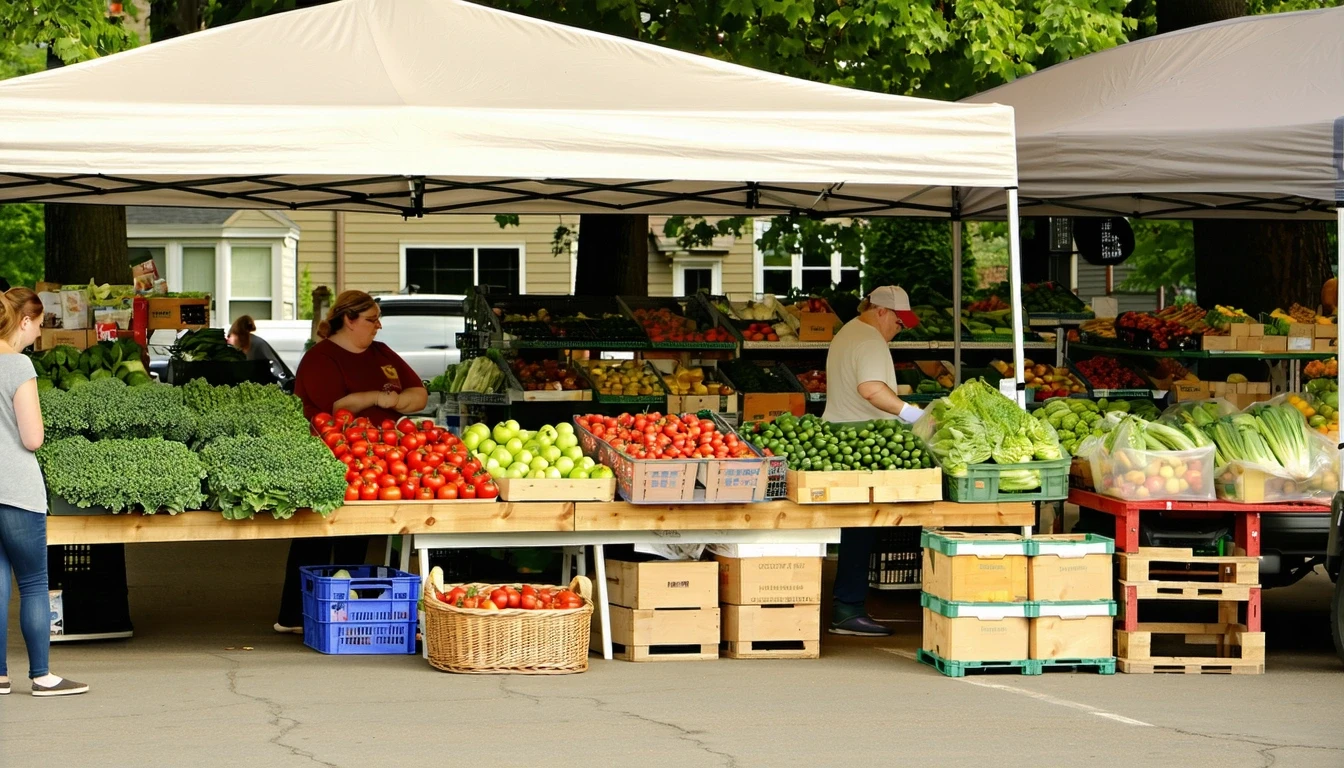
How Grocery Costs Feel in Collinsville
Grocery prices in Collinsville reflect the city’s position as a working-class suburb with strong ties to the broader St. Louis metro economy. The regional price parity of 96 suggests that food costs here run slightly below what you’d encounter in higher-cost metros or coastal markets, but the difference isn’t dramatic enough to redefine affordability on its own. What matters more is how that baseline interacts with household income and size. For a household earning near Collinsville’s median income of $63,155 per year, groceries occupy a manageable but non-trivial share of monthly cash flow—especially for families with children, where volume and variety demands climb quickly.
Singles and couples tend to experience grocery costs as predictable and controllable, particularly if they cook regularly and avoid heavy reliance on prepared foods or premium brands. The per-person cost structure works against smaller households to some degree—packaging sizes, waste, and the inefficiency of cooking for one or two mean that the per-capita grocery bill often runs higher than it does for a family of four. But the absolute dollar commitment remains lower, and the flexibility to shift between store tiers or adjust quality expectations gives smaller households significant room to maneuver. For families, especially those with teenagers or multiple young children, grocery costs become one of the most visible and persistent budget pressures, where a single week of unplanned purchases or a shift toward convenience items can push spending well above comfort zones.
Collinsville’s grocery landscape benefits from its proximity to a wide range of retailers spanning discount, mid-tier, and premium formats. Shoppers here aren’t locked into a single price tier by geography, which means that households willing to split trips or plan around sales can extract real savings without sacrificing quality. That said, convenience and time constraints often push families toward the closest or most familiar option, and the price gap between tiers is wide enough that default shopping habits can add hundreds of dollars annually to a household’s food costs. The key insight: grocery costs in Collinsville are less about the city’s baseline prices and more about the cumulative effect of dozens of small decisions made weekly at the store level.
Grocery Price Signals (Illustrative)
These prices illustrate how staple items tend to compare locally—not a full shopping list. They’re derived estimates based on national baseline data adjusted by Collinsville’s regional price parity, and they reflect typical pricing patterns rather than observed shelf prices at any specific store or point in time. Use them as reference points for understanding relative cost positioning, not as guarantees of what you’ll pay at checkout.
| Item | Illustrative Price |
|---|---|
| Bread | $1.72/lb |
| Cheese | $4.54/lb |
| Chicken | $1.96/lb |
| Eggs | $2.75/dozen |
| Ground Beef | $6.28/lb |
| Milk | $3.84/half-gallon |
| Rice | $1.02/lb |
Derived estimate based on national baseline adjusted by regional price parity; not an observed local price.
These figures suggest that Collinsville’s grocery baseline sits comfortably in the “affordable Midwest” zone—chicken and rice remain budget-friendly staples, while proteins like ground beef and dairy items like cheese reflect moderate pricing pressure consistent with national trends. Eggs, a category that has seen significant volatility in recent years, land in a middle range here, neither remarkably cheap nor prohibitively expensive. What these numbers don’t show is the spread between store tiers: discount grocers may undercut these figures by 15–25%, while premium organic formats can double them. The takeaway isn’t the specific price of a dozen eggs, but rather that Collinsville’s grocery market offers enough competitive range that price-conscious shoppers have real options.
Store Choice & Price Sensitivity
Grocery price pressure in Collinsville varies more by store tier than by any single “average” experience. Understanding the discount, mid-tier, and premium landscape is essential for households trying to control food costs without sacrificing quality or convenience. Discount chains—typically no-frills formats with limited selection, house brands, and fewer prepared options—deliver the lowest per-item prices and the highest savings potential for families willing to plan meals around what’s available. These stores thrive on volume and efficiency, and they’re particularly effective for households buying staples in bulk, cooking from scratch, and maintaining flexibility around brands. For a family of four operating on a tight budget, consistent use of discount formats can reduce grocery spending significantly compared to defaulting to mid-tier or premium options.
Mid-tier grocers—regional and national chains offering broader selection, name brands, and more convenience items—represent the default shopping experience for most Collinsville households. These stores balance price, variety, and accessibility, and they’re where most families land when time and convenience outweigh the marginal savings available at discount formats. Pricing here tends to track closely with the illustrative figures shown earlier, and sale cycles, loyalty programs, and private-label lines offer opportunities to shave costs without changing stores. Mid-tier grocers work well for households with moderate income cushion and mixed priorities: some willingness to pay for convenience, but enough price sensitivity to avoid premium formats for everyday staples.
Premium grocers and specialty markets—focused on organic, local, and prepared foods—occupy a distinct niche in Collinsville’s grocery ecosystem. These stores charge meaningfully higher prices in exchange for perceived quality, sourcing transparency, and curated selection. For households prioritizing organic produce, grass-fed proteins, or specialty dietary needs, premium formats offer value that justifies the cost. But for families simply trying to keep weekly grocery bills manageable, defaulting to premium stores without intentional trade-offs can push food costs well above regional norms. The key insight: Collinsville’s grocery affordability isn’t fixed—it’s a function of where you shop and how much flexibility you bring to brand and format decisions.
What Drives Grocery Pressure Here
Income is the most significant determinant of how grocery costs feel in Collinsville. For households earning near or above the city’s median income of $63,155 per year, groceries represent a manageable line item—important, but not destabilizing. These households can absorb price fluctuations, accommodate occasional premium purchases, and adjust store choice based on convenience rather than necessity. For households earning below median—particularly those with children or single-income structures—grocery costs become a persistent pressure point, where even small increases in staple prices (eggs, dairy, proteins) force trade-offs elsewhere in the budget. The gap between “groceries as routine expense” and “groceries as budget constraint” is wide, and it maps closely to income distribution.
Household size amplifies grocery cost sensitivity in predictable ways. A single adult or couple can navigate Collinsville’s grocery market with relative ease, absorbing inefficiencies and maintaining flexibility around meal planning and store choice. Families with children—especially multiple children or teenagers—face a fundamentally different cost structure: higher volume, less flexibility around preferences, more waste, and greater reliance on convenience items during busy weeks. The per-person cost advantage that larger households theoretically enjoy (through bulk buying and economies of scale) often gets eroded by the realities of feeding kids, managing schedules, and accommodating dietary variety. For these families, grocery costs aren’t just higher in absolute terms—they’re more volatile and harder to control.
Regional distribution and access patterns also shape grocery affordability in Collinsville. The city’s location within the Metro East means residents have access to a broad range of grocery formats without long drives, but the convenience of proximity often leads to habitual shopping at the nearest store rather than the cheapest. Households willing to split trips—discount stores for staples, mid-tier for fill-ins, occasional premium stops for specific items—can optimize costs, but that requires time, planning, and transportation flexibility that not all families possess. Seasonal variability, while less dramatic than in some categories, still influences grocery costs: produce prices fluctuate with growing seasons, holiday demand pushes up prices on certain proteins and baking staples, and winter months see modest increases in preserved and imported goods. These shifts don’t redefine affordability, but they add unpredictability that households on tight budgets feel acutely.
Practical Ways People Manage Grocery Costs
Collinsville households manage grocery costs through a combination of behavioral strategies that emphasize planning, flexibility, and intentionality. Meal planning remains one of the most effective levers: building a weekly menu around staples, sale items, and pantry inventory reduces impulse purchases, minimizes waste, and allows households to shop with purpose rather than defaulting to convenience. Families that plan meals in advance tend to experience grocery costs as more predictable and controllable, even when income is tight. The discipline required isn’t trivial—it demands time, consistency, and a willingness to adjust recipes based on what’s affordable that week—but the payoff in reduced spending and lower stress is meaningful.
Brand flexibility and private-label adoption offer another high-impact strategy. Store brands and private-label lines in Collinsville’s mid-tier grocers often deliver comparable quality to name brands at lower prices, and households willing to experiment with generics can reduce per-item costs without sacrificing nutrition or taste. This approach works particularly well for staples like rice, pasta, canned goods, dairy, and frozen vegetables, where brand differentiation is minimal. For families feeding multiple people, the cumulative effect of choosing store brands across dozens of items weekly adds up quickly, creating room in the budget for occasional premium purchases or absorbing price increases elsewhere.
Bulk buying and strategic stock-ups help households smooth grocery costs over time, particularly for non-perishables and freezer-friendly items. When staples like chicken, ground beef, rice, or canned goods go on sale, buying in volume and storing for future use reduces the per-unit cost and insulates households from short-term price spikes. This strategy requires upfront cash flow and storage space, which not all families have, but for those who do, it’s a powerful tool for controlling long-term grocery spending. Similarly, shopping sale cycles and using loyalty programs—common at mid-tier grocers—allows households to time purchases around discounts and accumulate savings that offset full-price items.
Cooking from scratch and reducing reliance on prepared foods represents the most labor-intensive but often most effective cost management strategy. Pre-cut vegetables, meal kits, rotisserie chickens, and frozen entrees all carry convenience premiums that add up quickly for families buying them regularly. Households that invest time in basic cooking—batch meals, slow-cooker recipes, simple from-scratch staples—can significantly reduce per-meal costs while maintaining quality and nutrition. The trade-off is time and energy, which are legitimately scarce resources for working parents and busy households, but for those with flexibility, cooking from scratch remains one of the highest-return strategies for managing grocery pressure in Collinsville.
Groceries vs Eating Out (Directional)
The trade-off between grocery spending and dining out is one of the most visible cost decisions Collinsville households make weekly. Cooking at home consistently delivers lower per-meal costs than restaurant dining or takeout, but the gap varies depending on the type of restaurant, the complexity of the home-cooked meal, and how much convenience households are willing to sacrifice. For families, the cost advantage of groceries is substantial: feeding four people at home, even with moderate-quality ingredients, typically costs a fraction of what the same meal would run at a casual dining restaurant. That gap widens further when comparing home cooking to fast-casual or full-service dining, where per-person costs climb quickly once drinks, appetizers, and tips are included.
For singles and couples, the calculus shifts slightly. Cooking for one or two often involves waste, smaller portion inefficiencies, and the time cost of meal prep, which narrows the financial advantage of groceries relative to dining out. A single professional grabbing a quick lunch or dinner out a few times a week may find that the convenience and social value justify the premium, particularly if home cooking results in unused ingredients and leftovers that go to waste. That said, even for smaller households, consistent reliance on dining out or delivery adds up quickly, and the cumulative cost over a month can easily exceed what a disciplined grocery budget would require.
The broader insight is that grocery costs and dining expenses exist on a spectrum, and most Collinsville households navigate a hybrid approach: cooking at home most nights to control baseline costs, with occasional restaurant meals or takeout as a convenience valve or social activity. The key is intentionality—treating dining out as a deliberate choice rather than a default response to busy schedules or decision fatigue. Households that succeed in managing monthly expenses in Collinsville tend to anchor their food spending in groceries, using home cooking as the foundation and dining out as the exception rather than the rule.
FAQs About Grocery Costs in Collinsville (2025)
Is it cheaper to shop in bulk in Collinsville? Bulk buying can reduce per-unit costs for non-perishables and freezer-friendly staples, particularly when items go on sale. The strategy works best for households with upfront cash flow, storage space, and the ability to use items before they spoil, but it’s not universally cheaper—buying in bulk without a plan can lead to waste that erases any savings.
Which stores in Collinsville are best for low prices? Discount-tier grocers consistently deliver the lowest per-item prices, particularly for staples, house brands, and bulk items. Mid-tier chains offer broader selection and more convenience at moderate prices, while premium formats charge higher prices in exchange for organic, specialty, and prepared options. The “best” store depends on what you’re buying and how much flexibility you have around brands and formats.
How much more do organic items cost in Collinsville? Organic products typically carry a meaningful premium over conventional equivalents, with the gap widest for produce, dairy, and proteins. The exact difference varies by item and store, but households prioritizing organic should expect to allocate a larger share of their grocery budget to food costs, particularly if shopping at premium-focused retailers.
How do grocery costs for two adults in Collinsville tend to compare to nearby cities? Collinsville’s regional price parity of 96 suggests grocery costs here run modestly below national averages and comparable to other Metro East communities. The city’s access to a full range of store tiers means that price-conscious shoppers can achieve costs similar to or lower than nearby areas, while those defaulting to premium formats may see costs align more closely with higher-cost suburbs.
How do households in Collinsville think about grocery spending when cooking at home? Most households treat grocery spending as a controllable cost category where planning, store choice, and cooking habits directly influence outcomes. Families that cook from scratch, shop sales, and use discount or mid-tier stores tend to experience groceries as manageable, while those relying heavily on convenience items, premium brands, or frequent dining out feel more pressure. The key is aligning shopping behavior with budget priorities and recognizing that small weekly decisions compound over time.
Do grocery costs in Collinsville vary much by season? Seasonal variation exists but tends to be modest and predictable. Produce prices fluctuate with growing seasons, holiday demand pushes up certain proteins and baking staples, and winter months see slight increases in preserved and imported goods. These shifts don’t fundamentally alter affordability, but they add variability that households on tight budgets notice and plan around.
Can you really stay under $100 on a grocery trip in Collinsville? Staying under $100 is achievable for singles, couples, and even small families shopping strategically at discount or mid-tier stores, focusing on staples, and avoiding impulse purchases or premium items. For larger families or households buying convenience foods, specialty items, or stocking up on proteins and fresh produce, $100 can disappear quickly. The answer depends less on Collinsville’s baseline prices and more on what you’re buying, where you’re shopping, and how much flexibility you bring to the cart.
How Groceries Fit Into the Cost of Living in Collinsville
Grocery costs in Collinsville occupy a middle position within the city’s broader cost-of-living structure—less dominant than housing, more controllable than insurance, and more responsive to behavior than utilities. For most households, groceries represent one of the few major expense categories where intentional decisions yield immediate results: switching stores, adjusting brands, cooking more often, and planning meals all translate directly into lower spending without requiring long-term commitments or large upfront investments. That makes groceries a critical lever for families managing tight budgets or trying to redirect cash flow toward savings, debt reduction, or other priorities.
At the same time, grocery costs don’t exist in isolation. Households that succeed in Collinsville’s cost environment treat food spending as one component of a larger financial picture that includes housing, transportation, utilities, and discretionary expenses. A family that saves $50 monthly by shopping strategically at discount grocers but overspends on housing or car payments hasn’t fundamentally improved their financial position—they’ve just shifted pressure from one category to another. The insight here is that grocery affordability matters most when it’s part of a coherent monthly budget that aligns spending across all categories with income and goals.
For a complete picture of how grocery costs fit into Collinsville’s overall affordability, including how food spending interacts with housing, utilities, transportation, and other essentials, see the dedicated Monthly Budget breakdown. That article provides the total-cost context and household-specific scenarios that help translate grocery strategies into broader financial outcomes. Groceries are manageable in Collinsville for most households willing to engage with store choice and planning, but understanding whether the city’s overall cost structure works for your situation requires looking at the full expense picture—not just what you’re spending at the checkout line.