
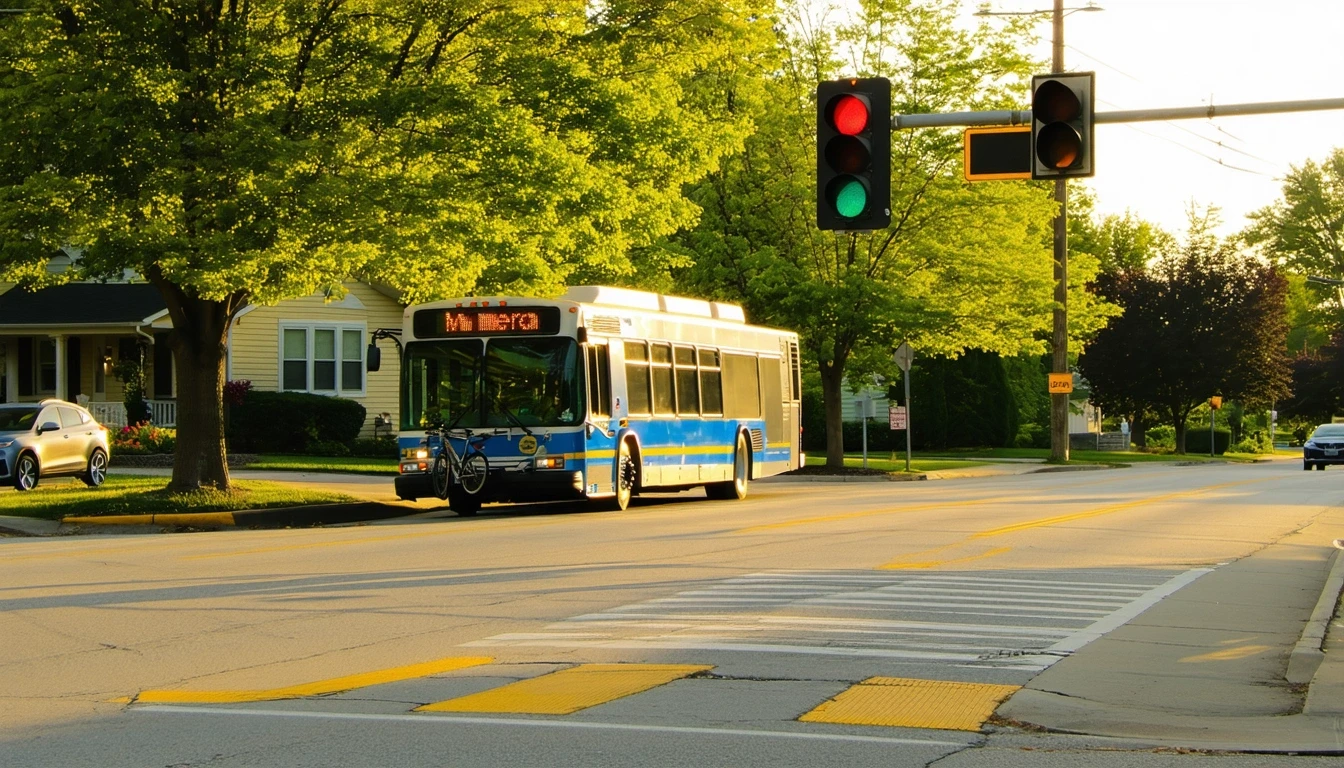
What You’ll Spend on Transit in Arnold
Understanding public transportation costs in Arnold requires a realistic view of what’s available in this suburban St. Louis community. Arnold is primarily a car-dependent suburb, and unlike the urban core of St. Louis, it lacks extensive fixed-route transit service within city limits. Most residents who use public transit connect to the broader Metro Transit system through nearby park-and-ride facilities or drive to stations in neighboring communities. With a COLI of 83.2, overall living costs in Arnold trend below the U.S. average, which often extends to transit and commuting—though the trade-off is limited service frequency and coverage.
For those who do connect to Metro Transit (the regional provider serving the St. Louis area), a standard one-way bus or MetroLink light rail fare is $2.50, with a 30-day pass priced at $78. These fares apply once you reach a Metro Transit route, typically requiring a short drive to a park-and-ride lot or transfer point. Because Arnold itself has minimal direct transit service, most residents budget for occasional regional trips rather than daily commuting by bus or rail. If you’re planning to use transit regularly from Arnold, expect to factor in both the pass cost and the logistics of reaching a connecting route.
In practice, many Arnold residents find that public transit works best for occasional trips into downtown St. Louis or to major employment centers rather than daily commuting. The average commute time in Arnold is around 28 minutes, and for most, that’s by car. Transit users often add 15–30 minutes to their trip depending on connection points and service frequency. While Metro Transit offers reliable service once you’re on board, the first-mile/last-mile challenge in a suburban setting like Arnold means transit costs are just one piece of the commuting puzzle.
How to Get Around Arnold
Arnold does not have its own municipal transit system or direct light rail service. Instead, residents rely on Metro Transit, the regional provider that operates MetroBus routes and the MetroLink light rail system throughout the St. Louis metropolitan area. To access these services from Arnold, most riders drive to nearby park-and-ride lots or connect via express routes that serve Jefferson County and South County areas. The closest MetroLink stations are typically 15–20 minutes away by car, making transit a multi-modal commute for Arnold residents.
Metro Transit offers several fare options that work for Arnold-area commuters. A single ride on MetroBus or MetroLink costs $2.50, with free transfers within two hours. For regular riders, a 30-day pass at $78 provides unlimited trips, and reduced fares are available for seniors, people with disabilities, and students. Metro also operates Call-A-Ride, a paratransit service for eligible riders, though service areas and eligibility requirements apply. Because Arnold is outside the core service area, transit options are limited to regional connections rather than neighborhood-level routes.
- MetroBus: Regional routes connecting South County and Jefferson County to downtown St. Louis and major employment centers
- MetroLink: Light rail service accessible via park-and-ride lots; closest stations require a short drive from Arnold
- Park-and-Ride: Free parking lots at select MetroLink stations and transit centers, designed for suburban commuters
- Call-A-Ride: Paratransit service for eligible riders with disabilities, available by reservation
Monthly Cost Breakdown
For Arnold residents who use Metro Transit regularly, monthly costs depend heavily on how often you ride and whether you can justify the upfront cost of a pass. Below is a breakdown of three common commuting profiles, reflecting 2025 Metro Transit fares. Keep in mind that these estimates assume you’ve already reached a Metro Transit route—most Arnold residents will need to drive to a park-and-ride lot first, which may add minimal cost if parking is free but does require vehicle access.
| Rider Profile | Trips per Month | Cost with Single Fares | Cost with 30-Day Pass |
|---|---|---|---|
| 5-Day Weekly Commuter | ~40 trips (20 round-trips) | $100 | $78 |
| Weekend-Only User | ~8 trips (4 round-trips) | $20 | Not cost-effective |
| Heavy Daily Commuter | ~50+ trips (25+ round-trips) | $125+ | $78 |
Estimates reflect 2025 Metro Transit fares for standard adult riders ($2.50 per ride, $78 for a 30-day pass). Actual costs may vary depending on discounts, pass types, and commuting frequency. For Arnold residents, these costs apply once you’ve reached a Metro Transit route; most will drive to a park-and-ride lot as part of their commute.
Is Public Transit Worth It in Arnold?
For most Arnold residents, the question isn’t just about fare costs—it’s about whether transit fits into a suburban lifestyle built around car ownership. With gas at $2.61 per gallon, a daily driver commuting 28 minutes each way might spend $120–$180 per month on fuel alone, depending on vehicle efficiency and exact distance. Add in parking fees (if applicable downtown), insurance, and maintenance, and the cost gap narrows—but only if you’re commuting to a destination well-served by Metro Transit. For trips into downtown St. Louis or to major employers along MetroLink corridors, transit can be competitive. For local errands, school drop-offs, or jobs in other suburban areas, a car remains essential.
Service frequency is another consideration. MetroBus routes serving South County and Jefferson County typically run every 30–60 minutes during peak hours, with reduced service on weekends and evenings. MetroLink offers more frequent service (every 10–15 minutes during rush hour), but reaching a station from Arnold adds time and requires a car or carpool. The average bus commute in the St. Louis region is around 45 minutes, and for Arnold residents connecting via park-and-ride, total door-to-door time often exceeds an hour. If your work schedule is flexible and your destination is transit-accessible, it can work—but for many, the convenience of driving outweighs the modest savings.
Walkability and neighborhood design also play a role. Arnold is a car-oriented suburb with limited sidewalk infrastructure and few mixed-use areas, so even if you take transit for your commute, you’ll likely still need a car for daily life. That said, for households trying to reduce vehicle expenses or avoid downtown parking costs, using transit for work trips while keeping a car for other needs can be a practical middle ground. In Arnold, public transit is best viewed as a supplement to car ownership rather than a full replacement, offering savings and convenience for specific trips rather than comprehensive mobility.
Ways to Save on Transit
If you’re planning to use Metro Transit regularly from Arnold, a few strategies can help you stretch your transit budget further. The most straightforward is to buy a 30-day pass if you’re commuting at least 16 times per month—at that frequency, the $78 pass pays for itself compared to single fares. Metro Transit also offers reduced-fare programs for seniors (ages 65+), people with disabilities, and Medicare cardholders, cutting the single-ride fare to $1.25 and the monthly pass to $39. Students may qualify for discounted passes through participating schools and universities, so check with your institution’s transportation office.
Employer-subsidized transit programs are another option worth exploring. Some St. Louis-area employers offer pre-tax commuter benefits or direct pass subsidies as part of their benefits packages, allowing you to pay for transit with pre-tax dollars and effectively reduce your cost by 20–30% depending on your tax bracket. Even if your employer doesn’t offer a formal program, it’s worth asking—Metro Transit provides resources for employers interested in setting up commuter benefits. For occasional riders, take advantage of the two-hour free transfer window to chain trips together and maximize the value of a single $2.50 fare.
- Buy a 30-day pass if you’re commuting 16+ times per month to break even on fare costs
- Apply for reduced fares if you’re a senior, student, or person with a disability—monthly passes drop to $39
- Use pre-tax commuter benefits if your employer offers them, saving 20–30% on pass costs
- Maximize free transfers within the two-hour window to combine errands and reduce per-trip costs
- Carpool to park-and-ride lots with neighbors or coworkers to share the first-mile drive and reduce vehicle wear
🏆 Tip: In Arnold, using a 30-day Metro Transit pass instead of daily fares can save frequent commuters up to $22 per month—and pairing transit with carpooling to the park-and-ride lot can cut your household vehicle costs even further.
FAQs About Transit in Arnold
What is the cheapest way to get around Arnold in 2025?
For local trips within Arnold, driving remains the most practical option due to limited transit service. For commutes into St. Louis or regional destinations, Metro Transit offers the lowest per-trip cost at $2.50 per ride, or $78 for unlimited monthly travel if you commute regularly.
How much does the average commuter spend monthly on public transit in Arnold?
Most Arnold residents who use Metro Transit spend around $78 per month for a 30-day pass, which covers unlimited trips once you’ve reached a MetroBus route or MetroLink station. Occasional riders spending less than $20–$30 per month typically stick with single fares rather than passes.
Does Arnold offer park-and-ride or express bus options for commuters?
Arnold itself does not operate park-and-ride facilities, but nearby Metro Transit stations and transit centers in South County and Jefferson County offer free parking for commuters. Express bus routes are limited, with most service focused on connecting suburban areas to downtown St. Louis during peak hours.
What discounts are available for students, seniors, or low-income riders in Arnold?
Metro Transit offers reduced fares for seniors (65+), people with disabilities, and Medicare cardholders at $1.25 per ride or $39 for a monthly pass. Students may qualify for discounted passes through participating schools, and some social service agencies provide transit assistance for low-income riders.
How does the cost of public transportation in Arnold compare to driving?
With gas at $2.61 per gallon, a typical Arnold commuter driving 28 minutes each way might spend $120–$180 per month on fuel alone, plus insurance, maintenance, and parking. A Metro Transit pass at $78 per month is cheaper for frequent commuters, but only if your destination is well-served by transit and you can manage the first-mile connection to a route.
Getting Around Smarter in Arnold
Public transportation in Arnold is less about replacing your car and more about finding strategic opportunities to save on commuting costs. If you work downtown or along a MetroLink corridor and can reliably connect to Metro Transit, plan $78 per month for a 30-day pass and budget extra time for the park-and-ride connection. For occasional riders or those with flexible schedules, single fares at $2.50 per trip offer a low-commitment way to test whether transit fits your routine. With gas at $2.61 per gallon, even modest transit use can offset fuel and parking costs—but for most Arnold households, a car will remain essential for daily life.
The key is to think of transit as a tool for specific trips rather than a comprehensive solution. If your employer is downtown, if you’re attending an event in the city, or if you’re trying to reduce your household’s vehicle expenses, Metro Transit offers a reliable and affordable option once you’ve navigated the first-mile challenge. For everything else—groceries, school runs, local errands—Arnold’s suburban layout and limited walkability mean you’ll still need access to a car. The smartest approach is to evaluate your own commute patterns, calculate the true cost of driving versus transit, and use both strategically based on the trip.
Ready to see how transit costs fit into your overall monthly budget? Explore our full budget guide for Arnold to understand how transportation, housing, and other expenses come together—and make informed decisions about where your money goes in 2025.