
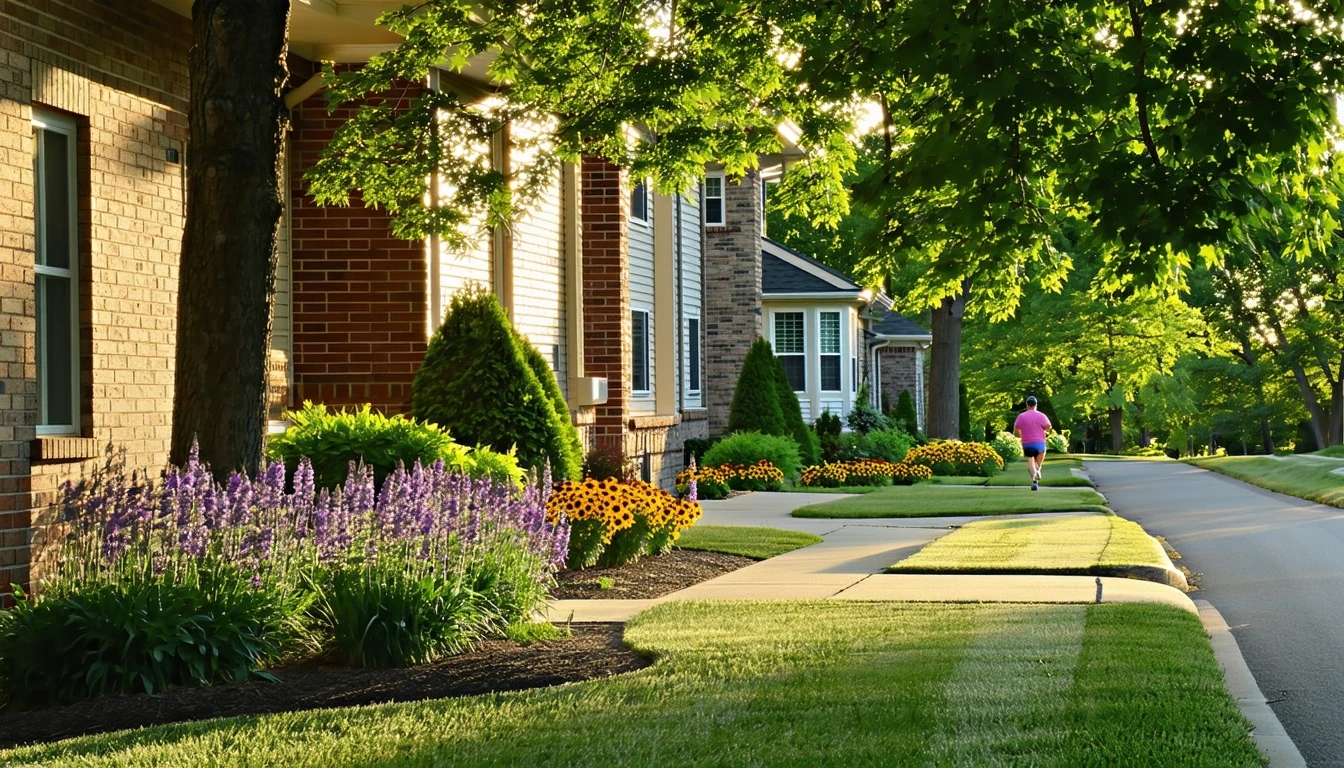
Apartment vs House in Saint Peters — Monthly Cost Comparison
| Expense Category | Apartment | House |
|---|---|---|
| Base Housing Cost | $1,186/month (median rent) | ~$1,100–1,300/month (mortgage on $237,100 median home, varies by rate and down payment) |
| Electricity | Lower exposure—smaller footprint, shared walls reduce heating/cooling load | Higher exposure—detached structure, full HVAC responsibility at 11.91¢/kWh |
| Natural Gas (Heating) | Minimal or included—many apartments use central systems | Direct exposure during cold months at $16.48/MCF |
| Water/Sewer/Trash | Often included in rent | Billed separately, varies by usage and household size |
| Maintenance & Repairs | Landlord responsibility—predictable monthly cost | Owner responsibility—irregular but unavoidable (HVAC, roof, appliances) |
| Property Taxes | None (embedded in rent) | Direct annual bill, subject to reassessment and levy changes |
| Insurance | Renters insurance—typically $15–25/month | Homeowners insurance—higher coverage, higher premium |
Why these differences matter in Saint Peters: The city’s mixed building character and moderate climate create meaningful cost splits between apartments and houses. Apartments buffer utility volatility through shared infrastructure and landlord-managed systems, while houses expose owners to full seasonal swings—especially natural gas during winter months and electricity during summer cooling. Maintenance unpredictability is the largest hidden gap: apartments convert irregular repair risk into stable rent, while houses require cash reserves for systems that fail without warning. Property tax exposure adds another layer of long-term uncertainty for owners, absent from the renter experience.
Omitted categories: HOA fees are excluded because prevalence data is unavailable and fee structures vary widely across Saint Peters neighborhoods. Commute costs are not included as they depend on household employment location rather than housing type. Lawn care and snow removal are neighborhood- and preference-dependent, not universal.
The Housing Market in Saint Peters Today
Saint Peters sits in the outer suburban ring of the St. Louis metro, shaped by its role as a commuter-oriented community with a stable employment base and family-focused infrastructure. The cost structure reflects a housing market that balances accessibility with proximity to regional job centers—home values remain below the metro’s high-cost western suburbs, but the city’s school infrastructure and park access sustain steady demand from families looking to settle rather than speculate.
What newcomers often misunderstand is that Saint Peters is not a uniform suburb. The city’s development spans decades, and its neighborhoods vary significantly in walkability, errands accessibility, and infrastructure maturity. Some areas feature walkable pockets with higher pedestrian-to-road ratios and notable bike infrastructure, allowing residents to handle daily errands without full car dependency. Other neighborhoods are more corridor-clustered, with grocery and food options concentrated along commercial strips—requiring intentional planning or a second vehicle for household logistics. This internal variation means that two households paying similar housing costs can experience very different day-to-day friction depending on where they land within the city.
The regional price parity index of 96 signals that Saint Peters operates slightly below the national baseline, but that advantage is modest—it does not translate into dramatic affordability compared to peer suburbs. Instead, the city’s housing market is defined by predictability: values are stable, inventory turns over steadily, and the buyer pool consists primarily of families and first-time owners rather than investors or flippers. For renters, the market is tighter—median gross rent of $1,186 per month reflects limited apartment supply relative to single-family stock, and vacancies fill quickly in neighborhoods with better errands access or school proximity.
Saint Peters also benefits from a low unemployment rate of 3.1%, which supports housing demand but also means that competition for well-located rentals and starter homes remains consistent. The city’s housing market does not experience the dramatic swings seen in speculative metros, but it also does not offer the deep discounts that come with economic distress or population loss. For buyers and renters alike, the market rewards those who understand the tradeoffs between location, access, and long-term cost exposure.
Renting in Saint Peters
Renting in Saint Peters means navigating a market where single-family homes dominate the housing stock and apartment inventory is limited. Median gross rent of $1,186 per month reflects this supply constraint—apartments and rental homes in desirable neighborhoods, particularly those with walkable access to schools, parks, or corridor-clustered grocery options, fill quickly and rarely sit vacant. Renters who prioritize proximity to errands or pedestrian-friendly streets will find their options concentrated in specific pockets of the city, while those willing to drive for daily needs gain access to a broader range of properties at similar or slightly lower price points.
The rental experience in Saint Peters is shaped by the city’s infrastructure and household composition. Families with school-age children often compete for rentals near the city’s moderate-density school zones, where school infrastructure is present but playground density remains low—meaning parents may need to drive to parks or recreational facilities rather than walking. Young professionals and dual-income households without children may find better value in apartments located along commercial corridors, where food and grocery density sits in the medium band and errands can be consolidated into fewer trips, even if walkability is inconsistent.
Rental pressure in Saint Peters is steady rather than volatile. The city does not experience the rapid rent escalation seen in high-growth metros, but it also does not offer the rent relief that comes with oversupply or population decline. Lease renewals typically reflect incremental increases tied to regional inflation and property tax adjustments, rather than speculative jumps. For renters planning to stay multiple years, this predictability is an advantage—budgets remain stable, and the risk of displacement due to sudden rent spikes is lower than in more speculative markets.
One underappreciated tradeoff in Saint Peters is the relationship between rent and mobility. Renters in walkable pockets with higher pedestrian infrastructure can reduce their reliance on a second vehicle, which offsets some of the rent premium in those neighborhoods. Renters in more car-dependent areas may pay slightly less in rent but face higher transportation costs—gas at $2.64 per gallon, vehicle maintenance, and insurance—especially if both adults in a household commute to separate job sites. The rental decision in Saint Peters is not just about the monthly check to the landlord; it is about the total friction and cost of running a household in a specific location.
Owning a Home in Saint Peters
Owning a home in Saint Peters means taking on a median home value of $237,100, which sits comfortably below the extremes of the St. Louis metro’s high-cost western suburbs but still requires dual income or substantial savings for most first-time buyers. The ownership experience here is defined less by the purchase price and more by the long-term exposures that follow: property taxes, maintenance, utilities, and the structural rigidity that comes with locking into a specific neighborhood’s infrastructure and access profile.
Property taxes in Saint Peters are a direct, recurring cost that renters never see itemized. While the specific rate is not provided in available data, Missouri’s property tax structure means that homeowners face annual bills subject to reassessment cycles and local levy changes. Unlike rent, which consolidates all housing costs into a single predictable payment, ownership splits expenses into visible (mortgage, insurance) and irregular (taxes, repairs, system failures) categories. Homeowners must budget not just for the monthly payment but for the volatility that comes with aging systems—HVAC replacement, water heater failure, roof wear—and the seasonal utility swings that hit harder in detached single-family homes than in apartments with shared walls and landlord-managed systems.
Saint Peters’s mixed building character and moderate climate create specific ownership exposures. Winters bring natural gas heating costs at $16.48 per MCF, and summers require sustained air conditioning at 11.91¢ per kWh. For illustrative context, a typical household using 1,000 kWh per month would face roughly $119 in electricity costs during peak cooling months, before fees and taxes. Natural gas exposure during heating months adds another layer, with usage spiking during cold stretches. These are not catastrophic costs, but they are less predictable than rent, and they compound when maintenance events—furnace repair, insulation upgrades—arrive without warning.
The ownership advantage in Saint Peters is control and stability. Homeowners lock in their base housing cost (the mortgage principal and interest) and gain the ability to modify their property, choose their maintenance priorities, and avoid the risk of lease non-renewal or rent increases. For families with school-age children, ownership also provides continuity—staying in the same school zone, building neighborhood relationships, and accumulating equity over time. But that stability comes with exposure: property taxes can rise, insurance premiums can adjust, and the cost of maintaining a house in a region with cold winters and hot summers does not flatten over time.
Saint Peters is not a city where homeownership is out of reach, but it is also not a market where ownership is automatically cheaper than renting. The decision hinges on household composition, income stability, and tolerance for irregular expenses. Buyers who understand the difference between mortgage affordability and total cost of ownership—and who can absorb the maintenance and utility volatility that comes with a detached home—will find Saint Peters a stable, family-friendly market. Those who prioritize predictability and minimal responsibility may find that renting, despite its lack of equity accumulation, better aligns with their risk profile.
Utilities & Upkeep Differences
Utilities and maintenance in Saint Peters behave differently depending on whether you rent an apartment or own a house, and the city’s climate and housing stock amplify those differences. Saint Peters experiences cold winters that drive natural gas heating demand and hot, humid summers that require sustained air conditioning. These seasonal swings hit homeowners directly, while apartment renters benefit from shared-wall insulation and landlord-managed systems that buffer individual exposure.
For homeowners, electricity at 11.91¢ per kWh and natural gas at $16.48 per MCF are the baseline rates, but the real cost driver is intensity and duration. A detached single-family home in Saint Peters will cycle its HVAC system heavily during both winter and summer, and older homes with less efficient insulation or aging furnaces will see sharper spikes. Homeowners also carry the full responsibility for system failure—when a furnace dies in January or an air conditioner fails in July, the repair or replacement cost lands immediately, often in the range of several thousand dollars. Apartment renters face none of this exposure; their utility bills are lower due to smaller square footage and shared infrastructure, and emergency repairs are the landlord’s problem.
Water, sewer, and trash collection add another layer of cost variability for homeowners. These services are billed separately in most single-family neighborhoods, and costs scale with household size and usage patterns. Apartment renters typically see these costs bundled into rent or covered by the landlord, which simplifies budgeting and eliminates the risk of seasonal spikes (such as higher water bills during summer lawn irrigation). For homeowners, these are small but persistent line items that renters never track.
Maintenance and upkeep differences are where the apartment-versus-house split becomes most visible. Apartments convert irregular repair risk into stable monthly rent—the landlord absorbs the cost of appliance replacement, plumbing failures, and structural wear. Homeowners in Saint Peters must budget for these events themselves, and the city’s mixed building character means that housing age and construction quality vary widely across neighborhoods. Older homes near the city’s core may require more frequent HVAC service, window sealing, and roof maintenance, while newer construction in outer subdivisions may offer a grace period before major systems need attention. But all homeowners face the same structural reality: maintenance costs are irregular, unavoidable, and often arrive in clusters.
The upkeep burden also extends to outdoor responsibilities. Homeowners in Saint Peters handle their own lawn care, snow removal, and exterior maintenance, which adds both time and cost—equipment, seasonal services, or DIY labor. Apartment renters are insulated from these tasks entirely, which matters more in a climate with cold winters and hot, humid summers that stress both lawns and driveways. For households without the time, tools, or inclination to manage property upkeep, this difference is not trivial—it is a recurring friction that shapes daily life and long-term satisfaction.
Rent vs Buy: Long-Term Exposure in Saint Peters
The rent-versus-buy decision in Saint Peters is not a simple math problem—it is a choice between two different risk profiles, each with distinct exposures over time. Renting offers predictability and flexibility: monthly costs are stable, maintenance is someone else’s problem, and the ability to relocate without selling a property remains intact. Buying offers control and equity accumulation, but it also locks households into long-term exposure to property taxes, maintenance volatility, and the structural costs of homeownership that do not flatten as the mortgage ages.
Renters in Saint Peters face one primary long-term risk: rent increases over time. Lease renewals typically reflect incremental adjustments tied to regional inflation, property tax changes, and landlord operating costs. These increases are not catastrophic in Saint Peters—the city’s rental market is stable rather than speculative—but they are persistent. A renter who stays in the same apartment for five or ten years will see their monthly payment drift upward, and they will accumulate no equity in exchange. The tradeoff is that renters avoid the irregular, high-cost events that define homeownership—HVAC replacement, roof repair, appliance failure—and they retain the ability to move without transaction costs if their household needs or employment situation changes.
Homeowners in Saint Peters face a different set of exposures. The mortgage principal and interest payment is fixed (for those with fixed-rate loans), which provides a stable baseline that rent cannot match. But property taxes, insurance, and maintenance costs are not fixed—they rise over time, sometimes gradually and sometimes in jumps. Property taxes adjust with reassessment cycles and local levy changes, and while Missouri does not have the extreme tax volatility seen in some states, the direction is consistently upward. Homeowners insurance premiums also drift higher as replacement costs and regional risk profiles shift. And maintenance costs compound as homes age: the furnace that was new at purchase will need replacement within 15–20 years, the roof will require attention, and appliances will cycle through their lifespans.
The long-term advantage of ownership in Saint Peters is equity accumulation and the elimination of housing payment risk in retirement. A homeowner who pays off their mortgage in 30 years will still face property taxes, insurance, and maintenance, but they will no longer carry a monthly housing payment—a significant reduction in fixed costs during retirement. Renters, by contrast, will continue paying rent indefinitely, with no endpoint and no equity cushion. For households planning to stay in Saint Peters long-term, this is the core argument for ownership: the ability to convert decades of housing payments into an owned asset rather than a landlord’s income stream.
But ownership also reduces flexibility. Selling a home in Saint Peters requires transaction costs (agent commissions, closing fees, potential repairs to make the property marketable) and time. Renters can relocate with a lease termination and a security deposit refund. For households with uncertain employment, family obligations in other regions, or a preference for mobility, renting preserves optionality that ownership eliminates. The decision is not about which option is cheaper—it is about which risk profile and time horizon align with the household’s goals and constraints.
One often-overlooked factor in Saint Peters is the relationship between housing choice and household logistics. Homeowners who buy in walkable pockets with better errands accessibility may reduce their need for a second vehicle, which offsets some of the ownership cost premium. Renters in car-dependent neighborhoods may pay less in rent but face higher transportation and time costs. The long-term calculus is not just about housing payments—it is about the total cost and friction of running a household in a specific location, and how that cost structure evolves as the household ages, incomes shift, and infrastructure needs change.
FAQs About Housing Costs in Saint Peters
Is it cheaper to rent or buy in Saint Peters, MO?
Neither option is universally cheaper—it depends on time horizon and household priorities. Median rent of $1,186 per month is comparable to a mortgage payment on the median home value of $237,100, but ownership adds property taxes, maintenance, and utility exposure that renters avoid. Short-term residents and those prioritizing flexibility will find renting more cost-effective. Long-term residents who can absorb irregular maintenance costs and want to build equity will benefit from ownership, especially as the mortgage principal is paid down and housing payment risk is eliminated in retirement.
How much do utilities cost for a house in Saint Peters?
Utility costs depend on home size, age, and seasonal intensity. Electricity at 11.91¢ per kWh and natural gas at $16.48 per MCF are the baseline rates, but actual bills vary with heating and cooling demand. For illustrative context, a typical household using 1,000 kWh per month would face roughly $119 in electricity costs during peak summer months, before fees and taxes. Natural gas usage spikes during winter heating months, with costs rising as outdoor temperatures drop. Older homes with less efficient insulation or aging HVAC systems will see higher bills than newer construction.
What neighborhoods in Saint Peters have the best housing value?
Housing value in Saint Peters is not just about price—it is about the relationship between cost, access, and household fit. Neighborhoods with walkable pockets, higher pedestrian infrastructure, and proximity to corridor-clustered grocery and food options offer lower transportation friction, which can offset higher home prices or rents. Families with school-age children should prioritize neighborhoods near the city’s moderate-density school zones, even though playground density is low and park access may require driving. Buyers and renters should evaluate total household cost—housing, transportation, time—rather than focusing solely on the purchase price or monthly rent.
Are property taxes high in Saint Peters, MO?
Specific property tax rates are not provided in available data, but Missouri’s property tax structure means that homeowners in Saint Peters face annual bills subject to reassessment cycles and local levy changes. Property taxes are a recurring, non-negotiable cost of ownership, and they rise over time as home values are reassessed and local governments adjust levies to fund schools, infrastructure, and services. Renters do not pay property taxes directly, though taxes are embedded in rent. Homeowners should budget for property tax increases as a long-term exposure that does not disappear when the mortgage is paid off.
How does Saint Peters compare to other St. Louis suburbs for housing costs?
Saint Peters sits in the middle range of St. Louis metro housing costs—below the high-cost western suburbs but above the most affordable outer-ring communities. The median home value of $237,100 and median rent of $1,186 per month reflect a market that balances accessibility with proximity to regional job centers. The city’s regional price parity index of 96 signals costs slightly below the national baseline, but the advantage is modest. Households comparing Saint Peters to other suburbs should evaluate not just housing costs but also transportation friction, school infrastructure, and errands accessibility—factors that vary significantly across the metro and affect total cost of living.
Making Housing Choices in Saint Peters
Housing costs in Saint Peters are shaped by the city’s role as a stable, family-oriented suburb with moderate home values, limited rental supply, and internal variation in walkability and errands access. The decision to rent or buy is not about finding the cheapest option—it is about matching housing choice to household priorities, time horizon, and tolerance for cost volatility. Renters gain predictability and flexibility but accumulate no equity and face persistent rent increases over time. Homeowners gain control and long-term stability but take on property tax exposure, maintenance unpredictability, and the full weight of utility and upkeep costs in a climate with cold winters and hot, humid summers.
The city’s mixed building character and corridor-clustered errands infrastructure mean that location within Saint Peters matters as much as the choice between renting and owning. Walkable pockets with higher pedestrian and bike infrastructure reduce car dependency and household logistics friction, which can offset higher housing costs. Neighborhoods where grocery and food options require driving add transportation and time costs that do not appear on the rent or mortgage statement but shape daily life and long-term satisfaction. Households making housing decisions in Saint Peters should evaluate total cost and friction—not just the monthly payment—and recognize that the city’s infrastructure and access profile vary significantly across its neighborhoods.
For more context on how housing costs fit into the broader financial picture, see the real cost pressures in Saint Peters. And for households planning a move, the best moving companies guide offers practical logistics support.
How this article was built: In addition to public economic data, this article incorporates location-based experiential signals derived from anonymized geographic patterns—such as access density, walkability, and land-use mix—to reflect how day-to-day living actually feels in Saint Peters, MO.