
St. Charles sits along the Missouri River as one of the established anchors of the St. Louis metro, blending historic neighborhoods with suburban expansion. The housing market here reflects that duality: median home values of $259,700 position ownership within reach for many households earning near the city’s median income of $83,589 per year, while median rent of $1,115 per month offers an alternative that trades long-term cost predictability for near-term flexibility. Understanding what shapes the cost of living in St. Charles starts with recognizing that housing decisions here are less about sticker price and more about exposure—how taxes, maintenance, utilities, and access patterns compound over time in ways that differ sharply between renting and owning.
What newcomers often miss is that St. Charles’s housing costs don’t behave uniformly across the city. Mixed building heights and integrated residential-commercial land use create pockets where walkability and errand access reduce the friction of daily life, while other areas remain car-dependent with grocery and services clustered along commercial corridors. That structural variation means two households paying similar rent or mortgage amounts can experience very different cost burdens depending on how often they need to drive, how far utilities stretch during seasonal extremes, and whether their housing type insulates them from—or exposes them to—the ongoing maintenance demands of an older housing stock.
The Housing Market in St. Charles Today
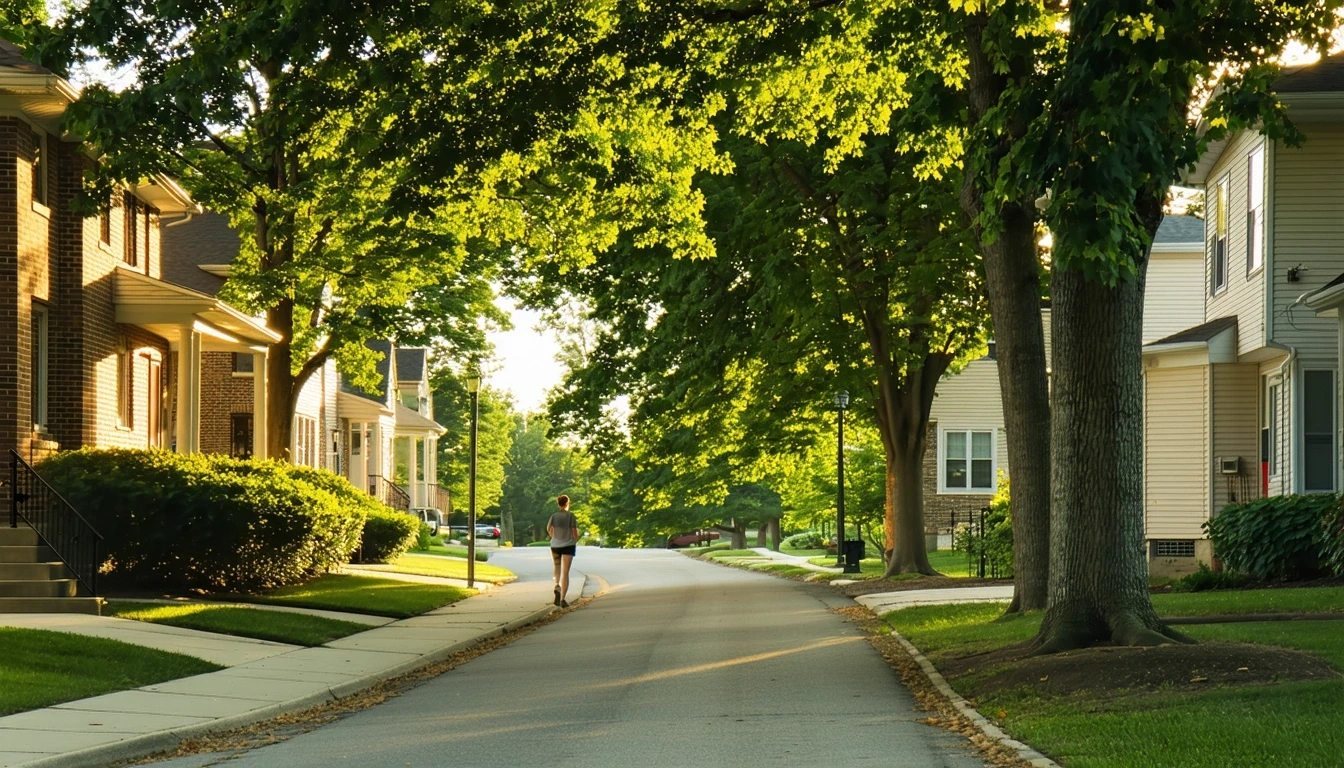
St. Charles’s housing market is shaped by its role as a mature suburb with deep roots—founded in 1769, it predates much of the westward expansion that defined the region. That history shows up in the housing stock: red-brick homes, tree-lined streets, and neighborhoods built across multiple decades create a market where home age, lot size, and proximity to the historic downtown or newer commercial corridors all influence both price and ongoing cost exposure. The city’s position within the broader St. Louis metro means it competes with other established communities for buyers seeking space, schools, and a slower pace than the urban core, but without the isolation of exurban development.
The median home value of $259,700 reflects a market that has remained accessible relative to income, but that figure alone doesn’t capture the full cost picture. Older homes—common in the city’s central and riverside neighborhoods—often come with charm and larger lots, but also with heating and cooling systems that work harder during St. Charles’s hot, humid summers and cold winters. Newer construction, typically found in the city’s expanding edges, may offer better insulation and modern mechanicals, but often includes homeowners’ association fees and smaller lots. The unemployment rate of 3.1% signals a stable local economy, which supports housing demand but also means inventory moves quickly when priced appropriately.
What distinguishes St. Charles from peer cities in the metro is its infrastructure maturity. Schools are present at moderate density, parks and water features provide outdoor access, and clinics serve routine healthcare needs even without a hospital in city limits. For buyers, this translates to a housing market where the cost of entry is moderate, but the cost of staying—property taxes, maintenance, utilities—requires more active management than in newer, more homogenous suburban markets.
Renting in St. Charles
Renting in St. Charles at a median of $1,115 per month positions tenants in a market where rental stock varies widely by location and building type. Apartments clustered near commercial corridors offer proximity to grocery stores and services, reducing the need for constant driving, while single-family rentals in residential neighborhoods often require more intentional trip planning. The city’s bus-only transit system provides basic connectivity, but most renters still rely on cars for commuting and errands, which means transportation costs layer on top of rent in ways that differ depending on where within St. Charles a household settles.
Rental pressure in St. Charles is influenced by the broader St. Louis metro dynamics: when urban core rents rise or when employers expand in nearby corridors, demand for St. Charles rentals ticks up. But because the city’s housing stock includes a mix of older duplexes, mid-rise apartments, and single-family homes converted to rentals, availability and condition vary more than in newer suburban markets. Renters should expect that units in older buildings may have higher utility costs due to less efficient heating and cooling systems, while newer apartments may bundle some utilities but charge higher base rent.
The key advantage of renting here is insulation from the maintenance and tax exposure that comes with ownership. When an HVAC system fails during a summer heat wave or a winter cold snap, the landlord absorbs the replacement cost. But renters also face annual lease renewals in a market where rent adjustments track both local demand and metro-wide trends, creating year-to-year uncertainty that ownership avoids. For households prioritizing flexibility—those unsure of job stability, testing the metro before committing, or avoiding the upfront costs of a down payment—renting in St. Charles offers a rational path, provided they account for transportation and utility variability in their monthly budget.
Owning a Home in St. Charles
Owning a home in St. Charles shifts the cost structure from predictable monthly rent to a mix of fixed mortgage payments and variable expenses that respond to the home’s age, condition, and the city’s climate. The median home value of $259,700 translates to a mortgage that many households earning near the city’s median income can manage, but ownership introduces obligations that renters avoid: property taxes, homeowners insurance, maintenance, and the full weight of utility bills that fluctuate with seasonal heating and cooling demands.
Property taxes in St. Charles fund schools, infrastructure, and municipal services, and while specific rates aren’t provided in the data, Missouri’s property tax structure means that older homes in established neighborhoods and newer homes in developing areas can carry different effective tax burdens due to assessment timing and local levies. Homeowners should expect that tax bills adjust over time, particularly after reassessments or voter-approved levies, creating a cost that rises independently of the mortgage. Homeowners’ associations, common in newer subdivisions, add another layer of monthly or annual fees in exchange for neighborhood amenities and exterior maintenance, but those fees are not universal across the city.
Maintenance exposure in St. Charles is directly tied to home age and construction quality. Older homes—especially those built before modern insulation and HVAC standards—require more frequent furnace, air conditioning, and weatherization work to keep utility costs manageable. Roofs, siding, and foundations in a climate with freeze-thaw cycles and summer storms demand periodic attention, and those costs arrive unpredictably. Newer homes reduce some of that exposure in the early years, but eventually face the same replacement cycles. Ownership also means managing yard work, snow removal, and exterior upkeep that landlords handle for renters.
The long-term value of ownership in St. Charles lies in cost predictability and control. A fixed-rate mortgage locks in the largest monthly expense, insulating owners from the rent increases that renters face. Owners can invest in efficiency upgrades—better insulation, programmable thermostats, high-efficiency HVAC—that reduce utility bills over time, a lever renters don’t control. And ownership builds equity, turning monthly payments into a financial asset rather than a sunk cost. But those advantages come with the obligation to stay solvent through maintenance surprises, tax increases, and the opportunity cost of capital tied up in the home.
Apartment vs House in St. Charles — Cost Behavior Comparison
| Expense Category | Apartment | House |
|---|---|---|
| Heating & Cooling | Shared walls and smaller square footage reduce exposure; landlord often controls system efficiency | Full envelope exposure to St. Charles’s hot summers and cold winters; owner responsible for system efficiency and replacement |
| Maintenance Obligation | Landlord handles HVAC, appliances, exterior, and structural repairs; tenant risk limited to lease terms | Owner absorbs all repair and replacement costs; older homes in St. Charles require more frequent intervention |
| Exterior & Grounds | No yard work, snow removal, or exterior upkeep; included in rent | Owner manages lawn, trees, driveway, and seasonal clearing; time and cost vary by lot size and home age |
| Property Tax Exposure | None; landlord pays and may pass through indirectly via rent adjustments | Direct annual obligation; increases over time with reassessments and levies |
| Errands & Access | Apartments near commercial corridors reduce driving frequency; walkable pockets exist but are limited | Single-family neighborhoods often require car trips for groceries and services; access varies by location within city |
Why these differences matter in St. Charles: The city’s mixed building stock and corridor-clustered commercial development mean that apartment renters near Main Street or other commercial nodes can reduce transportation costs and time spent on errands, while single-family homeowners in residential neighborhoods face more car dependency. St. Charles’s climate—with extended heating and cooling seasons—makes the efficiency and size of the housing unit a material cost driver, not just a comfort preference. Older homes, common in the city’s established areas, amplify maintenance and utility exposure in ways that newer apartments or houses with modern systems avoid. Categories like HOA fees and insurance are omitted because they vary too widely by property type and location to generalize meaningfully across the city.
Utilities & Upkeep Differences
Utility costs in St. Charles respond directly to the city’s continental climate and the age of the housing stock. Electricity at 13.12¢/kWh powers air conditioning during hot, humid summers, and natural gas at $28.51/MCF fuels heating during cold winters. For apartment renters, smaller square footage and shared walls reduce the total energy load, and landlords often control which systems are installed, meaning tenants inherit whatever efficiency level the building offers. For homeowners, especially those in older single-family houses, utility bills swing more dramatically with the seasons because the entire building envelope—roof, walls, windows, insulation—determines how hard the HVAC system works.
Maintenance exposure diverges sharply between apartments and houses in St. Charles. Apartment tenants call the landlord when the furnace fails or the air conditioner stops cooling; the landlord pays for the service call and any replacement. Homeowners in St. Charles face the full cost of HVAC replacement, which arrives unpredictably but inevitably, particularly in older homes where systems may be nearing end-of-life. Water heaters, roofs, siding, and foundations all demand periodic investment, and the city’s freeze-thaw cycles and summer storms accelerate wear on exterior components. Homes in neighborhoods with mature trees gain shade and curb appeal but also face higher costs for tree maintenance and potential damage during storms.
The magnitude of these differences is not trivial. A house in St. Charles with poor insulation and an aging HVAC system can see utility bills that substantially exceed those of a modern apartment, and the homeowner also carries the risk of a multi-thousand-dollar furnace or air conditioner replacement. Conversely, a homeowner who invests in insulation, a programmable thermostat, and high-efficiency equipment can reduce monthly utility costs below what a renter in an older, poorly maintained building experiences—but only after absorbing the upfront capital cost. Apartment living in St. Charles trades control for predictability; homeownership trades predictability for control and long-term cost reduction potential.
Rent vs Buy: Long-Term Exposure in St. Charles
The structural difference between renting and owning in St. Charles is not about which costs less in year one, but about which risks and obligations each household can manage over time. Renters face the possibility that rent adjusts annually in response to metro-wide demand, local landlord costs, and lease renewal timing. In a stable or growing market like St. Charles—supported by low unemployment and steady regional demand—rent increases are a persistent exposure. Renters avoid property tax increases, maintenance surprises, and the capital risk of home value fluctuations, but they also build no equity and retain no control over long-term housing cost trajectory.
Homeowners in St. Charles lock in their largest monthly expense—the mortgage payment—at the time of purchase, insulating themselves from the rent escalation that tenants face. But ownership introduces volatility in other categories: property taxes can rise with reassessments and voter-approved levies, homeowners insurance premiums adjust with claim history and regional risk, and maintenance costs arrive unpredictably based on home age and component lifespan. A furnace replacement, roof repair, or foundation work can each represent months of rent equivalent, and those costs are non-negotiable when they arrive.
Over a multi-year horizon, ownership in St. Charles offers the potential for lower total housing costs if the home appreciates, if the owner stays long enough to amortize transaction costs, and if maintenance expenses remain manageable. But that outcome is not guaranteed—it depends on the home’s condition at purchase, the owner’s ability to fund repairs without high-interest debt, and the broader metro housing market trajectory. Renters, by contrast, retain flexibility to move without transaction costs, avoid the risk of home value declines, and can redirect capital that would have gone to a down payment into other investments or liquidity reserves.
The decision in St. Charles hinges on household stability, risk tolerance, and time horizon. Buyers who plan to stay five or more years, who can manage maintenance surprises without financial distress, and who value cost predictability and equity accumulation will find ownership advantageous. Renters who prioritize flexibility, who lack the capital for a down payment and closing costs, or who prefer to avoid the operational burden of home maintenance will find renting a rational choice, even if rent increases over time.
How this article was built: In addition to public economic data, this article incorporates location-based experiential signals derived from anonymized geographic patterns—such as access density, walkability, and land-use mix—to reflect how day-to-day living actually feels in St. Charles, MO.
FAQs About Housing Costs in St. Charles
Is St. Charles, MO affordable for first-time homebuyers?
St. Charles offers median home values of $259,700, which many first-time buyers earning near the city’s median household income of $83,589 can approach with conventional financing. Affordability depends on the buyer’s ability to manage not just the mortgage, but also property taxes, insurance, and maintenance costs that vary with home age and location. Buyers should focus on total monthly obligations, not just the purchase price, and consider how utility costs and transportation needs differ across neighborhoods.
How does renting in St. Charles compare to nearby cities in the St. Louis metro?
St. Charles’s median rent of $1,115 per month positions it as a moderate-cost option within the metro, offering more space and a slower pace than the urban core while remaining accessible to regional employment centers. Renters should weigh rent levels against transportation costs, as St. Charles’s bus-only transit and corridor-clustered errands mean most households still need a car. Comparing rent alone without accounting for commute distance and frequency can obscure the true cost difference.
What drives utility costs higher for homeowners in St. Charles?
St. Charles experiences hot, humid summers and cold winters, creating extended heating and cooling seasons. Homeowners in older houses with poor insulation, aging HVAC systems, or single-pane windows face higher utility bills because the home’s envelope works against efficiency. Natural gas heating and electric cooling both represent material costs, and homeowners—unlike renters—control whether to invest in efficiency upgrades that reduce long-term exposure.
Are there neighborhoods in St. Charles where car ownership is less necessary?
St. Charles has walkable pockets with higher pedestrian infrastructure density, particularly near the historic downtown and areas with mixed residential and commercial land use. However, the city’s overall structure remains car-dependent, with grocery stores and services clustered along commercial corridors rather than distributed evenly. Bus service exists but is limited. Households seeking to minimize driving should prioritize proximity to those corridors and accept that true car-free living is challenging here.
How does home age affect ownership costs in St. Charles?
Older homes in St. Charles—common in the city’s central and riverside neighborhoods—often require more frequent maintenance and higher utility spending due to outdated insulation, HVAC systems, and building materials. Roofs, foundations, and mechanical systems in homes built decades ago are closer to replacement, and the city’s freeze-thaw cycles and summer storms accelerate wear. Buyers should budget for deferred maintenance and system upgrades, not just the purchase price, when evaluating older properties.
Making Housing Choices in St. Charles
Housing costs in St. Charles are shaped by the city’s position as a mature, historically rooted suburb within the St. Louis metro, where home values remain accessible but ownership introduces obligations that vary with home age, location, and household capacity to manage maintenance and utility exposure. Renters gain flexibility and avoid the capital and operational risks of ownership, but face ongoing rent adjustments and limited control over housing cost trajectory. Owners lock in mortgage payments and build equity, but absorb property taxes, maintenance surprises, and the full weight of utility bills that respond to the city’s climate extremes.
The households that thrive in St. Charles’s housing market are those who match their choice—rent or buy, apartment or house—to their time horizon, risk tolerance, and daily logistics. Families planning to stay long-term, who value school stability and can manage the operational demands of homeownership, will find the city’s housing stock and cost structure supportive. Renters who prioritize flexibility, lack the capital for ownership, or prefer to avoid maintenance risk will find rental options that offer reasonable access to the metro, provided they account for transportation and utility variability in their planning.
What matters most in St. Charles is understanding that housing costs don’t stop at rent or mortgage—they extend into utilities, transportation, maintenance, and taxes in ways that differ sharply depending on where within the city a household settles and what type of housing they choose. Decisions made with that full cost structure in view are the ones that hold up over time. For more context on how these housing expenses fit into overall household planning, see what a budget has to handle in St. Charles. And for those planning a move, our 2025 moving company picks can help manage the logistics of getting there.