
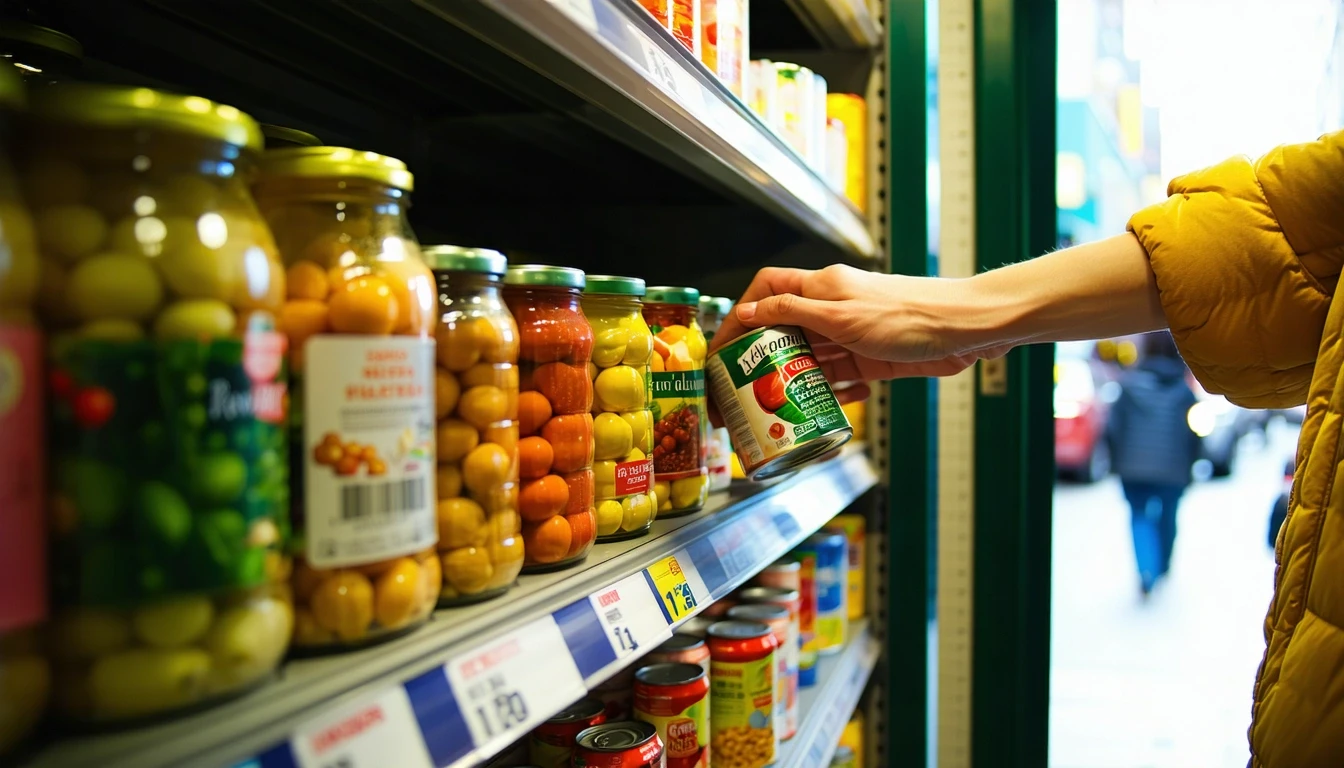
How Grocery Costs Feel in St. Louis
Grocery prices in St. Louis sit comfortably below the national baseline, reflecting the city’s regional price parity index of 96—meaning the overall cost structure here runs about 4% below the U.S. average. For households navigating weekly shopping trips, that translates into moderate pressure rather than acute sticker shock, though the experience varies significantly depending on household size, income, and store choice. A single professional stocking a small pantry will notice different price friction than a family of four filling a cart for the week, and that difference becomes more pronounced when median household income in St. Louis sits at $52,941 per year. Groceries don’t dominate the budget the way housing does, but they’re felt weekly, and for households stretching income across rent, utilities, and transportation, every pricing tier and store decision compounds over time.
What makes grocery costs in St. Louis particularly interesting is the interplay between competitive retail density and varied household sensitivity. The city benefits from high food and grocery establishment density, meaning most neighborhoods offer multiple store options within a reasonable distance—discount chains, mid-tier grocers, and premium markets often coexist within a few miles. That accessibility gives households real leverage: the ability to choose a store tier that matches their budget rather than defaulting to the closest option. For families managing tight margins, that choice isn’t theoretical—it’s the difference between manageable weekly spending and constant tradeoff pressure. Singles and couples, meanwhile, face less volume sensitivity but more per-unit awareness, noticing when staple items creep up in price even if the absolute dollar impact remains modest.
The broader cost-of-living context matters here, too. St. Louis households allocate income across relatively affordable housing (median home value $174,100, median rent $938/month) and moderate utility exposure, which leaves more room for grocery flexibility than in higher-cost metros. But that flexibility isn’t infinite, and for households earning near or below the median, grocery costs become one of the few line items they can actively control week to week. Store choice, shopping frequency, and willingness to shift between tiers become practical tools for managing financial pressure, not just lifestyle preferences.
Grocery Price Signals (Illustrative)
These prices illustrate how staple items tend to compare locally—not a full shopping list or a complete cart, but anchors that help contextualize what “moderate grocery costs” actually means at the shelf level. Derived from national baselines adjusted for regional price parity, they reflect typical mid-tier pricing rather than store-specific promotions or premium organic alternatives. Households shopping discount chains will see lower figures; those favoring specialty or premium stores will see higher. The goal here isn’t checkout accuracy—it’s understanding relative positioning and where price sensitivity tends to surface.
| Item | Typical Price |
|---|---|
| Bread (per pound) | $1.77/lb |
| Cheese (per pound) | $4.65/lb |
| Chicken (per pound) | $1.96/lb |
| Eggs (per dozen) | $2.47/dozen |
| Ground beef (per pound) | $6.48/lb |
| Milk (per half-gallon) | $3.94/half-gallon |
| Rice (per pound) | $1.02/lb |
Protein and dairy tend to drive the most noticeable variation in grocery spending. Ground beef at $6.48/lb and cheese at $4.65/lb represent meaningful line items for families cooking multiple meals per week, and those prices shift noticeably across store tiers. Chicken at $1.96/lb offers a more budget-friendly protein anchor, and rice at $1.02/lb provides an affordable staple base. Eggs at $2.47/dozen remain relatively stable, though they’re subject to seasonal and supply-driven volatility that can push prices higher temporarily. Milk and bread, meanwhile, serve as frequent-purchase items that households notice acutely—small per-unit increases compound quickly when you’re buying them twice a week.
These figures don’t account for organic premiums, specialty diets, or prepared foods, all of which layer additional cost on top of baseline staples. A household prioritizing organic dairy and grass-fed beef will experience meaningfully higher grocery pressure than one shopping conventional mid-tier options, and that gap widens further at premium-focused stores. The takeaway isn’t that one approach is right or wrong—it’s that grocery costs in St. Louis are highly responsive to household choice, and understanding that responsiveness helps clarify where flexibility exists and where it doesn’t.
Store Choice & Price Sensitivity
Grocery price pressure in St. Louis varies more by store tier than by a single “average” experience, and the city’s competitive retail density makes that variation accessible rather than hypothetical. Discount chains anchor the low end, offering no-frills environments with limited selection but consistently lower per-unit pricing on staples—bread, eggs, rice, and chicken often run 15–25% below mid-tier equivalents. These stores thrive on volume and efficiency, stripping out amenities like extensive deli counters or specialty sections in favor of straightforward, price-focused inventory. For families managing tight budgets or households prioritizing cost control over convenience, discount chains provide meaningful relief, turning grocery shopping into a predictable, low-friction expense rather than a source of weekly stress.
Mid-tier grocers occupy the middle ground, balancing price, selection, and convenience. These are the stores most St. Louis households default to—regional chains and national names offering broad product variety, reasonable pricing, and enough amenity (bakery, pharmacy, prepared foods) to make shopping efficient without tipping into premium territory. Prices here align closely with the illustrative figures shown earlier, and for couples and small families, mid-tier stores often hit the sweet spot: competitive enough to avoid sticker shock, convenient enough to support weekly routines without requiring multiple stops. Store loyalty programs and periodic promotions add another layer of value, rewarding consistent shoppers with incremental savings that compound over months.
Premium and specialty grocers serve a different function entirely. These stores emphasize organic selection, prepared meal options, and curated inventory—grass-fed beef, artisan bread, specialty cheeses—at prices that can run 30–50% above mid-tier equivalents. For households prioritizing dietary preferences, convenience, or specific product quality, premium stores justify the cost through selection and experience. But for price-sensitive shoppers, they represent a fundamentally different value proposition, one that trades affordability for choice. The key insight for St. Louis households is that store tier isn’t fixed by geography—most neighborhoods offer access to multiple tiers within a short drive or, in walkable pockets, within walking distance. That accessibility turns store choice into a practical lever, not a lifestyle statement, and households who treat it as such gain meaningful control over their grocery spending.
What Drives Grocery Pressure Here
Income interaction sits at the center of grocery pressure in St. Louis. With median household income at $52,941 per year, a typical household allocates roughly 10–15% of gross income to food, split between groceries and occasional dining out. That leaves meaningful room for flexibility, but not infinite room, and for households earning below the median—service workers, single-income families, retirees on fixed income—grocery costs become one of the few budget categories they can actively manage week to week. Housing and utilities arrive as fixed monthly obligations; groceries, by contrast, respond immediately to behavior. Switching from mid-tier to discount stores, reducing meat purchases, or buying in bulk all produce tangible results within a single shopping cycle, making grocery spending a high-agency line item even when overall financial pressure remains tight.
Household size amplifies sensitivity in predictable ways. A single professional spending $50–70 per week on groceries experiences price increases as mild inconvenience; a family of four spending $150–200 per week feels the same percentage increase as budget stress. Volume purchasing magnifies every per-unit price shift—ground beef rising $0.50/lb means an extra $2–3 per trip for a couple, but $6–8 for a family buying in larger quantities. That dynamic explains why families gravitate toward discount chains and bulk stores more consistently than singles or couples, and why store loyalty programs and promotional cycles matter more to larger households. The math isn’t complicated, but the lived experience diverges sharply depending on how many people you’re feeding and how often you’re shopping.
Regional distribution and access patterns also shape grocery pressure in ways that aren’t immediately visible in price data alone. St. Louis benefits from high grocery density and mixed land use, meaning most households can reach multiple store tiers without long drives. That reduces the “captive shopper” dynamic common in car-dependent suburbs, where limited store access forces households to accept whatever pricing the nearest grocer offers. In St. Louis, walkable pockets and well-distributed retail mean store choice becomes a practical tool, not a theoretical one. Households willing to shop across tiers—discount for staples, mid-tier for variety, occasional premium for specific items—can optimize spending in ways that single-store loyalty doesn’t support. That flexibility doesn’t eliminate grocery pressure, but it shifts the experience from passive acceptance to active management, and for households navigating tight margins, that shift matters.
Practical Ways People Manage Grocery Costs
Store rotation stands out as one of the most effective behavioral strategies for managing grocery costs in St. Louis, leveraging the city’s competitive retail density to reduce spending without sacrificing variety. Households who shop discount chains for staples—rice, bread, eggs, canned goods—and mid-tier stores for produce, dairy, and occasional specialty items often achieve meaningfully lower overall spending than those who default to a single store for convenience. The approach requires modest planning and an extra stop per week, but it avoids the all-or-nothing tradeoff between cost and selection. Families managing tight budgets find this particularly valuable, as it preserves access to variety while controlling the line items that drive the most volume-based cost.
Meal planning and list discipline reduce impulse purchasing and waste, two factors that quietly inflate grocery spending without delivering proportional value. Households who plan meals around sale cycles and seasonal availability—buying chicken when it’s discounted, stocking up on canned tomatoes during promotions—smooth out price volatility and avoid the premium pricing that comes with last-minute shopping. List discipline reinforces this by limiting unplanned purchases, which tend to skew toward higher-margin prepared foods and snacks. The strategy doesn’t require extreme couponing or hours of research; it’s about treating grocery shopping as a planned expense rather than a reactive errand, and the cumulative impact over months is substantial.
Bulk buying and pantry stocking work well for non-perishable staples—rice, pasta, canned goods, frozen vegetables—where per-unit cost drops significantly with volume and storage isn’t a constraint. Families with adequate pantry space and upfront cash flow can reduce per-meal costs by purchasing in bulk during promotions, effectively pre-paying for future meals at lower rates. The approach requires discipline to avoid over-purchasing perishables that spoil before use, but for shelf-stable items, it’s one of the most straightforward ways to reduce long-term grocery pressure. Singles and couples in smaller apartments face more storage constraints, but even modest bulk purchasing—buying a 10-lb bag of rice instead of 2-lb bags, stocking up on canned beans during sales—produces incremental savings that compound over time.
Groceries vs Eating Out (Directional)
The tradeoff between grocery spending and dining out shapes how St. Louis households experience food costs overall, though the balance varies widely by income, household size, and lifestyle preferences. Cooking at home consistently delivers lower per-meal costs than restaurant dining, but it requires time, planning, and upfront grocery investment—factors that matter differently depending on whether you’re a single professional working long hours or a family managing multiple schedules. For households prioritizing cost control, groceries represent the more predictable and controllable expense, while dining out functions as discretionary spending that scales with income and convenience needs. The key insight isn’t that one approach is inherently better, but that the two categories interact: households who cook most meals at home experience grocery costs as a primary food expense, while those who dine out frequently treat groceries as supplemental, reducing volume but not eliminating the line item entirely.
Frequency and occasion drive the financial impact of dining out more than per-meal cost. A household that eats out twice a week spends meaningfully more on food overall than one that dines out twice a month, even if grocery spending remains similar. St. Louis offers a range of dining options across price tiers—fast casual, mid-tier sit-down, upscale—and households who treat dining out as occasional rather than routine find it easier to absorb the cost without destabilizing their broader budget. For families, the volume effect compounds quickly: a $50 restaurant meal for four might replace $15–20 in groceries, creating a net increase that adds up over weeks. Singles and couples face smaller absolute differences, but the proportional impact remains, and for those managing tight margins, even modest dining frequency shifts the overall food budget noticeably.
FAQs About Grocery Costs in St. Louis (2026)
Is it cheaper to shop in bulk in St. Louis? Bulk buying reduces per-unit costs for non-perishable staples like rice, pasta, and canned goods, and St. Louis households with adequate storage space and upfront cash flow can achieve meaningful savings by purchasing in volume during promotions. The approach works best for shelf-stable items and requires discipline to avoid over-purchasing perishables that spoil before use.
Which stores in St. Louis are best for low prices? Discount chains consistently offer the lowest per-unit pricing on staples, running 15–25% below mid-tier grocers on items like bread, eggs, and chicken. Mid-tier stores balance price and selection, while premium grocers emphasize organic and specialty options at higher cost. Most St. Louis neighborhoods offer access to multiple tiers, making store choice a practical lever for managing spending.
How much more do organic items cost in St. Louis? Organic products typically carry a premium of 30–50% over conventional equivalents, with the gap widest for dairy, meat, and produce. Households prioritizing organic selection will experience meaningfully higher grocery costs than those shopping conventional mid-tier options, and that difference compounds quickly for families purchasing in volume.
How do grocery costs for households in St. Louis tend to compare to nearby cities? St. Louis benefits from a regional price parity index of 96, meaning overall costs run about 4% below the national average. Compared to higher-cost metros, grocery pressure here feels moderate, though the experience depends heavily on store choice and household size. Competitive retail density gives St. Louis households more flexibility than cities with limited store access.
How do households in St. Louis think about grocery spending when cooking at home? Cooking at home consistently delivers lower per-meal costs than dining out, and for households managing tight budgets, groceries represent the more predictable and controllable food expense. Store rotation, meal planning, and bulk buying for staples all reduce spending without sacrificing variety, and the city’s high grocery density makes those strategies accessible rather than theoretical.
Do grocery costs in St. Louis vary by season? Seasonal variation affects produce pricing more than staples, with local and regional harvests offering lower prices during peak growing months. Protein and dairy prices remain relatively stable year-round, though supply-driven volatility—particularly for eggs—can create temporary spikes. Households who plan meals around seasonal availability smooth out price fluctuations and avoid premium pricing on out-of-season items.
How does income level affect grocery pressure in St. Louis? With median household income at $52,941, a typical household allocates 10–15% of gross income to food, leaving meaningful flexibility for most. Households earning below the median feel grocery costs more acutely, and for single-income families or retirees on fixed income, store choice and shopping discipline become essential tools for managing financial pressure without sacrificing nutrition or variety.
How Groceries Fit Into the Cost of Living in St. Louis
Groceries occupy a distinct position in the broader cost structure of St. Louis, sitting between the fixed obligations of housing and utilities and the discretionary flexibility of entertainment or travel. Unlike rent or mortgage payments, which arrive as non-negotiable monthly totals, grocery spending responds immediately to household behavior—store choice, meal planning, bulk buying—making it one of the few line items where active management produces tangible results within a single week. That responsiveness gives households a sense of agency even when overall financial pressure remains tight, and for families managing tight margins, that agency matters as much as the absolute dollar savings.
Housing dominates the cost-of-living conversation in most cities, and St. Louis is no exception, with median rent at $938/month and median home value at $174,100 anchoring the budget for most households. Utilities add seasonal variability, particularly during summer cooling months, but they’re largely fixed by usage patterns and infrastructure. Groceries, by contrast, scale with household size, adjust to income constraints, and shift in real time based on store tier and shopping discipline. That makes them a high-leverage category for households seeking to reduce spending without relocating or fundamentally altering their lifestyle, and in a city where housing and transportation remain relatively affordable, grocery costs become one of the primary differentiators between financial comfort and constant tradeoff pressure.
For a complete picture of how grocery spending interacts with rent, utilities, transportation, and other recurring expenses, the monthly budget breakdown for St. Louis provides the full context. Groceries don’t exist in isolation—they’re part of a broader allocation puzzle, and understanding where they fit relative to housing and transportation helps clarify which cost categories offer the most flexibility and which demand the most discipline. The goal isn’t to optimize every line item to the dollar, but to understand where control exists and where it doesn’t, and for St. Louis households navigating moderate cost pressure, that clarity turns grocery shopping from a source of stress into a manageable, predictable part of the budget.
How this article was built: In addition to public economic data, this article incorporates location-based experiential signals derived from anonymized geographic patterns—such as access density, walkability, and land-use mix—to reflect how day-to-day living actually feels in St. Louis, MO.