
It’s 7:15 a.m. on a Tuesday, and Sarah is standing at the corner of Main and Peculiar, waiting for a bus that may or may not come. She moved to Belton three months ago, drawn by the lower rent and the promise of a quieter pace. She doesn’t own a car—never needed one in her last city—and assumed she’d figure out the transit system here. But after weeks of missed connections, long waits, and routes that don’t quite reach her workplace in southern Kansas City, she’s starting to realize that transportation options in Belton are built around a different assumption: that everyone drives.
Belton sits in the Kansas City metro, a region where car ownership isn’t just convenient—it’s foundational. The city’s layout, its commercial corridors, and its residential neighborhoods are all designed with the expectation that people will drive to work, to the grocery store, to school, and back home. Public transit exists in theory, but in practice, it serves a narrow slice of residents and a narrow set of trips. For most people, getting around Belton means owning a car, managing fuel costs, and accepting that commute time is a fixed part of daily life.
This article explains how people actually get around Belton in 2026, what transit options exist (and where they fall short), and who can realistically live here without a car. It’s not about whether Belton should have better transit—it’s about understanding the transportation reality as it is, so you can make decisions that fit your household.
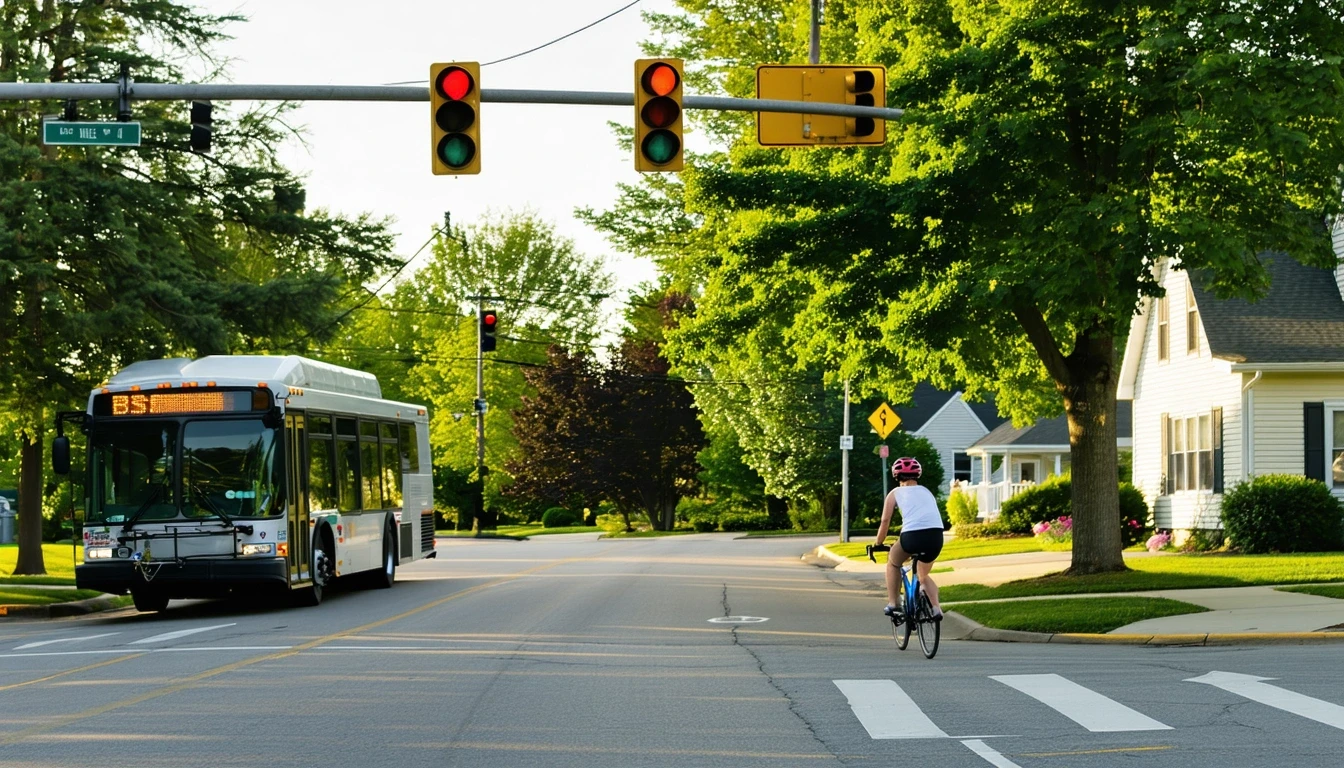
How People Get Around Belton
Belton is a car-first city. That doesn’t mean it’s hostile to pedestrians or that no one walks—it means the infrastructure, the distances, and the daily rhythms of life here assume you have access to a vehicle. Homes are spread across low-rise neighborhoods, commercial activity clusters along a few main corridors, and the distances between where people live and where they need to go are too far for walking to be a primary mode of transportation.
That said, Belton does have localized pockets where walking is practical. In certain neighborhoods, particularly those near mixed-use corridors, residents can reach a grocery store, a clinic, or a coffee shop on foot. The pedestrian-to-road ratio in these areas is higher than you’d expect in a typical suburban setting, and the presence of sidewalks, crosswalks, and some street-level retail makes short trips manageable without a car. But these pockets are the exception, not the rule. Most of Belton’s residential areas are set back from commercial zones, and the city’s overall form favors driving for nearly every errand.
Newcomers often misunderstand this. They see the walkable downtown blocks or a well-kept neighborhood with sidewalks and assume that pattern extends citywide. It doesn’t. Outside of a few corridors, daily life in Belton requires a car. That’s not a failure of planning—it’s the result of decades of development shaped by affordability, land availability, and the preferences of families who wanted space, yards, and quiet streets. But it does mean that households without a car face significant friction.
Public Transit Availability in Belton
Public transit in Belton is limited. The city is part of the Kansas City metro’s broader transit network, and residents may encounter services such as regional bus routes that connect Belton to other parts of the metro. However, coverage is sparse, frequencies are low, and the routes are designed primarily to serve commuters traveling into Kansas City proper, not residents moving within Belton itself.
Transit works best—if it works at all—for people who live near a major corridor and whose destination aligns with an existing route. If you’re commuting from a central Belton neighborhood to a job in downtown Kansas City, and your schedule is flexible enough to accommodate infrequent service, transit might be viable. But if you need to run errands, pick up kids, or travel during off-peak hours, the system falls short. Routes don’t reach most residential neighborhoods, and the time cost of waiting, transferring, and backtracking often exceeds the time it would take to drive.
Transit also struggles with coverage gaps in the evenings and on weekends. For households that rely on shift work, retail hours, or weekend errands, the lack of consistent service makes transit unreliable as a primary transportation option. This isn’t unique to Belton—it’s a pattern across suburban cities in the Kansas City metro—but it’s important to understand before committing to a car-free lifestyle here.
Driving & Car Dependence Reality
For most people in Belton, driving isn’t a choice—it’s a necessity. The city’s layout, its commercial structure, and its relationship to the broader Kansas City metro all assume car ownership. Grocery stores, medical clinics, schools, and workplaces are spread across distances that make walking impractical and transit unreliable. Parking is abundant, roads are wide, and the infrastructure is built to prioritize vehicle access.
This creates a different kind of cost structure. Instead of paying for transit passes or ride-hailing, households in Belton absorb the fixed costs of car ownership: insurance, maintenance, registration, and fuel. Gas prices in the area are moderate—currently around $2.45 per gallon—but the real cost comes from the frequency of trips. Commuting to Kansas City, running errands across town, and shuttling kids to activities all add up, not just in fuel, but in time and wear on the vehicle.
Car dependence also shapes where people choose to live. Proximity to work, schools, and grocery stores becomes a major factor in housing decisions, because every extra mile translates into daily commute time and fuel expense. Families with two working adults often need two cars, which doubles the fixed costs and limits flexibility. For renters, the need for reliable transportation can be a barrier to moving to Belton in the first place, especially if they’re coming from a city where car ownership was optional.
Commuting Patterns & Daily Mobility
Commuting in Belton typically means driving, either to a job within the city or to a workplace elsewhere in the Kansas City metro. The city functions as a residential base for many households, with a significant share of workers commuting north into Kansas City proper or east toward other suburban job centers. The structure of these commutes varies widely—some people make a single trip to a fixed workplace, while others manage multi-stop routes that include daycare drop-offs, school pickups, or errands layered into the drive.
The flexibility of driving is one of its key advantages in Belton. Unlike transit, which locks you into fixed routes and schedules, a car allows you to adjust your route, leave early or late, and handle unexpected stops without losing an hour to transfers and waiting. For households with kids, this flexibility is often non-negotiable. School start times, after-school activities, and medical appointments don’t align neatly with bus schedules, and the ability to drive directly from point to point makes daily logistics manageable.
But that flexibility comes with exposure. Traffic, road construction, and weather all affect commute predictability. And because most households in Belton rely on driving, there’s little fallback if a car breaks down or becomes too expensive to maintain. The city’s transportation system doesn’t offer a robust alternative, so car dependence becomes a structural vulnerability, not just a convenience.
Who Transit Works For — and Who It Doesn’t
Transit in Belton works for a narrow slice of residents: those who live near a major corridor, work in downtown Kansas City, and have schedules that align with infrequent bus service. If you’re a single commuter without kids, renting near a bus stop, and willing to build your routine around transit schedules, it’s possible—but it requires planning, patience, and acceptance of longer travel times.
For everyone else, transit doesn’t work. Families with kids can’t rely on routes that don’t reach schools or daycare centers. Shift workers can’t depend on service that stops running in the evening. People who need to run errands, pick up groceries, or manage multiple stops in a day will find that transit adds hours to tasks that take minutes by car. And for anyone living outside the few corridors where bus stops exist, transit isn’t even an option.
Renters in Belton’s more central neighborhoods have slightly better access to walkable errands and occasional transit connections, but even they typically own a car. Homeowners in peripheral neighborhoods have no realistic transit alternative at all. The city’s low-rise, spread-out form means that density is too low to support frequent service, and the distances are too great for walking to fill the gap.
Transportation Tradeoffs in Belton
The tradeoff between transit and driving in Belton isn’t really a tradeoff—it’s a forced choice. Transit offers lower fixed costs and no maintenance burden, but it comes with severe limitations in coverage, frequency, and flexibility. Driving offers control, predictability, and the ability to manage complex daily logistics, but it requires upfront investment, ongoing costs, and exposure to fuel price volatility.
For most households, driving wins because transit simply can’t meet their needs. The question isn’t whether to drive—it’s how to manage the costs and logistics of car ownership in a way that fits your household. That might mean choosing housing closer to work to shorten the commute, prioritizing fuel efficiency when buying a vehicle, or structuring errands to minimize trips. But it doesn’t mean avoiding the car altogether, because Belton’s infrastructure doesn’t support that choice.
The households that struggle most are those caught in between: people who can’t afford a reliable car but also can’t rely on transit. In Belton, that gap is wide, and the city’s transportation system doesn’t offer much help bridging it.
FAQs About Transportation in Belton (2026)
Is public transit usable for daily commuting in Belton?
Public transit in Belton is limited and primarily serves commuters traveling into Kansas City proper. If you live near a major corridor and your workplace aligns with an existing route, transit may be viable, but service is infrequent and doesn’t cover most residential neighborhoods. For daily errands, school runs, or off-peak travel, transit is not a reliable option.
Do most people in Belton rely on a car?
Yes. Belton’s layout, distances, and infrastructure are built around car ownership. Most households own at least one vehicle, and many families with two working adults own two. Public transit and walking serve only a small share of trips, and car dependence is the norm across nearly all neighborhoods.
Which areas of Belton are easiest to live in without a car?
A few central neighborhoods near mixed-use corridors offer better walkability and occasional transit access, but even in these areas, most residents own a car. Living without a vehicle in Belton is difficult regardless of location, and it requires significant compromises in terms of time, convenience, and access to jobs and services.
How does commuting in Belton compare to nearby cities?
Belton’s commute patterns are similar to other suburban cities in the Kansas City metro: most people drive, distances are moderate, and transit is minimal. Compared to Kansas City proper, Belton offers shorter distances to some job centers but less transit coverage. Compared to more rural areas, Belton has better road infrastructure and closer proximity to metro amenities.
Can you get by with one car in Belton if you have a family?
It depends on your household’s schedule and flexibility. If one adult works from home or if work, school, and errands can be coordinated into shared trips, one car may be enough. But for families with two working adults, kids in different schools, or complex daily logistics, two cars are often necessary. Belton’s lack of transit and limited walkability make single-car households more challenging than in denser cities.
How Transportation Fits Into the Cost of Living in Belton
Transportation in Belton isn’t just a line item—it’s a structural factor that shapes where you live, how you work, and what your household can afford. Because the city is built around car ownership, the costs of driving—insurance, fuel, maintenance, registration—are unavoidable for most residents. These aren’t discretionary expenses; they’re the price of participation in daily life.
That structure affects housing decisions, too. Proximity to work, schools, and grocery stores becomes a key variable in what a budget has to handle in Belton, because every extra mile of commute translates into time and fuel costs that compound over months and years. Families with two cars face double the fixed costs, and households without a car face friction that limits job access, errand efficiency, and overall quality of life.
Understanding how transportation works in Belton—and how it doesn’t—helps you make better decisions about where to live, what kind of vehicle to own, and how to structure your daily routine. It’s not about finding a perfect solution; it’s about managing the tradeoffs in a way that fits your household’s needs and constraints.
How this article was built: In addition to public economic data, this article incorporates location-based experiential signals derived from anonymized geographic patterns—such as access density, walkability, and land-use mix—to reflect how day-to-day living actually feels in Belton, MO.