
Is Grandview the kind of place you grow roots—or just pass through? That question sits at the heart of what it feels like to live here. Grandview occupies a particular spot in the Kansas City metro landscape: close enough to access the city’s jobs and amenities, affordable enough to stretch a household budget, but structured in a way that asks residents to embrace car dependency and plan their errands with intention. The emotional tone here isn’t about excitement or frustration in isolation—it’s about whether the tradeoffs align with what you actually need from a place.
The Emotional Landscape of Grandview
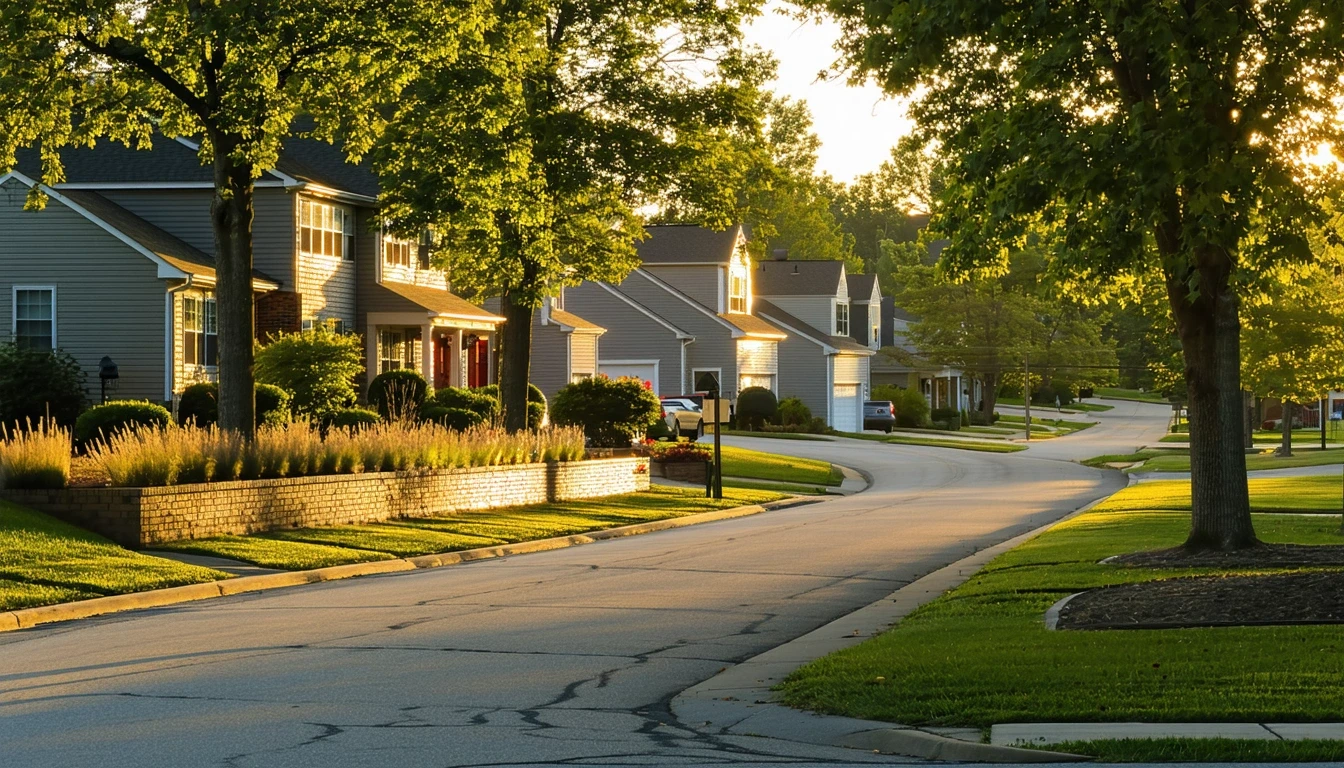
Grandview tends to reward people who value predictability, space, and affordability over spontaneity and walkable texture. The city’s low-rise character and mixed land use create pockets of residential and commercial activity, but the infrastructure leans heavily toward driving. Pedestrian paths are sparse, and while some cycling infrastructure exists in limited areas, it doesn’t change the fundamental rhythm: most daily tasks require a car.
For families seeking a quieter suburban pace near Kansas City, this structure often feels like a win. Housing is more accessible here than in many metro alternatives, and schools are present in moderate density. Parks and green spaces, including water features, offer outdoor options without requiring a long drive. But for households that imagine running errands on foot, grabbing coffee spontaneously, or relying on transit, Grandview’s car-oriented layout can feel limiting. The city doesn’t fight you—it just doesn’t accommodate walking-first lifestyles.
Healthcare access is another friction point. With no hospital or clinics detected locally, residents often travel for anything beyond routine care. That’s not unusual for a suburb, but it’s a tradeoff that matters more to some households than others—especially those with young children, aging parents, or chronic health needs.
What People Talk About Online
In online spaces where Grandview residents gather—local Facebook groups, neighborhood forums, and regional subreddit threads—the conversation tends to circle around a few recurring themes: affordability, proximity to Kansas City, and the tension between growth and identity.
“We moved here because we could actually afford a house with a yard. It’s not fancy, but it’s ours, and we’re fifteen minutes from everything we need in KC.”
“It’s quiet, maybe too quiet sometimes. If you’re looking for walkable coffee shops or a downtown vibe, this isn’t it. But if you want space and don’t mind driving, it works.”
“I wish there were more local options for groceries and restaurants. It feels like you’re always getting in the car to go somewhere else.”
The tone isn’t bitter, but it’s not boosterish either. People here tend to be pragmatic. They know what they traded—urban texture, walkability, dense amenities—and they’re generally okay with it, as long as the tradeoff delivers on affordability and space. When frustration surfaces, it’s usually about feeling like the city is “in between”—not quite self-contained, not quite integrated into the metro fabric.
How Local Coverage Frames the City
Local news and community coverage tend to frame Grandview through the lens of growth, change, and identity negotiation. Headlines and story themes often sound like this:
- “Community Debates What Growth Should Look Like”
- “New Retail and Dining Options Arrive as Residents Weigh Convenience”
- “Balancing Suburban Quiet with Metro Proximity”
- “Residents Discuss Infrastructure Needs as Population Shifts”
- “Grandview’s Role in the Broader Kansas City Region”
The framing is rarely celebratory or alarmist—it’s more about transition. Grandview is a city that’s figuring out what it wants to be as the metro around it evolves. That creates a tone of cautious optimism mixed with protectiveness. Long-time residents worry about losing the quiet, affordable character that drew them here. Newcomers want more local options so they don’t have to drive as much. Both groups care, but they don’t always agree on what “better” looks like.
Review-Based Public Perception
On platforms like Google Reviews, Yelp, and Nextdoor-style forums, Grandview’s reputation is shaped by expectation matching. People who wanted suburban affordability near Kansas City tend to leave positive feedback. People who wanted walkable neighborhoods, diverse dining, or easy errands without a car tend to express mild disappointment.
Praise often centers on space, value, and low-key community feel. “Great place to raise kids without breaking the bank.” “Quiet streets, friendly neighbors, and you’re still close to everything.” Complaints, when they appear, focus on limited local amenities, car dependency, and a sense that the city lacks a distinct center. “It’s fine, but there’s not much here. You end up driving to Lee’s Summit or KC for most things.” “Walkability is pretty much nonexistent.”
Neighborhood variation exists but isn’t sharply defined in public discussion. Newer planned areas tend to feel more polished and family-oriented, while older pockets offer more affordability and established trees. Neither is described as problematic—just different in texture and age.
How Grandview Compares to Nearby Cities
| Dimension | Grandview | Lee’s Summit | Raytown |
|---|---|---|---|
| Overall Vibe | Quiet, affordable, car-dependent | Polished suburban, family-focused, more amenities | Working-class, older housing stock, budget-friendly |
| Walkability | Low; errands require driving | Low to moderate in pockets | Low; similar car dependency |
| Amenities | Sparse locally; rely on metro access | More retail, dining, and services | Limited; similar to Grandview |
| Affordability | Strong; lower entry costs | Moderate; higher prices for newer builds | Strong; comparable to Grandview |
| Community Feel | Quiet, steady, pragmatic | Active, organized, family-centric | Grounded, diverse, unpretentious |
Grandview sits between Lee’s Summit’s polished suburban infrastructure and Raytown’s grittier affordability. If you want more local dining and shopping without driving as far, Lee’s Summit offers that—but at a higher price. If you want similar affordability with a slightly older, more working-class character, Raytown is comparable. Grandview occupies the middle: affordable, quiet, and functional, but without the amenity density of Lee’s Summit or the established grit of Raytown. It’s a choice that works well for households who prioritize housing tradeoffs and don’t mind planning their errands around driving.
What Locals Are Saying
“We’re a young family, and Grandview checked the boxes: affordable, safe, and close enough to Kansas City for work. It’s not exciting, but we’re not looking for exciting right now.”
“I work remotely, and honestly, the lack of walkable coffee shops or coworking spaces is a bummer. I end up driving to Overland Park or KC when I need a change of scenery.”
“Retired here five years ago. It’s peaceful, the neighbors are kind, and we’re not dealing with the noise or traffic of the city. We drive to the store, but that’s fine—we’re used to it.”
“It’s a good starter home area, but I don’t know if we’ll stay long-term. There’s not much to do locally, and it feels like we’re always leaving town for entertainment or errands.”
“Moved from Kansas City proper. The day-to-day costs are lower here, and we got more space. The tradeoff is we’re in the car more, but we knew that going in.”
“I grew up here, and it’s changed, but not dramatically. It’s still a place where people know each other, and that matters to me.”
“If you’re looking for nightlife or walkable neighborhoods, this isn’t it. But if you want a yard, low property taxes, and a short commute to KC, it’s solid.”
Does Grandview Feel Like a Good Fit?
Grandview’s emotional profile is defined by pragmatism and tradeoffs. It tends to work well for families and individuals who prioritize affordability, space, and proximity to Kansas City over walkability and dense local amenities. The city’s car-oriented structure and sparse errands accessibility mean that daily life requires planning and driving, but for households comfortable with that rhythm, the quality of life factors align well.
Friction tends to surface for those who value spontaneous, walkable neighborhoods, diverse local dining and shopping, or easy access to healthcare without leaving town. Grandview doesn’t fight against those preferences—it simply doesn’t accommodate them structurally.
The city’s identity is still evolving, and that creates both opportunity and uncertainty. For some, that feels like potential. For others, it feels like waiting. Whether Grandview feels like a good fit depends less on what the city is today and more on whether its tradeoffs match what you’re willing to accept in exchange for affordability and metro access.
How this article was built: In addition to public economic data, this article incorporates location-based experiential signals derived from anonymized geographic patterns—such as access density, walkability, and land-use mix—to reflect how day-to-day living actually feels in Grandview, MO.
The perspectives shown reflect commonly expressed local sentiment and recurring themes in public discussion, rather than individual accounts.