
Median household income in Blue Springs sits at $82,965 per year—nearly $25,550 higher than Independence’s $57,415. Yet the decision between these two Kansas City metro suburbs isn’t about which city is “cheaper.” It’s about where cost pressure shows up, how predictably it hits, and which household type feels it most. Both cities share the same regional price environment and utility rates, but housing entry barriers, transportation infrastructure, and day-to-day logistics create strikingly different financial textures for renters, first-time buyers, and families managing tight schedules in 2026.
Blue Springs and Independence sit just miles apart, but they attract different household profiles for good reason. Blue Springs offers newer housing stock, more integrated park access, and higher median incomes, while Independence provides lower entry costs, rail transit access, and a more varied building form. The choice isn’t about stretching a dollar further—it’s about matching cost structure to the household’s biggest vulnerabilities. A dual-income couple prioritizing commute flexibility will face different tradeoffs than a single adult managing grocery runs without a car, or a family weighing school access against mortgage pressure.
This comparison explains how housing, utilities, transportation, and daily errands behave differently in each city, and which households feel those differences most acutely. By the end, you’ll understand not which city costs less, but which city’s cost structure aligns with your household’s specific sensitivities and constraints.
Housing Costs
Housing entry costs separate these two cities more sharply than any other category. Blue Springs’ median home value sits at $224,600, while Independence comes in at $150,800—a structural difference that reshapes affordability pressure for buyers. For renters, the gap narrows but persists: median gross rent in Blue Springs reaches $1,159 per month compared to $1,020 in Independence. These aren’t minor variations—they represent fundamentally different barriers to entry and ongoing obligations that cascade through household budgets in distinct ways.
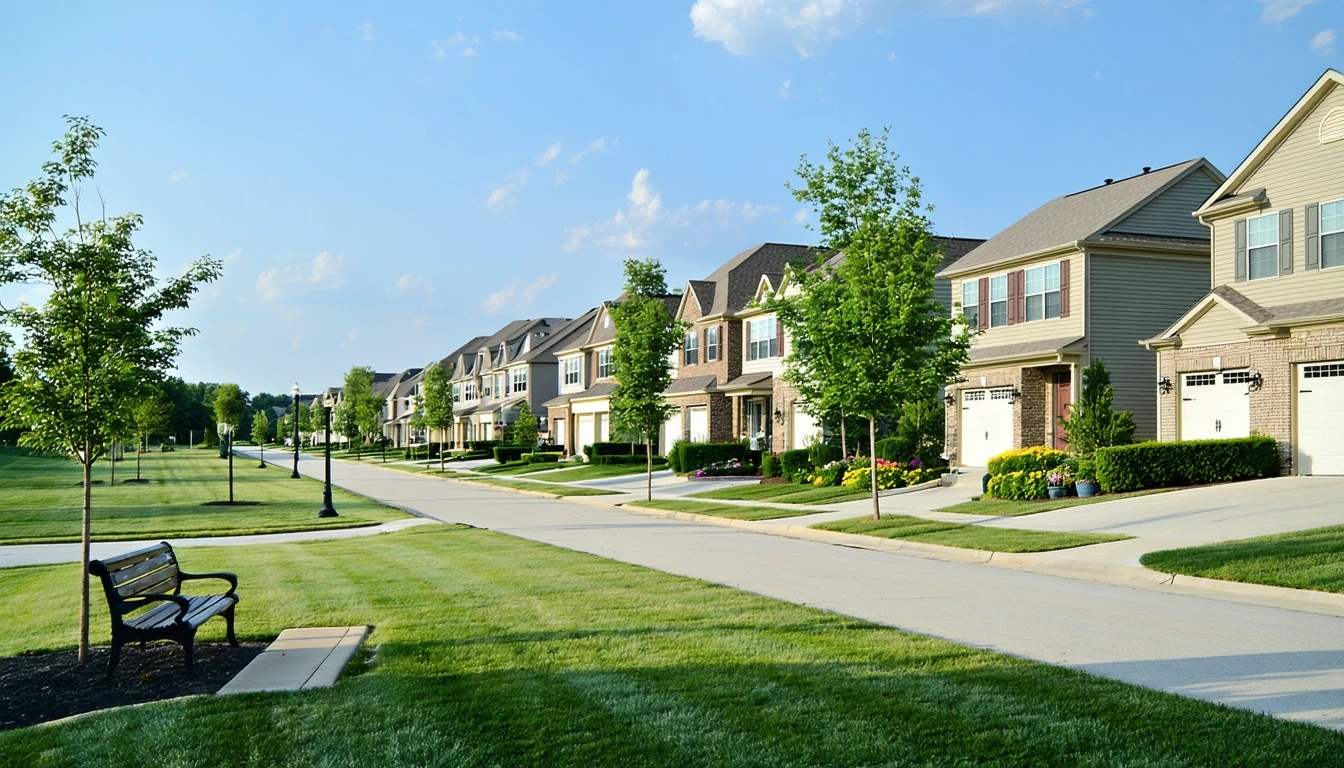
The housing stock in Blue Springs skews newer, with low-rise single-family homes dominating the landscape and mixed land use creating pockets of walkability. Independence shows more building height variety and a slightly denser urban form, reflecting older development patterns and a broader range of housing types. For first-time buyers, Independence offers a meaningfully lower threshold to ownership, reducing down payment requirements and monthly mortgage obligations. For renters, the $139 monthly difference between median rents may feel modest on paper, but it compounds over a year into $1,668—a gap that matters more to single adults or households with tighter income-to-rent ratios.
Families prioritizing space and newer construction often gravitate toward Blue Springs, accepting higher entry costs in exchange for larger lots, modern layouts, and proximity to parks. Renters sensitive to monthly cash flow, or buyers stretching to enter the market, find Independence’s lower baseline more forgiving. The tradeoff isn’t just about price—it’s about whether the household can absorb front-loaded costs (down payments, moving expenses, initial furnishing) or needs to minimize ongoing fixed obligations. Households planning to stay long-term may find Blue Springs’ higher entry point justified by newer infrastructure and lower maintenance exposure, while those prioritizing flexibility or managing income volatility benefit from Independence’s lower baseline pressure.
| Housing Type | Blue Springs | Independence | Primary Difference |
|---|---|---|---|
| Median Home Value | $224,600 | $150,800 | Higher entry barrier in Blue Springs |
| Median Gross Rent | $1,159/month | $1,020/month | Ongoing obligation higher in Blue Springs |
| Typical Housing Form | Low-rise, newer single-family | Mixed height, older variety | Blue Springs favors space; Independence offers density options |
First-time buyers face the starkest contrast. A household entering homeownership in Independence confronts a lower down payment threshold, reduced closing costs, and smaller monthly mortgage obligations—all of which ease the transition from renting. In Blue Springs, the higher purchase price demands more upfront capital and commits the household to a larger fixed payment, which can feel sustainable with dual incomes but precarious for single earners or those managing variable income streams. Renters, meanwhile, experience the difference as a question of flexibility: Independence’s lower rent baseline leaves more room for discretionary spending or emergency savings, while Blue Springs’ higher rent reflects access to newer units and neighborhoods with stronger park integration.
Housing takeaway: Blue Springs imposes higher entry costs and ongoing obligations, favoring households with stable dual incomes, long-term plans, and a preference for newer construction. Independence offers lower barriers to ownership and rent, fitting households prioritizing cash flow flexibility, market entry, or tolerance for older housing stock. The decision hinges on whether the household can absorb front-loaded costs or needs to minimize fixed monthly obligations.
Utilities and Energy Costs
Both cities share identical utility rate structures—electricity at 12.95¢/kWh and natural gas at $28.51/MCF—which means differences in utility exposure stem from housing characteristics, not pricing. Blue Springs’ newer housing stock tends to feature better insulation, modern HVAC systems, and energy-efficient windows, reducing baseline consumption and smoothing seasonal volatility. Independence’s older, more varied building stock introduces greater variability: some homes benefit from mature tree cover that moderates cooling loads, while others face higher heating and cooling demands due to outdated insulation or single-pane windows.
Hot, humid summers across the Kansas City metro drive cooling costs for both cities, but the intensity of that exposure depends on home age and construction quality. Newer homes in Blue Springs often include programmable thermostats, improved ductwork, and tighter building envelopes, which dampen peak-season spikes. Older homes in Independence may lack these features, leading to higher summer electricity bills and less predictable month-to-month costs. Heating season brings similar dynamics: natural gas furnaces in well-insulated homes maintain comfort with lower fuel consumption, while drafty older units cycle more frequently, driving up usage and introducing volatility that complicates budgeting.
Household size and housing type amplify these differences. Single adults in smaller apartments face lower absolute bills but less control over efficiency upgrades, making them more vulnerable to rate changes or extreme weather. Families in larger single-family homes experience higher baseline usage but gain more leverage from efficiency investments—replacing old HVAC units, adding insulation, or upgrading windows can meaningfully reduce long-term exposure. Renters in both cities face a different calculus: they benefit from lower upfront costs but lack authority to make structural improvements, leaving them more exposed to the energy profile of the unit they occupy.
Utility billing in both cities typically separates electricity, gas, water, and trash, with landlords sometimes covering water and trash in multi-unit buildings. Homeowners bear full responsibility for all utilities, plus seasonal maintenance like HVAC servicing, which adds to the total cost of ownership. Households managing tight budgets should account for summer cooling spikes—often the highest utility months—and recognize that older homes in Independence may require more frequent HVAC repairs or filter replacements, adding friction costs that don’t appear on monthly bills but accumulate over time.
Utility takeaway: Blue Springs’ newer housing stock offers more predictable utility costs and lower seasonal volatility, favoring households prioritizing budget stability. Independence’s older, more varied housing introduces greater exposure to efficiency gaps and maintenance needs, which matters most for renters without upgrade authority and families in larger homes. The decision depends on whether the household values predictability over lower entry costs, and whether they can invest in efficiency improvements to reduce long-term exposure.
Groceries and Daily Expenses
Both Blue Springs and Independence share the same regional price environment, with identical derived grocery estimates reflecting a 93 regional price parity index. Bread runs $1.70/lb, ground beef $6.22/lb, and eggs $2.52/dozen in both cities. Derived estimate based on national baseline adjusted by regional price parity; not an observed local price. The meaningful differences emerge not from prices themselves, but from how grocery shopping fits into daily logistics—where stores cluster, how easily households can comparison-shop, and whether car dependency adds friction to routine errands.
Experiential signals reveal that both cities show corridor-clustered food and grocery access, meaning options concentrate along major commercial strips rather than distributing evenly across neighborhoods. This pattern affects households differently depending on mobility. In Blue Springs, walkable pockets exist but most grocery trips require a car, and the city lacks rail transit, making errand consolidation essential for time-strapped households. Independence offers rail access, which doesn’t directly serve grocery stores but improves overall mobility and reduces the household’s reliance on a second vehicle for non-grocery trips—a distinction that indirectly eases the logistics burden for single adults or couples managing tight schedules.
Grocery strategy matters more than raw prices. Households that batch-shop at big-box retailers and cook at home face similar costs in both cities, with the primary variable being fuel consumption for the drive. Families managing larger weekly grocery volumes benefit from access to warehouse clubs or discount chains, which exist in both cities but require intentional route planning. Single adults or couples who lean on convenience—grabbing takeout, stopping for coffee, or picking up prepared foods—face higher cumulative costs, not because prices differ but because the frequency of small purchases compounds over weeks and months.
Dining out and convenience spending introduce variability that’s harder to track than grocery staples. Both cities offer a mix of chain restaurants and local spots, but the density and variety of options shape how often households default to eating out versus cooking. Households with predictable schedules and meal-planning discipline keep grocery costs stable regardless of city. Those managing irregular hours, long commutes, or childcare logistics may find themselves reaching for convenience more often, which drives up daily expenses without appearing as a single large bill. The key difference isn’t affordability—it’s whether the household’s routine supports disciplined grocery habits or invites spending creep through small, frequent purchases.
Grocery takeaway: Prices align across both cities, so cost pressure stems from logistics and habits rather than price sensitivity. Blue Springs requires more car-dependent errand planning, favoring households with vehicles and batch-shopping routines. Independence’s rail access and slightly denser urban form ease mobility for households managing errands without a second car. Families benefit from disciplined meal planning in both cities, while single adults face higher exposure to convenience spending if routines don’t support consistent home cooking.
Taxes and Fees
Property taxes, sales taxes, and local fees shape ongoing cost obligations in ways that differ sharply between renters and homeowners. Both cities sit within the same state tax structure, but local property tax rates and fee schedules vary based on school district funding, municipal services, and infrastructure maintenance needs. Homeowners in Blue Springs face property tax obligations tied to higher assessed home values, which translates to larger annual tax bills even if the millage rate aligns closely with Independence. A home valued at $224,600 generates a different tax burden than one at $150,800, and that gap persists year after year, compounding the cost of ownership.
Renters don’t pay property taxes directly, but landlords pass those costs through in rent pricing, making property tax exposure indirect but real. The $139 monthly rent difference between Blue Springs and Independence reflects not just housing quality but also the underlying tax and fee structure that landlords must cover. Homeowners, meanwhile, experience property taxes as a large, predictable annual or semi-annual bill—one that doesn’t fluctuate with usage or behavior, making it easier to budget for but harder to reduce. Households planning to stay long-term should account for potential tax increases tied to reassessments, which can shift the cost baseline upward without warning.
Local fees add friction costs that vary by housing type and neighborhood. Trash collection, water, sewer, and stormwater fees appear as separate line items for homeowners, while renters may see some of these bundled into rent. Homeowners’ association fees, where applicable, introduce another layer of obligation—sometimes covering landscaping, snow removal, or shared amenities, but always adding a fixed monthly cost that reduces flexibility. Blue Springs’ newer developments more commonly include HOA structures, which can range from minimal to substantial depending on the neighborhood. Independence’s older housing stock less frequently imposes HOA fees, leaving homeowners with more control but also more responsibility for exterior maintenance and repairs.
Sales taxes affect all households equally in day-to-day purchases, but the cumulative impact depends on spending patterns. Households that spend more on taxable goods—furniture, electronics, clothing, dining out—feel sales tax pressure more acutely than those who direct income toward housing, utilities, and groceries (many of which face lower or no sales tax). The structural difference between the cities lies not in the tax rate itself but in how housing costs and fees concentrate financial pressure: Blue Springs front-loads costs through higher home values and associated taxes, while Independence spreads pressure more evenly across rent, utilities, and discretionary spending.
Taxes and fees takeaway: Blue Springs imposes higher property tax exposure due to elevated home values, affecting homeowners directly and renters indirectly through rent pricing. Independence’s lower home values reduce tax obligations, easing long-term cost pressure for owners. HOA fees appear more frequently in Blue Springs’ newer neighborhoods, adding predictability but reducing flexibility. Households planning to own long-term should weigh front-loaded tax obligations in Blue Springs against Independence’s lower baseline, while renters experience the difference primarily through rent levels rather than direct fee exposure.
Transportation & Commute Reality
Transportation costs and commute friction diverge sharply between Blue Springs and Independence, driven not by gas prices—which sit at $2.47/gal in both cities—but by transit access and daily logistics. Blue Springs shows walkable pockets and some cycling infrastructure, but no rail transit, meaning most households depend entirely on personal vehicles for commuting, errands, and social activities. Independence offers rail service, a structural advantage that reduces the need for a second vehicle in dual-income households and provides a fallback option for single adults managing car maintenance or insurance lapses.
Blue Springs reports an average commute time of 26 minutes, reflecting typical suburban car-dependent patterns where workers drive to employment centers in the broader Kansas City metro. Independence lacks specific commute data in the feed, but the presence of rail transit suggests more variability: some households use rail for work trips, reducing fuel costs and wear-and-tear, while others still drive, facing similar time and distance exposure as Blue Springs residents. The key difference isn’t whether people commute—it’s whether they have a viable alternative to driving, and what that optionality costs in time, convenience, and flexibility.
Households in Blue Springs face near-total car dependency, which means every adult who works typically needs a vehicle, and families must coordinate schedules around school drop-offs, grocery runs, and extracurricular activities. This introduces both direct costs—fuel, insurance, maintenance—and indirect costs like time spent driving, parking friction, and reduced schedule flexibility. Independence’s rail access doesn’t eliminate car dependency for most households, but it creates breathing room: a couple can share one vehicle more easily, a single adult can defer car repairs without losing mobility entirely, and families can reduce the frequency of multi-stop errand loops by using transit for some trips.
Commute time matters less than commute predictability and optionality. A 26-minute drive in Blue Springs feels manageable until traffic, weather, or car trouble disrupts the routine, at which point the household has no fallback. Independence’s rail service introduces resilience: even if it’s slower or less convenient for daily use, it exists as a backup, reducing the household’s exposure to single-vehicle dependence. For single adults or couples managing tight budgets, this optionality can mean the difference between needing two cars or making do with one, a distinction that saves thousands annually in insurance, registration, and depreciation.
Transportation takeaway: Blue Springs requires near-total car dependency, favoring households with multiple vehicles, predictable schedules, and tolerance for driving-based logistics. Independence’s rail access reduces single-vehicle risk and eases mobility for households managing tight budgets or irregular schedules. The decision hinges on whether the household values transit optionality or accepts car dependency in exchange for Blue Springs’ other advantages.
Cost Structure Comparison
Housing pressure dominates the cost experience in Blue Springs, where higher home values and rents create steeper entry barriers and larger fixed monthly obligations. Households with stable dual incomes and long-term plans absorb this pressure more easily, especially if they value newer construction, integrated park access, and low-rise suburban character. Independence distributes cost pressure more evenly: lower housing entry costs ease the transition to ownership or reduce rent burdens, but older housing stock introduces more utility volatility and maintenance exposure. Households prioritizing cash flow flexibility or managing income variability find Independence’s structure more forgiving, even if it requires accepting older homes and less predictable energy bills.
Utilities introduce more volatility in Independence, where older, varied housing stock creates greater exposure to efficiency gaps and seasonal spikes. Blue Springs’ newer homes offer more predictable energy costs, which matters most for households managing tight budgets or those who prioritize stability over lower entry costs. The difference isn’t dramatic—both cities share identical utility rates—but the interaction between housing age and energy efficiency shifts the balance for families in larger homes or renters without upgrade authority. Households willing to invest in efficiency improvements can mitigate Independence’s volatility, while those seeking predictability out of the box benefit from Blue Springs’ newer stock.
Transportation patterns matter more in Independence, where rail access creates optionality that Blue Springs lacks. Single adults and couples managing car costs find Independence’s transit infrastructure valuable not because it eliminates driving, but because it reduces the household’s dependence on owning and maintaining multiple vehicles. Blue Springs’ car dependency suits families with predictable schedules and multiple drivers, but it introduces friction for households managing tight budgets, irregular hours, or vehicle reliability concerns. The time cost of commuting aligns closely in both cities, but the cash cost and logistics burden diverge based on whether the household can leverage transit or must rely entirely on personal vehicles.
Groceries and daily expenses align closely across both cities, with differences emerging from logistics rather than prices. Both cities show corridor-clustered food access, meaning households must plan errand routes intentionally rather than walking to nearby stores. Blue Springs’ lack of transit amplifies car dependency for errands, while Independence’s rail service eases mobility for non-grocery trips, indirectly reducing the burden of managing a second vehicle. Families with disciplined meal-planning routines face similar grocery costs in both cities, while single adults or couples leaning on convenience spending experience higher cumulative costs regardless of location—the difference lies in whether the household’s routine supports consistent home cooking or invites spending creep.
The better choice depends on which costs dominate the household’s financial profile. Households sensitive to housing entry barriers and ongoing rent or mortgage obligations may prefer Independence, where lower baseline costs ease cash flow pressure and reduce the risk of housing-cost overextension. Households prioritizing predictability, newer construction, and integrated outdoor access may prefer Blue Springs, accepting higher entry costs in exchange for lower utility volatility and modern infrastructure. For households managing transportation logistics, the decision hinges on whether rail optionality matters more than suburban space and park access. Neither city offers a universal advantage—each fits households with different sensitivities, constraints, and long-term plans.
How the Same Income Feels in Blue Springs vs Independence
Single Adult
Housing becomes non-negotiable first, with rent consuming a larger share of income in Blue Springs due to the $139 monthly gap. Flexibility exists in dining out, entertainment, and discretionary travel, but car dependency in Blue Springs eliminates the option to defer vehicle costs, while Independence’s rail access creates breathing room for single adults managing insurance lapses or maintenance delays. The time cost of errands and commuting feels similar in both cities, but Independence’s transit fallback reduces the exposure to single-vehicle dependence, which matters most when income tightens or unexpected repairs arise.
Dual-Income Couple
Housing costs in Blue Springs demand more upfront capital and higher monthly obligations, but dual incomes absorb this pressure more easily, especially if both partners work and the household values newer construction and park access. Flexibility disappears faster in Independence if one income drops or becomes irregular, because the household’s lower rent baseline doesn’t offset the need for two vehicles in a car-dependent metro. Blue Springs’ higher housing costs feel stable and predictable, while Independence’s lower entry barrier creates more room for discretionary spending or emergency savings, but only if the couple can manage with one vehicle or tolerate older housing stock.
Family with Kids
Housing space and school access become non-negotiable, with Blue Springs offering newer single-family homes and integrated parks that fit family routines, but at a higher entry cost that tightens budgets for childcare, extracurriculars, and groceries. Independence’s lower home values ease mortgage pressure and free up cash flow for other needs, but older housing stock introduces more maintenance exposure and utility volatility, which compounds when managing larger homes and multiple occupants. Transportation friction intensifies in both cities due to school drop-offs and activity shuttles, but Independence’s rail access provides a fallback for non-school trips, reducing the household’s dependence on coordinating multiple vehicles during peak logistics hours.
Decision Matrix: Which City Fits Which Household?
| Decision factor | If you’re sensitive to this… | Blue Springs tends to fit when… | Independence tends to fit when… |
|---|---|---|---|
| Housing entry + space needs | Down payment size, monthly mortgage or rent burden, housing age | You have stable dual income, prioritize newer construction, and plan to stay long-term | You need lower entry costs, tolerate older stock, or prioritize cash flow flexibility |
| Transportation dependence + commute friction | Vehicle count, insurance costs, commute optionality, schedule coordination | You own multiple vehicles, accept car dependency, and have predictable schedules | You value transit fallback, manage tight vehicle budgets, or need single-car flexibility |
| Utility variability + home size exposure | Seasonal bill spikes, efficiency gaps, maintenance unpredictability | You prioritize predictable energy costs and benefit from newer, efficient housing stock | You can invest in efficiency upgrades or tolerate variability in exchange for lower entry costs |
| Grocery strategy + convenience spending creep | Meal planning discipline, takeout frequency, errand consolidation | You batch-shop, cook at home, and tolerate car-dependent errand logistics | You benefit from rail mobility for non-grocery trips and value reduced vehicle dependence |
| Fees + friction costs (HOA, services, upkeep) | Predictability vs control, exterior maintenance responsibility, bundled services | You accept HOA fees for predictability and prefer newer neighborhoods with bundled services | You prioritize control over costs and tolerate older housing with more maintenance responsibility |
| Time budget (schedule flexibility, errands, logistics) | Commute resilience, errand friction, multi-stop trip frequency | You have flexible schedules, multiple drivers, and tolerate car-dependent logistics | You manage tight schedules, benefit from transit optionality, and need fallback mobility |
Lifestyle Fit
Blue Springs and Independence offer distinct lifestyle textures shaped by housing form, mobility infrastructure, and outdoor access. Blue Springs features low-rise suburban neighborhoods with integrated park access—park density exceeds high thresholds, and water features add recreational variety. Walkable pockets exist, and some cycling infrastructure supports limited bike use, but the city lacks rail transit, making car dependency near-universal. Independence shows more building height variety, reflecting older, denser development patterns, and offers rail transit access that improves mobility for households managing tight vehicle budgets. Park density sits in the moderate range, providing outdoor options without the same level of integration seen in Blue Springs.
Families prioritizing outdoor routines and space for kids often gravitate toward Blue Springs, where parks, trails, and open space fit naturally into daily life. The city’s newer housing stock and low-rise character create a suburban rhythm that suits households valuing predictability, modern amenities, and easy access to green space. Independence appeals to households seeking transit optionality, lower housing entry costs, and a more varied urban form. The rail service doesn’t transform daily life for most residents, but it provides a fallback for commuting, reduces the need for multiple vehicles, and eases logistics for single adults or couples managing irregular schedules.
Both cities show corridor-clustered food and grocery access, meaning daily errands require intentional planning rather than spontaneous walkability. Blue Springs’ walkable pockets and bike infrastructure support limited car-free activity, but most households still drive for groceries, dining, and social trips. Independence’s rail access and slightly denser form ease mobility for non-driving trips, which matters most for households managing car costs or those who value the resilience of having a transit fallback. Neither city offers dense urban walkability, but Independence’s transit infrastructure introduces a layer of optionality that Blue Springs lacks.
Blue Springs’ average commute time: 26 minutes, reflecting typical suburban car-dependent patterns. Independence offers rail transit access, a structural advantage that reduces single-vehicle risk and eases mobility for households managing tight budgets or irregular schedules. Lifestyle factors indirectly affect costs: Blue Springs’ newer housing stock lowers utility bills through better efficiency, while Independence’s transit access reduces the need for a second vehicle, cutting insurance, maintenance, and depreciation costs. Households prioritizing outdoor access and modern construction fit Blue Springs’ profile, while those valuing transit optionality and lower entry costs align with Independence’s structure.
Frequently Asked Questions
Is Blue Springs or Independence more affordable for renters in 2026?
Independence offers lower median rent at $1,020 per month compared to Blue Springs’ $1,159, creating more breathing room for single adults or households managing tight cash flow. The $139 monthly difference compounds to $1,668 annually, which matters more for renters with lower income-to-rent ratios. Blue Springs’ higher rent reflects newer housing stock and integrated park access, which reduces utility volatility and maintenance exposure. Renters prioritizing predictable energy costs and modern amenities may find Blue Springs’ higher rent justified, while those needing lower fixed obligations benefit from Independence’s baseline.
How do transportation costs differ between Blue Springs and Independence in 2026?
Both cities share the same gas price at $2.47/gal, but transportation pressure diverges based on transit access and vehicle dependence. Blue Springs lacks rail transit, requiring most households to own and maintain personal vehicles for all trips, which increases insurance, maintenance, and depreciation costs. Independence offers rail service, reducing the need for a second vehicle in dual-income households and providing a fallback for single adults managing car costs. The difference isn’t about fuel expense—it’s about whether the household can leverage transit optionality or must absorb the full cost of car dependency.
Which city has lower utility bills, Blue Springs or Independence, in 2026?
Both cities share identical utility rates—electricity at 12.95¢/kWh and natural gas at $28.51/MCF—so differences in utility costs stem from housing characteristics, not pricing. Blue Springs’ newer housing stock typically features better insulation and modern HVAC systems, reducing baseline consumption and smoothing seasonal spikes. Independence’s older, more varied housing introduces greater exposure to efficiency gaps, leading to higher heating and cooling costs in poorly insulated homes. Households in newer Blue Springs homes experience more predictable bills, while those in older Independence units face more volatility unless they invest in efficiency upgrades.
Does Blue Springs or Independence offer better value for first-time homebuyers in 2026?
Independence’s median home value of $150,800 creates a lower entry barrier for first-time buyers, reducing down payment requirements and monthly mortgage obligations compared to Blue Springs’ $224,600 median. The difference matters most for households stretching to enter the market or managing variable income. Blue Springs’ higher home values reflect newer construction, integrated parks, and lower utility exposure, which can justify the premium for households with stable dual incomes and long-term plans. The better value depends on whether the household prioritizes lower entry costs or predictable long-term expenses.
How do grocery and daily expenses compare between Blue Springs and Independence in 2026?
Grocery prices align across both cities, with bread at $1.70/lb, ground beef at $6.22/lb, and eggs at $2.52/dozen reflecting the same regional price environment. Derived estimate based on national baseline adjusted by regional price parity; not an observed local price. Cost pressure stems from logistics rather than prices: both cities show corridor-clustered food access, requiring car-dependent errand planning. Blue Springs lacks rail transit, amplifying vehicle dependence for all