
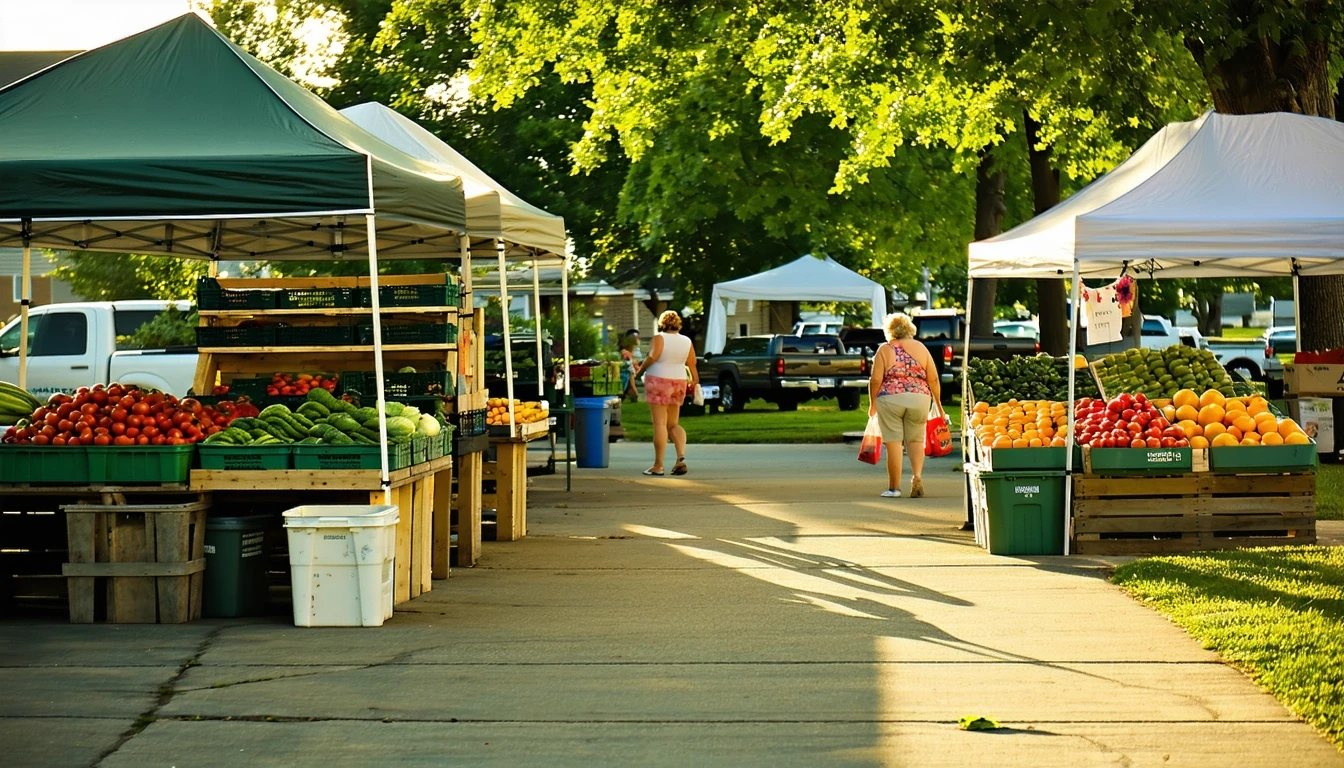
How Grocery Costs Feel in Blue Springs
Grocery prices in Blue Springs run noticeably below the national average, a function of the Kansas City metro’s regional cost structure and Missouri’s position as a distribution crossroads. The Bureau of Economic Analysis places Blue Springs at a regional price parity index of 93—meaning the same basket of goods that costs $100 nationally tends to cost closer to $93 here. That discount shows up most clearly in staple categories: dairy, bread, eggs, and meat. For households moving from higher-cost metros on the coasts or upper Midwest, the grocery aisle often delivers one of the first tangible signs that money stretches differently here. It’s not dramatic—this isn’t a low-cost rural outpost—but it’s consistent, and over the course of a year, that 7% edge compounds across every shopping trip.
Who notices that advantage most depends on household composition and income elasticity. Singles and young professionals earning near or above the metro median of $82,965 tend to experience grocery costs as a minor line item, easily absorbed within discretionary spending. Families with children, on the other hand, face a different equation: larger household size amplifies every per-unit price difference, and the volume of purchases—milk by the gallon, ground beef by the multi-pack, snacks in bulk—means that even modest per-item savings scale quickly. Retirees on fixed incomes sit somewhere in between, benefiting from the regional price discount but also more sensitive to any upward drift in costs, particularly for protein and fresh produce. The baseline affordability is real, but it doesn’t eliminate the need for intentional shopping behavior.
Blue Springs’ grocery landscape reflects a suburban structure common to the Kansas City metro: food and grocery options are corridor-clustered, concentrated along commercial arterials rather than distributed evenly across neighborhoods. That pattern, visible in the city’s infrastructure signals, means most households rely on cars to access their preferred stores, and the choice of where to shop—discount tier, mid-market chain, or premium grocer—becomes a deliberate decision rather than a convenience-driven default. The regional price advantage creates a favorable starting point, but the lived experience of grocery costs depends heavily on which stores households choose and how often they’re willing to drive to access them.
Grocery Price Signals (Illustrative)
These prices illustrate how staple items tend to compare locally—not a full shopping list. They’re derived from national baselines adjusted for regional price parity, and they reflect typical ranges rather than week-to-week retail precision. The goal is to show relative positioning: how Blue Springs compares to the national average, and where households gain the most ground.
| Item | Blue Springs Price |
|---|---|
| Bread | $1.70/lb |
| Milk | $3.76/half-gallon |
| Eggs | $2.52/dozen |
| Chicken | $1.88/lb |
| Ground Beef | $6.22/lb |
| Cheese | $4.40/lb |
| Rice | $1.00/lb |
The standout categories are dairy and protein. Eggs at $2.52 per dozen and chicken at $1.88 per pound sit comfortably below national norms, and for families cooking at home frequently, those are high-frequency purchases. Ground beef at $6.22 per pound reflects broader national trends in meat pricing but still lands on the lower end of metro averages. Bread, rice, and cheese all track predictably with the regional discount. None of these figures represent store-specific pricing or weekly promotions—they’re anchors, useful for understanding how Blue Springs compares to other metros but not substitutes for actual receipt-level budgeting.
What’s absent from this table matters as much as what’s included. Produce prices vary seasonally and by store tier, and processed or packaged goods often show wider spreads depending on brand and retailer strategy. The illustrative prices above focus on staples because those are the items households buy repeatedly and in volume, where regional price differences accumulate most visibly. For a full picture of grocery spending, households need to layer in their own consumption patterns, dietary preferences, and store loyalty—but the baseline message holds: Blue Springs starts from a lower cost position than much of the country.
Store Choice & Price Sensitivity
Grocery price pressure in Blue Springs varies more by store tier than by any single “average” experience. The regional price advantage establishes a baseline, but the practical reality of what households pay depends on whether they shop discount, mid-tier, or premium. Discount grocers—no-frills chains focused on private label and high-volume turnover—can deliver prices 15–25% below mid-market competitors on staple categories. That gap is large enough to matter for families buying in bulk or retirees managing fixed incomes, and it’s one of the most effective levers households have to control food costs without changing what they eat.
Mid-tier chains dominate Blue Springs’ grocery infrastructure, offering a balance of selection, convenience, and competitive pricing. These stores carry national brands alongside private label, maintain broader produce and deli sections, and tend to cluster along the city’s commercial corridors. For households earning near or above the metro median, mid-tier stores represent the path of least resistance: adequate variety, predictable quality, and prices that feel reasonable without requiring extreme budget discipline. The tradeoff is that mid-tier pricing doesn’t maximize the regional cost advantage—it captures some of it, but not all.
Premium grocers, where present, cater to households prioritizing organic, specialty, or prepared foods. Prices in these stores can run 20–40% above mid-tier on comparable items, and the premium widens further for niche categories like grass-fed meat, artisan dairy, or international ingredients. For high-income households or those with specific dietary needs, the premium tier offers value in selection and quality, but it erases the regional price discount entirely and can push grocery costs above national averages. The key insight: Blue Springs’ affordability on groceries is not automatic. It’s a function of where you shop, how often, and whether you’re willing to trade convenience for cost control.
What Drives Grocery Pressure Here
Income plays a moderating role in how grocery costs feel. At a median household income of $82,965, Blue Springs sits above the Missouri state median and well above national affordability thresholds for food spending. Standard budget guidance suggests households allocate 10–15% of gross income to food, which would imply $690–$1,035 per month for a median-income household here. That range provides substantial cushion, particularly given the regional price discount. For households earning significantly below the median—service workers, single-income families, or part-time earners—the pressure tightens, and store tier choice shifts from preference to necessity. The regional advantage helps, but it doesn’t eliminate the need for active cost management.
Household size amplifies every price signal. A single adult buying for one can absorb higher per-unit costs without strain, and the total monthly outlay remains modest even at mid-tier or premium stores. A family of four or five, by contrast, buys in multiples: gallons instead of quarts, family packs instead of single servings, and the weekly cart total climbs quickly. For these households, the 7% regional discount and the additional 15–25% savings available at discount grocers combine to create meaningful breathing room. The math is straightforward: a family spending $800 per month at mid-tier stores might spend $600 at discount stores, a $200 monthly difference that compounds to $2,400 annually. That’s not trivial, and it’s one reason larger families in Blue Springs tend to be more intentional about where they shop.
Regional distribution and access patterns also shape the grocery experience. Blue Springs’ corridor-clustered food infrastructure means most households drive to shop, and the choice of store often depends on proximity to home or commute routes. The city’s mixed mobility texture and limited transit options reinforce car dependency for grocery runs, which adds a secondary cost—fuel and time—to every shopping trip. Households willing to drive farther to access discount grocers gain cost savings but pay in convenience and travel time. Those who prioritize proximity may end up at mid-tier stores by default, even if discount options exist elsewhere in the metro. The structure of the city itself influences grocery costs, not just the prices on the shelf.
Practical Ways People Manage Grocery Costs
The most effective strategy households use to control grocery spending in Blue Springs is store tier arbitrage: shopping discount grocers for staples and shelf-stable goods, then supplementing with mid-tier or premium stores for specific items—fresh produce, specialty ingredients, or prepared foods. This approach captures the deepest discounts on high-frequency purchases (milk, eggs, bread, rice, canned goods) while preserving flexibility for quality or variety where it matters most. It requires planning and often multiple stops, but for families or budget-conscious households, the savings justify the effort.
Buying in bulk reduces per-unit costs and smooths out price volatility, particularly for non-perishables and freezer-friendly proteins. Households with adequate storage space—common in Blue Springs’ single-family housing stock—can take advantage of case-lot sales, multi-packs, and warehouse club pricing. The upfront outlay is higher, but the effective cost per meal drops, and the frequency of shopping trips decreases. This strategy works best for stable households with predictable consumption patterns; it’s less practical for singles, renters in smaller units, or households with variable schedules.
Seasonal shopping and flexibility around produce choices also help manage costs without sacrificing nutrition. Produce prices fluctuate with growing seasons and regional supply, and households that adapt their menus to what’s abundant and inexpensive—rather than buying the same items year-round—tend to see lower grocery bills. This doesn’t require extreme frugality; it’s more about awareness and willingness to substitute. The same principle applies to protein: buying whole chickens instead of pre-cut breasts, choosing pork when beef prices spike, or incorporating more plant-based meals during high-cost weeks. These adjustments reduce exposure to price volatility and give households more control over their food budget.
Groceries vs Eating Out (Directional)
The tradeoff between cooking at home and dining out in Blue Springs follows a familiar suburban pattern: groceries offer better value per meal, but convenience and time savings often tip the balance toward restaurants or takeout, particularly for dual-income households or families managing complex schedules. Cooking at home consistently costs less per serving, and the regional price discount on groceries widens that gap. A home-cooked dinner for four might cost $12–$18 in ingredients at a mid-tier grocer; the same meal at a casual dining restaurant would run $50–$70 before tip. The math is clear, but the decision isn’t purely financial.
Dining out absorbs time pressure and eliminates meal planning, shopping, and cleanup—all of which carry real opportunity costs for busy households. For families where both adults work full-time, the convenience premium of restaurant meals or prepared foods can feel justified even when the per-meal cost is higher. The key is frequency: occasional dining out doesn’t materially affect monthly expenses, but habitual reliance on restaurants or delivery shifts a significant portion of the food budget into a higher-cost category. Blue Springs households that cook at home most nights and reserve dining out for weekends or special occasions tend to capture the best of both—lower baseline costs and preserved flexibility.
Prepared foods and meal kits occupy a middle ground, offering some convenience without full restaurant pricing. Many mid-tier and premium grocers in the metro now carry ready-to-heat entrees, pre-prepped ingredients, and subscription meal kits that reduce cooking time while keeping costs closer to grocery-level than restaurant-level. These options appeal to households seeking a compromise, though the per-serving cost still runs higher than cooking from scratch. The decision ultimately hinges on how much time and effort a household is willing to trade for cost savings, and there’s no universal right answer—just tradeoffs that vary by income, schedule, and priorities.
FAQs About Grocery Costs in Blue Springs (2026)
Is it cheaper to shop in bulk in Blue Springs? Yes, particularly for non-perishables, freezer-friendly proteins, and household staples. Warehouse clubs and discount grocers offer meaningful per-unit savings for households with storage space and predictable consumption patterns.
Which stores in Blue Springs are best for low prices? Discount-tier grocers consistently deliver the lowest prices on staples, often 15–25% below mid-market chains. Mid-tier stores offer broader selection and convenience, while premium grocers cater to specialty and organic preferences at higher cost.
How much more do organic items cost in Blue Springs? Organic products typically carry a 20–50% premium over conventional equivalents, with the widest gaps in produce, dairy, and meat. The regional price discount applies to both conventional and organic goods, but the premium tier erases most of the baseline affordability advantage.
How do grocery costs for two adults in Blue Springs tend to compare to nearby cities? Blue Springs tracks closely with the broader Kansas City metro, benefiting from the same regional price parity and distribution infrastructure. Compared to higher-cost metros on the coasts or upper Midwest, grocery costs here run noticeably lower, but the gap narrows when comparing to other Midwestern suburbs.
How do households in Blue Springs think about grocery spending when cooking at home? Most households view groceries as a controllable expense where store choice, bulk buying, and seasonal flexibility offer clear cost savings. Cooking at home remains the most cost-effective option, and the regional price discount makes that baseline even more favorable compared to national averages.
Does Blue Springs’ car-oriented layout affect grocery shopping costs? Yes, indirectly. The corridor-clustered food infrastructure means most households drive to shop, and the choice of store often depends on proximity to home or commute routes. Households willing to drive farther to access discount grocers gain cost savings but pay in fuel and time.
Are grocery prices in Blue Springs rising faster than income? Grocery prices nationwide have experienced volatility in recent years, and Blue Springs is not insulated from those trends. However, the regional price discount and above-average median household income provide cushion. The pressure is most acute for fixed-income households and larger families, where volume amplifies any upward drift in prices.
How Groceries Fit Into the Cost of Living in Blue Springs
Groceries represent a smaller share of household budgets in Blue Springs than housing or transportation, but they’re one of the few major expense categories where households exercise direct, frequent control. The regional price discount—7% below the national average—creates a favorable baseline, and the availability of discount-tier stores offers an additional lever for cost reduction. For families and budget-conscious households, that combination can translate to hundreds of dollars in annual savings compared to higher-cost metros. For higher-income households, the grocery advantage is less material but still present, and it contributes to the overall sense that money stretches further here than in coastal or upper-Midwest cities.
The interplay between groceries and other costs matters. Blue Springs’ median home value of $224,600 and median rent of $1,159 per month mean housing absorbs a larger share of income than food, and for most households, housing pressure determines overall affordability more than grocery prices. But groceries are where households can adjust behavior quickly—switching stores, buying in bulk, cooking more at home—without the friction of lease terms, mortgage locks, or utility contracts. That flexibility makes grocery spending a key variable in how households manage month-to-month cash flow, particularly when other costs spike or income fluctuates.
For a complete picture of how groceries fit into the broader cost structure—alongside housing, utilities, transportation, and discretionary spending—readers should consult the monthly budget breakdown for Blue Springs. That article provides the full context for how much households typically allocate to food, where tradeoffs emerge, and how different income levels experience the city’s overall affordability. Groceries are one piece of the puzzle, and while the regional price advantage is real and consistent, it’s the combination of all major expense categories that determines whether Blue Springs feels affordable or tight for any given household. The grocery aisle is a good place to start, but it’s not the whole story.
How this article was built: In addition to public economic data, this article incorporates location-based experiential signals derived from anonymized geographic patterns—such as access density, walkability, and land-use mix—to reflect how day-to-day living actually feels in Blue Springs, MO.