
A first-time renter in Lee’s Summit looking at a one-bedroom apartment near the rail line might budget around $1,295 per month in gross rent, then add electricity, internet, and renter’s insurance—pushing the monthly housing footprint closer to $1,450 before any lifestyle spending. A first-time buyer eyeing a modest single-family home at the median value of $291,400 faces a different calculus: mortgage principal and interest, property taxes, homeowner’s insurance, and the reality that suburban homes here carry maintenance exposure tied to Missouri’s humid summers and occasional winter freezes. Both paths are viable in Lee’s Summit, but they diverge sharply in predictability, control, and long-term cost behavior.
This article explains how housing costs work in Lee’s Summit—not what you can afford, but how rent, ownership, taxes, utilities, and upkeep interact in a commuter suburb where the Kansas City metro’s economic gravity shapes both opportunity and expense. Whether you’re deciding between renting near transit or buying in a neighborhood with yard space, understanding Lee’s Summit’s housing cost structure helps you choose the path that fits your household’s tolerance for volatility, maintenance responsibility, and long-term financial exposure.
The Housing Market in Lee’s Summit Today
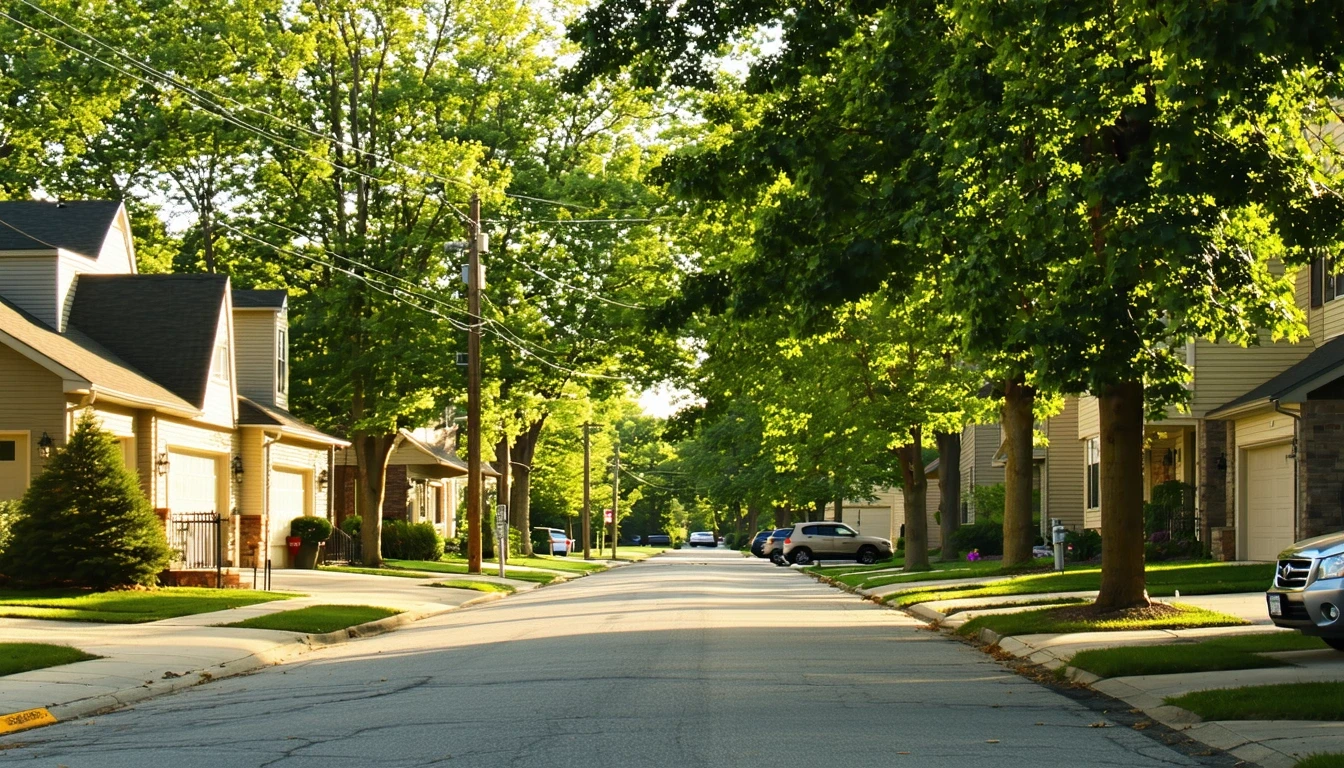
Lee’s Summit sits at the southern edge of the Kansas City metro, functioning as a commuter suburb with rail access, moderate income levels, and a housing market oriented heavily toward ownership. The median household income of $103,447 per year supports a homeownership base, and the median home value of $291,400 reflects a market where entry is accessible for dual-income households but not trivial for single earners or those relocating from lower-cost regions.
What newcomers often misunderstand is that Lee’s Summit’s housing market isn’t uniform. Rail transit creates value tiers: proximity to stations commands a premium, while neighborhoods farther out trade transit convenience for larger lots and lower per-square-foot costs. The city’s infrastructure reflects this split—walkable pockets exist near commercial corridors and transit nodes, but much of the housing stock sits in car-oriented subdivisions where errands cluster along a few main arteries rather than dispersing evenly across neighborhoods.
The regional price parity index of 87 (below the national baseline of 100) signals that Lee’s Summit’s overall cost structure runs lower than many metro areas, but housing itself doesn’t follow that discount uniformly. Home values here reflect demand from Kansas City commuters seeking suburban space, school access, and ownership stability, which keeps prices elevated relative to the broader cost environment. Renters face a thinner market—apartments and rental homes exist, but inventory is limited compared to ownership stock, and landlords price accordingly.
Lee’s Summit’s housing market rewards planning. Buyers who research transit proximity, school catchment areas, and neighborhood-level walkability can find homes that reduce car dependency and errand friction. Renters who prioritize location over square footage can access rail transit and mixed-use corridors, but they pay a premium for that convenience and face renewal risk as landlords adjust to metro-wide rental pressure.
Renting in Lee’s Summit
Rental housing in Lee’s Summit exists primarily in two forms: apartment complexes clustered near commercial corridors and transit, and single-family homes rented by individual landlords in subdivisions built for ownership. The median gross rent of $1,295 per month reflects a market where demand from Kansas City commuters, young professionals, and transitional households keeps pressure steady, even as the broader metro offers more rental inventory in urban cores.
Renters here face a tradeoff between location and cost. Apartments near the rail line or walkable commercial pockets offer shorter commutes and reduced car dependency, but they command higher rents and often include fewer square feet than comparable units farther out. Single-family rentals in car-oriented subdivisions provide more space and yard access, but they require reliable transportation for errands, school runs, and social activity—errand accessibility here is corridor-clustered, meaning most grocery, retail, and service options concentrate along a few main roads rather than distributing evenly across neighborhoods.
Rental volatility in Lee’s Summit stems from limited supply and metro-wide competition. Landlords adjust rents at renewal to reflect Kansas City’s broader rental market, and tenants in desirable locations—near transit, parks, or higher-rated school zones—see steeper increases than those in less connected areas. Renters also absorb utility volatility directly: electricity bills fluctuate with Missouri’s hot, humid summers (where air conditioning dominates usage) and cold snaps in winter (where heating costs spike). At 11.80¢/kWh, electricity rates are moderate, but consumption intensity drives the expense, not the rate alone.
For renters prioritizing flexibility, Lee’s Summit offers a functional base with access to Kansas City employment and metro amenities. For those planning to stay longer than two years, the rental market’s limited stock and renewal pressure make ownership worth serious consideration, especially for households that value cost predictability over mobility.
Owning a Home in Lee’s Summit
Homeownership in Lee’s Summit means taking on property taxes, maintenance, and the long-term exposure that comes with suburban housing stock in a climate that stresses roofs, HVAC systems, and exterior materials. The median home value of $291,400 provides an entry point for households earning near or above the metro median, but the purchase price is only the beginning of the cost structure.
Property taxes in Missouri vary by jurisdiction, and while the specific rate for Lee’s Summit isn’t provided here, buyers should expect annual tax bills that reflect both city and county levies, plus school district funding. Unlike renters, who see taxes embedded in rent, owners pay these directly and face reassessment risk when property values rise. Ownership also introduces maintenance exposure that renters avoid: HVAC systems work hard in Lee’s Summit’s humid summers and cold winters, roofs age under storm exposure, and suburban lots require upkeep that apartment dwellers never budget for.
Homeowners here also navigate governance structures that vary by neighborhood. Some subdivisions operate under homeowners associations (HOAs) that collect dues, enforce aesthetic rules, and manage shared amenities; others function without formal governance, leaving maintenance and neighborhood standards to individual owners. HOA presence isn’t universal in Lee’s Summit, but where it exists, it adds a recurring cost and a layer of control that some households welcome and others resent.
What distinguishes ownership in Lee’s Summit from renting is control over long-term cost behavior. Mortgage principal and interest remain fixed (for fixed-rate loans), insulating owners from the rental market’s renewal volatility. Property taxes and insurance rise over time, but these increases are slower and more predictable than rent adjustments in a supply-constrained rental market. Maintenance costs are episodic rather than monthly—HVAC replacement, roof repair, and appliance failure don’t follow a schedule—but owners can budget for them, defer them strategically, or mitigate them through preventive care.
Ownership in Lee’s Summit fits households that plan to stay long enough to absorb transaction costs, value stability over flexibility, and can handle the episodic financial shocks that come with maintaining a suburban home in a four-season climate.
Apartment vs House in Lee’s Summit — Cost Behavior Comparison
| Expense Category | Apartment | House |
|---|---|---|
| Base Housing Cost | $1,295/month median rent; includes structural maintenance | Mortgage on $291,400 median value; principal and interest fixed, but add taxes and insurance |
| Cooling & Heating Exposure | Lower square footage reduces total usage; shared walls buffer temperature swings | Higher square footage and detached structure increase HVAC runtime in humid summers and cold winters |
| Maintenance Responsibility | Landlord covers HVAC, appliances, roof, exterior; tenant handles only interior damage | Owner absorbs all repair and replacement costs; HVAC, roof, and appliance failure are episodic but significant |
| Errand & Transit Access | Apartments near rail or commercial corridors reduce car dependency; those farther out require driving | Most single-family homes sit in car-oriented subdivisions; errands cluster along main roads, not within neighborhoods |
| Renewal & Volatility Risk | Rent adjusts annually; metro-wide pressure and limited supply drive increases, especially near transit | Fixed-rate mortgage locks principal and interest; taxes and insurance rise, but more slowly than rent |
Methodology note: This table includes only categories where cost behavior differs meaningfully in Lee’s Summit due to housing stock, climate, infrastructure, or market structure. Generic distinctions (e.g., “houses have yards”) are omitted. Differences reflect Lee’s Summit’s commuter-suburb character, corridor-clustered errands, rail transit presence, and Missouri’s seasonal climate exposure.
Utilities & Upkeep Differences
Utility and maintenance costs in Lee’s Summit don’t just differ between apartments and houses—they differ because of how Missouri’s climate interacts with suburban housing stock and how the city’s infrastructure shapes daily logistics.
Electricity exposure in Lee’s Summit is driven by consumption intensity, not rate alone. At 11.80¢/kWh, the rate is moderate, but suburban homes here run air conditioning heavily through humid summers and heating (often electric or gas-assisted) during cold snaps. Apartments benefit from shared walls that buffer temperature swings and smaller square footage that reduces total runtime, but tenants in older complexes or units with poor insulation still see noticeable seasonal spikes. Homeowners face larger swings: a detached single-family home with 1,500–2,500 square feet can see summer bills climb substantially as HVAC systems work against heat and humidity, then drop in spring and fall when heating and cooling demands ease.
Natural gas, priced at $14.51/MCF, factors into heating costs for homes with gas furnaces or water heaters. Apartments often include gas in rent or spread the cost across units, insulating tenants from direct volatility. Homeowners pay the full seasonal swing, and in Lee’s Summit’s climate—where winter cold is real but not extreme—gas heating bills rise noticeably in December through February, then fall back in milder months.
Maintenance exposure in Lee’s Summit reflects the age and construction of suburban housing stock. Homes built in the 1990s and 2000s are reaching the age where HVAC systems, water heaters, and roofs need replacement—expenses that hit in the thousands, not hundreds. Storm exposure (summer thunderstorms, occasional ice) accelerates roof aging and gutter wear. Apartment tenants avoid these costs entirely; landlords absorb them and price them into rent over time.
The distinction matters because Lee’s Summit’s housing market is ownership-heavy. Renters benefit from landlord-covered maintenance, but they pay for that indirectly through rent and lose control over timing and quality of repairs. Owners face episodic shocks but gain the ability to invest in efficiency upgrades, preventive maintenance, and long-term cost reduction—advantages that compound over years of occupancy.
Rent vs Buy: Long-Term Exposure in Lee’s Summit
The choice between renting and buying in Lee’s Summit isn’t about which costs less in month one—it’s about which cost structure fits your household’s tolerance for volatility, control, and long-term financial exposure.
Renters in Lee’s Summit face annual renewal risk. Landlords adjust rents to reflect metro-wide demand, and in a market where rental inventory is limited and Kansas City commuters compete for units near transit and amenities, increases are common and sometimes steep. A tenant paying $1,295 per month today should expect that figure to rise at renewal, especially in neighborhoods with rail access, walkable errands, or proximity to higher-rated schools. Renters also absorb utility volatility directly, with no ability to invest in insulation, HVAC efficiency, or structural improvements that reduce consumption.
Owners in Lee’s Summit lock in mortgage principal and interest (on fixed-rate loans), which removes the largest component of housing cost from market volatility. Property taxes and insurance rise over time, but these increases are slower and more predictable than rent adjustments. Maintenance costs are episodic—HVAC replacement, roof repair, appliance failure—but owners control timing, quality, and whether to invest in upgrades that reduce future exposure. Over five or ten years, ownership in Lee’s Summit tends to deliver more predictable total housing costs than renting, especially for households that stay long enough to spread transaction costs (closing, moving, potential selling fees) across many years of occupancy.
The tradeoff is flexibility. Renters can leave at lease end with minimal financial penalty. Owners face transaction costs, market timing risk, and the possibility that selling in a down market erases years of equity gains. In Lee’s Summit, where the housing market is stable but not rapidly appreciating, ownership makes sense for households planning to stay at least five years and willing to handle maintenance responsibility in exchange for cost predictability.
Ownership also creates leverage for cost control. Homeowners can invest in efficiency upgrades, shop for better insurance rates, appeal property tax assessments, and refinance when rates drop. Renters have none of these levers—they accept the landlord’s choices and the market’s renewal terms. For households that value agency over their housing cost trajectory, ownership in Lee’s Summit offers structural advantages that compound over time.
How this article was built: In addition to public economic data, this article incorporates location-based experiential signals derived from anonymized geographic patterns—such as access density, walkability, and land-use mix—to reflect how day-to-day living actually feels in Lee’s Summit, MO.
FAQs About Housing Costs in Lee’s Summit
Is renting or buying cheaper in Lee’s Summit over five years?
Ownership typically delivers lower total housing costs over five years in Lee’s Summit, assuming stable occupancy and moderate maintenance needs. Renters face annual increases that compound over time, while owners lock in mortgage principal and interest and absorb only slower-growing taxes and insurance. The crossover point depends on down payment size, interest rate, and whether the owner faces major repairs early, but for households planning to stay, ownership reduces long-term exposure to rental market volatility.
How much do utilities add to housing costs in Lee’s Summit?
Utility costs in Lee’s Summit vary by housing type, size, and season. Apartment tenants might add $80–$150/month for electricity, internet, and gas (if separate), with summer and winter peaks. Homeowners in detached single-family homes face higher totals due to larger square footage and climate exposure—electricity and gas together can add several hundred dollars monthly during peak heating and cooling months, then drop substantially in spring and fall. The monthly expenses article provides more context on how utilities fit into overall household budgets.
Does Lee’s Summit have high property taxes?
Property tax rates in Lee’s Summit reflect Missouri’s local funding structure, which relies on property taxes for schools, city services, and county operations. While the specific rate isn’t provided here, buyers should expect annual tax bills that rise with assessed home values and any voter-approved levies. Compared to states with income taxes and lower property taxes, Missouri’s structure shifts more of the burden onto homeowners, making property taxes a significant and ongoing cost that renters avoid directly.
Are there neighborhoods in Lee’s Summit where renting makes more sense than buying?
Renting makes more sense near transit and walkable commercial corridors if you prioritize short commutes, car-light living, and flexibility over long-term cost predictability. These areas see higher rents but offer lifestyle benefits that reduce transportation and time costs. Buying makes more sense in car-oriented subdivisions farther from transit, where home values are lower per square foot, rental inventory is thin, and ownership delivers better long-term cost control. The choice depends on how long you plan to stay and whether you value mobility or stability more.
How does Lee’s Summit’s housing market compare to Kansas City overall?
Lee’s Summit functions as a commuter suburb within the Kansas City metro, offering lower density, more ownership-oriented housing stock, and access to rail transit that connects to urban employment centers. Home values here reflect demand from households seeking suburban space and school access without leaving the metro entirely. Compared to Kansas City’s urban core, Lee’s Summit offers more single-family inventory and less rental density, which makes ownership more accessible but renting more competitive. The metro’s broader cost structure shapes both markets, but Lee’s Summit skews toward families and long-term residents rather than transient renters.
Making Housing Choices in Lee’s Summit
Housing costs in Lee’s Summit reflect the city’s role as a commuter suburb where ownership dominates, rental inventory is limited, and infrastructure creates value tiers based on transit proximity and walkability. The median home value of $291,400 and median rent of $1,295 per month provide entry points, but the real cost structure emerges over time—through renewal volatility for renters, maintenance exposure for owners, and the seasonal utility swings that come with Missouri’s humid summers and cold winters.
Renters in Lee’s Summit gain flexibility and avoid maintenance responsibility, but they face annual renewal risk in a market where limited supply and metro-wide demand push rents upward, especially near transit and amenities. Owners lock in mortgage costs, gain control over long-term expenses, and absorb episodic maintenance shocks in exchange for predictability and the ability to invest in efficiency and cost reduction. Neither path is universally cheaper—the right choice depends on how long you plan to stay, your tolerance for volatility, and whether you value mobility or stability more.
For households planning to stay five years or longer, ownership in Lee’s Summit offers structural cost advantages: fixed mortgage payments, slower-growing taxes and insurance, and the ability to control maintenance timing and quality. For those prioritizing flexibility, career mobility, or short-term cost minimization, renting near transit or walkable corridors provides access to the metro without the transaction costs and maintenance exposure of ownership. Both paths work in Lee’s Summit, but they diverge sharply in how costs behave over time and who controls them.
Understanding how housing costs interact with transit access, errand logistics, and climate exposure helps you choose the path that fits your household’s financial structure and lifestyle priorities. Lee’s Summit rewards planning—whether that means researching school zones and rail proximity before buying, or timing lease renewals to avoid peak rental pressure. The city’s housing market is stable, accessible, and oriented toward long-term residents, but only if you match your choice to your timeline and risk tolerance.