
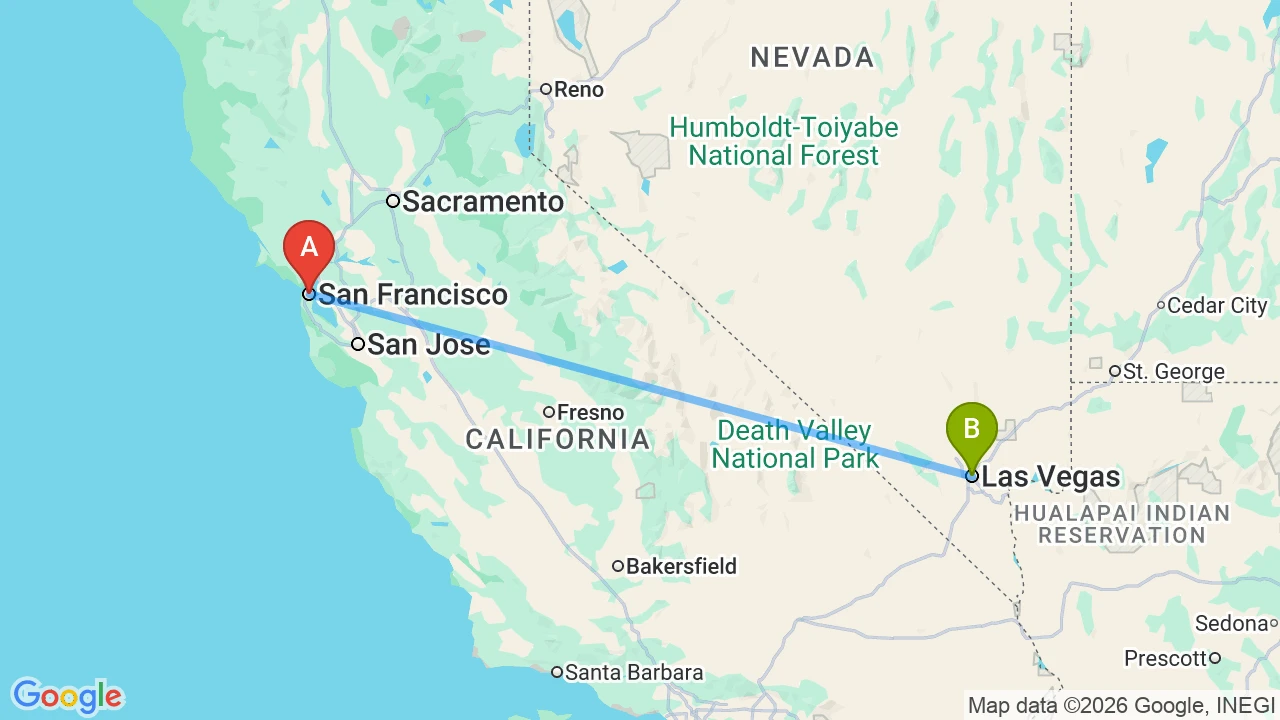
The move from San Francisco to Las Vegas represents one of the most dramatic cost and lifestyle shifts in the American West. While San Francisco’s median home value sits at $1,348,700 and median rent reaches $2,316 per month, Las Vegas offers median home values of $365,300 and median rent of $1,356 per month. But this relocation involves far more than lower sticker prices—it fundamentally changes where your money goes, how you move through your day, and what kinds of expenses demand your attention.
This guide explains how cost pressure, daily logistics, and household rhythms shift when you leave the Bay Area for the Las Vegas Valley. It does not calculate total savings or declare a financial winner. Instead, it maps where expenses concentrate differently, which household types feel the most relief, and where new pressures emerge that San Francisco residents may not anticipate.
Understanding the Cost Pressure Shift
In San Francisco, housing costs dominate household budgets so completely that they often eclipse all other expenses. The median household income of $136,689 per year reflects the earnings required to sustain life in one of America’s most expensive housing markets. Las Vegas households earn a median of $66,356 per year—roughly half the San Francisco figure—yet face housing costs that represent about one-quarter of Bay Area levels.
This creates a fundamental rebalancing. Housing pressure drops dramatically, but other cost categories—utilities, transportation, and ongoing maintenance—claim a larger share of attention. In San Francisco, a $200 monthly utility swing barely registers against a $3,000+ rent payment. In Las Vegas, that same $200 swing becomes a meaningful budget event, especially during summer months when cooling costs dominate.
Electricity rates illustrate this dynamic clearly. San Francisco’s rate of 31.91¢/kWh is more than double Las Vegas’s 14.20¢/kWh, but the volume of electricity consumed in the desert climate—particularly for air conditioning during extended triple-digit heat—means total utility bills often surprise newcomers. Natural gas prices follow a similar pattern: $21.89/MCF in San Francisco versus $11.96/MCF in Las Vegas, but heating needs in the Bay Area’s cool, damp climate differ sharply from the desert’s rare cold snaps.
Transportation costs shift in both price and structure. Gasoline runs $4.61/gallon in San Francisco compared to $3.67/gallon in Las Vegas, but the bigger change involves how much you drive and how often. San Francisco’s average commute of 31 minutes often happens via transit, rideshare, or compressed urban routes. Las Vegas’s 25-minute average commute almost always happens by car, and only 4.6% of workers report working from home, compared to 12.8% in San Francisco. The sprawling valley layout means errands, healthcare visits, and social activities typically require separate car trips rather than combined walking loops.
Housing Market Dynamics and Entry Barriers
The housing cost difference between these cities is not merely a matter of lower prices—it reflects entirely different market structures and ownership pathways. San Francisco’s housing market functions as a high-barrier, low-inventory system where entry requires substantial capital and ongoing costs remain rigid. Las Vegas operates as a higher-volume, lower-barrier market where entry is more accessible but ongoing obligations—property taxes, HOA fees, insurance, and climate-driven maintenance—demand consistent attention.
For renters, the shift from $2,316 to $1,356 in median monthly rent represents immediate, tangible relief. But rental markets in Las Vegas behave differently than in San Francisco. Lease renewals can be more volatile, landlord-tenant protections differ, and the rental stock skews toward larger apartment complexes and single-family homes rather than the dense multi-unit buildings common in San Francisco. Renters accustomed to San Francisco’s tenant-friendly regulatory environment may find Las Vegas’s market more landlord-driven, with fewer restrictions on rent increases and lease terms.
For prospective buyers, the gap between $1,348,700 and $365,300 in median home values opens ownership possibilities that feel impossible in the Bay Area. A household with $100,000 in savings—barely enough for a down payment on a modest San Francisco condo—can comfortably purchase a single-family home in many Las Vegas neighborhoods. However, ownership in the desert comes with ongoing costs that San Francisco’s dense urban housing often bundles or minimizes: landscape irrigation during scorching summers, pool maintenance if the property includes one, HVAC system strain and replacement cycles, and homeowners association fees that can range widely depending on neighborhood amenities.
Neighborhood form also changes the ownership equation. San Francisco’s compact geography means many homeowners live in attached housing with shared walls, limited yards, and walkable access to services. Las Vegas’s suburban layout favors detached single-family homes with yards, garages, and car-dependent access. This shift affects not just purchase price but ongoing time, effort, and cost related to property upkeep.
Daily Rhythms and Lifestyle Adjustments
The move from San Francisco to Las Vegas fundamentally alters how you move through your day. San Francisco’s dense urban fabric allows many residents to combine errands, work, and social activities into compact walking or transit loops. Grocery stores, pharmacies, cafes, and services cluster within neighborhoods, and public transit—while imperfect—provides a viable alternative to car ownership for many households.
Las Vegas operates on an entirely different spatial logic. The valley sprawls across a broad desert basin, and most residential neighborhoods sit separated from commercial corridors by design. Running errands typically means driving to strip malls or big-box retail clusters, often several miles from home. Healthcare appointments, children’s activities, and social gatherings almost always require separate car trips. Even households that rarely drove in San Francisco find themselves logging hundreds of miles per month in Las Vegas, not because distances are extreme, but because the built environment assumes car access for nearly every activity.
This car dependence creates both cost and time implications. Fuel costs, while lower per gallon, accumulate quickly when every household task requires ignition. Vehicle maintenance intervals arrive faster. Insurance, registration, and tire replacement become more frequent budget items. For households with multiple drivers—especially those with teenagers—the assumption that each person needs a vehicle adds a layer of expense that many San Francisco families avoided entirely.
Climate also reshapes daily routines in ways that affect both cost and comfort. San Francisco’s famously mild, foggy weather means minimal heating and virtually no air conditioning. Year-round temperatures hover in a narrow band, and outdoor activities remain possible in every season. Las Vegas’s desert climate brings extended periods of triple-digit summer heat, making midday outdoor activity uncomfortable or unsafe from June through September. Air conditioning becomes non-negotiable, and utility bills spike accordingly. Conversely, winter months are mild and sunny, with rare freezing nights and minimal heating needs—a sharp contrast to San Francisco’s damp, chilly winters that demand consistent heating despite moderate temperatures.
Who Benefits Most from This Move
This relocation tends to work best for households whose primary financial pressure in San Francisco was housing cost, and who can adapt comfortably to car-dependent suburban living. Families seeking more indoor space, private yards, and lower monthly obligations often find Las Vegas delivers immediate quality-of-life improvements. The ability to purchase a home—and build equity—becomes realistic for middle-income earners who faced permanent renter status in the Bay Area.
Remote workers and retirees also benefit significantly, especially those who no longer need daily access to San Francisco’s job market or urban amenities. The combination of lower housing costs, no state income tax in Nevada, and abundant sunshine makes Las Vegas attractive for households prioritizing financial flexibility and climate comfort. Retirees, in particular, appreciate the dry heat, the active adult communities, and the lower cost base that stretches fixed incomes further.
However, this move challenges households that depend on urban density, public transit, and walkable access to thrive. Professionals in creative industries, tech workers who value proximity to innovation hubs, and families who rely on San Francisco’s robust public transit may find Las Vegas isolating and logistically exhausting. The lack of a strong transit network means every household member needs either a car or constant rides, and the sprawling layout makes spontaneous social interaction rare.
Young professionals and recent graduates often struggle with the lifestyle adjustment. San Francisco’s density creates accidental community—you meet people at coffee shops, on the bus, at neighborhood events. Las Vegas’s suburban form requires intentional effort to build social networks, and the car-dependent layout can feel lonely for those accustomed to urban serendipity. Additionally, the job market in Las Vegas skews heavily toward hospitality, gaming, and service industries, with fewer opportunities in tech, finance, and professional services compared to the Bay Area.
Relocation Logistics and Practical Friction
The physical move from San Francisco to Las Vegas is relatively straightforward—about 570 miles, typically completed in a single long day of driving or a short flight. However, the administrative and logistical adjustments take longer than the journey itself.
Nevada residency brings immediate changes: no state income tax, but vehicle registration and insurance requirements differ from California. New residents must register vehicles within 30 days and obtain Nevada driver’s licenses. Car insurance rates vary widely depending on neighborhood, driving history, and coverage levels, and Las Vegas’s higher traffic accident rates compared to San Francisco sometimes surprise newcomers.
Utility setup in Las Vegas typically involves separate accounts for electricity, water, trash, and sometimes natural gas, whereas San Francisco renters often have some utilities included in rent. Homeowners in planned communities may also pay HOA fees that cover landscaping, amenities, and exterior maintenance—an expense structure less common in San Francisco’s older housing stock.
Healthcare access requires research and adjustment. Las Vegas has fewer major medical centers than the Bay Area, and specialist availability can be more limited. Households with complex medical needs or those accustomed to UCSF, Stanford, or other top-tier Bay Area health systems may find the transition requires more travel or longer wait times for certain services.
School systems also differ significantly. San Francisco Unified operates as a single district with a complex enrollment process and wide variation in school quality by neighborhood. Las Vegas falls under the Clark County School District, one of the largest in the nation, with school assignment typically based on residential address. Families prioritizing school quality often find themselves researching specific neighborhoods and zoning boundaries carefully before choosing where to live.
Where New Pressures Emerge
While housing cost relief is immediate and substantial, Las Vegas introduces pressures that San Francisco residents may not anticipate. Summer utility bills can rival or exceed the monthly savings on rent, especially in larger homes or those with older HVAC systems. The desert climate also accelerates wear on vehicles, outdoor furniture, and exterior paint, creating maintenance cycles that feel more frequent than in the Bay Area’s milder conditions.
The car-dependent lifestyle also imposes hidden time costs. What used to be a 10-minute walk to the grocery store becomes a 15-minute drive each way, plus parking. Households with children find themselves spending hours each week shuttling between school, activities, and appointments—time that San Francisco families often reclaimed via walking or transit. This “windshield time” doesn’t appear on a budget spreadsheet, but it affects quality of life and household stress levels.
Social and cultural adjustment can be subtler but equally significant. San Francisco’s progressive politics, environmental consciousness, and tech-driven culture create a distinct social environment. Las Vegas’s culture centers more on hospitality, entertainment, and a libertarian live-and-let-live ethos. Newcomers sometimes feel the absence of the Bay Area’s intellectual and activist communities, especially in suburban neighborhoods where social interaction is less spontaneous.
Employment volatility also differs between the two cities. San Francisco’s unemployment rate of 3.9% reflects a tight labor market with strong demand for skilled workers. Las Vegas’s 5.8% unemployment rate and heavy reliance on tourism and hospitality mean the job market can be more volatile, especially during economic downturns or shifts in travel patterns. Households that depend on two incomes may find one partner’s job search takes longer than expected, or that career advancement opportunities feel more limited than in the Bay Area’s diverse economy.
Climate, Seasonality, and Household Exposure
San Francisco’s climate is famously stable—cool, foggy summers and mild, damp winters create a year-round sameness that requires minimal seasonal adjustment. Heating costs remain modest, air conditioning is rare, and outdoor activities are possible in every month, even if fog and wind sometimes limit comfort.
Las Vegas’s desert climate operates in extremes. Summer heat dominates from May through September, with daytime temperatures regularly exceeding 100°F and occasionally reaching 115°F or higher. Air conditioning runs continuously, and outdoor activities shift to early morning or evening hours. Utility bills spike, and households without adequate cooling face genuine health risks. Conversely, winter months are mild and sunny, with daytime temperatures in the 50s and 60s and rare freezing nights. Heating needs are minimal, and outdoor recreation becomes the norm.
This seasonality affects both cost and lifestyle. Families with children find summer months challenging—outdoor play is limited, and keeping kids entertained indoors for weeks on end requires planning. Conversely, winter months feel liberating compared to San Francisco’s damp chill, and many residents embrace hiking, biking, and outdoor dining during the cooler season.
How this article was built: In addition to public economic data, this article incorporates location-based experiential signals derived from anonymized geographic patterns—such as access density, walkability, and land-use mix—to reflect how day-to-day living actually feels in Las Vegas, NV.
Frequently Asked Questions
- Does Las Vegas feel more or less expensive than San Francisco?
- Housing costs drop dramatically, but expense concentration shifts rather than disappears. In San Francisco, rent or mortgage dominates your budget so completely that other costs feel secondary. In Las Vegas, housing pressure eases, but utilities, transportation, and car-dependent logistics claim a larger share of attention. Whether the move feels cheaper depends on how your household adapts to suburban sprawl, summer cooling costs, and the assumption that every adult needs a vehicle.
- How do housing markets differ between San Francisco and Las Vegas?
- San Francisco operates as a high-barrier, low-inventory market where entry requires substantial capital and ongoing costs remain rigid. Las Vegas offers lower entry barriers and higher transaction volume, making homeownership accessible to middle-income households. However, ownership in Las Vegas comes with different ongoing obligations—property taxes, HOA fees, landscape maintenance, and climate-driven upkeep—that San Francisco’s dense urban housing often minimizes or bundles differently.
- What feels different about daily life after moving to Las Vegas?
- The biggest adjustment is car dependence. San Francisco’s density allows many residents to walk, bike, or take transit for daily errands, while Las Vegas’s sprawling layout requires driving for nearly every activity. Households log significantly more miles, spend more time in vehicles, and find that spontaneous social interaction becomes rare. Climate also reshapes routines—summer heat limits outdoor activity for months, while mild winters open up recreation that San Francisco’s damp chill often discourages.
- When does this move tend to feel easiest or hardest?
- The transition feels smoothest for households arriving in fall or winter, when Las Vegas’s mild, sunny weather contrasts favorably with San Francisco’s damp chill and housing costs deliver immediate relief. Summer arrivals face the shock of extreme heat and spiking utility bills before experiencing the benefits of lower housing pressure. Families with school-age children often time moves to align with the academic calendar, but adjusting to a new district and car-dependent logistics takes longer than the summer break allows.
- What adjustment pressures surprise people most?
- Three pressures catch newcomers off guard: the sheer amount of driving required for daily life, the intensity of summer utility bills, and the effort needed to build social networks in a car-dependent suburb. San Francisco residents accustomed to walking to coffee shops, running errands on foot, and meeting neighbors organically find Las Vegas requires intentional effort to create community. The lack of a viable transit system also means every household member needs either a car or constant rides, adding logistical complexity that many Bay Area families avoided.
- Who does this move work best for—and who struggles?
- This relocation benefits households whose primary pain point in San Francisco was housing cost, and who adapt comfortably to suburban, car-dependent living. Families seeking space, homeownership, and lower monthly obligations often thrive, as do remote workers and retirees who no longer need access to the Bay Area’s job market. However, young professionals in creative or tech industries, households reliant on public transit, and those who value urban density and spontaneous social interaction often find Las Vegas isolating and logistically exhausting.
Making the Decision
The move from San Francisco to Las Vegas is not a simple cost arbitrage—it’s a fundamental restructuring of how you live, where your money goes, and what your daily routines look like. Housing pressure drops dramatically, but car dependence, utility exposure, and suburban logistics introduce new demands that require adaptation and planning.
This relocation works best when you understand not just the lower sticker prices, but the behavioral and structural changes those prices reflect. If your household thrives on space, sunshine, and the ability to own rather than rent, Las Vegas delivers meaningful quality-of-life improvements. If you depend on urban density, public transit, and walkable access to feel at home, the adjustment may prove more challenging than the cost savings suggest.
For deeper exploration of what life in Las Vegas actually costs and how different household types navigate the transition, visit the Las Vegas cost of living hub for detailed breakdowns of utilities, transportation, and neighborhood-specific expenses.