
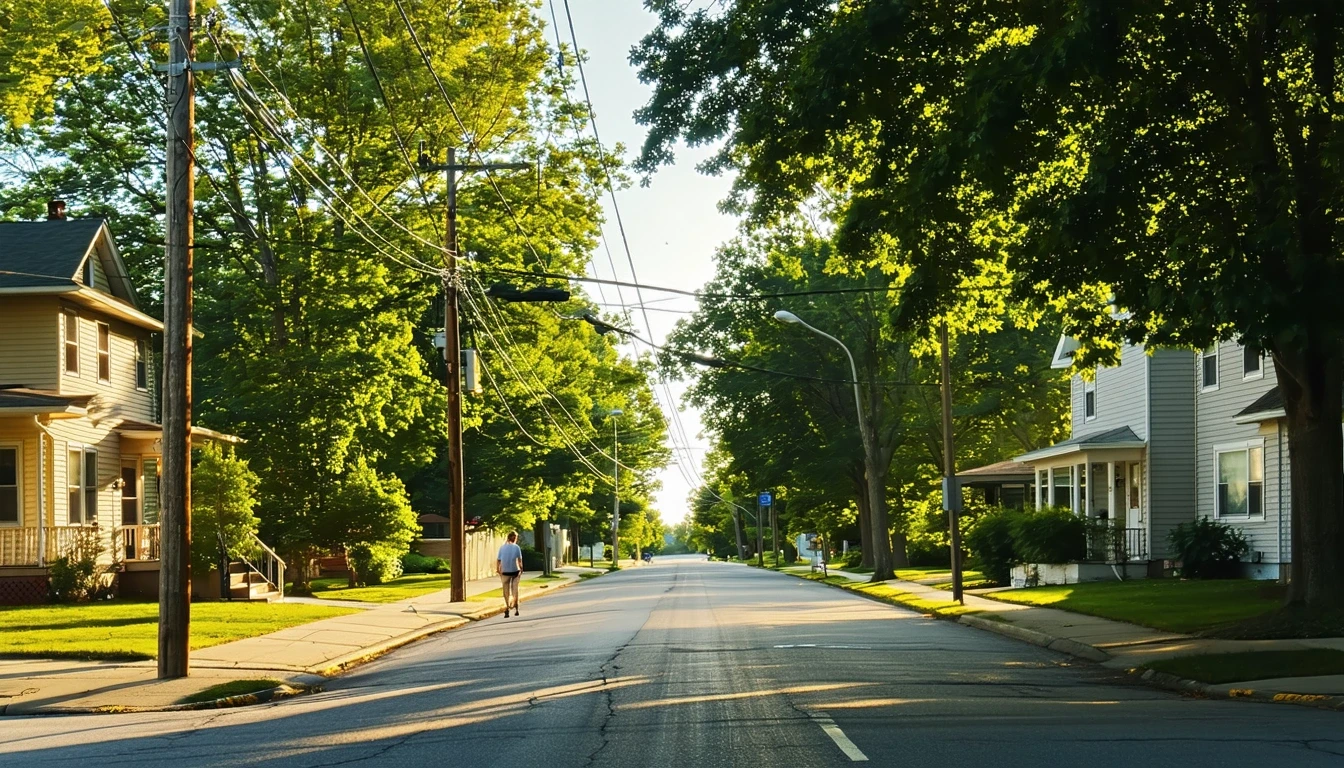
Independence and Blue Springs sit just miles apart in the Kansas City metro, sharing the same regional economy, weather patterns, and even the same cost-of-living index. Yet the financial experience of living in each city diverges sharply—not because one is universally cheaper, but because cost pressure concentrates in different places. Independence offers a lower entry point for housing and access to rail transit, while Blue Springs commands higher home prices but delivers more integrated park access and a commuter-oriented income profile. For households deciding between the two in 2026, the question isn’t which city costs less overall, but which cost structure aligns with how they live, work, and move through daily life.
Meet the Nguyens, a fictional family of four debating this exact choice. Both parents work—one commutes downtown, the other manages a flexible schedule from home. They’re weighing Independence’s lower mortgage entry and transit access against Blue Springs’ family-friendly green space and newer housing stock. Their decision hinges not on a single number, but on understanding where each city’s costs become non-negotiable, where flexibility exists, and how their household’s specific sensitivities—commute friction, utility volatility, housing form—interact with each place’s structure.
This article breaks down how housing, utilities, groceries, transportation, and taxes behave differently in Independence and Blue Springs, explains what those differences mean for renters, owners, singles, couples, and families, and provides a decision framework to help households identify which city’s cost pressures they’re better equipped to manage.
Housing Costs
Housing is where Independence and Blue Springs diverge most visibly. Independence’s median home value sits at $150,800, while Blue Springs’ reaches $224,600—a substantial gap that shapes who can enter each market and what ongoing obligations follow. For renters, the difference narrows but persists: Independence’s median gross rent is $1,020 per month, compared to $1,159 per month in Blue Springs. These aren’t just price tags; they’re structural signals about what kind of housing stock dominates, who the market serves, and where cost pressure lands first.
In Independence, the lower entry barrier opens the door to first-time buyers and households stretching toward ownership. The housing stock reflects a mix of building heights and ages, with older single-family homes, duplexes, and small apartment complexes creating variety in both form and price. This diversity means renters can often find units that fit tighter budgets, and buyers can access ownership without the down payment hurdle that Blue Springs imposes. However, older housing stock introduces its own exposure: higher heating and cooling costs, more frequent maintenance, and less predictable utility bills. Independence’s mixed urban form also means neighborhoods vary widely—some walkable and transit-served, others car-dependent and isolated from services.
Blue Springs, by contrast, skews toward newer single-family homes in low-rise subdivisions. The higher home values reflect not just larger lots and square footage, but also more recent construction, which typically translates to better insulation, modern HVAC systems, and lower baseline utility exposure. Renters in Blue Springs face higher monthly obligations, but the rental stock often includes townhomes and newer apartment complexes with amenities that can reduce other costs (on-site fitness centers, included trash service, proximity to parks). The trade-off is clear: Blue Springs front-loads cost in housing, but households gain predictability in utilities and access to integrated green space that reduces the need for paid recreation.
For the Nguyens, this difference is decisive. If they prioritize getting into a home quickly and can manage the maintenance and utility variability of an older property, Independence’s lower entry point makes ownership feasible. If they value newer construction, lower ongoing utility risk, and immediate access to parks for their kids, Blue Springs justifies the higher mortgage—but only if their dual income can absorb the front-loaded housing cost without sacrificing flexibility elsewhere.
| Housing Type | Independence | Blue Springs |
|---|---|---|
| Median Home Value | $150,800 | $224,600 |
| Median Gross Rent | $1,020/month | $1,159/month |
| Typical Stock Character | Mixed ages, varied building heights | Newer low-rise, single-family dominant |
Housing Takeaway: Independence suits households sensitive to entry barriers and those willing to trade predictability for access. Blue Springs fits households that can absorb higher upfront housing costs in exchange for newer construction, lower utility volatility, and integrated outdoor amenities. Renters face the same directional trade-off: Independence offers lower monthly obligations but more variability in unit quality and location; Blue Springs demands more rent but delivers more consistency in housing condition and neighborhood access.
Utilities and Energy Costs
Utilities in Independence and Blue Springs share the same seasonal rhythm—hot, humid summers demand air conditioning, and cold winters require heating—but the cost structure beneath that rhythm differs in ways that matter for household budgets. Independence’s electricity rate is 13.12¢/kWh, slightly higher than Blue Springs’ 12.95¢/kWh, a difference too small to drive decisions on its own. Natural gas, however, tells a different story: Independence pays $16.48 per MCF, while Blue Springs faces $28.51 per MCF, a gap that significantly affects heating season exposure for households relying on gas furnaces.
In Independence, the older housing stock—common in neighborhoods with mixed building heights and varied construction eras—means many homes lack modern insulation, have single-pane windows, or run aging HVAC systems. These homes consume more energy to maintain comfort, turning even modest rate differences into meaningful monthly swings. Summer cooling can dominate utility bills, especially in poorly insulated units, while winter heating—though cheaper per unit of gas—still climbs as older furnaces work harder. Renters in older apartment buildings face similar exposure, often with less control over efficiency upgrades. The result is higher volatility: utility bills fluctuate more with weather extremes, and households have less ability to predict or smooth costs across the year.
Blue Springs’ newer housing stock shifts the equation. Homes built in the last two decades typically feature better insulation, double-pane windows, and more efficient heating and cooling systems, which lower baseline energy consumption. However, the higher natural gas price introduces a different kind of exposure: households in larger single-family homes with gas heating face steeper bills during cold snaps, even if their homes are well-insulated. The trade-off is predictability versus magnitude—Blue Springs households can better estimate usage, but the per-unit cost of heating is higher. Renters in newer complexes often benefit from included water or trash service, which can offset some utility pressure, but those in standalone townhomes bear the full weight of seasonal gas bills.
For the Nguyens, this difference hinges on housing choice and risk tolerance. If they buy an older home in Independence, they’ll face more volatile utility bills and may need to budget for efficiency upgrades (weatherstripping, programmable thermostats, furnace maintenance) to regain control. If they choose Blue Springs, they’ll pay more for natural gas during winter but can rely on newer construction to keep total usage lower and more predictable. Families with young children—who need stable indoor temperatures year-round—may prefer Blue Springs’ predictability, while cost-conscious couples willing to layer up in winter and manage thermostat discipline might find Independence’s lower gas rates more forgiving.
Utility Takeaway: Independence households face more volatility due to older housing stock, but lower natural gas rates provide some relief during heating season. Blue Springs offers more predictable energy usage thanks to newer construction, but higher natural gas prices increase exposure for households in larger homes or those heavily reliant on gas heating. Apartment renters in both cities experience less extreme swings, but those in older Independence buildings should expect higher cooling costs in summer, while Blue Springs renters in gas-heated units will feel winter bills more acutely.
Groceries and Daily Expenses

Grocery and everyday spending in Independence and Blue Springs operate within the same regional price environment—both cities share a regional price parity index of 93, meaning costs run slightly below the national baseline. Yet how households experience that pricing depends less on the numbers themselves and more on access patterns, store concentration, and the friction involved in running errands. Both cities show corridor-clustered food and grocery density, meaning options concentrate along major roads rather than spreading evenly across neighborhoods. This structure favors households with cars and flexible schedules, while those relying on transit or walking face longer trips and fewer nearby choices.
In Independence, grocery access clusters near commercial corridors, with a mix of big-box stores, regional chains, and smaller neighborhood markets. Households willing to drive can comparison-shop across multiple stores, leveraging sales and discount options to manage costs. However, the mixed urban form means some neighborhoods sit farther from these clusters, adding time and fuel costs to each grocery run. For single adults or couples without kids, this friction is manageable—one or two trips per week, planned around work schedules, keeps costs predictable. Families managing larger volumes and more frequent trips feel the friction more acutely, especially if they’re balancing school pickups, activities, and meal planning. Dining out and convenience spending (coffee shops, takeout, prepared foods) also concentrate along corridors, making it easy to slip into higher spending if errands become rushed or fragmented.
Blue Springs mirrors this pattern but with a slight edge in park-adjacent retail clusters, where grocery stores, pharmacies, and casual dining options sit near recreational amenities. This layout benefits families who can combine errands with outdoor activities, reducing the number of separate trips and the temptation to fill gaps with convenience purchases. The newer retail infrastructure also tends toward larger-format stores with broader selections, which can reduce the need for specialty trips but may encourage larger cart sizes and impulse buying. For cost-sensitive households, the key is discipline: Blue Springs’ layout makes it easy to consolidate trips, but the presence of more dining and convenience options also creates more opportunities to spend beyond the grocery list.
For the Nguyens, grocery strategy becomes a question of time versus money. If they choose Independence and live near a corridor cluster, they can manage costs through careful planning and discount shopping, but they’ll need to account for the time cost of multiple stops and the fuel for each trip. If they choose Blue Springs, they can streamline errands by combining grocery runs with park visits, but they’ll need to resist the convenience creep that comes with more dining and takeout options nearby. Families with young kids often find that time savings justify slightly higher grocery spending, while cost-focused couples may prefer the flexibility to hunt for deals even if it means more driving.
Grocery Takeaway: Both cities require car-based grocery strategies due to corridor-clustered access. Independence offers more variety in store types and price points but demands more intentional trip planning to avoid friction costs. Blue Springs simplifies logistics with park-adjacent retail clusters but introduces more temptation for convenience spending. Households sensitive to time pressure may prefer Blue Springs’ consolidated errands, while those prioritizing price flexibility and willing to manage multiple stops may find Independence more forgiving.
Taxes and Fees
Taxes and fees in Independence and Blue Springs don’t appear as line items in the input data, but their structural role in household budgets is significant and predictable based on housing type, ownership status, and local service models. Property taxes in Missouri are assessed locally, meaning the specific rates depend on school district funding, city services, and county levies. Both cities fall within the Kansas City metro’s broader tax environment, but the higher home values in Blue Springs translate directly into higher absolute property tax bills for owners, even if the millage rates are similar. For a household buying at the median home value, Blue Springs’ higher entry price means a larger annual tax obligation from day one—an ongoing cost that doesn’t fluctuate with usage or behavior.
Renters in both cities don’t pay property taxes directly, but landlords pass those costs through in rent pricing. Blue Springs’ higher rents reflect not just newer construction and larger units, but also the property tax burden on those more expensive homes. Independence’s lower rents offer some relief, but renters in older buildings may face higher utility costs that offset the savings. The key difference is predictability: property taxes are stable and known at purchase, while utility costs fluctuate with weather and usage. Homeowners in Blue Springs face higher fixed costs but more control over variables; Independence owners trade lower fixed obligations for more exposure to seasonal swings.
Fees—trash collection, water, sewer, stormwater management—vary by provider and housing type. Single-family homeowners in both cities typically pay these fees separately, either directly to the city or through utility billing. Apartment and townhome renters often see these costs bundled into rent or HOA fees, which can simplify budgeting but obscure the true cost structure. Blue Springs’ newer subdivisions more commonly include HOA fees that cover landscaping, shared amenities, and sometimes trash service, adding a predictable monthly line item that Independence’s older neighborhoods may not carry. For households sensitive to hidden fees or ongoing obligations, understanding whether HOA fees are mandatory—and what they cover—becomes critical to comparing true housing costs.
For the Nguyens, the tax and fee picture depends on ownership versus renting and housing type. If they buy in Blue Springs, they’ll face higher property taxes and possibly HOA fees, but those costs are predictable and don’t spike with weather or usage. If they buy in Independence, they’ll pay less in property taxes but may need to budget separately for services that HOAs bundle elsewhere. Renters in both cities should ask whether trash, water, and sewer are included in rent or billed separately, and whether HOA fees apply—details that can shift the effective monthly cost by $50 to $150 without changing the advertised rent.
Taxes and Fees Takeaway: Blue Springs homeowners face higher property tax obligations due to higher home values, plus potential HOA fees in newer subdivisions. Independence homeowners pay less in property taxes but may lack the bundled services that HOAs provide. Renters in both cities should clarify which fees are included in rent and whether HOA dues apply. Long-term residents benefit from predictable property taxes, while recent movers should budget for the full cost structure—including fees—before committing to a lease or purchase.
Transportation and Commute Reality
Transportation costs in Independence and Blue Springs hinge less on gas prices—which differ by only four cents per gallon ($2.51/gal in Independence, $2.47/gal in Blue Springs)—and more on how households move through daily life. Independence offers rail transit service, a structural advantage that reduces car dependency for households whose work, errands, or social patterns align with transit routes. Blue Springs lacks rail service in the available signals, meaning nearly all trips require a car. The commute data underscores this: Blue Springs residents average 26 minutes each way, with 43% facing long commutes, while only 4.7% work from home. Independence’s commute data is absent, but the presence of rail transit and walkable pockets suggests more variability in how people get around.
For households with one or two commuters, the difference between car-only and transit-optional cities compounds quickly. In Blue Springs, both adults likely drive separately if their work locations or schedules don’t align, doubling vehicle ownership costs (insurance, registration, maintenance) and fuel expenses. The 43% long-commute figure signals that many Blue Springs residents work outside the immediate area, adding time costs that can’t be reclaimed—time that could otherwise go toward meal prep, errands, or family activities. Independence’s rail access doesn’t eliminate the need for a car, but it creates optionality: one household member might commute by rail while the other drives, reducing the pressure to own two vehicles or absorb two sets of commute costs.
Walkability signals complicate the picture. Both cities show walkable pockets with high pedestrian-to-road ratios, meaning some neighborhoods support walking for short trips—coffee runs, park visits, nearby errands. Blue Springs also shows some cycling infrastructure, though it’s limited to pockets rather than city-wide networks. These signals suggest that daily errands still require a car in most cases, but households in well-located neighborhoods can reduce short trips and the associated fuel and wear. The corridor-clustered grocery and service access in both cities reinforces car dependence: even if a neighborhood is walkable internally, reaching the grocery store, pharmacy, or dining options almost always means driving.
For the Nguyens, transportation strategy hinges on work locations and schedule flexibility. If one parent commutes downtown and can use Independence’s rail service, they save not just fuel but also parking costs, vehicle wear, and the stress of daily driving. If both parents work in suburban office parks or have staggered schedules, Blue Springs’ car-dependent structure becomes unavoidable, and the 26-minute average commute becomes a baseline time cost that shapes everything else—when they can pick up kids, when they can shop, how much evening time remains for cooking versus takeout. Households with flexible or remote work can mitigate some of this friction, but the 4.7% work-from-home rate in Blue Springs suggests that’s the exception, not the norm.
Transportation Takeaway: Independence’s rail transit and walkable pockets offer optionality that can reduce car dependency and associated costs for some households, especially those with downtown commutes. Blue Springs’ car-dependent structure and long commute prevalence mean nearly all households need reliable vehicles and must budget for the time cost of driving. Households sensitive to commute friction, vehicle ownership costs, or schedule flexibility may find Independence’s transit access valuable, while those already committed to car-based lifestyles won’t notice much difference beyond the presence or absence of rail as a backup option.
Cost Structure Comparison
The cost experience in Independence and Blue Springs doesn’t reduce to a single “cheaper” or “more expensive” verdict because the pressure points differ by household type, income stability, and daily logistics. Housing dominates the financial picture in both cities, but the nature of that dominance shifts: Independence front-loads less cost but introduces more variability through older housing stock and utility exposure, while Blue Springs demands higher upfront investment but delivers more predictability in energy usage and access to amenities. For renters, Independence offers lower monthly obligations with less consistency in unit quality, while Blue Springs charges more but typically provides newer construction and bundled services.
Utilities introduce more volatility in Independence due to older homes and less efficient systems, even though natural gas rates are lower. Blue Springs’ higher natural gas prices hit harder during winter, but newer construction keeps total usage more predictable. Households in larger single-family homes feel this difference most acutely, while apartment renters in both cities experience less extreme swings. The key question is whether a household values predictability (Blue Springs) or lower baseline rates with more variability (Independence).
Transportation patterns matter more in Blue Springs, where the absence of rail transit and the prevalence of long commutes mean nearly all households need at least one reliable vehicle, and many need two. Independence’s rail access and walkable pockets create optionality that can reduce vehicle ownership costs and commute friction for some households, though car dependency remains the norm for most daily errands. Families juggling school drop-offs, activities, and work schedules feel this friction most intensely, while single adults or couples with aligned schedules can manage more easily.
Groceries and daily expenses follow similar corridor-clustered patterns in both cities, meaning access requires a car and intentional trip planning. Blue Springs’ park-adjacent retail clusters simplify logistics for families who can combine errands with outdoor activities, while Independence’s variety in store types offers more price flexibility for households willing to manage multiple stops. The difference is less about cost and more about time budget and convenience creep—Blue Springs makes it easier to consolidate trips but also easier to spend on dining and takeout.
For households sensitive to housing entry barriers and willing to manage older homes and utility variability, Independence offers a lower-cost path to ownership and renting. For households that can absorb higher housing costs in exchange for predictability, newer construction, and integrated green space, Blue Springs justifies the premium. The decision isn’t about which city costs less overall, but about which cost structure aligns with a household’s income stability, time flexibility, and tolerance for variability versus front-loaded obligations.
How the Same Income Feels in Independence vs Blue Springs
Single Adult
For a single adult, Independence’s lower rent and the option to live near rail transit can preserve flexibility in both budget and lifestyle. Housing becomes the largest fixed cost, but the lower entry point leaves room for discretionary spending or savings. In Blue Springs, higher rent claims a larger share of income upfront, and the need for a reliable car—plus the time cost of a longer commute—reduces both financial and schedule flexibility. Independence allows a single adult to test different neighborhoods and housing types without overcommitting, while Blue Springs demands more certainty about income stability before signing a lease.
Dual-Income Couple
A dual-income couple in Independence can leverage the lower housing costs to build savings, pay down debt, or absorb one partner’s job change without immediate financial stress. The presence of rail transit means one partner might commute without a car, reducing vehicle ownership costs. In Blue Springs, the higher housing cost and car dependency mean both incomes are more fully committed to fixed obligations, leaving less cushion for variability. If both partners have stable jobs and predictable schedules, Blue Springs’ newer housing and park access feel like quality-of-life upgrades worth the premium. If one partner’s income is variable or they anticipate a job transition, Independence’s lower baseline costs provide more breathing room.
Family with Kids
For families, Independence’s lower housing entry point can make ownership feasible sooner, but the trade-off is older homes with higher utility variability and less integrated park access. Families must budget for maintenance, efficiency upgrades, and the time cost of driving kids to scattered parks and activities. Blue Springs’ higher housing costs are non-negotiable, but the integrated park density and newer construction reduce ongoing friction—less driving to recreation, lower utility volatility, fewer surprise repair bills. Families with stable dual incomes and a preference for predictable monthly costs may find Blue Springs worth the premium, while those prioritizing homeownership access and willing to manage older homes may prefer Independence’s lower barrier to entry.
Decision Matrix: Which City Fits Which Household?
| Decision Factor | If You’re Sensitive to This… | Independence Tends to Fit When… | Blue Springs Tends to Fit When… |
|---|---|---|---|
| Housing entry + space needs | Down payment size, monthly rent burden, ownership timeline | You need to enter the market quickly with less upfront capital and can manage older housing stock | You can absorb higher upfront costs in exchange for newer construction and lower ongoing maintenance exposure |
| Transportation dependence + commute friction | Vehicle ownership costs, commute time, schedule flexibility | You value transit optionality or have a downtown commute that aligns with rail service | You’re already committed to car-based commuting and prioritize residential amenities over transit access |
| Utility variability + home size exposure | Seasonal bill swings, heating costs, energy efficiency | You can tolerate more volatility in exchange for lower natural gas rates and are willing to invest in efficiency upgrades | You prefer predictable energy usage from newer construction even if natural gas prices are higher per unit |
| Grocery strategy + convenience spending creep | Time spent on errands, impulse purchases, dining out frequency | You’re willing to manage multiple stops and comparison-shop to control costs | You value consolidated errands near parks and can resist convenience spending even with more options nearby |
| Fees + friction costs (HOA, services, upkeep) | Hidden fees, bundled services, ongoing obligations | You prefer to pay for services separately and avoid mandatory HOA fees | You value bundled services and predictable monthly fees even if they add to the baseline cost |
| Time budget (schedule flexibility, errands, logistics) | Commute duration, errand consolidation, family activity access | You have flexible schedules or can structure life around transit and walkable pockets | You need to minimize trip fragmentation and value park-adjacent retail for family logistics |
Lifestyle Fit
Lifestyle differences between Independence and Blue Springs extend beyond cost structure into how daily life feels and what trade-offs households accept. Independence’s mixed urban form and rail transit access create pockets of walkability and neighborhood character that appeal to households who value variety and optionality. Some neighborhoods feel urban-adjacent, with older homes, tree-lined streets, and proximity to transit stops, while others lean suburban with single-family homes and car-dependent access. This variety means households can choose a neighborhood that fits their lifestyle, but it also means more research is required to find the right fit. The presence of rail transit doesn’t eliminate the need for a car, but it does reduce the penalty for living with one vehicle or choosing a home farther from work.
Blue Springs, by contrast, offers a more uniform suburban experience centered on newer single-family homes, low-rise development, and integrated park access. The park density signals—exceeding high thresholds—translate into practical benefits for families: playgrounds, trails, and green space within walking or short driving distance, reducing the need to travel for outdoor recreation. This setup appeals to households with young children or those who prioritize outdoor activities as part of daily routine. However, the low work-from-home percentage (4.7%) and high long-commute prevalence (43%) suggest that many Blue Springs residents trade residential quality for job access elsewhere, accepting longer drives in exchange for more space and amenities at home.
Both cities show corridor-clustered errands and limited family infrastructure density (schools and playgrounds below thresholds), meaning families in either location will likely drive kids to school, activities, and playdates. The difference is that Blue Springs’ integrated parks reduce the need for separate recreation trips, while Independence’s transit access offers an alternative for non-car errands or commutes. For households with flexible schedules or remote work options, Independence’s walkable pockets and transit can reduce daily friction. For households with rigid work schedules and a preference for consolidated family logistics, Blue Springs’ park-adjacent retail and newer housing simplify daily routines even if commutes are longer.
Quick Facts: Independence offers rail transit access and mixed urban form, creating optionality for households who value walkability and transit as a backup to car ownership. Blue Springs delivers integrated park density and newer low-rise housing, appealing to families who prioritize outdoor access and predictable residential quality over transit options.
Lifestyle Trade-Off: Independence suits households who value neighborhood variety, transit optionality, and lower housing entry barriers, even if it means managing older homes and more variable utility costs. Blue Springs fits households willing to absorb higher housing costs and longer commutes in exchange for newer construction, integrated parks, and simplified family logistics.
Frequently Asked Questions
Is Independence or Blue Springs cheaper for renters in 2026?