
Moving from Los Angeles to San Diego: What Changes in 2026
The move from Los Angeles to San Diego represents one of Southern California’s most common relocation corridors—close enough to feel familiar, different enough to reshape daily routines. Both cities share climate advantages, coastal access, and California’s broader cost structure, yet the texture of daily life shifts in ways that matter for household budgets and logistics.
This guide explains where cost pressure concentrates differently, how housing markets diverge despite similar price points, and what changes in commute patterns, neighborhood access, and day-to-day rhythms. It’s not about whether San Diego is “cheaper”—the numbers don’t support that framing—but about understanding where expenses show up, who feels them most, and how household strategies need to adapt.
If you’re weighing this move, the decision hinges less on headline affordability and more on how your specific household manages housing entry costs, transportation trade-offs, and the shift from LA’s sprawling metro density to San Diego’s more compact coastal footprint.
Where Cost Pressure Shifts Between LA and San Diego
At first glance, San Diego’s median home value of $783,300 appears slightly lower than Los Angeles’ $822,600, suggesting modest relief for buyers. But this surface-level comparison misses the structural reality: San Diego’s rental market runs significantly higher, with median gross rent at $2,080 per month compared to LA’s $1,791. For renters—especially those moving without the capital or credit to buy immediately—San Diego introduces more ongoing housing pressure, not less.
The income context matters here. San Diego’s median household income of $98,657 per year substantially exceeds LA’s $76,244, reflecting the region’s concentration of biotech, defense, and research employment. Yet this income advantage doesn’t translate proportionally into housing relief. The rent-to-income ratio tightens for many movers, particularly those transferring within the same employer or industry without corresponding salary adjustments.
Beyond housing, the cost structure converges in most categories. Both cities share identical electricity rates (33.60¢/kWh), natural gas prices ($21.94/MCF), and gas prices ($4.21/gal). Grocery costs track closely as well, with San Diego’s regional price parity index of 111 (compared to LA’s 100) producing modestly higher prices—bread at $2.03/lb versus $1.83/lb, ground beef at $7.42/lb versus $6.69/lb—but these differences rarely dominate monthly budgets.
The real divergence emerges in how costs accumulate. San Diego’s more compact geography and lower work-from-home rate (5.0% versus LA’s 13.1%) mean more households face daily commute obligations, even as average commute time drops to 24 minutes from LA’s 31 minutes. Fewer residents endure long commutes—31.1% versus LA’s 52.1%—but the consistency of shorter, daily trips creates different transportation cost patterns than LA’s more variable commute landscape.
How this article was built: In addition to public economic data, this article incorporates location-based experiential signals derived from anonymized geographic patterns—such as access density, walkability, and land-use mix—to reflect how day-to-day living actually feels in San Diego, CA.
Housing Markets: Entry Barriers vs. Ongoing Obligations
The housing decision for LA-to-San Diego movers splits along the rent-versus-buy divide more sharply than in many relocation corridors. Buyers encounter a slightly lower entry threshold—saving roughly $40,000 on median purchase price—but face San Diego’s notoriously competitive coastal market, where desirable neighborhoods near employment centers command premiums that erase headline savings.
Renters confront the opposite dynamic. That $289 monthly rent increase represents nearly $3,500 annually in additional housing obligation—a material shift that compounds over lease cycles. For households moving to San Diego for lifestyle or climate rather than income growth, this rental premium often surprises, especially when combined with San Diego’s tighter vacancy rates and faster lease-up times in popular areas.
Neighborhood form affects these calculations differently in each city. Los Angeles’ vast geographic spread means housing costs vary dramatically by subregion—the San Fernando Valley, South Bay, and eastern communities offer entry points that don’t exist at comparable distance in San Diego. San Diego’s more compact coastal orientation concentrates desirable housing within a narrower band, pushing affordability seekers farther inland to communities like Santee, El Cajon, or Escondido, where savings come with longer commutes and reduced coastal access.
Ownership costs beyond the mortgage also behave differently. San Diego’s coastal proximity introduces higher homeowners insurance premiums in some zones, while property tax rates follow California’s Proposition 13 framework in both cities. HOA fees tend to run higher in San Diego’s abundant planned communities and coastal condos, adding another layer of ongoing obligation that doesn’t show up in purchase price comparisons.
Daily Rhythms: Commute, Access, and Household Logistics
The shift from LA to San Diego compresses daily geography in ways that reshape household logistics. Los Angeles’ sprawling metro area means many residents structure their lives around long, predictable commutes to centralized employment nodes—often 45 minutes to over an hour each way. San Diego’s shorter average commute of 24 minutes reflects a more distributed employment pattern, with major job centers in UTC/La Jolla, downtown, Sorrento Valley, and the South Bay creating multiple gravity wells rather than a single dominant core.
This geographic compression changes how households think about errands, childcare, and daily access. In LA, many families batch errands strategically around commute routes or weekend blocks, accepting that cross-town trips consume significant time. San Diego’s tighter footprint makes mid-day errands more feasible for some, but the city’s lower work-from-home rate means fewer households have the schedule flexibility to capitalize on this advantage.
Car dependence remains high in both cities, but the texture differs. LA’s freeway-centric design means most trips involve highway segments, with surface street alternatives often adding prohibitive time. San Diego’s more neighborhood-oriented layout in coastal and central areas allows some households to handle local errands without freeway access, though this advantage concentrates in specific ZIP codes rather than applying region-wide.
Public transit serves fundamentally different roles in each city. LA’s Metro system, while incomplete, provides viable commute alternatives for specific corridors—particularly rail lines serving downtown, Hollywood, and Westside employment. San Diego’s trolley and bus network covers less total area but offers strong connectivity within the coastal corridor and to the border. For most movers, however, transit remains supplementary rather than primary, and the move doesn’t significantly alter car ownership needs.
Climate exposure shifts subtly but meaningfully. Both cities enjoy mild, Mediterranean-influenced weather, but San Diego’s coastal marine layer moderates temperature swings more consistently than LA’s inland valleys. This translates to lower air conditioning demand in many San Diego neighborhoods—particularly those west of I-5—while heating needs remain minimal in both cities. The practical impact shows up in summer utility bills, where San Diego households in coastal zones often run AC less frequently than their LA counterparts in the Valley or eastern communities.
Employment, Income, and Economic Stability
San Diego’s unemployment rate of 4.3% compares favorably to LA’s 5.8%, reflecting the region’s stable employment base in defense, healthcare, biotech, and tourism. For movers with transferable skills in these sectors, San Diego often offers comparable or superior job security. However, the city’s smaller overall employment market means fewer options within niche industries—entertainment, fashion, international trade, and certain professional services remain far more concentrated in LA.
The income differential between the cities—nearly $22,000 in median household income favoring San Diego—stems partly from industry mix and partly from educational attainment. San Diego’s concentration of research institutions, military installations, and life sciences companies creates strong demand for technical and professional roles. Movers who can access these sectors often see income gains that offset higher rental costs. Those moving for lifestyle reasons without corresponding career advancement may find the income-to-housing ratio tightening uncomfortably.
Dual-income households face different calculus. LA’s larger employment market makes it easier for both partners to find roles within tolerable commute distance. San Diego’s more compact geography helps, but the smaller job market means one partner may need to accept a longer commute or a role outside their primary field. This dynamic particularly affects households where one partner works in industries heavily concentrated in LA.
Relocation Logistics and Adjustment Friction
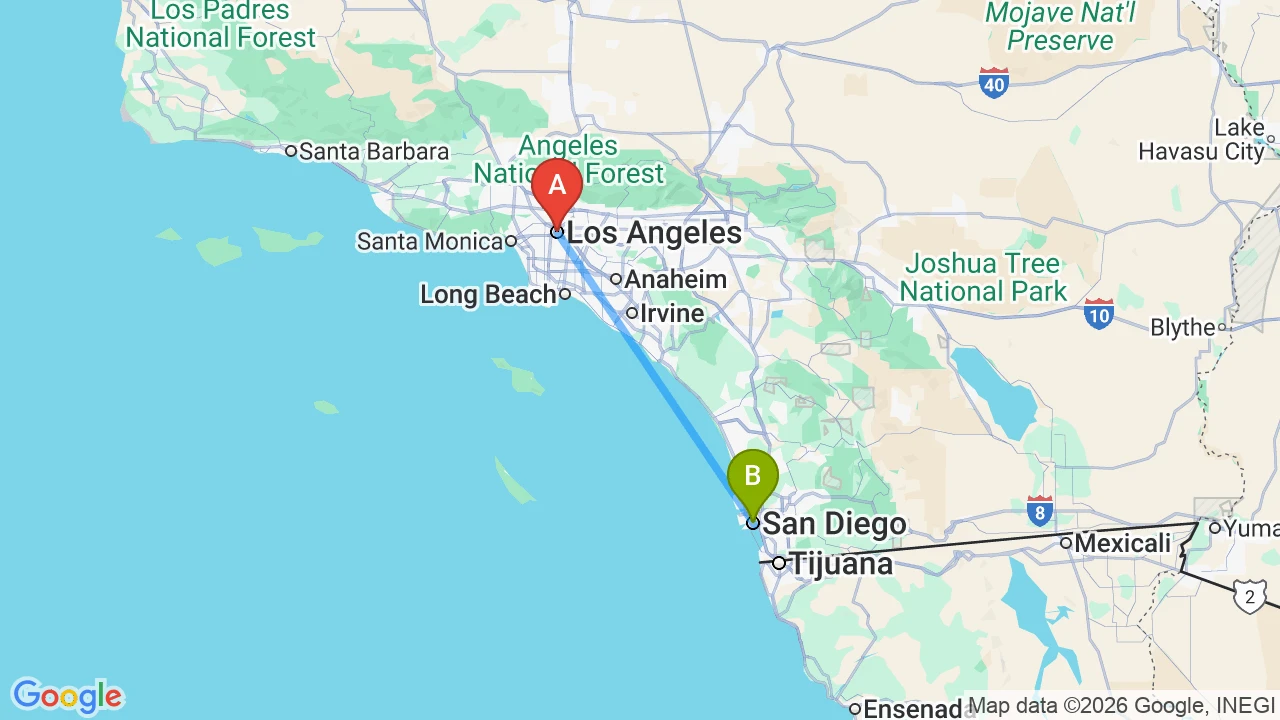
The physical move between LA and San Diego—roughly 120 miles—creates less logistical friction than cross-country relocations, but adjustment challenges persist. Most movers underestimate how much their LA-based networks, service providers, and routine patterns shaped their cost structure. Finding new childcare, establishing medical providers, and identifying reliable contractors all take time, and temporary solutions often cost more than established relationships.
Timing matters less for weather-related reasons—both cities remain accessible year-round—and more for housing market cycles. San Diego’s rental market tightens significantly around university calendars, military transfer seasons, and summer months when families prefer to move. Buyers face similar seasonal competition, with spring and early summer bringing the most inventory but also the most bidders.
The proximity between cities creates a unique adjustment pattern: many movers maintain social and family ties in LA, leading to frequent weekend trips that add transportation costs not present in longer-distance relocations. This “commuter social life” pattern can persist for years, effectively adding a recurring expense line that doesn’t show up in standard cost-of-living comparisons.
Neighborhood selection carries higher stakes in San Diego due to the city’s more pronounced coastal premium. In LA, dozens of neighborhoods offer reasonable access to employment and amenities at various price points. San Diego’s desirability gradient runs more steeply from coast to inland, meaning early neighborhood choices have outsized impact on long-term satisfaction and cost. Movers who prioritize beach access or coastal climate often find themselves priced into smaller spaces or older housing stock than they left behind in LA.
Who This Move Serves—and Who It Challenges
This relocation corridor works best for households that can capture San Diego’s income advantages while managing the rental premium. Mid-career professionals in biotech, healthcare, defense, or tech often find the move financially neutral or positive, particularly if they’re buying rather than renting. The quality-of-life trade-offs—shorter commutes, more consistent coastal access, a somewhat slower pace—appeal strongly to families with young children and professionals seeking better work-life integration than LA’s sprawl typically allows.
The move challenges renters without corresponding income growth, particularly those in creative, entertainment, or service industries where LA’s deeper job market and higher concentration of opportunities matter. Single-income households face tighter margins in San Diego’s rental market, and the city’s lower work-from-home rate means less flexibility to offset housing costs through remote work arrangements.
Retirees and empty-nesters often find the move appealing if they’re selling LA property and buying in San Diego, converting home equity into a comparable or better property while gaining lifestyle benefits. Those renting in both cities face a more difficult calculation, as the rental premium persists without the wealth-building offset of ownership.
Young professionals early in their careers encounter mixed outcomes. San Diego offers better entry-level opportunities in certain sectors and a more navigable city for those new to Southern California. However, LA’s greater industry diversity, larger professional networks, and more abundant entry-level housing options (particularly in the Valley and eastern communities) often provide more runway for career experimentation and growth.
Frequently Asked Questions
- Does San Diego feel more or less expensive than Los Angeles?
- San Diego concentrates cost pressure differently rather than simply costing more or less overall. Renters face significantly higher monthly obligations—nearly $300 more in median rent—while buyers encounter slightly lower entry prices but a more competitive coastal market. Most other expenses track closely between the cities, so the financial experience depends heavily on whether you’re renting or buying and which industries employ your household.
- How do the housing markets differ between LA and San Diego?
- LA’s vast geography creates more price diversity across neighborhoods, with affordable entry points scattered throughout the metro area. San Diego’s more compact coastal orientation concentrates desirable housing within a narrower band, creating a steeper price gradient from coast to inland. Renters find LA’s market slightly more forgiving on monthly costs, while buyers face similar challenges in both cities but navigate different competitive dynamics and neighborhood trade-offs.
- What feels different about daily life after moving from LA to San Diego?
- Most movers notice shorter, more consistent commutes and a somewhat slower pace, though car dependence remains high in both cities. San Diego’s tighter geography makes some errands more convenient, but the lower work-from-home rate means less schedule flexibility for many households. The coastal climate feels more consistent, with less extreme heat in summer, and the city’s more compact layout changes how you think about distance and access.
- When does this move tend to feel easiest or hardest?
- The physical move flows smoothly year-round given the short distance, but housing market timing matters more. San Diego’s rental market tightens around university calendars, military transfers, and summer family moves, while buyers face strongest competition in spring and early summer. The adjustment period often feels longest for households that underestimate how much their LA networks and routines shaped their cost structure and daily patterns.
- What adjustment pressures surprise movers most?
- The rental premium catches many off guard, particularly those moving for lifestyle rather than income growth. The smaller overall job market creates challenges for dual-income households and those in industries concentrated in LA. Many movers also underestimate ongoing transportation costs from maintaining LA social and family ties, creating a recurring expense that persists longer than expected. Finally, San Diego’s steeper coastal-to-inland price gradient means neighborhood choice has outsized long-term impact on satisfaction and cost.
- Who tends to benefit from this move, and who may struggle?
- Mid-career professionals in biotech, healthcare, defense, or tech often find the move financially neutral or positive, especially if buying rather than renting. Families with young children benefit from shorter commutes and strong schools in many areas. The move challenges renters without income growth, particularly in creative or entertainment fields where LA’s deeper job market matters. Single-income households and those early in their careers face tighter margins in San Diego’s rental market and may miss LA’s greater industry diversity and professional network density.
Making the Decision Work for Your Household
The LA-to-San Diego move rarely delivers dramatic cost savings—the numbers don’t support that expectation—but it can meaningfully improve daily quality of life for households whose priorities align with what San Diego offers. Shorter commutes, consistent coastal access, and a more navigable city footprint appeal strongly to those willing to accept higher rental costs or navigate a competitive housing market.
The decision hinges on honest assessment of your household’s income trajectory, housing strategy, and industry positioning. If you’re capturing San Diego’s higher median income through career advancement or industry fit, the move often pencils out favorably. If you’re moving primarily for lifestyle while maintaining LA-level income in a tighter rental market, budget carefully and consider whether buying becomes feasible sooner than planned.
For deeper analysis of San Diego’s cost structure, neighborhood patterns, and household budget scenarios, explore IndexYard’s dedicated San Diego living cost guides and metro area comparisons. Understanding where your specific household sits within these patterns—not just the citywide averages—makes the difference between a move that improves your financial position and one that introduces unexpected pressure.