
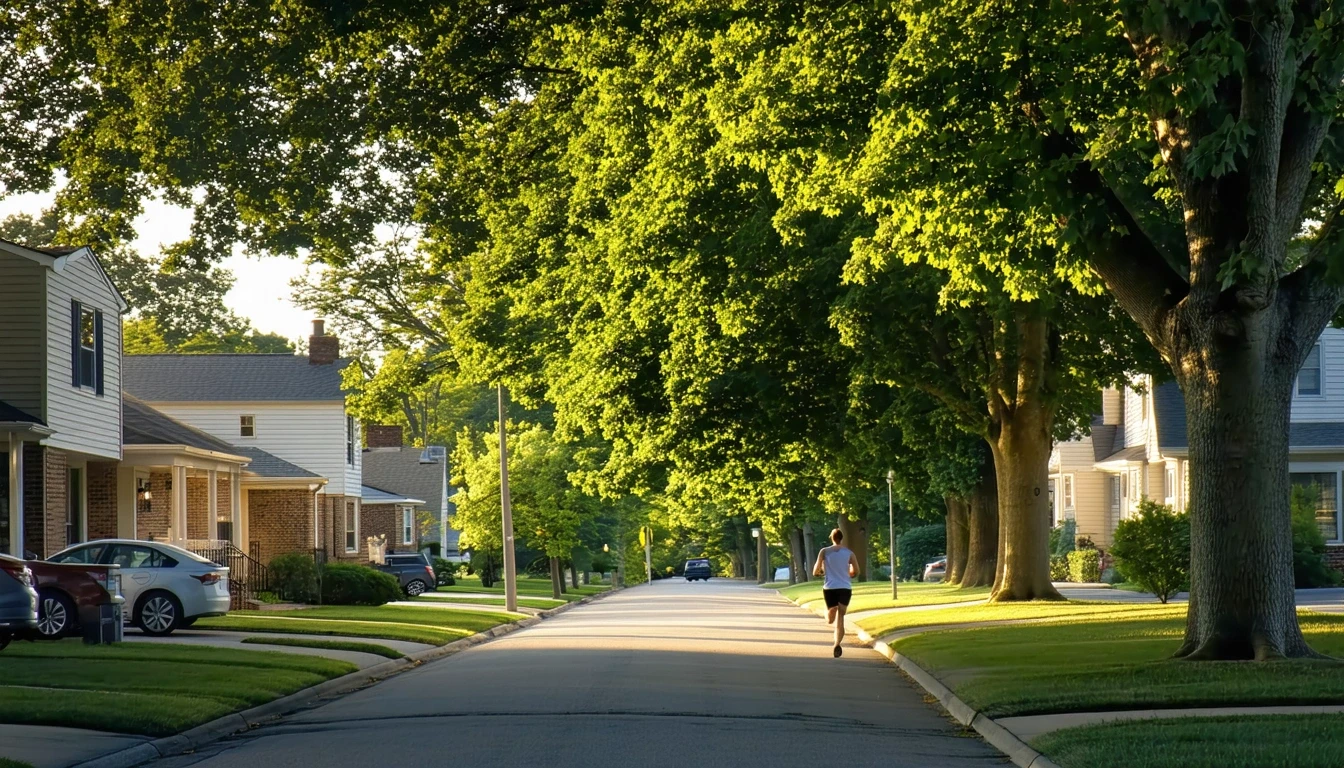
Kansas City: $208,900 median home, $1,131 rent, rail transit, broadly accessible groceries, integrated parks, more vertical buildings.
Independence: $150,800 median home, $1,020 rent, rail transit, corridor-clustered groceries, moderate parks, mixed-height buildings.
Same metro. Different cost structures. Different daily friction.
Kansas City and Independence sit in the same regional economy, share the same unemployment rate (3.9%), and operate under the same regional price environment. But the way costs show up—and the way households experience them—diverges sharply. Kansas City offers denser infrastructure, more walkable errands access, and integrated green space, but demands a higher housing entry point. Independence trades lower home prices and rent for a more car-dependent errands pattern and less family-oriented infrastructure density. The decision isn’t about which city costs less overall; it’s about which cost pressures your household can absorb and which daily frictions you’re willing to manage in 2026.
This comparison explains where housing, utilities, groceries, transportation, and taxes create different exposures for renters, owners, singles, couples, and families. It does not calculate total cost of living or declare a winner. Instead, it shows how the same income feels different depending on where cost pressure concentrates and how much control you have over it.
Housing Costs
Kansas City’s median home value sits at $208,900, while Independence comes in at $150,800—a structural difference that shapes entry barriers, monthly obligations, and long-term equity exposure. Kansas City’s median gross rent is $1,131 per month compared to Independence’s $1,020. These aren’t small gaps; they represent different housing markets serving different household strategies within the same metro.
In Kansas City, the higher home values reflect denser, more vertical building stock and proximity to walkable commercial corridors. Renters pay more per month but gain access to neighborhoods where errands, parks, and transit options are broadly accessible. Homebuyers face a steeper entry cost, but they’re purchasing into a market with more mixed-use infrastructure and higher pedestrian-to-road ratios. For households prioritizing reduced car dependence and integrated daily amenities, the housing premium buys structural convenience that lowers friction elsewhere.
Independence offers a lower entry point for both renters and buyers. The $150,800 median home value makes ownership more accessible to first-time buyers or households stretching income limits, and the $1,020 median rent provides breathing room for renters managing tight budgets. But the housing savings come with tradeoffs: Independence’s corridor-clustered errands accessibility and limited family infrastructure mean households rely more heavily on cars for groceries, schools, and recreation. The housing cost advantage is real, but it shifts pressure onto transportation, time, and logistics.
Housing takeaway: Kansas City imposes higher housing costs but reduces daily friction through denser infrastructure and broader errands access. Independence lowers the entry barrier and ongoing rent obligations but increases reliance on car-based logistics. Renters sensitive to monthly cash flow may prefer Independence; households valuing walkability and reduced transportation dependence may absorb Kansas City’s housing premium. First-time buyers face a clearer path to ownership in Independence, while Kansas City buyers pay more upfront for proximity to amenities that reduce long-term transportation and time costs.
Utilities and Energy Costs
Utility cost exposure in Kansas City and Independence reflects both rate differences and housing stock characteristics. Kansas City’s electricity rate is 11.91¢/kWh, while Independence pays 13.12¢/kWh. Natural gas pricing follows a similar pattern: Kansas City’s rate is $14.63/MCF compared to Independence’s $16.48/MCF. These rate differences matter most during months of heavy heating or cooling demand, and they interact with building type, insulation quality, and household size to create different volatility profiles.
Kansas City’s more vertical building stock—apartments, condos, and townhomes—tends to share walls and reduce heating and cooling surface area compared to detached single-family homes. Households in multi-unit buildings experience more predictable utility costs because they’re not heating or cooling as much exterior-facing space. The lower electricity and gas rates amplify this advantage during extreme weather months. Renters in Kansas City often benefit from smaller unit footprints and shared infrastructure, which dampens seasonal swings.
Independence’s mixed building height profile includes more single-family detached homes, which carry higher heating and cooling exposure due to greater exterior surface area. The higher electricity and natural gas rates compound this effect: households heating larger spaces in winter or cooling stand-alone homes in summer face more volatile bills. Older housing stock—common in suburban markets—may also lack modern insulation or efficient HVAC systems, increasing baseline usage. Families in larger homes feel this pressure more acutely than singles or couples in smaller units.
Utility takeaway: Kansas City’s lower rates and more vertical housing stock create more predictable utility costs, especially for renters and households in multi-unit buildings. Independence’s higher rates and prevalence of single-family homes increase seasonal volatility, particularly for families managing larger spaces. Households sensitive to bill swings during extreme weather months may prefer Kansas City’s rate structure and building density; those prioritizing space and yard access in Independence must budget for higher and less predictable energy costs.
Groceries and Daily Expenses

Both Kansas City and Independence share the same regional price parity index (93), meaning grocery staples and household goods reflect the same baseline cost structure. But the way households access those goods—and the friction involved—differs sharply. Kansas City’s broadly accessible food and grocery density means most households can reach multiple options without long drives or planning. Independence’s corridor-clustered accessibility concentrates grocery stores along main roads, requiring more intentional trips and reducing spontaneous or convenience-based shopping.
In Kansas City, high food and grocery density supports flexible shopping habits. Households can compare prices across nearby stores, make quick trips for missing items, or walk to corner markets without a car. This accessibility reduces the temptation to over-purchase or rely on convenience stores, which typically charge higher per-unit prices. Singles and couples benefit from the ability to shop frequently in smaller quantities, avoiding waste. Families managing larger volumes can choose between discount chains, specialty stores, and neighborhood grocers based on weekly needs rather than driving constraints.
Independence’s corridor-based grocery access means households plan trips around main commercial roads rather than neighborhood proximity. This structure favors bulk shopping and reduces the frequency of small, spontaneous purchases—which can lower overall spending if households stick to lists and avoid convenience markups. But it also increases reliance on cars for every grocery run, adding time and fuel costs that offset any savings from disciplined shopping. Families with predictable routines may adapt easily; singles or couples with variable schedules may find the planning burden more frustrating.
Grocery takeaway: Kansas City’s dense, broadly accessible grocery infrastructure reduces friction and supports flexible shopping habits, which benefits households that value spontaneity and price comparison. Independence’s corridor-clustered model rewards disciplined, bulk-focused shopping but increases car dependence and planning overhead. Households sensitive to convenience and walkable errands access will feel less daily friction in Kansas City; those comfortable with car-based logistics and bulk purchasing can manage Independence’s structure without meaningful cost penalty, assuming they avoid convenience-store markups.
Taxes and Fees
Kansas City and Independence operate under Missouri’s state tax framework, but local property tax rates, assessment practices, and city-specific fees create different obligations for homeowners and renters. Property taxes in both cities fund schools, infrastructure, and services, but the assessed home values differ significantly: Kansas City’s $208,900 median home generates a different tax bill than Independence’s $150,800 median, even if millage rates are similar. Homeowners in Kansas City pay more in absolute terms due to higher valuations, but they’re also purchasing into neighborhoods with denser infrastructure and more integrated amenities.
Renters in both cities don’t pay property taxes directly, but landlords pass through those costs in rent pricing. Kansas City’s higher median rent ($1,131) reflects not only housing demand but also the property tax burden on multi-unit buildings in denser neighborhoods. Independence’s lower rent ($1,020) partly reflects lower property valuations and less infrastructure density. For renters planning to stay short-term, Independence offers lower monthly obligations; for those planning to buy eventually, Kansas City’s higher taxes come with proximity to amenities that may reduce other costs (transportation, time, errands friction).
City-specific fees—trash collection, water, sewer, stormwater management—vary by jurisdiction and housing type. Single-family homeowners in Independence may face separate billing for each service, while Kansas City’s multi-unit buildings often bundle utilities into rent or HOA fees. Homeowners associations in newer developments (more common in suburban Independence) may charge monthly dues covering landscaping, snow removal, or shared amenities, adding predictable but non-negotiable costs. Kansas City’s older, denser neighborhoods typically lack HOAs but may require individual homeowners to manage maintenance and services directly.
Taxes and fees takeaway: Kansas City’s higher home values generate larger property tax bills, but homeowners gain access to denser infrastructure and integrated amenities that reduce other costs. Independence’s lower valuations mean smaller tax obligations, but homeowners may face additional HOA fees or service charges depending on neighborhood type. Renters in Independence pay less per month but sacrifice walkable access and transit options; renters in Kansas City pay more but reduce car dependence and errands friction. Long-term homeowners must weigh tax exposure against infrastructure benefits; short-term renters prioritizing cash flow may prefer Independence’s lower baseline obligations.
Transportation & Commute Reality
Kansas City’s average commute time is 22 minutes, with 26.1% of workers facing long commutes and only 3.1% working from home. Gas prices sit at $3.31/gallon. Independence lacks specific commute data in the feed, but its corridor-clustered errands accessibility and lower pedestrian infrastructure density suggest higher car dependence for both commuting and daily logistics. Gas prices in Independence are notably lower at $2.51/gallon, which offsets some of the cost pressure from increased driving frequency.
Both cities offer rail transit service, but Kansas City’s walkable pockets and high pedestrian-to-road ratio mean more households can combine transit with walking for errands, reducing total vehicle miles traveled. Independence’s rail access exists, but the corridor-based grocery and services layout means most households still rely on cars for daily trips even if they use transit for work commutes. The 80-cent-per-gallon gas price difference matters most for households driving frequently; those able to consolidate trips or use transit in Kansas City may not see enough fuel savings in Independence to justify the added logistics friction.
Commute time matters less than commute predictability and the ability to combine trips. Kansas City’s integrated parks, broadly accessible groceries, and mixed-use land patterns allow households to run errands on foot or via short detours, reducing the number of separate car trips. Independence’s structure requires more intentional trip planning: grocery runs, school pickups, and recreation often demand separate drives along main corridors. For dual-income households managing tight schedules, the time cost of multiple car trips can outweigh fuel savings, even with cheaper gas.
Cost Structure Comparison
Housing dominates the cost experience in Kansas City, where higher home values and rent create a steeper entry barrier but deliver denser infrastructure, walkable errands access, and integrated parks that reduce transportation and time costs. Independence front-loads affordability through lower housing prices and rent, but shifts pressure onto car-based logistics, corridor-clustered groceries, and more volatile utility bills due to single-family housing stock.
Utilities introduce more seasonal volatility in Independence, where higher electricity and natural gas rates combine with larger, detached homes to create less predictable bills. Kansas City’s lower rates and more vertical building stock dampen swings, especially for renters and households in multi-unit buildings. Families managing larger spaces in Independence must budget for higher heating and cooling exposure; singles and couples in Kansas City apartments benefit from shared walls and smaller footprints.
Daily living costs—groceries, errands, convenience spending—feel different based on accessibility structure. Kansas City’s broadly accessible food and grocery density reduces friction and supports flexible shopping habits, which benefits households that value spontaneity and price comparison. Independence’s corridor-clustered model rewards disciplined, bulk-focused shopping but increases planning overhead and car dependence. Households sensitive to convenience will feel less daily friction in Kansas City; those comfortable with car-based logistics can manage Independence’s structure without meaningful cost penalty.
Transportation patterns matter more in Independence, where lower gas prices offset higher driving frequency but don’t eliminate the time cost of multiple car trips for errands, schools, and recreation. Kansas City’s rail transit, walkable pockets, and mixed-use neighborhoods allow households to consolidate trips or substitute walking for driving, reducing both fuel costs and schedule complexity. For dual-income households managing tight schedules, the time savings in Kansas City may outweigh Independence’s fuel price advantage.
The better choice depends on which costs dominate your household. Households sensitive to housing entry barriers and monthly rent obligations may prefer Independence’s lower baseline costs, accepting higher car dependence and corridor-based errands in exchange. Households prioritizing walkability, transit access, and reduced logistics friction may absorb Kansas City’s housing premium, recognizing that denser infrastructure lowers transportation and time costs. For families, the difference is less about total spending and more about where pressure concentrates: upfront housing costs in Kansas City versus ongoing transportation and utility volatility in Independence.
How the Same Income Feels in Kansas City vs Independence
Single Adult
In Kansas City, housing takes a larger share upfront, but walkable errands access and rail transit reduce the need for a car or frequent driving. Flexibility comes from proximity: groceries, parks, and daily services are broadly accessible without planning every trip. In Independence, lower rent frees up monthly cash flow, but car ownership becomes non-negotiable for groceries, errands, and social life. Flexibility disappears when every trip requires driving to a corridor, and gas savings don’t fully offset the time cost of managing logistics alone.
Dual-Income Couple
In Kansas City, higher housing costs compete with the ability to share one car or rely on transit for one commute, reducing insurance, fuel, and maintenance exposure. Non-negotiable costs include rent or mortgage, but discretionary spending gains flexibility from walkable dining, entertainment, and errands. In Independence, lower housing costs create breathing room, but both partners likely need cars to manage separate commutes and errands along dispersed corridors. Flexibility exists in housing choice, but transportation becomes a fixed, ongoing obligation that limits discretionary trade-offs.
Family with Kids
In Kansas City, housing dominates the budget, but integrated parks, schools within walking distance, and broadly accessible groceries reduce the number of separate car trips and the complexity of managing multiple schedules. Non-negotiable costs include higher rent or mortgage and utilities for multi-bedroom units, but time flexibility improves when errands don’t require constant driving. In Independence, lower housing entry costs make ownership more accessible, but limited family infrastructure density means separate car trips for schools, playgrounds, and groceries. Flexibility disappears when every activity requires planning around corridors, and utility volatility in larger homes adds unpredictable seasonal pressure.
Decision Matrix: Which City Fits Which Household?
| Decision factor | If you’re sensitive to this… | Kansas City tends to fit when… | Independence tends to fit when… |
|---|---|---|---|
| Housing entry + space needs | You’re balancing upfront costs against long-term infrastructure access | You value walkable amenities and transit enough to absorb higher home prices and rent | You prioritize lower entry costs and accept car-dependent logistics for space and yard access |
| Transportation dependence + commute friction | You’re managing tight schedules or want to reduce car reliance | You can consolidate trips using transit and walkable errands, reducing total vehicle miles | You’re comfortable driving for all errands and benefit from lower gas prices despite higher frequency |
| Utility variability + home size exposure | You want predictable bills or live in a larger home | You prefer multi-unit housing with shared walls and lower seasonal swings | You accept higher seasonal volatility in exchange for single-family space and yard access |
| Grocery strategy + convenience spending creep | You value spontaneous shopping or price comparison flexibility | You benefit from dense, walkable grocery access that supports frequent, small trips | You plan bulk shopping trips along corridors and avoid convenience-store markups through discipline |
| Fees + friction costs (HOA, services, upkeep) | You’re weighing bundled services against individual control | You prefer older neighborhoods without HOA fees but manage maintenance directly | You accept HOA dues in newer developments for bundled landscaping and shared amenities |
| Time budget (schedule flexibility, errands, logistics) | You’re managing multiple schedules or want to reduce trip planning | You value integrated parks, schools, and groceries that reduce separate car trips | You’re comfortable planning corridor-based trips and accept the time cost of car-dependent logistics |
Lifestyle Fit
Kansas City and Independence offer different daily rhythms shaped by infrastructure density, building form, and accessibility patterns. Kansas City’s walkable pockets, rail transit, and broadly accessible groceries support a lifestyle where errands, recreation, and social activities can happen without constant car use. The more vertical building stock and mixed-use neighborhoods create proximity: parks, dining, and services cluster within walking distance or short transit rides. Households that value spontaneity, reduced driving, and integrated green space will find Kansas City’s structure aligns with those priorities. The 22-minute average commute and rail access mean some households can manage with one car or rely on transit for work trips, freeing up time and reducing transportation overhead.
Independence’s corridor-clustered errands accessibility and mixed building heights reflect a more car-oriented suburban pattern. Grocery stores, schools, and services concentrate along main roads rather than within neighborhoods, requiring intentional trip planning and vehicle access. Rail transit exists, but the lower density of family infrastructure—schools and playgrounds below threshold levels—means households with kids face more logistics friction. Parks are present but less integrated than in Kansas City, and the lack of cycling infrastructure signals limited non-car mobility options. For households comfortable with driving and bulk shopping routines, Independence’s structure works well. For those seeking walkable daily life or reduced car dependence, the infrastructure doesn’t support it as seamlessly.
Recreation and outdoor access differ in density and integration. Kansas City’s park density exceeds high thresholds, with water features present and green space woven into neighborhoods. Families and active adults can access trails, playgrounds, and open space without long drives. Independence’s moderate park density still provides outdoor options, but the lower playground density and less integrated layout mean families often drive to recreation rather than walking from home. Both cities experience cold winters and hot summers typical of the region, but Kansas City’s denser infrastructure allows households to combine outdoor activities with errands or transit trips, while Independence’s layout separates recreation from daily logistics.
Kansas City median household income: $65,256 per year
Independence median household income: $57,415 per year
The income difference reflects different household compositions and cost structures, but it doesn’t determine fit. Higher-earning households in Kansas City absorb housing premiums more easily but still benefit from reduced transportation and time costs. Lower-earning households in Independence gain breathing room from cheaper housing but must manage car dependence and utility volatility carefully. Lifestyle fit depends less on income level and more on which daily frictions you’re willing to manage and which infrastructure benefits you value most.
Frequently Asked Questions
Is Kansas City or Independence cheaper for renters in 2026?
Independence offers lower median rent at $1,020 per month compared to Kansas City’s $1,131, reducing upfront monthly obligations. But Kansas City’s broadly accessible groceries, walkable errands, and rail transit mean renters may spend less on transportation and convenience purchases. The cheaper option depends on whether you prioritize lower rent or reduced car dependence and logistics friction.
How do utility costs differ between Kansas City and Independence in 2026?
Kansas City’s electricity rate is 11.91¢/kWh and natural gas is $14.63/MCF, while Independence pays 13.12¢/kWh and $16.48/MCF. Kansas City’s lower rates and more vertical housing stock create more predictable bills, especially for renters in multi-unit buildings. Independence’s higher rates and prevalence of single-family homes increase seasonal volatility, particularly for families managing larger spaces during extreme weather.
Which city is better for families comparing Kansas City and Independence in 2026?
Kansas City offers integrated parks, schools within walking distance, and broadly accessible groceries that reduce the number of separate car trips families must manage. Independence provides lower housing entry costs and more single-family home options, but limited family infrastructure density and corridor-based errands increase car dependence and logistics complexity. Families prioritizing walkability and reduced driving friction may prefer Kansas City; those seeking lower home prices and yard space may choose Independence despite higher transportation overhead.
Do Kansas City and Independence have different commute costs in 2026?
Kansas City’s average commute is 22 minutes with gas at $3.31/gallon, and rail transit allows some households to reduce car reliance. Independence lacks specific commute data but has gas at $2.51/gallon, which offsets higher driving frequency for corridor-based errands. The lower gas price in Independence matters most for households driving frequently; those able to use transit or walk in Kansas City may not see enough fuel savings to justify Independence’s added logistics friction.
How does the same income feel different in Kansas City versus Independence in 2026?
In Kansas City, higher housing costs compete with reduced transportation and time expenses due to walkable errands and transit access. In Independence, lower housing entry costs free up monthly cash flow, but car dependence and corridor-based logistics shift pressure onto fuel, insurance, and trip planning. The same income feels tighter or more flexible depending on whether housing or transportation dominates your budget and which daily frictions you’re equipped to manage.
Conclusion
Kansas City and Independence sit in the same metro, share the same regional price environment, and offer rail transit access—but the way costs show up and the daily frictions households manage diverge sharply. Kansas City imposes higher housing entry costs and rent but delivers denser infrastructure, broadly accessible groceries, integrated parks, and walkable pockets that reduce car dependence and logistics overhead. Independence lowers the barrier to ownership and monthly rent obligations but shifts pressure onto transportation, corridor-based errands, and more volatile utility bills in single-family homes. Neither city is universally cheaper; each fits different household priorities.
Households valuing walkability, transit access, and reduced daily friction will find Kansas City’s housing premium buys structural convenience that lowers transportation and time costs. Those prioritizing lower housing entry, yard space, and single-family living will find Independence’s cost structure more accessible upfront, accepting car dependence and planning overhead as part of suburban life. Singles and couples managing tight budgets may prefer Independence’s lower rent; families seeking integrated parks and schools within walking distance may absorb Kansas City’s higher costs to reduce logistics complexity. The decision depends on which cost pressures you can absorb, which daily frictions you’re willing to manage, and which infrastructure benefits matter most to your household in 2026.
How this article was built: In addition to public economic data, this article incorporates location-based experiential signals derived from anonymized geographic patterns—such as access density, walkability, and land-use mix—to reflect how day-to-day living actually feels in Kansas City, MO.