
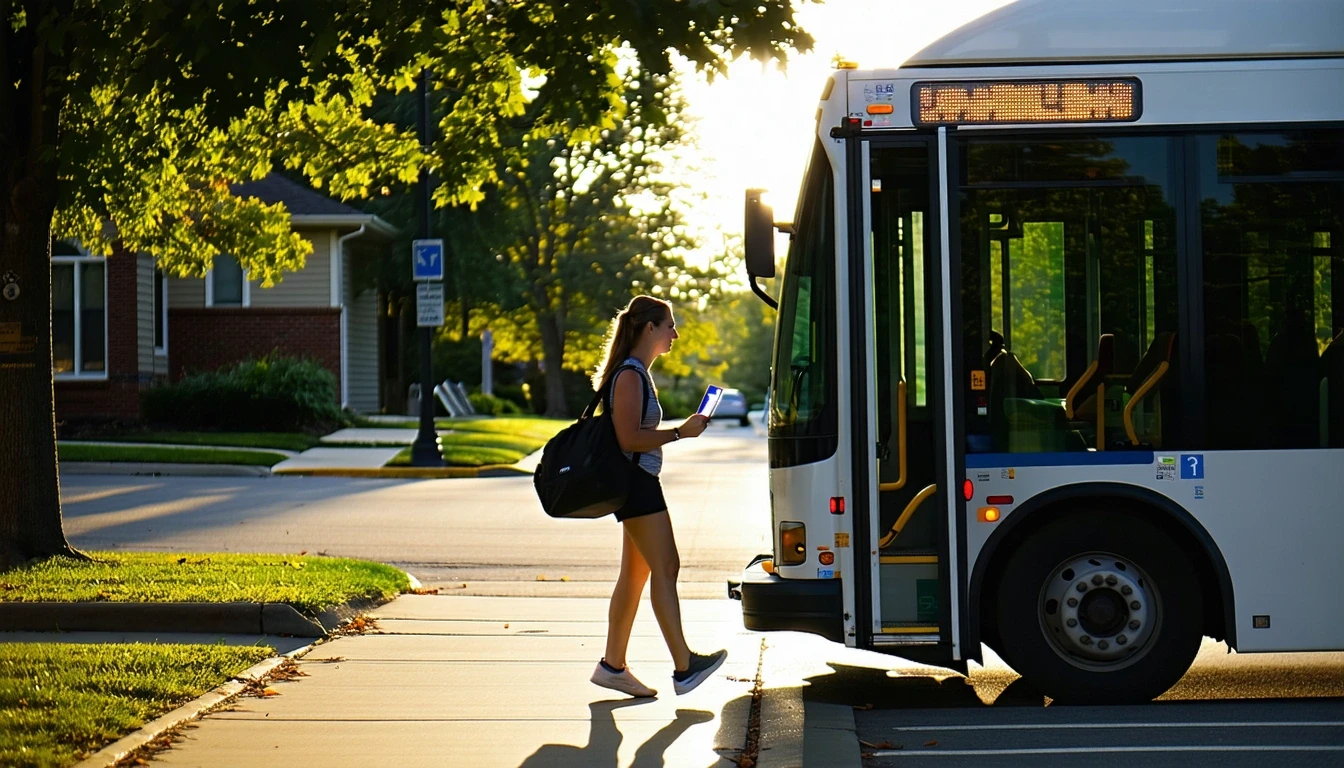
What You’ll Spend on Transit in Overland Park
In 2025, public transportation costs in Overland Park remain affordable for most commuters. With a COLI of 100.8, overall living costs in Overland Park trend slightly above the U.S. average, which can extend to transit and commuting expenses. However, the city’s transit system still offers good value compared to the costs of car ownership and parking.
For bus riders, a one-way fare typically costs $1.50. A 30-day bus pass in Overland Park runs $50.00, providing significant savings for daily commuters. Reduced fares are available for youth, older adults, and riders with disabilities.
Transit Coverage and Ride Times in Overland Park
| Mode | Coverage | Avg. Trip Time |
|---|---|---|
| Bus | 85% of city | 35 min |
| Express Bus | Key corridors | 25 min |
| Paratransit | City-wide | 45 min |
Getting Around Overland Park
Johnson County Transit (JCT) operates the primary bus routes serving Overland Park. The system includes local routes connecting neighborhoods and key destinations, as well as express buses running to major employment centers. While Overland Park does not have direct light rail service, bus routes connect with regional rail lines in adjacent cities.
Transit options in Overland Park include:
- Local bus routes (JCT)
- Express commuter buses
- Paratransit for riders with disabilities
- Park & Ride lots at key transit hubs
Monthly Cost Breakdown
| Rider Profile | Monthly Transit Costs |
|---|---|
| Weekday commuter (5 days/wk) | $50 (monthly pass) |
| Weekend rider (8 trips/mo) | $24 (day passes) |
| All-purpose rider (25 trips/mo) | $50 (monthly pass) |
| Car commuter (5 days/wk) | $140+ (gas only at $3.50/gal) |
Estimates reflect 2025 fares for standard adult riders. Actual costs may vary depending on discounts, pass types, and commuting frequency.
Is Public Transit Worth It in Overland Park?
For many Overland Park residents, using public transit can be more affordable than relying on a car for daily commuting. The average bus commute in Overland Park takes about 35 minutes, while driving averages 25 minutes. However, during peak times, express buses often match or exceed the speed of car traffic.
Aside from monthly expenses like car payments and insurance, drivers must also factor in the costs of gas and parking. With gas prices around $3.50/gallon, fueling a car for a typical commute adds up quickly. In neighborhoods with paid or scarce parking, taking the bus can lead to major savings over time.
The walkability and transit-friendliness of Overland Park varies by area. Neighborhoods near downtown or along key bus routes tend to have the best access to frequent, reliable service. In other parts of the city, service may be more limited, making a car the most practical option. Overall, public transit is viable for many commuters and can be substantially cheaper than driving.
Ways to Save on Transit
Overland Park offers several programs to help riders save on fares:
- Youth, senior, and disability discounts
- Employer-sponsored passes
- Pre-tax commuter benefits
🏆 Tip: Purchasing a monthly JCT pass instead of paying daily fares can save regular Overland Park commuters over 30% per month.
Some employers also provide free or discounted transit passes as part of their benefits packages. Check if your workplace participates or offers a pre-tax commuter card to use for transit expenses.
FAQs About Transit in Overland Park
How much does the average commuter spend monthly on public transit in Overland Park?
In 2025, a typical bus commuter in Overland Park spends about $50 per month on fares, using a 30-day JCT pass. Costs may be lower for those who ride less frequently or qualify for discounted passes.
Does Overland Park offer park-and-ride or express bus options for commuters?
Yes, JCT operates several express routes connecting park & ride lots to major employment centers. These buses run during peak commute times and tend to be quicker than regular routes.
What discounts are available for students, seniors, or low-income riders in Overland Park?
Overland Park offers reduced fares for youth (ages 6-18), older adults (65+), and people with disabilities. Low-income programs are available through some employers and organizations. Eligible riders can save 50% or more compared to regular fares.
How does the cost of public transportation in Overland Park compare to driving?
For daily commuters, taking transit is often cheaper than driving solo. With gas prices around $3.50/gallon, plus parking costs, driving can easily exceed $140/month just for fuel. A monthly JCT pass runs $50, providing significant savings.
Getting Around Smarter in Overland Park
When budgeting for transportation in Overland Park, plan on spending around $50/month if you commute by bus daily. Occasional riders can get by on less, while seniors and youth can take advantage of discounted fares. Compared to the typical costs of car ownership, transit offers an affordable alternative for many.
With gas prices staying elevated, even a modest transit commute is often substantially cheaper than driving every day. By planning your trips and using passes wisely, you can keep your transportation costs low while still getting everywhere you need to go in Overland Park.