
“I moved here thinking it’d be all suburban sprawl, but there are these little pockets where you can actually walk to a coffee shop or catch the train. It’s not consistent across the whole city, but when you find those spots, it feels surprisingly connected.”
That tension—between walkable, transit-friendly zones and car-dependent stretches—captures much of what people feel about living in Kansas City, KS. This isn’t a city with one unified vibe. It’s a place where your day-to-day experience depends heavily on which neighborhood you land in, how you get around, and what you prioritize in your routine. Some residents love the access to parks and the presence of rail transit. Others feel frustrated by the need to drive for groceries or the unevenness of pedestrian infrastructure. Understanding whether Kansas City feels like a good fit means understanding these tradeoffs—and being honest about which ones you’re willing to navigate.
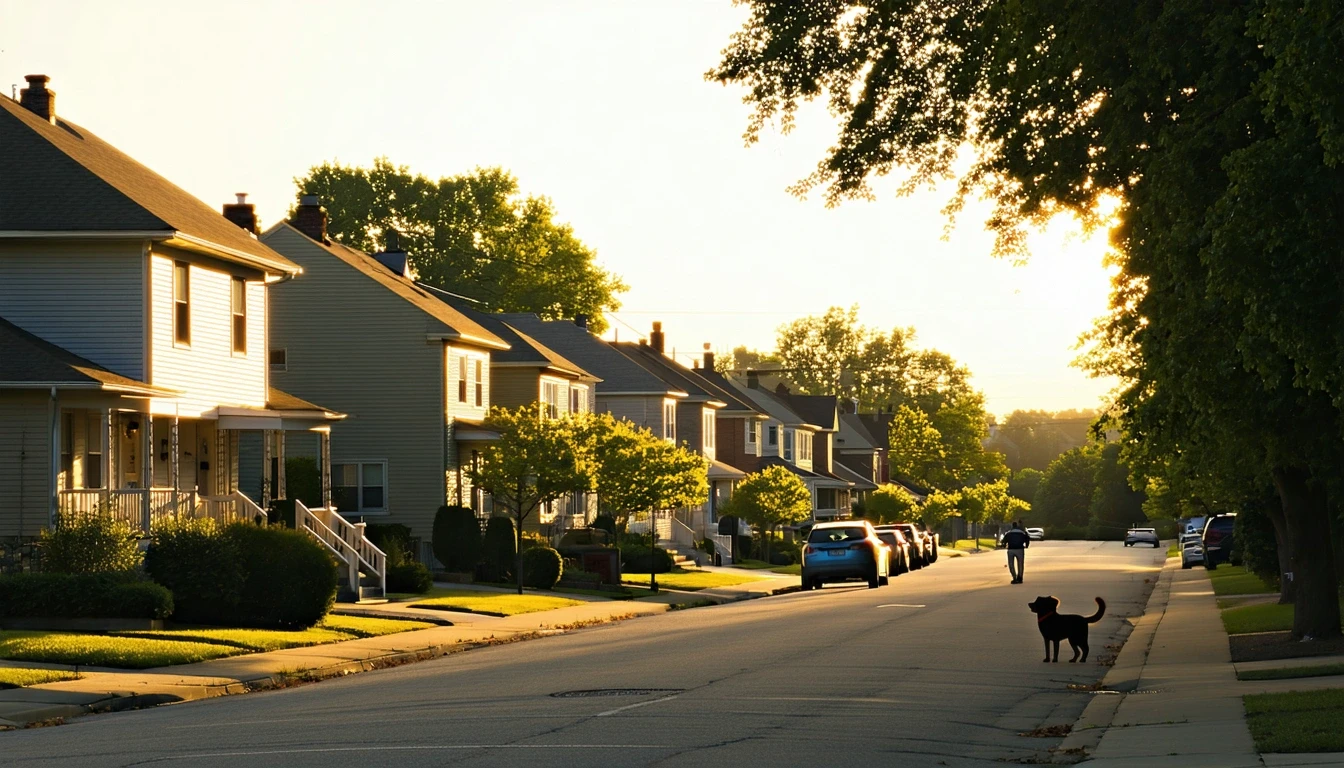
What Kansas City’s Emotional Tone Actually Feels Like
Kansas City, KS carries a quiet, practical energy. It’s not flashy, and it doesn’t try to be. People who thrive here tend to appreciate green space, value having a hospital nearby, and don’t mind planning their errands around a few key corridors. The city offers substantial pedestrian infrastructure in certain areas, and rail transit gives carless households a real option—if they’re positioned near it. But outside those walkable pockets, the city leans heavily on car ownership. That creates a bifurcated experience: some residents feel genuinely connected to their surroundings, while others describe a sense of logistical friction, especially around daily errands.
What tends to feel rewarding here is the combination of outdoor access and transit availability. Park density is high, water features are present, and the infrastructure supports families who want space to move around. For households near rail lines and in walkable zones, the city offers a level of mobility freedom that surprises newcomers. What tends to feel limiting is the corridor-clustered layout of food and grocery options. If you’re not near one of those corridors, even a quick errand can require a deliberate trip. The city’s mixed building heights and varied land use mean that neighborhood character shifts noticeably from block to block, and not everyone finds the rhythm intuitive.
People who feel “at home” here are often those who value outdoor time, appreciate transit options without expecting dense urban texture, and are comfortable using a car strategically. People who feel “restless” are often those who expected more walkable access to daily needs or wanted a more consistent pedestrian experience across the city.
Social Media Buzz in Kansas City
On platforms like Reddit and local Facebook groups, Kansas City, KS generates steady conversation around mobility, neighborhood variation, and the balance between suburban comfort and urban access. The tone is often protective—residents push back against assumptions that the city is “just sprawl” or “only car-dependent,” pointing to specific areas where walking and transit work well. But there’s also a thread of frustration around errands and grocery access, especially from people who live outside the more connected zones.
Composite themes that come up frequently include:
- Pride in park access: “We have more green space than people realize, and it actually gets used—not just decorative.”
- Mixed feelings about walkability: “It depends where you are. My block is great for walking, but two miles over it’s a completely different story.”
- Appreciation for rail transit: “Having the train makes a huge difference if you work on the Missouri side or just want to avoid driving downtown.”
The emotional range is wide: optimism about infrastructure improvements, annoyance at uneven development, and a persistent sense that the city is underestimated by outsiders. There’s less fatigue here than in some peer cities, but also less consensus about what the city’s identity should be.
Local News Tone
Local coverage of Kansas City, KS tends to frame the city through the lens of infrastructure evolution, cross-state identity, and community debate over growth. The tone is rarely celebratory or alarmist—it’s more observational, tracking how the city is changing and what residents think about it. Headlines and story themes often fall into these buckets:
- “Transit Expansion Brings New Commuting Options”
- “Residents Weigh Walkability Gains Against Development Pressure”
- “Park Investment Continues as Green Space Becomes Defining Feature”
- “Neighborhood Character Shifts as Mixed-Use Projects Arrive”
- “Cross-State Commuters Debate Where to Settle”
The framing reflects a city in transition—not rapidly, but noticeably. There’s attention to what’s being built, where infrastructure is improving, and how different parts of the city are experienced. The tone suggests a place that’s still figuring out its balance between suburban ease and urban connectivity, and where residents are actively part of that conversation.
Review-Based Public Perception
On platforms like Google Reviews, Yelp, and Nextdoor-style forums, Kansas City, KS tends to receive praise for healthcare access, outdoor amenities, and transit availability—and criticism for errand logistics and neighborhood inconsistency. The pattern is clear: people who align their expectations with the city’s structure tend to rate their experience positively. People who expected more uniform walkability or denser retail access tend to feel let down.
Common praise includes:
- “Great parks, easy to get outside with kids or dogs.”
- “Hospital and pharmacies are close, which matters more than I thought it would.”
- “Rail line is a game-changer if you commute to Missouri or just want options.”
Common complaints include:
- “Grocery runs feel like a production—everything’s clustered in a few spots.”
- “Walkability is hit or miss depending on your block, and it’s hard to predict.”
- “Some areas feel really connected, others feel isolated even though they’re close.”
Neighborhood variation plays a big role in perception. Newer planned areas tend to get praised for green space and school access, but critiqued for car dependency. Older pockets near transit and mixed-use corridors get praised for walkability, but sometimes critiqued for building age or maintenance. The takeaway: where you land in Kansas City, KS shapes your experience more than in cities with more uniform infrastructure.
Comparison to Nearby Cities
| Aspect | Kansas City, KS | Kansas City, MO | Overland Park, KS |
|---|---|---|---|
| Walkability | Pockets of strong pedestrian infrastructure, uneven citywide | More consistent urban walkability in core areas | Primarily car-oriented with planned paths in subdivisions |
| Transit Access | Rail present, bus service available | More extensive transit network, denser stops | Limited transit, car ownership expected |
| Errands | Corridor-clustered, requires planning | Broadly accessible in denser zones | Strip mall clusters, drive-focused layout |
| Green Space | High park density, integrated throughout | Strong park system, more urban character | Suburban parks, recreation-focused |
| Vibe | Practical, bifurcated, quietly evolving | Urban energy, more cultural density | Polished suburban comfort, family-oriented |
Kansas City, KS sits between the denser urban texture of Kansas City, MO and the polished suburban predictability of Overland Park. If you want more walkable access to daily needs and cultural amenities, Kansas City, MO may feel more intuitive. If you want newer housing, lower logistical friction, and a more uniform suburban experience, Overland Park may feel more aligned. Kansas City, KS works best for people who value housing tradeoffs that include green space and transit access, and who are comfortable navigating neighborhood variation and corridor-based errands. It’s not the easiest city to decode, but for the right household, that complexity translates into flexibility rather than frustration.
What Locals Are Saying
“I love that I can take the train to work and still have a yard and a park two blocks away. That combination is hard to find.”
— Young professional, renting near transit
“We chose this area for the schools and the green space, and that part has been great. But I do wish the grocery store wasn’t a 10-minute drive.”
— Parent of two, homeowner in planned neighborhood
“It’s not the most exciting place, but it’s stable. I know where the hospital is, I know where to shop, and I don’t feel like I’m guessing.”
— Retiree, longtime resident
“The walkability thing is real but inconsistent. My friend’s block is totally walkable, mine isn’t. You have to know what you’re getting into.”
— Remote worker, recent transplant
“I thought I’d hate not being in the city, but the parks here are actually better, and the train makes it easy to go into Kansas City, MO when I want to.”
— Single professional, moved from Missouri side
“It’s fine if you have a car. If you don’t, or you’re trying to rely on walking for everything, it’s going to feel limiting pretty fast.”
— Graduate student, carless household
“We’ve been here 15 years and it’s changed a lot—more mixed-use stuff, better sidewalks in some areas. It’s not dramatic, but it’s moving in a good direction.”
— Long-time homeowner, active in neighborhood group
Does Kansas City Feel Like a Good Fit?
Kansas City, KS doesn’t offer one unified experience—it offers several, depending on where you live and how you move through the city. This tends to work for households who value outdoor access, appreciate having rail transit as an option, and are comfortable using a car strategically for errands. It works for people who want a quieter, less dense environment than Kansas City, MO, but still want some walkable infrastructure and transit connectivity. It works for families who prioritize green space and hospital access over playground density or broadly distributed retail.
This tends to frustrate households who expect consistent walkability across the city, who want to run daily errands on foot, or who are carless and living outside the transit-accessible zones. It frustrates people who want dense urban texture or a predictable suburban layout—Kansas City, KS is neither, and that in-between character can feel confusing if you’re not prepared for it.
The city’s emotional profile is practical, evolving, and bifurcated. It rewards flexibility and penalizes assumptions. If you’re the kind of person who researches your block carefully, values lifestyle needs like park access and transit options, and doesn’t mind planning your errands around corridors, Kansas City, KS can feel surprisingly aligned. If you’re looking for uniformity—either urban or suburban—you’ll likely feel the friction. Understanding where money goes and how place structure shapes daily routines will help you decide whether this city’s particular mix of tradeoffs fits your life.
How this article was built: In addition to public economic data, this article incorporates location-based experiential signals derived from anonymized geographic patterns—such as access density, walkability, and land-use mix—to reflect how day-to-day living actually feels in Kansas City, KS.
The perspectives shown reflect commonly expressed local sentiment and recurring themes in public discussion, rather than individual accounts.