
Moving from Chicago, IL to Charlotte, NC: How Cost Pressure and Daily Life Shift
The move from Chicago to Charlotte is one of the most common relocation corridors in the U.S., and it’s not hard to see why. People leave Chicago for a variety of reasons—job opportunities in Charlotte’s banking and tech sectors, a desire for milder winters, or the hope of finding more housing for less upfront cost. But this isn’t a simple “cheaper city” story. What changes most is where costs concentrate, how daily routines are structured, and who feels the shift most acutely.
This guide explains how cost behavior, lifestyle patterns, and household logistics shift when you move from Chicago to Charlotte. It does not declare a winner or estimate your total budget. Instead, it helps you understand where pressure moves—so you can plan accordingly.
Cost Pressure Shifts: Where Money Shows Up Differently
The most visible difference between Chicago and Charlotte is the housing entry point. Chicago’s median home value is $304,500, while Charlotte’s is $312,800—slightly higher on paper. But the rental market tells a different story: Chicago’s median gross rent is $1,314 per month, compared to Charlotte’s $1,399 per month. The gap is modest, but it reflects a broader pattern: Charlotte’s housing market has tightened in recent years, and renters often find less inventory and faster turnover than they expect.
What changes more dramatically is ongoing cost exposure. Chicago’s electricity rate is 18.74¢/kWh, while Charlotte’s is 15.05¢/kWh. That sounds like a win for Charlotte—until you account for climate. Charlotte’s extended cooling season and higher humidity mean air conditioning runs longer and harder. Chicago’s heating season is intense, but natural gas is relatively affordable at $15.48/MCF. Charlotte’s natural gas price is $25.54/MCF, which matters less for most households because heating demand is lighter. The tradeoff: Chicago households face sharp winter utility spikes; Charlotte households face sustained summer cooling costs that stretch across four to five months.
Transportation costs shift in a different direction. Chicago’s average commute is 34 minutes, with 59.7% of workers facing long commutes. Charlotte’s average is 25 minutes, but only 5.2% of workers telecommute, compared to Chicago’s 14.6%. Gas prices favor Charlotte ($2.64/gal vs. Chicago’s $2.89/gal), but the bigger issue is car dependence. Chicago offers rail transit and walkable pockets; Charlotte’s structure is more car-reliant, with notable cycling infrastructure but limited transit coverage. If you’re used to taking the L or walking to errands, you’ll likely drive more in Charlotte—and that adds up in fuel, insurance, and maintenance.
Grocery costs follow regional price patterns. Chicago’s regional price parity index is 103 (slightly above the national baseline), while Charlotte’s is 97 (slightly below). In practice, this means staples like bread, chicken, and eggs cost a bit less in Charlotte—but the difference is modest, and access matters more than price. Charlotte’s food and grocery density is high, with options broadly accessible across the metro. Chicago also has strong food access, but neighborhood-level variation is more pronounced.
Housing & Neighborhood Patterns: Entry vs. Ongoing Obligations
Chicago’s housing market is layered. Renters face high inventory in some neighborhoods and tight supply in others, with rent renewal pressure varying widely by location. Homeowners contend with property taxes that are among the highest in the nation, though the feed does not provide a specific rate. The cost of ownership in Chicago is not just the mortgage—it’s the ongoing tax burden, which compounds over time.
Charlotte’s housing market is tighter and faster-moving. Rental inventory has not kept pace with population growth, and lease renewals can be steep in high-demand areas. Homeownership is more accessible in terms of entry cost relative to income—Charlotte’s median household income is $74,070 per year, compared to Chicago’s $71,673 per year—but property taxes and HOA fees vary widely by neighborhood. Suburban developments often come with HOA obligations that bundle services but add monthly fixed costs.
Neighborhood form shapes daily expenses in both cities, but differently. Chicago’s walkable pockets and mixed-use corridors reduce car dependence in certain areas, which lowers transportation costs but may increase rent. Charlotte’s more vertical urban core and mixed land use support some walkability, but most of the metro is structured around driving. If you’re moving from a Chicago neighborhood where you rarely drove, expect to budget for a car—and the insurance, fuel, and maintenance that come with it.
Lifestyle & Daily Rhythms: Pace, Access, and Climate Exposure
Daily life in Chicago is shaped by density, transit access, and seasonal extremes. Winters are long and cold, with heating costs spiking from November through March. Summers are warm but manageable, with less sustained cooling demand than in the South. The city’s rail system and pedestrian infrastructure make it possible to live without a car in many neighborhoods, though commute times are long for those who drive or take transit to the suburbs.
Charlotte’s daily rhythms are car-centric. The metro has notable cycling infrastructure and rail service is present, but most errands, commutes, and social trips require driving. Commute times are shorter on average, but the lack of transit alternatives means you’re more exposed to fuel price swings and traffic variability. The climate is milder in winter—rare freezing nights, minimal heating demand—but summer heat is intense and sustained. Air conditioning runs from May through September, and humidity makes it feel hotter than the thermometer suggests.
Access to parks and outdoor space is strong in both cities. Chicago’s park density is high, with water features integrated throughout the metro. Charlotte also has high park density and water features, making outdoor recreation accessible year-round. Family infrastructure is present in both cities, though Chicago’s school and playground density is more evenly distributed. Charlotte’s school density is moderate, with playground density lower than expected for a growing metro.
Healthcare access is robust in both cities. Chicago has hospital and pharmacy presence throughout the metro. Charlotte also has hospital facilities and pharmacies widely available, which matters for families and older adults managing routine care.
How Place Structure Shapes Daily Costs
One of the most overlooked aspects of relocation is how the physical structure of a place changes the way you spend money and time. Chicago’s walkable pockets and high pedestrian-to-road ratio mean that in certain neighborhoods, you can run errands, grab groceries, and meet friends without driving. That reduces fuel costs, parking fees, and car wear—but it also means you’re more likely to pay higher rent for that convenience. The city’s rail transit system offers a viable alternative to driving for many commutes, though long travel times are common for those working in the suburbs.
Charlotte’s structure is different. The city has notable cycling infrastructure and a high bike-to-road ratio, but most daily trips still require a car. Food and grocery options are broadly accessible, with high density across the metro, but the distance between home, work, and errands is greater. You’ll drive more, which means budgeting for fuel, insurance, and maintenance becomes more important. The shorter average commute is a real quality-of-life win, but it comes with the expectation that you’ll own and maintain a vehicle.
This shift in mobility texture affects more than just transportation costs. In Chicago, you might walk to a corner store for last-minute items or take the train to avoid parking fees downtown. In Charlotte, you’ll plan trips more deliberately, batch errands, and factor in drive time. That’s not necessarily worse—it’s just a different rhythm, and it changes how you think about convenience, time, and cost tradeoffs.
Relocation Logistics & Practical Friction
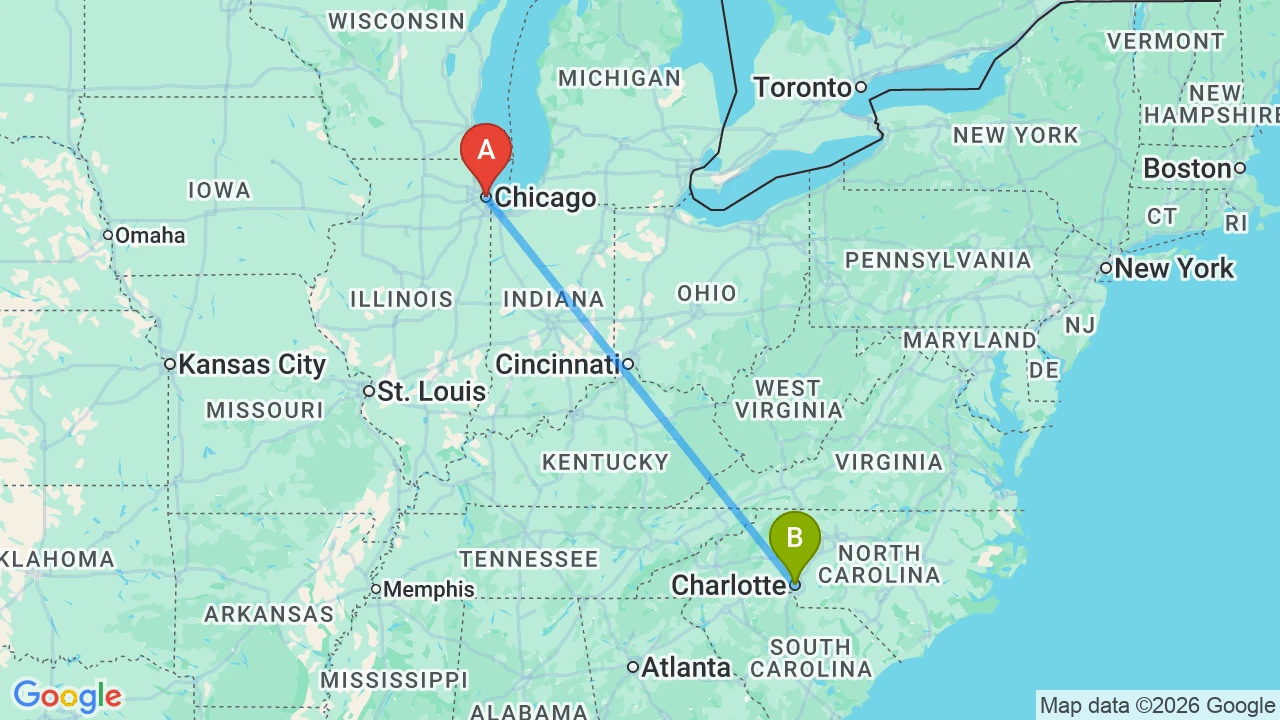
The move itself is straightforward in terms of distance—Chicago to Charlotte is roughly 750 miles, a common long-haul route for professional movers. But the adjustment period is longer than many people expect. If you’re used to Chicago’s transit system, the shift to car dependence in Charlotte can feel abrupt. You’ll need to budget for a vehicle if you don’t already own one, and that includes insurance, registration, and parking—all of which vary by neighborhood.
Utility setup in Charlotte can involve deposits and connection fees, especially for renters. Some landlords bundle utilities into rent, but many do not, and summer cooling costs can surprise newcomers who underestimate how long the AC runs. Chicago’s winter heating costs are predictable for most residents, but Charlotte’s summer electricity bills are less intuitive—humidity and heat combine to create sustained demand.
Renters in Charlotte should expect faster lease turnover and less negotiating room than in many Chicago neighborhoods. Landlords in high-demand areas often have multiple applicants, and rent increases at renewal are common. Homebuyers will find a competitive market, with inventory moving quickly in desirable school districts and walkable areas.
One often-overlooked friction point: social infrastructure. Chicago’s density and transit access make spontaneous meetups easier. In Charlotte, you’ll plan more—drive times matter, parking matters, and the rhythm of social life is less impromptu. That’s not a cost in dollars, but it’s a cost in time and mental load.
Frequently Asked Questions
- Does Charlotte feel more or less expensive than Chicago?
- It depends on where costs land for your household. Charlotte’s housing entry point is similar to Chicago’s, but ongoing costs shift: lower electricity rates but higher cooling demand, shorter commutes but more car dependence, and slightly lower grocery prices but less transit flexibility. Chicago’s property taxes and winter heating costs are high, but walkable neighborhoods reduce transportation expenses. The question isn’t which city is cheaper overall—it’s where you feel cost pressure most, and whether that aligns with your household’s priorities and income structure.
- How do housing markets differ between Chicago and Charlotte?
- Chicago’s housing market is more segmented, with wide variation in rent and ownership costs by neighborhood. Renters face high inventory in some areas and tight supply in others, while homeowners contend with steep property taxes. Charlotte’s market is tighter and faster-moving, with less rental inventory and quicker lease turnover. Homeownership is slightly more accessible relative to income, but HOA fees and property taxes vary widely. Both cities reward research and flexibility, but Charlotte’s market moves faster and leaves less room for negotiation.
- What feels different about daily life after moving from Chicago to Charlotte?
- The biggest shift is car dependence. If you’re used to walking to errands or taking the L in Chicago, you’ll drive more in Charlotte—for groceries, commutes, and social trips. Commute times are shorter on average, but you’ll need to own and maintain a vehicle. Climate also changes daily routines: Chicago’s winters are harsh and heating-intensive, while Charlotte’s summers are long, hot, and humid, with air conditioning running for months. The pace is less dense and more suburban, even in urban neighborhoods, which changes how you plan your day.
- When does the move from Chicago to Charlotte tend to feel easiest?
- Spring and fall offer the most forgiving weather for moving and adjusting. Summer moves mean arriving during Charlotte’s peak cooling season, which can make utility bills feel high right away. Winter moves avoid that, but you’ll miss the chance to experience a full Chicago winter before leaving—which some people appreciate and others regret. The housing market is competitive year-round in Charlotte, so timing your lease or purchase matters more than the season. If you’re renting, avoid moving during peak college and job-change months (May through August) when inventory is tightest.
- What are the most common adjustment pressures after this move?
- Car dependence surprises people who lived in walkable Chicago neighborhoods. You’ll drive more, which means budgeting for fuel, insurance, and maintenance. Summer cooling costs in Charlotte are higher and longer than many expect, especially if you’re used to Chicago’s milder summers. Social rhythms shift—spontaneous plans are harder when everything requires a drive. Renters often face steeper lease renewals than they anticipated, and homebuyers find the market moves faster than Chicago’s. Finally, the lack of transit alternatives means you’re more exposed to traffic and fuel price swings, with fewer backup options.
- Who tends to benefit from moving from Chicago to Charlotte, and who may struggle?
- This move works well for households prioritizing shorter commutes, milder winters, and access to a growing job market—especially in banking, tech, and healthcare. Families with school-age children benefit from Charlotte’s moderate school density and strong park access. People who already own cars and are comfortable driving daily will adapt quickly. The move is harder for those who rely on transit or prefer walkable neighborhoods, as Charlotte’s structure is more car-dependent. Renters on tight budgets may find less flexibility in Charlotte’s faster-moving market, and anyone sensitive to heat and humidity will feel the long summer cooling season. If you value spontaneity, density, and transit access, the adjustment takes longer.
Conclusion: Tradeoffs, Not Totals
The move from Chicago to Charlotte is not about finding a cheaper city—it’s about understanding where cost pressure shifts and whether that shift aligns with your household’s priorities. Charlotte offers shorter commutes, milder winters, and a growing job market, but it demands more car dependence, sustained summer cooling costs, and faster housing turnover. Chicago’s density, transit access, and walkable neighborhoods reduce transportation costs for some households, but property taxes and winter heating expenses are high.
Neither city is universally easier or harder. The question is whether the tradeoffs—car dependence for shorter commutes, lower grocery costs for higher cooling bills, faster housing markets for stronger job growth—work for your household. If you’re used to Chicago’s transit and walkability, expect a longer adjustment period. If you’re already driving daily and prioritize income growth and climate, Charlotte’s structure may feel like a relief.
For deeper exploration of how costs behave in each city, visit the Chicago cost of living hub and the Charlotte cost of living hub on IndexYard.
How this article was built: In addition to public economic data, this article incorporates location-based experiential signals derived from anonymized geographic patterns—such as access density, walkability, and land-use mix—to reflect how day-to-day living actually feels in Charlotte, NC.