
“I take the train into Charlotte three days a week, but I still drive everywhere else,” says Marcus, a financial analyst who moved to Gastonia two years ago. “The rail works great for my office commute, but if I need groceries or want to meet friends after work, I’m back in the car.”
That tension—between the presence of transit infrastructure and the reality of car dependence—defines how people actually move through Gastonia. Understanding transportation options in Gastonia means recognizing that mobility here operates on two tracks: a regional rail connection that serves specific commuter corridors, and a car-oriented local landscape that shapes nearly every other trip.
How People Get Around Gastonia
Gastonia’s transportation reality is built on driving. The city’s layout reflects decades of suburban development, with residential neighborhoods, commercial corridors, and employment centers spread across a landscape designed around automobile access. Pedestrian infrastructure remains limited, and while rail transit exists, it functions primarily as a commuter lifeline to Charlotte rather than a tool for navigating Gastonia itself.
Newcomers often assume that the presence of rail service means less reliance on a car. In practice, most households find that rail solves one specific problem—the daily commute to a job along the transit corridor—while driving handles everything else. Errands, appointments, social plans, and school runs almost universally require a vehicle. The city’s structure doesn’t support the kind of dense, walkable access that would allow residents to string together multiple stops without a car.
This isn’t a failure of planning; it’s the product of Gastonia’s geographic role as a bedroom community within the Charlotte metro. The city offers more affordable housing and a quieter pace, but that spaciousness comes with transportation tradeoffs. People who thrive here tend to be those who either accept driving as the default or who have commutes that align precisely with the rail corridor.
Public Transit Availability in Gastonia
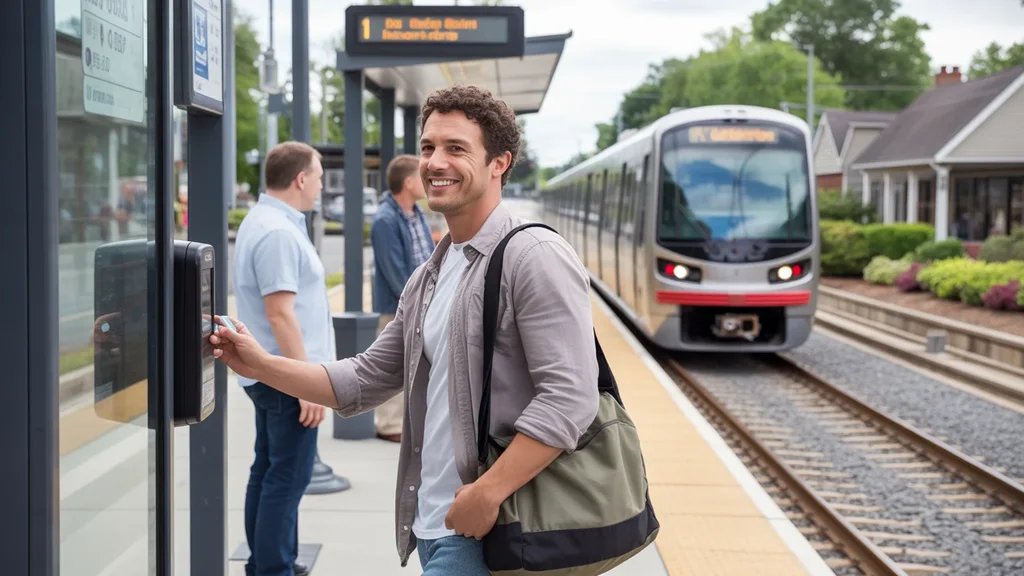
Public transit in Gastonia centers around regional rail service that connects to Charlotte, offering a structured option for commuters whose jobs sit along that route. The rail system functions as a peak-hour workhorse, moving people into the urban core in the morning and back out in the evening. For residents with downtown Charlotte offices or employers near transit stops, this service eliminates the daily grind of highway traffic and parking costs.
But transit’s usefulness drops sharply outside that narrow use case. Coverage within Gastonia itself remains sparse, and the pedestrian infrastructure needed to make transit stops accessible without a car is largely absent. This creates a practical barrier: even if a bus or train stop exists near your home, getting to it often requires driving, which undermines the convenience that makes transit viable in denser cities.
Transit works best in Gastonia’s more vertical, mixed-use corridors where commercial and residential land use overlap. In these pockets, residents can sometimes walk to a stop and access employment or services. But these areas represent the exception, not the rule. Most of Gastonia’s residential fabric sits in car-oriented neighborhoods where transit access requires advance planning, schedule coordination, and often a ride to the station.
The result is a system that serves a specific slice of the population well—primarily solo commuters with fixed schedules and jobs in Charlotte—while leaving most other transportation needs unmet. Families managing multiple stops, shift workers with non-standard hours, and residents living outside the transit corridor find little practical value in the existing network.
Driving & Car Dependence Reality
Driving isn’t just common in Gastonia; it’s structurally necessary. The city’s commercial activity clusters along corridors rather than concentrating in walkable districts, which means that running errands typically involves multiple stops separated by distances that don’t support walking or biking. Grocery stores, medical offices, schools, and retail sit in different zones, and stringing them together requires a car.
Parking pressure remains low throughout most of the city, which removes one of the friction points that makes driving costly or stressful in urban cores. Residents can generally park for free at home, at work, and at most destinations. This ease of parking reinforces car dependence by eliminating the logistical hassle that might otherwise push people toward transit or shared mobility.
The tradeoff comes in time and flexibility. Gastonia’s average commute runs 25 minutes, but 38.6% of workers face longer trips, often into Charlotte or other parts of the metro. These extended commutes don’t just add time; they reduce schedule flexibility and increase exposure to traffic variability. A fender-bender on I-85 or road construction can turn a predictable half-hour drive into an hour-long ordeal, with no easy alternative route or backup plan.
For households with two working adults, car dependence often means maintaining two vehicles, along with the insurance, maintenance, and registration costs that come with them. Single-car households can manage if work schedules align or if one partner works from home—8.1% of Gastonia workers do—but most families find that the city’s sprawl and limited transit make a second vehicle a practical necessity rather than a luxury.
Commuting Patterns & Daily Mobility
Commuting in Gastonia typically follows one of two patterns: either a direct drive to a job within the metro area, or a rail commute into Charlotte’s core. The rail option appeals to workers who value predictability and want to avoid the stress of highway driving, but it requires living near a station and working near a stop on the other end. That alignment is more common among professionals in finance, law, or corporate roles concentrated in Charlotte’s downtown.
For everyone else, commuting means driving. Some residents work locally in Gastonia’s manufacturing, healthcare, or retail sectors, which keeps commute times manageable. Others face longer trips to employers scattered across the metro, including Belmont, Concord, or south Charlotte. These commutes don’t benefit from transit, and the distances involved make carpooling or alternative modes impractical.
Daily mobility beyond commuting reinforces car dependence. Parents managing school drop-offs and pickups, workers running errands during lunch breaks, and households coordinating medical appointments or social plans all rely on personal vehicles. The city’s layout doesn’t support the kind of trip-chaining that would allow someone to walk or bike between multiple stops, and transit schedules don’t accommodate the flexibility most households need.
This structure creates a clear division: people whose lives fit the rail corridor can reduce their driving significantly, while everyone else absorbs the full cost and time burden of car-based mobility. There’s little middle ground, which makes transportation in Gastonia feel binary—you either benefit from the rail system or you don’t.
Who Transit Works For — and Who It Doesn’t
Transit in Gastonia works best for single commuters with fixed schedules, jobs in Charlotte’s core, and housing near a rail station. These residents can structure their lives around the train, using it for the daily commute while driving only for errands or weekend trips. The time saved avoiding highway traffic and the mental relief of not navigating rush hour make transit a strong fit for this group.
Families with children face a harder calculus. School schedules, after-school activities, and the need to manage multiple stops throughout the day make transit impractical for most household logistics. Even if one parent uses the train for commuting, the household almost always needs at least one car to handle everything else. The lack of walkable access to schools, groceries, and services means that transit can’t replace driving—it can only supplement it.
Renters in Gastonia’s more vertical, mixed-use corridors have the best shot at reducing car dependence, but even they face limits. While these neighborhoods offer better proximity to transit stops and some commercial activity, the overall car-oriented texture of the city means that most errands still require driving. Renters without cars can survive in these pockets, but they’ll rely heavily on ride-sharing, delivery services, or help from friends for trips that fall outside the transit network.
Homeowners in peripheral neighborhoods—where most of Gastonia’s housing stock sits—find transit largely irrelevant. These areas lack the pedestrian infrastructure and density needed to make transit stops accessible, and the distance to rail stations makes driving to the train as time-consuming as driving to work directly. For these households, car ownership isn’t optional; it’s the only viable way to participate in daily life.
Transportation Tradeoffs in Gastonia
Choosing between transit and driving in Gastonia isn’t really a choice for most residents—it’s a question of whether your life happens to align with the rail corridor. For those who fit, transit offers predictability, lower stress, and freedom from parking concerns in Charlotte. For everyone else, driving provides the flexibility and coverage that transit can’t match.
The tradeoff isn’t about cost in isolation; it’s about control and exposure. Transit users give up flexibility in exchange for consistency. They can’t easily detour for errands, adjust their schedule on the fly, or accommodate last-minute changes. But they also avoid the unpredictability of traffic, the wear and tear on a vehicle, and the mental load of navigating congested highways twice a day.
Drivers, by contrast, absorb more variability. They control their routes and timing, but they also bear the full exposure to traffic delays, fuel price swings, and vehicle maintenance cycles. In Gastonia, where driving is the default, this exposure is unavoidable for most households. The question isn’t whether to drive, but how much driving your household can structure around work, errands, and daily logistics.
The city’s layout amplifies these tradeoffs. Because commercial activity clusters along corridors rather than concentrating in walkable nodes, even short errands often require a car. This makes it difficult to reduce driving incrementally—you either live in one of the few areas where transit and walkability overlap, or you drive for nearly everything. There’s little room for a hybrid approach, which forces households to commit fully to one mode or the other.
FAQs About Transportation in Gastonia (2026)
Is public transit usable for daily commuting in Gastonia?
Public transit works well for commuters whose jobs sit along the rail corridor into Charlotte and who live near a station in Gastonia. For these residents, rail provides a reliable, predictable commute that avoids highway traffic. But transit doesn’t serve most other trips—errands, appointments, and local travel almost always require a car. If your commute doesn’t align with the rail route, transit offers little practical value.
Do most people in Gastonia rely on a car?
Yes. Gastonia’s layout, limited pedestrian infrastructure, and sprawling commercial corridors make driving the default for nearly all households. Even residents who use rail for commuting typically own a car for errands, family logistics, and weekend activities. The city’s structure doesn’t support car-free living for most people, and only a small fraction of residents can manage without regular vehicle access.
Which areas of Gastonia are easiest to live in without a car?
The areas with more vertical building forms and mixed land use—typically closer to transit stops and commercial corridors—offer the best chance of reducing car dependence. These neighborhoods provide some walkable access to services and proximity to rail stations. But even in these pockets, most residents find that a car remains necessary for grocery shopping, medical appointments, and trips outside the immediate area.
How does commuting in Gastonia compare to nearby cities?
Gastonia’s average commute of 25 minutes sits in the moderate range for the Charlotte metro, but 38.6% of workers face longer trips, often into Charlotte or other metro employment centers. Compared to cities with more robust transit networks, Gastonia offers fewer alternatives to driving, which means commuters here absorb more exposure to traffic variability and fuel costs. The rail corridor provides relief for some, but most residents depend entirely on personal vehicles.
Can families manage with one car in Gastonia?
Single-car households can work if one adult works from home, if both partners have aligned schedules, or if one uses rail for commuting while the other handles local errands. But Gastonia’s sprawl and limited transit make this arrangement difficult for most families. School runs, after-school activities, and the need to manage multiple stops throughout the day typically push households toward owning two vehicles.
How Transportation Fits Into the Cost of Living in Gastonia
Transportation in Gastonia isn’t just a line item—it’s a structural force that shapes where people live, how they manage time, and what kind of flexibility they can build into their lives. The city’s car-oriented layout means that mobility costs are less about choosing between transit and driving and more about how many vehicles a household needs and how much commuting time they’re willing to absorb.
For households evaluating what a budget has to handle in Gastonia, transportation sits alongside housing as one of the two dominant cost drivers. The combination of vehicle ownership, fuel, insurance, and maintenance creates a baseline expense that most households can’t avoid. Reducing that burden requires either living close enough to work to shorten commutes or aligning with the rail corridor to eliminate one vehicle.
The tradeoff between housing affordability and commute length plays out clearly here. Gastonia offers more accessible home prices than Charlotte, but many residents pay for that affordability with longer commutes and higher transportation exposure. Understanding how those two forces interact—and whether your household’s work and lifestyle fit the rail corridor—determines whether Gastonia’s transportation structure supports or strains your financial flexibility.
Transit exists in Gastonia, but it serves a narrow slice of the population. For everyone else, the city’s reality is built on driving, and managing that dependence well means thinking carefully about where you live, where you work, and how much time and money you’re prepared to spend moving between the two.
How this article was built: In addition to public economic data, this article incorporates location-based experiential signals derived from anonymized geographic patterns—such as access density, walkability, and land-use mix—to reflect how day-to-day living actually feels in Gastonia, NC.