
“I thought I could manage without a second car when we moved here,” says a daily commuter who’s lived in Simsbury for three years. “The town center is walkable, there’s a bus, and it felt doable. But once you’re running errands or need to get to work on time, you realize how much the car shapes everything.”
That tension—between Simsbury’s traditional New England town character and the realities of modern mobility—defines transportation options in Simsbury. The town offers pockets of walkability, some bus service, and a layout that feels less car-dominated than many Connecticut suburbs. But daily life here still revolves around driving for most households, especially those managing errands, school runs, or commutes beyond the immediate area.
Understanding how people actually get around Simsbury means looking past the postcard image of a quaint town center and recognizing the structural role transportation plays in shaping cost, time, and household logistics.
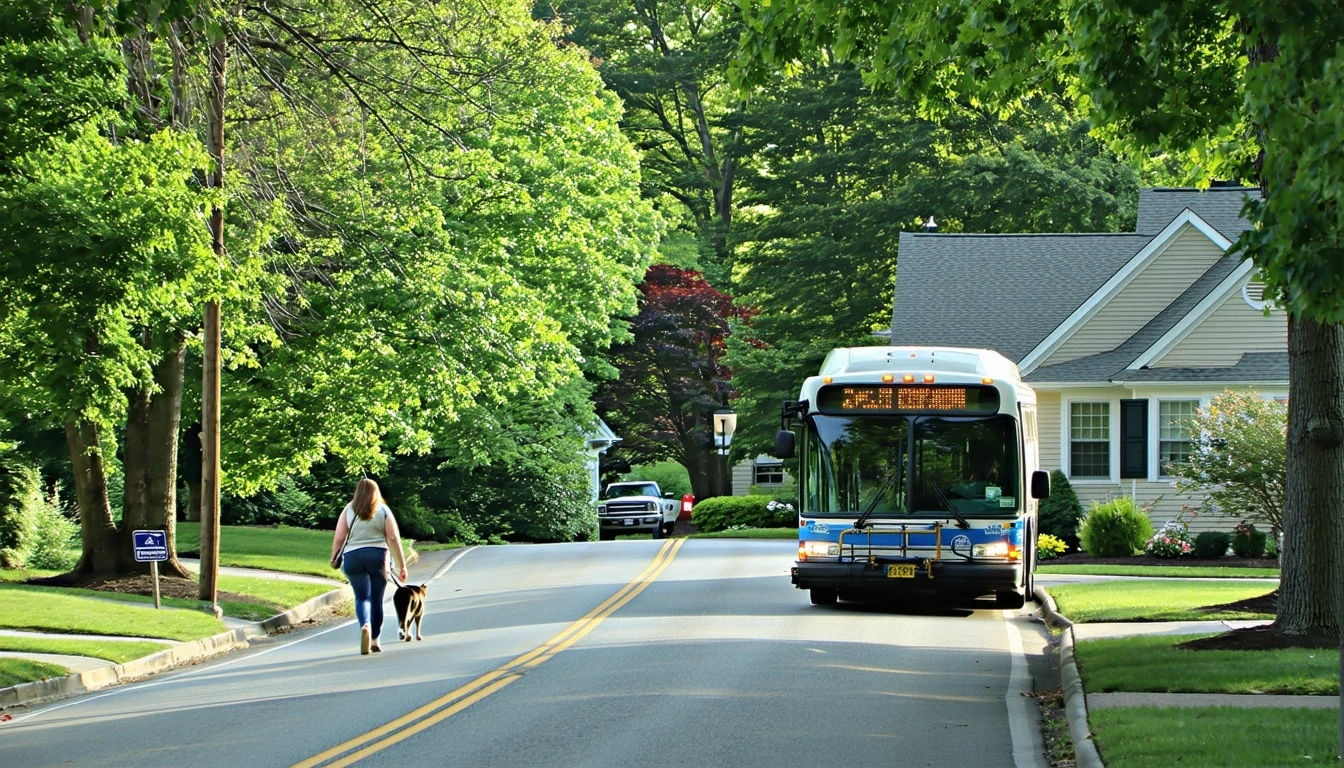
How People Get Around Simsbury
Simsbury’s mobility pattern reflects its dual identity: a historic town center with traditional street grids, surrounded by lower-density residential neighborhoods that stretch toward farmland and wooded hills. The result is a place where walkability exists in concentrated pockets—mainly around Hopmeadow Street and the downtown core—but thins out quickly as you move into the surrounding neighborhoods.
Most residents rely on a car for daily life. The town’s layout, with residential areas separated from commercial corridors and grocery options spread thin, makes driving the default for errands, appointments, and commuting. Even households living near the walkable center often find themselves driving for anything beyond a coffee run or a quick stop at a local shop.
What newcomers often misunderstand is that Simsbury’s charm—its green spaces, historic character, and suburban calm—comes with a tradeoff in mobility flexibility. The infrastructure that supports walking and biking is present in parts of town, but it doesn’t extend uniformly. And while bus service exists, it plays a supporting role rather than serving as a primary transportation option for most residents.
Public Transit Availability in Simsbury
Public transit in Simsbury often centers around systems such as CTtransit, which provides bus service connecting the town to Hartford and other regional destinations. The presence of bus stops indicates that transit is available, but coverage is limited and best suited to specific corridors rather than the entire town.
Transit tends to work best for residents living near major routes—particularly those connecting Simsbury’s center to Hartford—and for commuters with predictable schedules who can align their routines with bus timing. It’s less practical for households managing multiple daily trips, off-peak errands, or destinations not served by direct routes.
Where transit falls short is in flexibility and coverage. Simsbury’s lower-density neighborhoods, spread across a relatively large geographic area, don’t support the kind of frequent, comprehensive service that would make transit a viable car replacement for most households. Late hours, weekend service, and connections to non-Hartford destinations are particularly constrained.
For some residents—especially those working in Hartford or living near transit-served corridors—bus service provides a real alternative to driving. But for the majority, transit functions as a backup option rather than a primary mode of getting around.
Driving & Car Dependence Reality
Driving is not just common in Simsbury—it’s structurally necessary for most households. The town’s layout, with residential areas separated from grocery stores, schools, and workplaces, means that even short errands often require a car. Parking is generally abundant and free, which removes one of the friction points that might otherwise encourage transit use or carpooling.
Car dependence here is tied to geography and infrastructure, not just personal preference. The sparse distribution of food and grocery options—flagged by low density thresholds across the town—means that households can’t rely on walking or biking for weekly shopping trips. And while some neighborhoods have sidewalks and bike lanes, the gaps between them make multi-stop errands by foot or bike impractical.
For families, a second car often becomes essential. School runs, after-school activities, and the need to manage overlapping schedules make single-car households difficult to sustain, especially when both adults work outside the home. Commuters heading to Hartford or other regional employment centers face a choice: absorb the time and schedule constraints of bus service, or drive and gain flexibility at the cost of fuel, tolls, and parking.
The tradeoff is clear. Driving offers control, predictability, and the ability to manage complex household logistics. But it also locks in exposure to fuel prices—currently $4.28 per gallon in Connecticut—and the ongoing costs of vehicle maintenance, insurance, and registration.
Commuting Patterns & Daily Mobility
Commuting in Simsbury typically follows one of two patterns: residents who work locally or remotely, and those who commute to Hartford or other nearby employment hubs. The town’s position in the Hartford metro area makes it a bedroom community for many professionals, but it also supports a smaller population of residents whose work is tied to Simsbury itself or who operate on flexible schedules.
For those commuting to Hartford, the decision between driving and taking the bus hinges on schedule flexibility and tolerance for fixed departure times. Bus service provides a viable option for commuters with predictable work hours and proximity to transit stops, but it’s less practical for those managing variable schedules, client meetings, or multi-location workdays.
Daily mobility beyond commuting—running errands, picking up kids, managing appointments—adds another layer of complexity. Simsbury’s mixed land use, with both residential and commercial areas present, suggests some integration of daily needs within the town. But the low density of food and grocery establishments means that even residents living near the town center often need to drive to access a full range of shopping options.
Who benefits from proximity? Residents living within walking distance of Hopmeadow Street or the downtown core can handle some daily tasks on foot, especially if they work remotely or have flexible schedules. But households managing school-age children, dual-income logistics, or regular trips outside Simsbury absorb significantly more commute friction and time pressure.
In practice, Simsbury’s transportation structure creates a two-tier experience. If you live near one of the walkable pockets—close to the town center or along a bus-served corridor—you can piece together a lower-car lifestyle, especially if your work is remote or local. But step outside those areas, and the car becomes non-negotiable. The sparse distribution of grocery stores and daily errands destinations means that even short trips require planning and wheels. Families, in particular, find that managing school runs, activities, and overlapping schedules without a second car adds friction that quickly outweighs any savings from reduced driving.
Who Transit Works For — and Who It Doesn’t
Transit in Simsbury fits a specific profile: commuters with fixed schedules, residents living near bus routes, and households willing to trade time and flexibility for reduced driving costs. It works best for individuals rather than families, and for those whose daily needs align with transit-served corridors.
Renters living near the town center or along Hopmeadow Street are more likely to benefit from transit than homeowners in peripheral neighborhoods. The concentration of walkable infrastructure and bus access in the core gives renters—who often prioritize proximity and lower transportation costs—a real advantage. Homeowners in lower-density areas, by contrast, typically face longer distances to transit stops and fewer walkable errands options, making car ownership a practical necessity.
Transit doesn’t work well for households managing complex logistics: multiple daily trips, off-peak errands, or destinations outside the Hartford corridor. It also falls short for families with school-age children, where the need to coordinate drop-offs, pickups, and activities makes fixed bus schedules impractical.
The fit question isn’t about whether transit exists—it does—but whether it aligns with how a household actually moves through daily life. For some, it’s a viable primary option. For most, it’s a supplement to driving, not a replacement.
Transportation Tradeoffs in Simsbury
The choice between transit and driving in Simsbury isn’t primarily about cost—it’s about control, predictability, and time. Driving offers flexibility: the ability to run multiple errands in one trip, adjust schedules on the fly, and manage household logistics without depending on fixed routes or departure times. Transit offers reduced exposure to fuel price volatility and the potential to avoid the ongoing costs of vehicle ownership, but it requires households to structure their lives around service availability.
For commuters, the tradeoff often comes down to schedule tolerance. Bus service to Hartford can work for those with predictable work hours and proximity to stops, but it adds time and reduces flexibility compared to driving. For errands, the tradeoff is even sharper: driving is faster and more convenient, but transit—where it’s practical—reduces wear on vehicles and limits fuel consumption.
The broader tradeoff is geographic. Living near Simsbury’s walkable core or a bus-served corridor opens up lower-car options, but those locations often come with higher housing costs or limited availability. Living farther out reduces housing pressure but increases transportation dependence, locking in the need for at least one car—and often two.
Neither choice is wrong, but each carries different exposure. Households prioritizing transportation flexibility and control will absorb higher fuel and vehicle costs. Those prioritizing reduced driving will need to accept longer trip times, fewer errands options, and the need to live near transit-served areas.
FAQs About Transportation in Simsbury (2026)
Is public transit usable for daily commuting in Simsbury?
Yes, but with limitations. Bus service connects Simsbury to Hartford and other regional destinations, making it viable for commuters with fixed schedules and proximity to transit stops. It’s less practical for those managing variable work hours, multi-location days, or errands outside transit-served corridors. Transit works best as a primary option for individuals with predictable routines, and as a backup for others.
Do most people in Simsbury rely on a car?
Yes. The town’s layout—with residential neighborhoods separated from grocery stores, schools, and workplaces—makes driving the default for most households. Even residents living near the walkable town center often drive for errands, appointments, and trips beyond the immediate area. Parking is abundant and free, which reinforces car dependence rather than discouraging it.
Which areas of Simsbury are easiest to live in without a car?
The town center and areas near Hopmeadow Street offer the most walkable infrastructure and closest access to bus service. Residents in these pockets can manage some daily tasks on foot and have better access to transit for commuting. But even in these areas, a car remains useful for grocery shopping, errands, and trips outside Simsbury. Living car-free is possible for a small subset of residents—typically those working remotely or locally—but it’s not the norm.
How does commuting in Simsbury compare to nearby cities?
Simsbury functions as a bedroom community within the Hartford metro area, so commuting patterns skew toward regional employment centers rather than local jobs. Compared to denser cities with more comprehensive transit, Simsbury offers less frequent service and fewer route options. Compared to more rural areas, it provides better access to Hartford and some walkable infrastructure in the town center. The commute experience depends heavily on where you work and whether your schedule aligns with available bus service.
Does Simsbury have bike-friendly infrastructure?
Bike infrastructure exists in some pockets, with bike-to-road ratios in the medium range. This means cycling is viable in certain areas—particularly near the town center and along specific corridors—but it’s not uniformly supported across the entire town. Cyclists managing longer distances or trips between disconnected neighborhoods will face gaps in infrastructure and higher reliance on roads shared with cars. Biking works best for recreational use or short, local trips rather than as a primary transportation mode for most households.
How Transportation Fits Into the Cost of Living in Simsbury
Transportation in Simsbury isn’t just a line item—it’s a structural factor that shapes housing choice, time allocation, and household flexibility. The decision to live near the walkable core versus a peripheral neighborhood affects not only monthly expenses, budget planning, cost breakdown, but also how much time households spend managing logistics and how much control they have over daily schedules.
For households weighing Simsbury against other Connecticut towns, transportation dependence is a key variable. The town offers more walkable character than many suburbs, but less transit coverage than denser cities. That middle position creates opportunity for some—particularly remote workers or flexible commuters—but adds friction for families and dual-income households managing complex schedules.
The clearest guidance: if you’re considering Simsbury, assume you’ll need at least one car, and plan for two if you’re managing a family or dual commutes. Transit exists and works for specific use cases, but it’s not a car replacement for most households. The town’s layout, errands accessibility, and commute patterns all point toward driving as the primary mode of mobility—even in the most walkable pockets.
Understanding that reality upfront—before signing a lease or closing on a home—gives you the clarity to make housing and transportation decisions that align with how you actually live, rather than how you hope to live. Simsbury offers real quality-of-life benefits, but they come with transportation tradeoffs that are worth accounting for early.
How this article was built: In addition to public economic data, this article incorporates location-based experiential signals derived from anonymized geographic patterns—such as access density, walkability, and land-use mix—to reflect how day-to-day living actually feels in Simsbury, CT.