
Introduction: What Changes When You Move from Chicago to Frisco
The move from Chicago, IL to Frisco, TX represents one of the more dramatic lifestyle and cost structure shifts you can make within the United States. This isn’t a lateral move between similar cities—it’s a transition from a dense, transit-rich urban environment to a master-planned suburban community built around car ownership and newer construction.
People consider this move for many reasons: job opportunities in the Dallas metro’s growing economy, the appeal of newer housing stock, lower unemployment (3.8% in Frisco versus 5.4% in Chicago), or simply a desire to trade urban density for suburban space. But the financial and logistical tradeoffs are substantial, and they show up in unexpected places.
This guide explains how cost pressure, daily routines, and household logistics shift between these two cities. We’re not calculating whether the move “saves” money or declaring one city “better”—we’re showing you where expenses concentrate differently, how your day-to-day patterns will change, and which household types tend to feel more or less pressure after relocating. The goal is clarity about what you’re trading, not a verdict on whether to make the trade.
Cost Pressure Shifts: Where Money Moves
The most immediate financial difference is housing entry cost. Frisco’s median home value sits at $531,400 compared to Chicago’s $304,500—a gap of nearly $227,000 that translates directly into down payment requirements, mortgage obligations, and property tax exposure. For renters, the shift is equally pronounced: median gross rent in Frisco runs $1,803 per month versus $1,314 in Chicago, a 37% increase in monthly housing obligations.
This housing cost increase happens against a backdrop of higher median household income—$144,567 in Frisco versus $71,673 in Chicago—which suggests the local economy supports higher-earning households. But that income differential doesn’t automatically offset housing pressure for everyone. If you’re moving with a Chicago-based income (remote work, for example) or entering Frisco’s job market at mid-level wages, the housing cost gap becomes a primary budget constraint.
Transportation costs shift in complex ways. Gas prices favor Frisco ($2.47 per gallon versus Chicago’s $2.94), but the infrastructure change means you’ll almost certainly drive more. Chicago’s rail transit system and walkable neighborhoods allow many households to minimize or eliminate car ownership; Frisco’s suburban form assumes vehicle dependence for nearly every errand. The savings at the pump may be offset—or exceeded—by increased insurance, maintenance, and the necessity of owning multiple vehicles for multi-adult households.
Utility costs show a mixed picture. Electricity rates are slightly lower in Frisco (16.04¢ per kWh versus 18.31¢), but natural gas costs nearly double ($30.71 per MCF versus $15.48). This matters most during winter months when heating demand peaks, though Frisco’s milder winters may reduce total consumption. Summer cooling costs, however, become a dominant expense in Frisco’s extended heat season, where triple-digit temperatures drive air conditioning use for months at a time.
Grocery costs show similar regional price parity between the two cities (both have an RPP index of 103), meaning the per-item cost of staples like bread ($1.89/lb), eggs ($2.79/dozen), and chicken ($2.08/lb) remains comparable. Derived estimate based on national baseline adjusted by regional price parity; not an observed local price. What changes is access: Chicago’s high density of food establishments means shorter trips and more competitive pricing within walking distance, while Frisco’s lower-density layout often requires longer drives and favors bulk shopping patterns.
Housing & Neighborhood Patterns
Chicago’s housing market reflects over a century of urban development: a mix of vintage walkups, mid-century courtyard buildings, and modern high-rises, with ownership options ranging from condos in dense neighborhoods to single-family homes in quieter wards. Frisco’s housing stock skews heavily toward newer construction—master-planned subdivisions, homeowner association communities, and large-lot single-family homes built within the last two decades.
This difference in housing age and form affects ongoing costs in ways that don’t show up in median price alone. Frisco homes often come with HOA fees that bundle services like lawn care, community amenities, and exterior maintenance—costs that can add hundreds of dollars monthly but also reduce direct maintenance obligations. Chicago’s older housing stock may have lower purchase prices in some neighborhoods, but it often carries deferred maintenance, higher heating costs from less efficient building envelopes, and the need for periodic capital improvements.
For renters, the shift is equally structural. Chicago’s rental market includes everything from small studios in walkable neighborhoods to larger units in residential zones, with access to transit often factored into rent premiums. Frisco’s rental inventory leans toward larger apartment complexes and single-family rentals in car-dependent locations, where the monthly rent may be higher but the unit size and parking availability typically exceed what the same budget would secure in Chicago.
Neighborhood form also determines daily cost friction. In Chicago, particularly in areas with high pedestrian infrastructure density and integrated park systems, households can structure routines around walking, transit, and neighborhood-scale errands. Frisco’s development pattern assumes car trips for nearly everything—groceries, school drop-offs, recreational activities—which adds time, fuel, and vehicle wear to every routine task.
Lifestyle & Daily Rhythms
The experiential difference between these cities is profound, driven primarily by infrastructure and urban form. Chicago’s substantial pedestrian infrastructure, rail transit presence, and notable cycling networks create an environment where many households can—and do—build daily routines without constant car dependence. Food and grocery density exceeds high thresholds, park access is integrated throughout the city, and mixed residential and commercial land use means errands often happen within walking distance.
Frisco operates on entirely different assumptions. Without the walkable infrastructure or transit options that define Chicago’s mobility texture, nearly every household task requires a vehicle. School runs, grocery trips, social visits, and recreational activities all assume car access. For households accustomed to Chicago’s car-optional lifestyle, this represents a fundamental shift in daily logistics, time allocation, and the mental load of coordinating transportation.
Climate exposure also inverts. Chicago’s long heating season and cold winters (current temperature 23°F, feels like 19°F) give way to Frisco’s extended cooling season and hot summers (current temperature 38°F, feels like 34°F, but summer heat regularly reaches triple digits). This shift affects not just utility bills but also outdoor activity patterns, when you can comfortably spend time outside, and how much of the year you’re managing indoor climate control.
The pace and rhythm of daily life slow in some ways and accelerate in others. Frisco’s suburban form offers more space, quieter streets, and newer amenities, but it also means longer distances between destinations, more time spent in vehicles, and fewer spontaneous interactions that come from dense, mixed-use neighborhoods. Chicago’s faster pace, denser social fabric, and layered neighborhood cultures give way to a more planned, scheduled, and car-mediated daily experience.
How this article was built: In addition to public economic data, this article incorporates location-based experiential signals derived from anonymized geographic patterns—such as access density, walkability, and land-use mix—to reflect how day-to-day living actually feels in Chicago, IL.
Relocation Logistics & Practical Friction
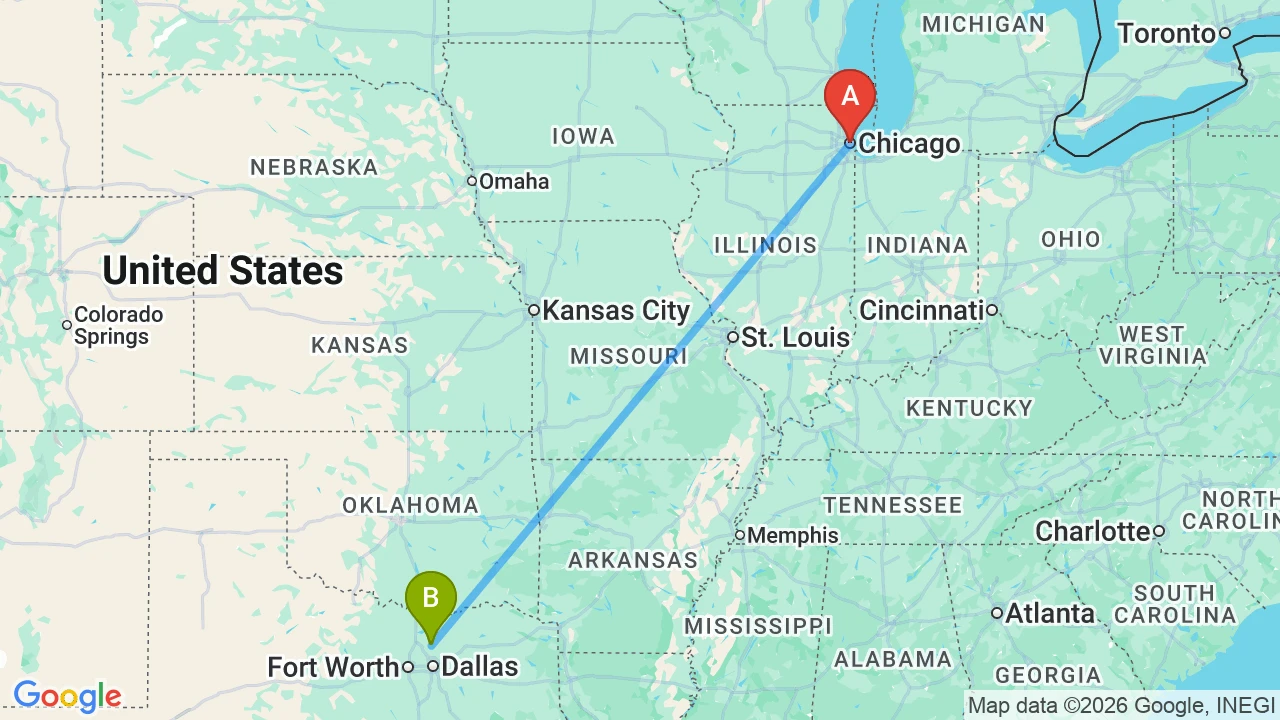
The physical move itself spans roughly 1,000 miles and crosses multiple climate zones, which affects timing, vehicle preparation, and what belongings make sense to bring. Winter moves from Chicago require planning around weather volatility, while summer moves into Frisco mean arriving during peak heat season when cooling costs and outdoor activity limitations are most intense.
What surprises many movers is the infrastructure adjustment period. If you’re accustomed to running errands on foot, taking transit to work, or structuring weekends around neighborhood exploration, the shift to car-dependent routines requires both logistical and psychological adaptation. Households that previously managed with one vehicle—or none—often find they need two cars immediately upon arrival in Frisco, adding insurance, registration, and financing costs that weren’t part of the Chicago budget.
School and family logistics also change shape. Chicago’s moderate school density and mixed family infrastructure give way to Frisco’s newer school facilities, but the distances involved mean more driving, more coordination, and less ability for children to navigate independently. Playground density is lower in Frisco based on available signals, though the city’s master-planned communities often include private recreational amenities accessible only to HOA members.
Healthcare access shifts as well. Chicago’s hospital presence and pharmacy availability create a dense medical services network; Frisco’s suburban form means longer travel times to specialized care, though routine medical needs are generally well-served. The difference matters most for households managing chronic conditions or those who value proximity to major medical centers.
Social network rebuilding takes time in any move, but Frisco’s car-dependent layout and newer population mean fewer organic opportunities for neighbor interaction compared to Chicago’s denser, more established communities. Building a social circle often requires more intentional effort—joining clubs, attending organized events, or connecting through workplaces—rather than the spontaneous interactions that happen in walkable neighborhoods.
Frequently Asked Questions
- Does Frisco, TX feel more or less expensive than Chicago, IL?
- Frisco concentrates cost pressure in housing entry—both purchase prices and rents run substantially higher—while Chicago spreads costs across transit, older housing maintenance, and higher heating expenses. Frisco feels more expensive upfront for housing but assumes higher household income; Chicago’s costs are more distributed but accumulate through car ownership (if needed), winter utilities, and urban service fees. Who feels more pressure depends on income level, housing tenure, and whether you’re bringing Chicago-level earnings or entering Frisco’s higher-wage job market.
- How do housing markets differ between Chicago and Frisco?
- Chicago offers a century of housing variety—vintage apartments, mid-century homes, modern condos—across a wide price spectrum, with walkable neighborhoods commanding premiums. Frisco’s market skews toward newer construction in master-planned communities with HOA structures, larger lots, and higher entry costs but often lower ongoing maintenance needs. Chicago rewards those who can navigate older housing stock and value transit access; Frisco rewards those who prioritize new construction, space, and car-oriented suburban form.
- What feels different about daily life after moving from Chicago to Frisco?
- The most immediate shift is mobility: Chicago’s walkable errands, transit options, and pedestrian-friendly infrastructure give way to Frisco’s car-dependent routines where nearly every task requires driving. The pace slows in some ways (quieter streets, more space) but accelerates in others (longer distances, more scheduled activities). Climate exposure inverts from long, cold winters to extended, hot summers, changing when and how you spend time outdoors.
- When does the move from Chicago to Frisco tend to feel easiest or hardest?
- Spring and fall offer the most moderate weather windows in both cities, avoiding Chicago’s winter moving challenges and Frisco’s peak summer heat. The adjustment period feels hardest for households accustomed to car-optional lifestyles, those downsizing from higher incomes, or families navigating the shift from neighborhood-scale independence to vehicle-dependent logistics. It feels easiest for high-income households, those prioritizing newer housing and suburban space, or people already comfortable with car-oriented daily routines.
- What are the most common adjustment pressures after this move?
- Vehicle dependence surprises many movers—suddenly needing two cars, managing longer drive times, and losing the spontaneity of walkable errands. Housing cost pressure hits renters and moderate-income buyers hard, especially those moving without Frisco-level salaries. The social adjustment takes longer than expected in a newer, more dispersed community where neighbor interaction requires intentional effort rather than happening organically through shared infrastructure.
- Who does this move work best for, and who tends to struggle?
- This move works best for high-income households who can absorb Frisco’s housing entry costs, families seeking newer construction and master-planned amenities, and those who prefer car-oriented suburban living with access to Dallas metro job opportunities. It’s challenging for households reliant on transit or walkable infrastructure, moderate-income renters facing 37% higher monthly obligations, and people who value dense urban culture, spontaneous neighborhood interaction, and car-optional daily routines. Remote workers with Chicago-level incomes face particular pressure if housing costs consume a larger budget share than they did previously.
Conclusion: Understanding the Tradeoff Structure
The move from Chicago to Frisco isn’t a simple cost-of-living swap—it’s a fundamental restructuring of how you live, move, and spend money day to day. Housing costs shift dramatically upward, but so does the median income that supports the local economy. Transit and walkability give way to car dependence and suburban space. Dense urban infrastructure is traded for newer construction and master-planned communities.
For high-income households, families prioritizing space and newer amenities, and those comfortable with car-oriented living, Frisco offers a compelling package: lower unemployment, modern housing stock, and access to the Dallas metro’s economic opportunities. For moderate-income renters, transit-dependent households, and those who value walkable urbanism and spontaneous neighborhood life, the move introduces substantial pressure and requires significant lifestyle adaptation.
The key is understanding which costs and constraints you’re trading, not whether one city is “cheaper” in aggregate. Use the Chicago city hub and Frisco city hub on IndexYard to explore housing options, neighborhood patterns, and local cost drivers in greater depth before making your decision.