
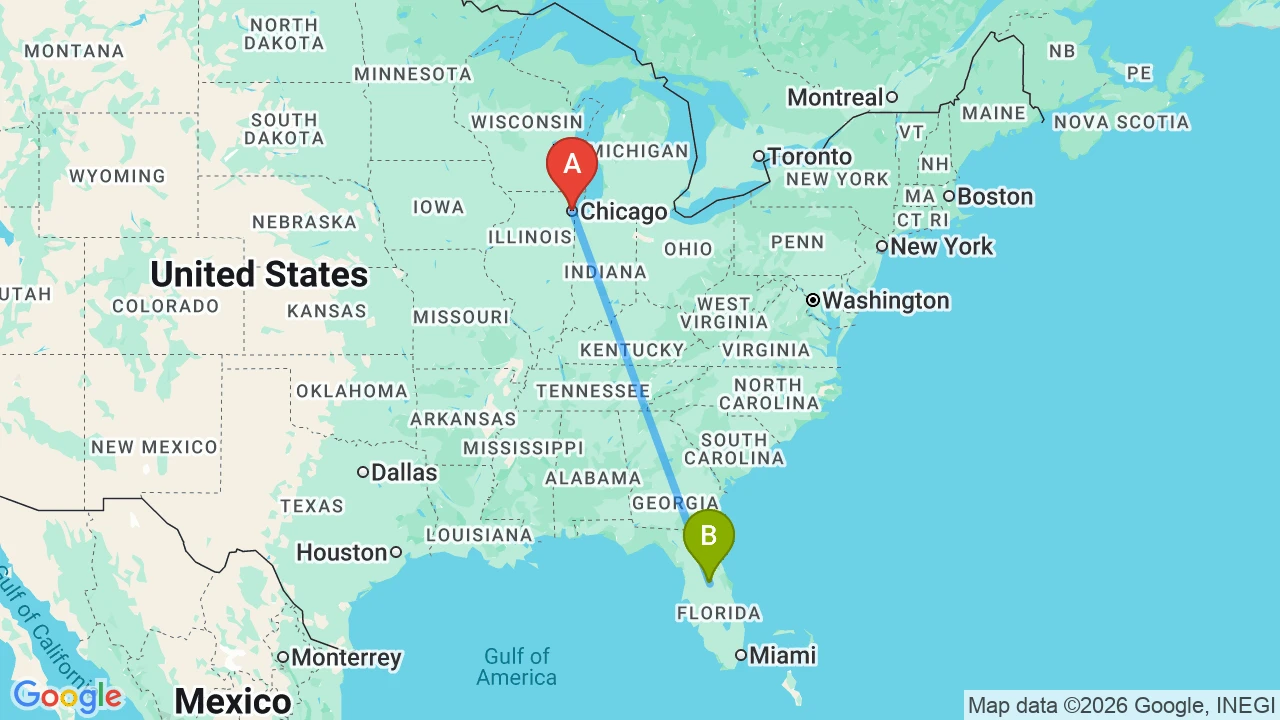
Moving from Chicago to Winter Garden represents one of the more dramatic geographic and lifestyle shifts available within the continental United States. You’re trading a major metropolitan center with extensive transit infrastructure for a growing suburban community in the Orlando metro area, swapping long heating seasons for extended cooling exposure, and moving from a city built around density and rail access to one where nearly every errand assumes car ownership.
This guide explains how cost pressure, daily routines, and household logistics typically shift when making this move. It does not declare which city is “cheaper” in total—that depends entirely on your housing choices, household size, and lifestyle—but it does clarify where costs concentrate differently, where exposure increases or decreases, and which household types tend to feel the transition most acutely.
Where Cost Pressure Shifts
The most visible cost shift involves housing entry barriers. Chicago’s median home value sits at $304,500, while Winter Garden’s reaches $408,700—a substantial jump in upfront capital required for ownership. Median rent follows a similar pattern: $1,314 per month in Chicago versus $1,590 per month in Winter Garden. For renters and first-time buyers, this represents a meaningful increase in baseline housing pressure.
However, income context matters. Winter Garden’s median household income is $101,953 per year, compared to Chicago’s $71,673. This income difference reflects both the professional composition of Winter Garden’s population and the reality that many residents commute to higher-wage jobs in the broader Orlando metro. The income gap does not automatically offset the housing cost increase—it depends entirely on your own earning trajectory and whether your job transition maintains or improves your income position.
Utility exposure changes direction and character. Chicago’s electricity rate is 18.31¢/kWh, while Winter Garden’s is 15.78¢/kWh—a lower rate, but one you’ll use far more intensively. Winter Garden’s extended cooling season means air conditioning runs from late spring through early fall, often daily, whereas Chicago’s cooling needs are concentrated in a shorter summer window. Heating flips: Chicago’s long, cold winters drive natural gas usage ($15.48/MCF), while Winter Garden’s mild winters ($32.82/MCF for natural gas, though many homes use electric heat or heat pumps) mean heating costs are minimal or absent. The net effect: utility bills in Winter Garden tend to be more stable year-round, driven primarily by cooling, while Chicago’s bills swing more dramatically between heating and cooling seasons.
Transportation costs shift from transit-optional to car-mandatory. Chicago’s rail and bus network allows many households to avoid car ownership entirely or limit driving to occasional trips. Winter Garden’s bus service exists but is limited, and the city’s layout assumes car access for nearly all errands. Gas prices are slightly lower in Winter Garden ($2.85/gal versus $2.98/gal in Chicago), but you’ll drive far more frequently. Commute patterns in Chicago average 34 minutes, with 59.7% of workers experiencing long commutes and 14.6% working from home. Winter Garden’s commute data is not available in the feed, but the city’s position as a suburban node within the Orlando metro means many residents drive to jobs in Orlando proper, Windermere, or other nearby employment centers. If your job is remote or located within Winter Garden itself, transportation pressure drops significantly; if you’re commuting into Orlando, expect meaningful drive time and fuel costs.
Grocery costs are nearly identical when adjusted for regional price differences. Chicago’s regional price parity index is 103, Winter Garden’s is 101—a negligible difference. Derived estimates for staples like bread, milk, and chicken show minimal variation (e.g., bread at $1.89/lb in Chicago versus $1.85/lb in Winter Garden). These are derived estimates based on national baselines adjusted by regional price parity; not observed local prices. The real difference lies in access patterns: Chicago’s high food and grocery density means walkable or transit-accessible options are common in many neighborhoods, while Winter Garden’s corridor-clustered food access means most grocery trips require driving to specific retail zones.
Housing Market Dynamics and Neighborhood Form
Chicago’s housing market offers a wide spectrum of entry points, from affordable South and West Side neighborhoods to premium North Side and lakefront areas. The city’s density and transit access mean renters can often find lower-cost options with reasonable commute times via rail. Ownership in Chicago comes with property tax exposure—Illinois has some of the highest effective property tax rates in the country—and older housing stock often carries higher maintenance and utility costs due to less efficient building envelopes.
Winter Garden’s housing market is newer and more homogeneous. Much of the city’s growth occurred in the 2000s and 2010s, resulting in subdivisions with similar age profiles, modern construction standards, and homeowners’ association (HOA) structures. HOA fees are common and can add $100–$400+ per month to ownership costs, but they often cover amenities like landscaping, community pools, and exterior maintenance. Property taxes in Florida are generally lower than Illinois, and the state’s homestead exemption provides additional relief for primary residences. However, homeowners insurance in Florida has risen sharply in recent years due to hurricane exposure and market volatility, adding a cost layer that Chicago homeowners rarely face.
Rental markets differ in flexibility and turnover. Chicago’s large rental inventory and competitive market mean lease renewals often involve negotiation, and rent increases, while common, are tempered by high vacancy rates in some neighborhoods. Winter Garden’s rental market is tighter, with fewer large multifamily complexes and more single-family rentals managed by individual landlords or small property companies. Rent increases at renewal can be steeper, and tenant protections are less robust than in Illinois.
Neighborhood form affects daily costs in subtle but meaningful ways. Chicago’s grid layout, mixed-use corridors, and transit nodes mean many errands can be clustered or completed on foot. Winter Garden’s suburban form—with residential subdivisions separated from commercial corridors—means nearly every errand requires a separate car trip. This increases not just fuel costs but also vehicle wear, insurance exposure (Florida has high insurance rates), and time spent in transit.
How Place Structure Shapes Daily Life
Winter Garden’s pedestrian infrastructure is concentrated in specific areas—particularly the historic downtown district—but the broader city layout assumes car access. Cycling infrastructure exists in pockets, and the city’s mixed residential and commercial land use means some neighborhoods blend housing and retail, but these are exceptions rather than the rule. Grocery and food options are clustered along major corridors rather than distributed throughout residential areas, so even a quick trip for milk or eggs typically requires driving to a shopping center. Parks are well-distributed and water features are present, providing outdoor access, but reaching them usually involves a short drive rather than a walk from home.
Chicago’s walkable pockets are extensive, particularly in neighborhoods served by the ‘L’ system. Pedestrian infrastructure is dense relative to the road network, and cycling infrastructure is notable throughout much of the city. Rail transit provides a viable alternative to car ownership for many residents, and food and grocery options are broadly accessible, often within walking distance. This structure reduces the baseline cost of daily life for households willing to rely on transit and foot traffic, but it also means those who do drive face congestion, parking costs, and slower trip times.
The practical implication: Chicago allows for a low-car or no-car lifestyle in many neighborhoods, which can significantly reduce transportation costs but may increase rent or limit housing options to transit-accessible areas. Winter Garden assumes car ownership, which adds fixed costs (insurance, registration, maintenance) and variable costs (fuel, wear) but often pairs with larger homes, private yards, and lower density. The tradeoff is not better or worse—it’s a question of which cost structure and daily rhythm fits your household.
Climate, Seasonality, and Utility Exposure
Chicago’s climate is defined by cold winters and moderate summers. Heating dominates utility costs from November through March, and natural gas furnaces are the norm. Summer cooling is necessary but concentrated in a shorter window, typically July and August. The city’s older housing stock often means less efficient insulation, leading to higher heating bills in vintage apartments and homes. Winter weather also imposes indirect costs: snow removal, salt damage to vehicles, and the need for cold-weather clothing and gear.
Winter Garden’s climate is hot and humid for much of the year. Air conditioning is not optional—it’s a baseline requirement from late spring through early fall, and many residents run AC year-round to manage humidity. Cooling costs dominate utility bills, but the lower electricity rate and modern construction standards (better insulation, more efficient HVAC systems) mean bills are often predictable and stable. Heating is minimal; rare cold snaps may require a few nights of heat, but extended heating seasons are absent. The tradeoff: no winter heating burden, but relentless summer cooling exposure and higher humidity, which can stress HVAC systems and increase maintenance frequency.
Outdoor life shifts dramatically. Chicago’s summers are prized for outdoor activity, but winter months limit time outside for all but the most cold-tolerant. Winter Garden’s year-round warmth allows for consistent outdoor recreation, but summer heat and humidity make midday outdoor activity uncomfortable. Pools, screened porches, and shaded outdoor spaces become essential rather than luxuries.
Lifestyle Adjustments and Daily Rhythms
The move from Chicago to Winter Garden represents a shift from urban density to suburban sprawl, from transit-oriented mobility to car-dependent logistics, and from a city with deep cultural infrastructure (museums, theaters, music venues) to a smaller community with fewer large-scale amenities but proximity to Orlando’s attractions.
Daily errands in Chicago often involve walking to a nearby grocery store, taking the train to work, and stopping at a corner café or pharmacy on the way home. In Winter Garden, errands are typically batched into car trips: drive to the grocery store, then to the pharmacy, then home. This requires more planning and time but often allows for larger, less frequent shopping trips. For households with young children, the car-dependent model can feel more convenient (no stroller on the bus, no carrying groceries on foot), but it also means every outing requires loading the car and navigating traffic.
Social rhythms differ. Chicago’s density and transit access mean spontaneous meetups, neighborhood bars, and walkable social scenes are common. Winter Garden’s suburban form means social life often centers on planned gatherings, backyard barbecues, and community events rather than impromptu encounters. For extroverts who thrive on urban energy, this can feel isolating; for those who prefer quieter, more controlled social environments, it can feel like a relief.
Work-from-home dynamics shift. Chicago’s smaller living spaces and urban noise can make remote work challenging, particularly in older apartments with thin walls. Winter Garden’s larger homes and quieter neighborhoods often provide better work-from-home environments, with dedicated office space and fewer distractions. However, if your job requires occasional in-office presence in Orlando, commute time becomes a factor.
Family infrastructure in Winter Garden is present but not as dense as in some suburban areas. Schools are available, and playground density is moderate, but families should verify school quality and proximity to their specific neighborhood. Chicago’s family infrastructure varies widely by neighborhood, with some areas offering excellent schools and parks and others facing significant resource gaps.
Healthcare access differs in character. Chicago has major hospital systems and a high density of clinics and specialists, making it easy to find care within a short distance. Winter Garden has clinics and pharmacies but no hospital within city limits; hospital care typically requires a drive to nearby Winter Garden or Orlando. For households with chronic health needs or young children, this difference in access can matter.
Economic Context and Job Market Considerations
Chicago’s unemployment rate is 5.4%, while Winter Garden’s (as part of the Orlando metro) is 3.3%. The tighter labor market in the Orlando area reflects strong job growth in hospitality, healthcare, and professional services, but it also means competition for housing is intense. Chicago’s higher unemployment rate reflects both economic headwinds in certain sectors and the city’s larger, more diverse economy, which includes finance, manufacturing, logistics, and tech.
Job transitions matter enormously in this move. If you’re relocating for a specific job offer, verify that your new salary accounts for the higher housing costs in Winter Garden. If you’re moving without a job lined up, Orlando’s job market is active, but wages in hospitality and service sectors may not support Winter Garden’s housing costs without dual incomes or significant savings. Remote workers have the most flexibility, as they can access Winter Garden’s quality of life without relying on local wages.
Relocation Logistics and Practical Friction
The physical move from Chicago to Winter Garden is a long-haul relocation—roughly 1,200 miles—requiring either a multi-day drive or professional movers. Moving costs vary widely based on volume, timing, and service level, but long-distance moves of this scale typically run several thousand dollars for a full-service option. DIY moves with a rental truck are cheaper but require significant time and physical effort.
Timing the move around weather can reduce stress. Avoid moving in the dead of Chicago winter (January–February) if possible, as snow and ice complicate loading and driving. Summer moves to Florida mean arriving during peak heat and humidity, which can make unpacking exhausting. Late fall or early spring offers the most temperate conditions on both ends.
Establishing new routines takes time. In Chicago, you likely knew which train line to take, which grocery store had the best prices, and which streets to avoid during rush hour. In Winter Garden, you’ll need to rebuild that knowledge: which roads flood during heavy rain, which shopping centers have the best selection, and which times of day to avoid I-4 traffic. This learning curve is invisible in cost comparisons but affects daily life for months after the move.
Licensing and registration requirements differ. Florida requires new residents to obtain a Florida driver’s license within 30 days of establishing residency and to register vehicles within 10 days. Vehicle registration fees and insurance rates in Florida are generally higher than in Illinois, particularly for comprehensive coverage in hurricane-prone areas. Budget for these upfront costs in your moving timeline.
Social networks take time to rebuild. Chicago’s density and established social infrastructure mean it’s relatively easy to meet people through work, transit, or neighborhood hangouts. Winter Garden’s suburban form means social connections often form through planned activities: HOA events, church groups, kids’ sports leagues, or volunteer organizations. For newcomers without built-in social structures (e.g., a job with a social team, kids in school), building a social network requires more intentional effort.
Frequently Asked Questions
- Does Winter Garden feel more or less expensive than Chicago?
- Winter Garden’s higher housing costs—both for ownership and rent—create more upfront pressure, but the city’s higher median income and lower utility volatility can offset some of that burden for households with strong earnings. Chicago allows for lower-cost housing in some neighborhoods and offers a transit-based lifestyle that reduces transportation costs, but property taxes, heating expenses, and older housing stock add ongoing pressure. Where you feel the cost difference most depends on your housing choices, whether you own or rent, and how much you drive.
- How do the housing markets differ between Chicago and Winter Garden?
- Chicago offers a wider range of housing types and price points, from affordable neighborhoods to premium lakefront areas, with a large rental inventory and transit access that can reduce the need for a car. Winter Garden’s market is newer, more suburban, and more homogeneous, with higher entry costs but often lower property taxes and modern construction. HOA fees are common in Winter Garden and rare in Chicago, and Florida’s homeowners insurance costs have risen sharply in recent years, adding a layer of expense that Illinois homeowners typically avoid.
- What feels different about daily life after moving from Chicago to Winter Garden?
- The shift from transit-oriented urban density to car-dependent suburban sprawl is the most immediate change. Errands that once involved a walk or train ride now require driving, and spontaneous social encounters give way to planned gatherings. The climate flips from cold winters and moderate summers to year-round warmth with extended cooling seasons. Outdoor life becomes more consistent but also more heat-constrained during summer months. For some, the slower pace and larger living spaces feel like a relief; for others, the loss of walkability and cultural density feels isolating.
- When does this move tend to feel easiest or hardest?
- Moves timed to avoid Chicago’s harsh winter and Winter Garden’s peak summer heat—such as late fall or early spring—reduce weather-related stress on both ends. Families with school-age children often prefer summer moves to avoid mid-year school transitions. Remote workers have the most timing flexibility, while those relocating for a job must align with start dates. The adjustment period tends to feel hardest in the first few months, as you rebuild routines, establish new service providers, and learn the local geography.
- What are the most common adjustment challenges?
- The loss of walkability and transit access surprises many Chicago transplants, as does the need to drive for nearly every errand. Building a social network takes longer in a suburban environment, particularly for those without built-in connections through work or family. The relentless summer heat and humidity can feel oppressive for those accustomed to Chicago’s cooler summers. On the flip side, the absence of winter cold and snow is a relief for many, and the larger homes and private outdoor spaces feel like a significant quality-of-life upgrade.
- Who tends to benefit most from this move, and who may struggle?
- Families seeking larger homes, private yards, and year-round outdoor access often thrive in Winter Garden, particularly if both adults have strong incomes or one works remotely. Retirees escaping Chicago winters appreciate the mild climate and lower property taxes, though they should verify healthcare access and proximity to specialists. Young professionals without kids may feel isolated by the suburban form and miss Chicago’s walkable neighborhoods and cultural amenities. Households relying on public transit or preferring car-free lifestyles will find Winter Garden challenging, as car ownership is effectively mandatory.
Making the Decision
Moving from Chicago to Winter Garden is not a simple cost arbitrage—it’s a fundamental shift in how you live day to day. Housing costs are higher in Winter Garden, but income levels are also higher, and the absence of harsh winters reduces some seasonal expenses. Chicago offers unmatched transit access, cultural infrastructure, and neighborhood diversity, but it also imposes property tax pressure, heating costs, and the logistical challenges of urban density. Winter Garden provides larger homes, private outdoor space, and year-round warmth, but it requires car ownership, longer commutes for many jobs, and a more intentional approach to building social connections.
The move works best for households that value space, warmth, and suburban rhythms over walkability, transit access, and urban energy. It’s less about which city is cheaper and more about which cost structure and lifestyle pattern fits your household’s priorities. If you’re still exploring options, consider visiting Winter Garden during summer to experience the heat and humidity firsthand, and spend time driving the routes you’d take for work, errands, and recreation to understand the daily logistics.
How this article was built: In addition to public economic data, this article incorporates location-based experiential signals derived from anonymized geographic patterns—such as access density, walkability, and land-use mix—to reflect how day-to-day living actually feels in Winter Garden, FL.
For more detailed breakdowns of individual cost categories, explore the Chicago cost of living hub and the Winter Garden cost of living hub.