
Mara wakes early on a Tuesday, checks the bus schedule on her phone, and walks three blocks to the nearest stop. She’s heading to her office job in Hartford, a commute she’s done dozens of times. The bus arrives on time, she boards, and settles in for the ride. By the time she reaches her desk, she’s spent about an hour in transit—manageable, predictable, and cheaper than driving. But on her way home, she needs to pick up groceries. The store she passes on the bus route has limited selection, and the one she prefers is two miles in the opposite direction. She skips it, makes a mental note to ask her partner to drive them both on Saturday, and heads home. This is the daily negotiation that defines transportation options in Bristol: bus service exists and works for some trips, but the gaps between where transit goes and where errands happen mean most households still rely heavily on a car.
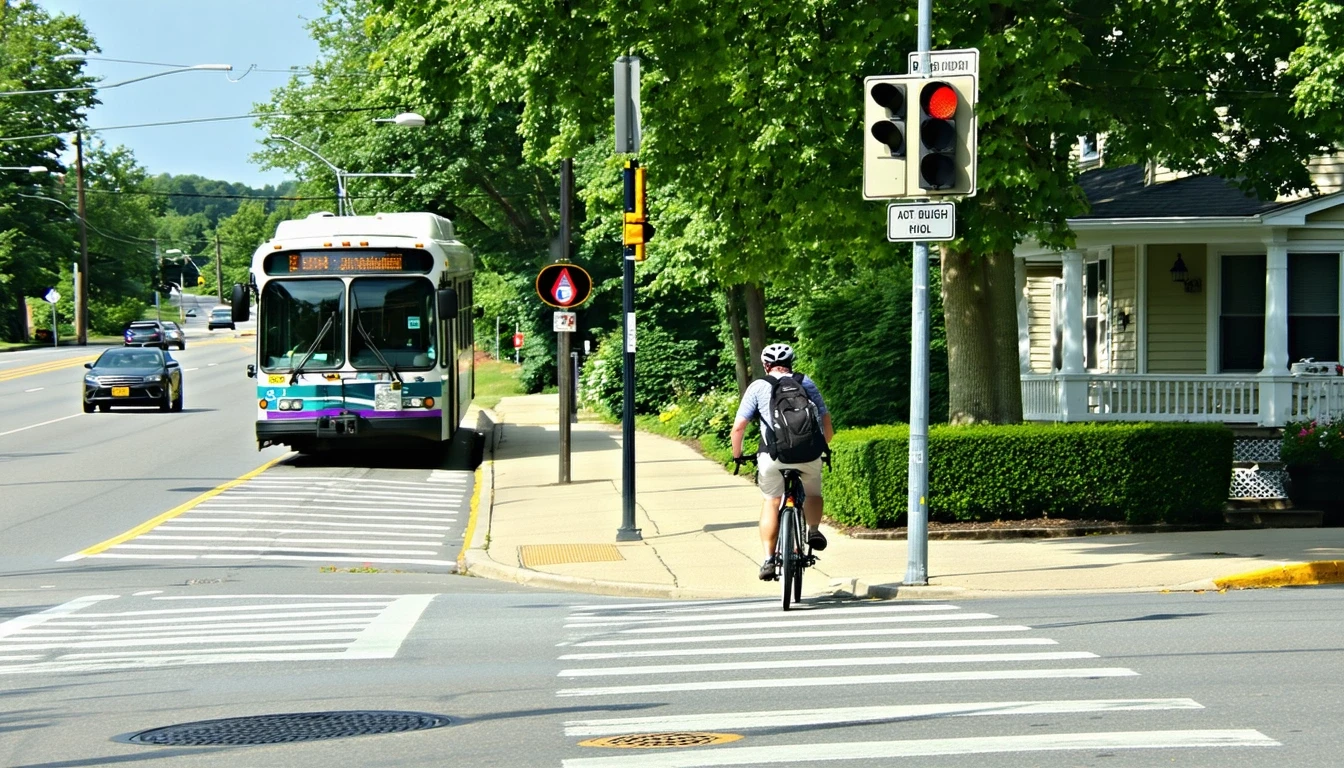
How People Get Around Bristol
Bristol sits in a middle zone—not dense enough to support the kind of transit network that lets you skip car ownership entirely, but not so sprawling that every trip requires driving. The city has bus service, and certain parts of town have sidewalks and pedestrian infrastructure that make short trips on foot realistic. But the overall pattern is car-first. Most households own at least one vehicle, and many own two. The reasons aren’t about preference or lifestyle—they’re structural. Grocery stores, medical offices, schools, and workplaces are spread across a geography that bus routes cover only partially. Even in neighborhoods where walking feels natural, the destinations you need on a weekly basis often sit just outside comfortable walking range.
What newcomers tend to misunderstand is that Bristol’s walkability exists in pockets, not across the whole city. You might live on a street with good sidewalks, mature trees, and a pleasant pedestrian feel, but that doesn’t mean you can walk to a full-service grocery store or a pharmacy. The infrastructure supports the activity, but the land use doesn’t always deliver the destinations. That gap is where cars become necessary, even for people who’d prefer to walk or bike more often.
Public Transit Availability in Bristol
Public transit in Bristol often centers around bus service, typically provided by regional systems such as CTtransit, though coverage and routes vary depending on where you live. Bus stops are present throughout parts of the city, and service connects Bristol to nearby employment centers, including Hartford. For residents whose commutes align with established routes and whose schedules fit published service hours, the bus can be a practical option. It works best for people making single-destination trips during weekday business hours—commuting to a job, attending appointments, or accessing services in denser corridors.
Where transit falls short is in flexibility and coverage. Routes tend to follow main roads and commercial corridors, leaving residential side streets and outer neighborhoods with limited or no direct access. If you live more than a few blocks from a bus line, your first trip is often a walk or a drive to the stop itself. Evening and weekend service is generally lighter, which means anyone working non-traditional hours or planning weekend errands will find transit less useful. There’s no rail service in Bristol, so the system is entirely bus-based, and that shapes what’s possible. Buses can’t offer the frequency or speed of rail, and they’re more vulnerable to traffic and weather delays.
Transit works well enough for specific use cases, but it doesn’t cover the full range of daily mobility needs for most households. It’s a supplemental option, not a primary one, unless your life happens to align closely with where the buses go and when they run.
Driving & Car Dependence Reality
For the majority of Bristol residents, driving isn’t optional—it’s the default. The city’s layout, the spacing of commercial development, and the limited reach of public transit all point in the same direction: you need a car to manage daily life efficiently. Errands that might take fifteen minutes by car can become hour-long undertakings on foot or by bus, especially when you’re chaining stops—dropping off dry cleaning, picking up prescriptions, buying groceries, getting to a kid’s practice. The car gives you control over timing, routing, and capacity in ways transit simply can’t match here.
Parking pressure is generally low in Bristol. Most homes come with driveways or garages, and street parking is widely available in residential areas. Commercial lots are plentiful, and you’re rarely circling for a spot. That ease removes one of the major friction points that makes car ownership stressful in denser cities. The tradeoff is that driving becomes so convenient that the built environment assumes it. Sidewalks might end abruptly, crosswalks might be sparse, and distances between destinations stretch just far enough that walking feels impractical even when it’s technically possible.
Car dependence in Bristol isn’t about sprawl in the classic suburban sense—it’s about a land-use pattern where residential and commercial uses are present but not tightly integrated. You’re close to things, but not quite close enough to skip the car for most trips.
Commuting Patterns & Daily Mobility
Commuting in Bristol tends to follow one of two patterns: people either work locally or regionally, often in Hartford or surrounding towns. For those commuting out of the city, the car is almost always the tool of choice. Routes are direct, parking at the destination is typically available, and the flexibility to leave early or stay late without checking a bus schedule makes driving the practical default. Some commuters do use the bus, particularly those heading to Hartford’s downtown core where parking is expensive and transit drops you closer to office buildings. But that’s a minority pattern, and it works only when the job location and the bus route align.
For people working within Bristol, the commute is usually short in distance but still car-dependent. The jobs might be in office parks, retail centers, or industrial zones that aren’t served directly by bus lines and aren’t within walking distance of most residential neighborhoods. Even a three-mile commute becomes a driving trip when there’s no safe, direct pedestrian or bike route and no bus running at the right time.
Daily mobility isn’t just about the commute to work—it’s about the trips that happen before and after. Dropping kids at school, stopping for coffee, running to the bank, picking up takeout. These trips are short, but they’re scattered, and they don’t line up neatly with transit routes. The car becomes the tool that stitches the day together, and households that try to go car-free or car-light quickly find themselves spending significant time planning around bus schedules or walking longer distances than they anticipated.
Who Transit Works For — and Who It Doesn’t
Transit in Bristol works best for a narrow slice of residents: those who live near a bus line, commute to a destination the bus serves directly, and don’t need to make frequent multi-stop trips. If you’re a single professional renting near downtown, working in Hartford, and comfortable walking to a grocery store even if selection is limited, the bus can cover most of your transportation needs. If you’re a student, a retiree with flexible timing, or someone whose job and home both sit on the same route, transit becomes viable.
It works less well—or not at all—for families with kids, households managing complex schedules, or anyone living outside the core areas where bus service is most frequent. Parents shuttling children to school, daycare, and activities face a coordination problem that transit can’t solve. Shift workers whose hours don’t align with bus schedules are effectively locked out. People with mobility limitations who need door-to-door service will struggle with the walk to and from stops, especially in winter.
Renters in walkable pockets near bus lines have the best shot at reducing car dependence, but even they’ll likely find themselves borrowing or renting a car periodically for errands that transit doesn’t serve. Homeowners, especially those in outer neighborhoods, are almost universally car-dependent. The infrastructure and the land use both assume car access, and trying to live without one in those areas means accepting significant inconvenience.
Transportation Tradeoffs in Bristol
The choice between transit and driving in Bristol isn’t really a choice for most people—it’s a question of how much you’re willing to compromise. Transit offers lower direct costs and eliminates the need to own, insure, and maintain a vehicle, but it trades that savings for time, flexibility, and convenience. A fifteen-minute drive becomes a forty-minute bus trip. A quick errand becomes a planned expedition. A spontaneous change of plans becomes a logistical puzzle.
Driving gives you control. You leave when you want, stop where you need to, and carry as much as your trunk will hold. You’re insulated from weather, from schedule changes, from the need to coordinate with anyone else. The tradeoff is cost—not just gas, but insurance, maintenance, registration, and depreciation—and the assumption of risk. Your mobility depends on the car working, on your ability to drive, and on your ability to keep paying for it.
For households trying to balance these tradeoffs, the most common compromise is a one-car household where one partner uses transit or works from home while the other drives. That works until it doesn’t—until schedules conflict, until someone needs the car for an errand, until a bus runs late and a pickup gets missed. The system has little redundancy, and that fragility shows up in daily stress more than in monthly costs.
FAQs About Transportation in Bristol (2026)
Is public transit usable for daily commuting in Bristol?
It can be, but only if your commute aligns with existing bus routes and schedules. Transit works best for single-destination trips to regional employment centers like Hartford during weekday business hours. If you need flexibility, make multi-stop trips, or work non-traditional hours, transit becomes much harder to rely on.
Do most people in Bristol rely on a car?
Yes. The majority of households own at least one vehicle, and many own two. The city’s layout and the limited reach of public transit make driving the practical default for most errands, commutes, and family logistics.
Which areas of Bristol are easiest to live in without a car?
Neighborhoods near bus lines and within walking distance of grocery stores or other daily needs offer the best chance of reducing car dependence. Even in those areas, though, you’ll likely face tradeoffs in convenience, selection, and time. Fully car-free living is difficult in Bristol for most household types.
How does commuting in Bristol compare to nearby cities?
Bristol offers shorter commutes for people working locally, but less transit coverage than denser cities with rail service. Compared to Hartford, transit options are more limited. Compared to smaller towns with no bus service at all, Bristol provides more flexibility. The city sits in a middle zone—better than fully car-dependent suburbs, but not as transit-rich as urban cores.
Can you bike for transportation in Bristol?
Biking is possible in some areas, particularly where pedestrian infrastructure is strong, but the city lacks a comprehensive bike network. You’ll find some bike-friendly streets and paths, but gaps in connectivity, traffic speeds, and winter weather all limit biking as a primary transportation mode for most residents.
How Transportation Fits Into the Cost of Living in Bristol
Transportation in Bristol isn’t just a line item—it’s a structural factor that shapes where you can live, how you spend your time, and what kinds of tradeoffs you’re forced to make. Choosing a home near a bus line might lower your transportation costs, but if that location also limits your access to affordable groceries or quality schools, the savings get complicated quickly. Choosing to go car-free might work on paper, but if it adds an hour to your daily routine or forces you to skip errands, the real cost shows up in time and stress, not dollars.
The tension in Bristol is that the city offers some of the infrastructure that supports less car-dependent living—sidewalks, bus service, mixed-use areas—but not enough of it, and not connected tightly enough, to make car-free living practical for most households. You end up in a middle ground where you might be able to reduce driving, but rarely eliminate it, and where the cost of maintaining that flexibility often means keeping a car you don’t use every day.
For a fuller picture of how monthly expenses interact and where transportation costs sit relative to housing, utilities, and other needs, the budget breakdown article offers grounded context. The goal here isn’t to optimize transportation in isolation—it’s to understand how mobility shapes your day-to-day life in Bristol, and to make decisions that reflect what you actually need, not what you wish the system offered.
How this article was built: In addition to public economic data, this article incorporates location-based experiential signals derived from anonymized geographic patterns—such as access density, walkability, and land-use mix—to reflect how day-to-day living actually feels in Bristol, CT.