
‘We moved to Bristol for the schools, but stayed for the neighbors.’
That sentiment captures something essential about life in Bristol, CT—a city where the initial draw might be practical, but the emotional payoff often comes from something quieter. Bristol sits in the Hartford metro area with a blend of suburban comfort and established neighborhood character, offering a lifestyle that rewards those who value stability and home ownership over constant stimulation. But it’s not a perfect fit for everyone, and understanding the tradeoffs helps clarify whether this city aligns with what you actually need day-to-day.
The Emotional Landscape of Bristol
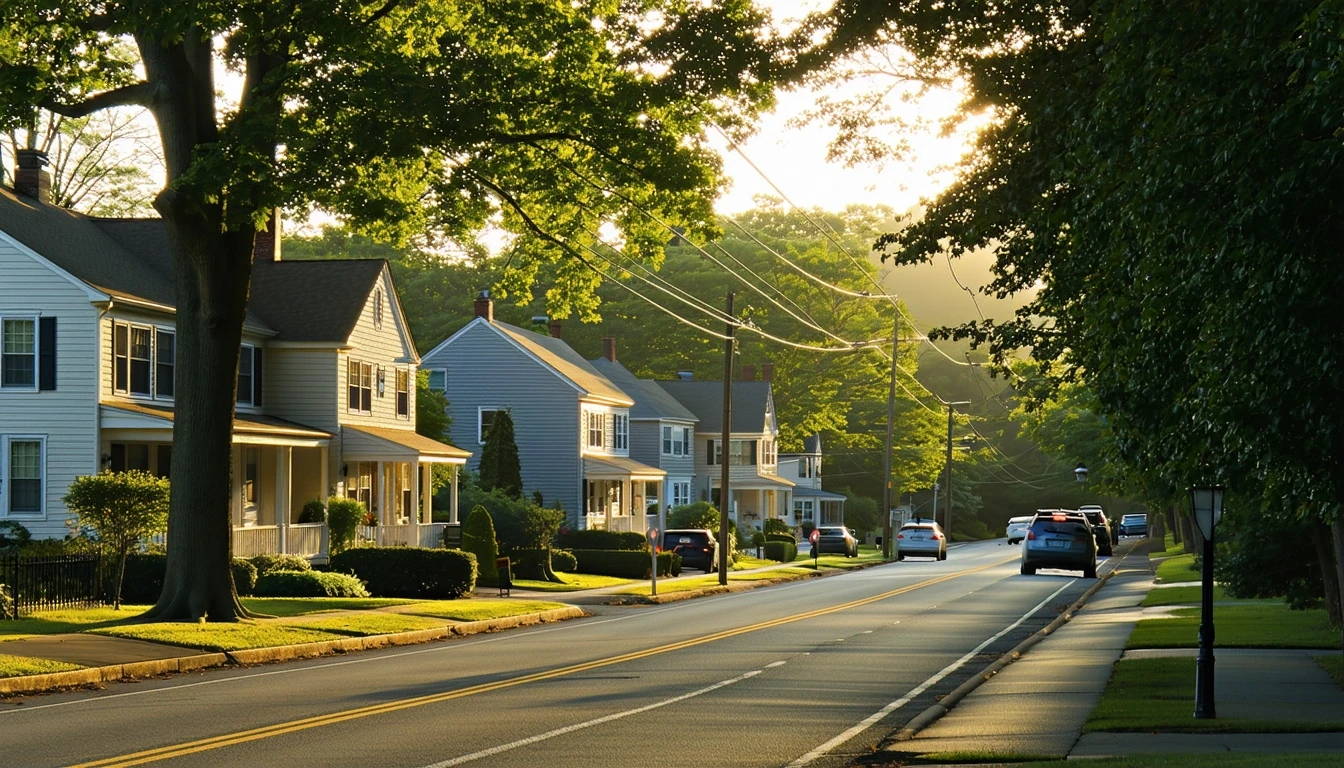
Bristol tends to work best for people who want a place that feels settled without feeling stagnant. The city has walkable pockets where pedestrian infrastructure exceeds what you’d find in many car-oriented suburbs, yet most daily errands still require planning and driving. Food and grocery options exist but don’t cluster densely enough to support spontaneous neighborhood runs. Green space is present—parks are woven into the community at a moderate level, and water features add natural relief—but outdoor access doesn’t dominate the landscape the way it might in more recreation-focused towns.
What tends to feel rewarding here is the sense of rootedness. Homes are relatively affordable compared to coastal Connecticut markets, and neighborhoods mix residential and commercial land use in ways that create familiarity over time. People who thrive in Bristol often describe appreciating predictability: knowing their route to the grocery store, recognizing faces at the local coffee shop, and feeling like they’re building equity in a place that won’t radically transform overnight.
What tends to feel limiting is the lack of spontaneity. If your ideal evening involves walking to three different restaurant options or catching live music without a plan, Bristol will feel thin. The city offers bus service, which provides baseline connectivity, but it doesn’t eliminate the need for a car. For households that rely on transit or prefer not to drive daily, that creates friction. Similarly, families with school-age children may find that educational facilities require longer commutes than expected, as school density falls below thresholds that would support hyper-local access.
The people who feel “at home” here tend to be those who’ve made peace with trading variety for value, and convenience for space. The people who feel restless are often those who moved expecting suburban ease but underestimated how much they’d miss urban texture.
What People Talk About Online
Public discussion around Bristol—on platforms like Reddit, Facebook groups, and neighborhood forums—tends to circle around a few recurring themes: affordability, change, and the tension between small-town identity and regional growth pressure.
One common thread is pride mixed with defensiveness. Long-time residents often express affection for the city’s unpretentious character, describing it as a place where people work hard, own homes, and don’t put on airs. But there’s also sensitivity to how Bristol is perceived by outsiders, particularly in comparison to wealthier Hartford suburbs. You’ll see comments like:
“People sleep on Bristol. It’s not flashy, but it’s real. You can actually afford a house here and still be close to everything.”
“It’s not the kind of place you move to for nightlife, but if you want a yard and neighbors who actually talk to you, it works.”
Another frequent topic is frustration with limited dining and entertainment options. Residents acknowledge that Bristol lacks the restaurant diversity and weekend activity options found in nearby cities, and that gap becomes more noticeable for younger professionals or families with teens. The tone isn’t angry—it’s more resigned, with occasional calls for “something new to open” that rarely seem to gain traction.
There’s also ongoing conversation about traffic and errands. Because food establishments are spread thin and grocery density sits in the medium range, people talk about needing to drive for most tasks, even in neighborhoods that feel walkable. The bus system gets mentioned occasionally, usually in the context of “it’s there if you need it,” rather than as a primary mobility solution.
“You’re going to need a car. The buses run, but they’re not going to get you everywhere you need to go on a schedule that makes sense.”
How Local Coverage Frames the City
Local news and community coverage in Bristol tends to focus on identity preservation, infrastructure updates, and the balancing act between growth and character. The tone is rarely celebratory or alarmist—it’s more observational, reflecting a community that’s seen change before and is cautiously navigating what comes next.
Recurring topic buckets include:
- “Community Debates What Growth Should Look Like”
- “New Retail Arrives as Residents Weigh Convenience vs Quiet”
- “Schools and Budgets Remain Central to Town Conversations”
- “Infrastructure Projects Aim to Improve Daily Commutes”
- “Residents Reflect on What Makes Bristol Feel Like Home”
The framing tends to emphasize continuity over disruption. When new development is covered, the angle is often about whether it fits the existing character rather than whether it’s objectively good or bad. When schools or budgets come up, the discussion centers on resource allocation and long-term planning, not crisis. This reflects a community that sees itself as stable and wants to stay that way, even as the broader region evolves.
What Reviews and Public Perception Reveal
On review platforms and neighborhood apps, Bristol’s public perception splits along expectation lines. People who moved here wanting suburban affordability, space, and a slower pace tend to leave positive feedback. People who moved here expecting walkable convenience, dining variety, or easy transit access tend to express disappointment.
Common praise includes:
- Home values that feel attainable compared to other Hartford-area suburbs
- Neighbors who are friendly and invested in the community
- Access to parks and green space without feeling isolated
- Mixed-use areas that provide some walkability in specific pockets
Common complaints include:
- Limited restaurant and entertainment options, especially for younger residents
- Need to drive for most errands, even in areas that look walkable
- School access that requires more planning than expected
- Healthcare limited to clinics, with hospital services requiring travel
Neighborhood variation exists, though it’s often described in general terms: newer planned areas tend to feel more car-oriented and uniform, while older pockets offer more architectural variety and pedestrian-friendly streets. But even in the more walkable sections, the sparse food density means you’re still driving for weekly groceries or a wider range of dining choices.
The overall sentiment isn’t negative—it’s conditional. Bristol works well if you know what you’re getting. It frustrates when expectations don’t match reality.
How Bristol Compares to Nearby Cities
| Dimension | Bristol, CT | Meriden, CT | New Britain, CT |
|---|---|---|---|
| Overall Vibe | Suburban, stable, family-oriented with walkable pockets | Quieter, more rural feel with less commercial density | More urban texture, denser, more diverse dining and culture |
| Walkability | High pedestrian-to-road ratio in pockets, but car-dependent overall | Lower walkability, more spread out | More walkable core, better for errands on foot |
| Dining & Entertainment | Limited variety, requires driving | Even more limited, very suburban | More diverse, better for spontaneous options |
| Transit Access | Bus service present, not comprehensive | Minimal transit options | Better bus coverage, closer to regional rail |
| Family Infrastructure | Limited school density, requires planning | Similar constraints, spread out | More schools and playgrounds per area |
Bristol sits in the middle of a spectrum. If you’re drawn to Meriden’s quieter, more rural character but want a bit more walkability and commercial access, Bristol offers that. If you’re considering New Britain but want less density and a more suburban feel, Bristol provides that tradeoff. The key is understanding what you’re willing to give up: Bristol offers more space and affordability than New Britain, but less spontaneity and fewer dining options. It offers more walkable pockets and commercial access than Meriden, but still requires a car for most tasks.
None of these cities is objectively better—they serve different needs. Bristol works best for people who want suburban stability with occasional walkable moments, not constant urban stimulation.
What Locals Are Saying
“We looked at a bunch of places in the Hartford area, and Bristol just felt more real. The houses aren’t cookie-cutter, the neighbors actually wave, and we’re not stretching every month to make the mortgage.” — Family of four, moved from out of state
“I thought I’d be fine without a ton of restaurant options, but honestly, it gets old. We end up driving to West Hartford or even Hartford proper when we want something different.” — Young professional, renting
“The parks are nice, and we’re close to some good hiking. It’s not like we’re in the middle of nowhere, but it’s also not crowded. That balance works for us.” — Retiree, longtime resident
“If you have kids, just know that school drop-off might not be a five-minute thing. We have to drive a bit farther than we expected, but the schools themselves are solid.” — Parent of two elementary-aged children
“I work remotely, so the lack of nightlife doesn’t bother me. What I care about is space, quiet, and not paying an arm and a leg. Bristol delivers on that.” — Remote worker, early 30s
“It’s not the most exciting place, but it’s dependable. I know what I’m getting, and that’s worth something.” — Long-time resident, raised family here
“The bus is there, but it’s not really a substitute for a car. If you’re trying to live here without driving, it’s going to be tough.” — Renter, mid-20s
Does Bristol Feel Like a Good Fit?
Bristol’s emotional profile is one of grounded stability. It tends to work for people who prioritize home ownership, space, and community familiarity over spontaneity and variety. It rewards those who are comfortable with car dependency and who don’t need dense school infrastructure or hospital-level healthcare within walking distance. It appeals to families, remote workers, and retirees who want a place that feels settled without feeling stagnant.
It tends to frustrate people who underestimate how much they’ll miss urban texture—walkable errands, diverse dining, easy transit, and the ability to change plans without getting in the car. It’s not a city for those who thrive on constant stimulation or who need hyper-local access to schools and services.
The question isn’t whether Bristol is “happy” in some universal sense—it’s whether the tradeoffs align with what you actually need day-to-day. If you’re drawn to renting vs owning in a market that feels attainable, if you value neighbors over nightlife, and if you’re willing to plan errands rather than walk to them, Bristol offers a lot. If you’re hoping for spontaneity, variety, and transit viability, you’ll likely feel the gaps.
Understanding where money goes and what drives quality of life in Bristol helps clarify whether this city’s particular blend of suburban comfort and car-oriented logistics matches your priorities—or whether you’d be better served looking elsewhere.
How this article was built: In addition to public economic data, this article incorporates location-based experiential signals derived from anonymized geographic patterns—such as access density, walkability, and land-use mix—to reflect how day-to-day living actually feels in Bristol, CT.
The perspectives shown reflect commonly expressed local sentiment and recurring themes in public discussion, rather than individual accounts.