
“I thought I could get by without a car when I first moved here. That lasted about three weeks.” That’s how one East Hartford commuter describes the reality of getting around a city where bus service exists but doesn’t always reach where you need to go, when you need to be there.
Transportation options in East Hartford reflect a city built primarily around driving, with public transit playing a supporting role along key corridors. The layout favors car ownership for most daily routines, though pockets of walkability and bus access create viable alternatives for households positioned near the right routes. Understanding how mobility actually works here—and who it works for—shapes everything from where you choose to live to how much time and money you’ll spend just getting through the week.
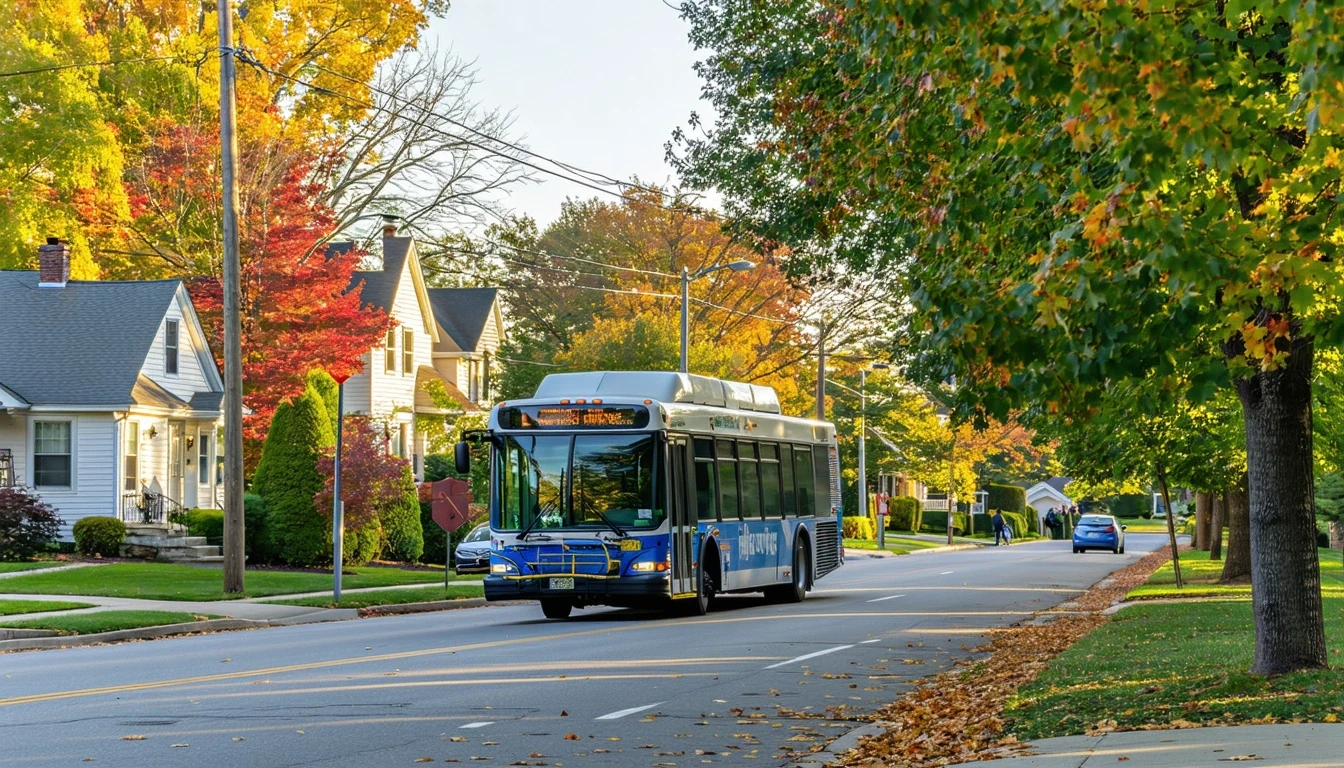
How People Get Around East Hartford
East Hartford operates as a car-first environment with selective transit support. Most residents drive for work, errands, and family logistics. The city’s development pattern—more vertical in core areas, with mixed residential and commercial land use—creates concentrated zones where walking and bus access function reasonably well. Outside those corridors, the infrastructure thins quickly, and car dependence becomes the default.
Pedestrian infrastructure exists in meaningful density in certain pockets, particularly where the ratio of sidewalks and crossings to road network exceeds typical suburban norms. But “walkable pockets” doesn’t mean walkable everywhere. It means that if you live or work in one of those zones, you can handle some daily tasks on foot. If you don’t, you’re planning around a vehicle.
Newcomers often underestimate how much the car shapes daily rhythm here. East Hartford isn’t a place where you can easily skip owning a vehicle and patch together the gaps with rideshares or borrowed rides. The gaps are structural, not occasional.
Public Transit Availability in East Hartford
Public transit in East Hartford centers around bus service. There is no rail presence, so transit access depends entirely on bus routes, schedules, and coverage areas. Bus stops are present throughout the city, but service is corridor-focused rather than comprehensive.
Transit works best along main commercial arteries and in denser residential zones where stops align with employment centers, shopping districts, or regional transfer points. If your home and destination both sit near these corridors, bus service can handle regular commuting or errands. If either end of your trip falls outside the network, transit becomes impractical quickly.
Late hours, weekends, and multi-stop trips expose the limits of bus-only systems. Frequency and span of service matter as much as route presence, and East Hartford’s transit infrastructure reflects the realities of a mid-sized city where ridership doesn’t support the density of service found in larger metros.
For households considering whether transit can replace car ownership, the answer depends almost entirely on where you live and where you need to go. Transit isn’t unusable—it’s conditional.
Driving & Car Dependence Reality
Driving isn’t just common in East Hartford—it’s structurally necessary for most residents. Errands are corridor-clustered, meaning grocery stores, pharmacies, and services concentrate along specific routes rather than distributing evenly across neighborhoods. If you’re not positioned near one of those corridors, every trip requires a car.
Parking is generally accessible and free in most residential and commercial areas, which removes one friction point common in denser cities. But that ease of parking also reflects the car-oriented design: the city assumes you’re driving, and the infrastructure accommodates it.
Commute flexibility matters here. If your job, daycare, and grocery run all sit along a single bus route, you might manage without a car. If any one of those sits outside the network—or if your schedule requires off-peak travel—you’ll spend significant time waiting, transferring, or walking distances that aren’t practical in winter or with children.
Car dependence isn’t about preference in East Hartford. It’s about whether the infrastructure supports your specific household logistics. For most families, multi-income households, or anyone working outside the city core, driving is the only realistic option.
Commuting Patterns & Daily Mobility
Commuting in East Hartford typically involves either a short drive to nearby employment centers or a longer trip to Hartford, other regional hubs, or suburban office parks. The city’s position within the greater Hartford metro means many residents commute outward for work, while others benefit from proximity to local employers.
Single-destination commuters—those traveling to one job at consistent hours—have the easiest time evaluating transit viability. If a bus route connects home and workplace with reasonable frequency, transit becomes a live option. But households managing multiple jobs, school pickups, or irregular schedules face compounding friction. Each additional stop or timing constraint makes car dependence more likely.
Daily mobility isn’t just about commuting. It’s about how you chain errands, handle emergencies, and manage the gaps between where you are and where you need to be. In East Hartford, those gaps are wide enough that most households default to driving, even if they’d prefer not to.
Who Transit Works For — and Who It Doesn’t
Transit works best for renters living near core corridors, single commuters traveling to regional hubs, and households with flexible schedules that accommodate bus timing. If your daily routine aligns with existing routes and you’re positioned within walking distance of a stop, bus service can reduce or eliminate the need for a car.
Transit falls short for families managing school runs, daycare, and activities; suburban residents living outside corridor zones; and anyone whose work requires multi-stop travel or off-peak hours. The infrastructure simply doesn’t extend far enough or run frequently enough to support complex household logistics.
Renters in denser, mixed-use areas have the best shot at car-free or car-light living. Homeowners in peripheral neighborhoods, by contrast, are almost universally car-dependent. The difference isn’t lifestyle preference—it’s geographic fit.
Transportation Tradeoffs in East Hartford
Choosing between transit and driving in East Hartford means weighing predictability, control, flexibility, and exposure.
Transit offers lower direct costs and eliminates parking concerns, but it introduces timing constraints, limits spontaneity, and requires proximity to functional routes. Driving offers control and flexibility but exposes households to fuel volatility, maintenance, insurance, and the ongoing cost of vehicle ownership. With gas prices currently at $2.85 per gallon, fuel costs remain moderate but not negligible for daily commuters.
For households positioned near strong bus corridors, transit reduces transportation exposure and frees up time otherwise spent navigating traffic or parking. For everyone else, driving isn’t a tradeoff—it’s the baseline requirement for participating in daily life.
The real tradeoff isn’t transit versus driving. It’s whether you’re willing to constrain your housing search to the narrow zones where transit actually functions, or whether you’ll accept car dependence in exchange for broader housing options and neighborhood choice.
FAQs About Transportation in East Hartford (2026)
Is public transit usable for daily commuting in East Hartford?
Yes, but only if your home and workplace both sit near bus routes with reasonable frequency. Transit works for single-destination commuters in core corridors. It doesn’t work well for multi-stop trips, irregular schedules, or households living outside the main service areas.
Do most people in East Hartford rely on a car?
Yes. The city’s layout, errands distribution, and transit coverage make car ownership the default for most households. Even residents with access to bus service often keep a vehicle for errands, emergencies, or trips that fall outside transit hours.
Which areas of East Hartford are easiest to live in without a car?
Denser neighborhoods near commercial corridors, where bus stops, grocery stores, and services cluster within walking distance, offer the best chance of car-free living. Peripheral or suburban zones require driving for nearly all daily tasks.
How does commuting in East Hartford compare to nearby cities?
East Hartford’s commute reality depends heavily on whether you’re traveling within the city or to regional employment centers. Proximity to Hartford creates options for some commuters, but the lack of rail service and limited bus coverage means most residents face similar car dependence as other mid-sized Connecticut cities.
Can you get by with one car in a two-income household in East Hartford?
It’s difficult unless both jobs, daycare, and errands align geographically and temporally. Most two-income households find that managing schedules, school, and logistics with one vehicle creates enough friction that a second car becomes necessary.
How Transportation Fits Into the Cost of Living in East Hartford
Transportation isn’t just a line item—it’s a structural factor that shapes where you can live, how much time you spend managing logistics, and how much flexibility you have in your monthly spending. Households that can function without a car avoid insurance, maintenance, and fuel exposure. Those who can’t face ongoing costs that compound over time and limit financial flexibility elsewhere.
The decision to rely on transit or own a vehicle also affects housing choice. Limiting your search to transit-viable zones narrows your options and may push you toward higher-rent corridors. Accepting car dependence opens up more neighborhoods but locks in transportation costs that persist regardless of income changes or economic shifts.
East Hartford’s transportation reality rewards households that can align their logistics with existing bus corridors and penalizes those who can’t. The gap between those two experiences is wide, and it shows up not just in monthly budgets but in daily time, stress, and control over how you move through the city.
How this article was built: In addition to public economic data, this article incorporates location-based experiential signals derived from anonymized geographic patterns—such as access density, walkability, and land-use mix—to reflect how day-to-day living actually feels in East Hartford, CT.