
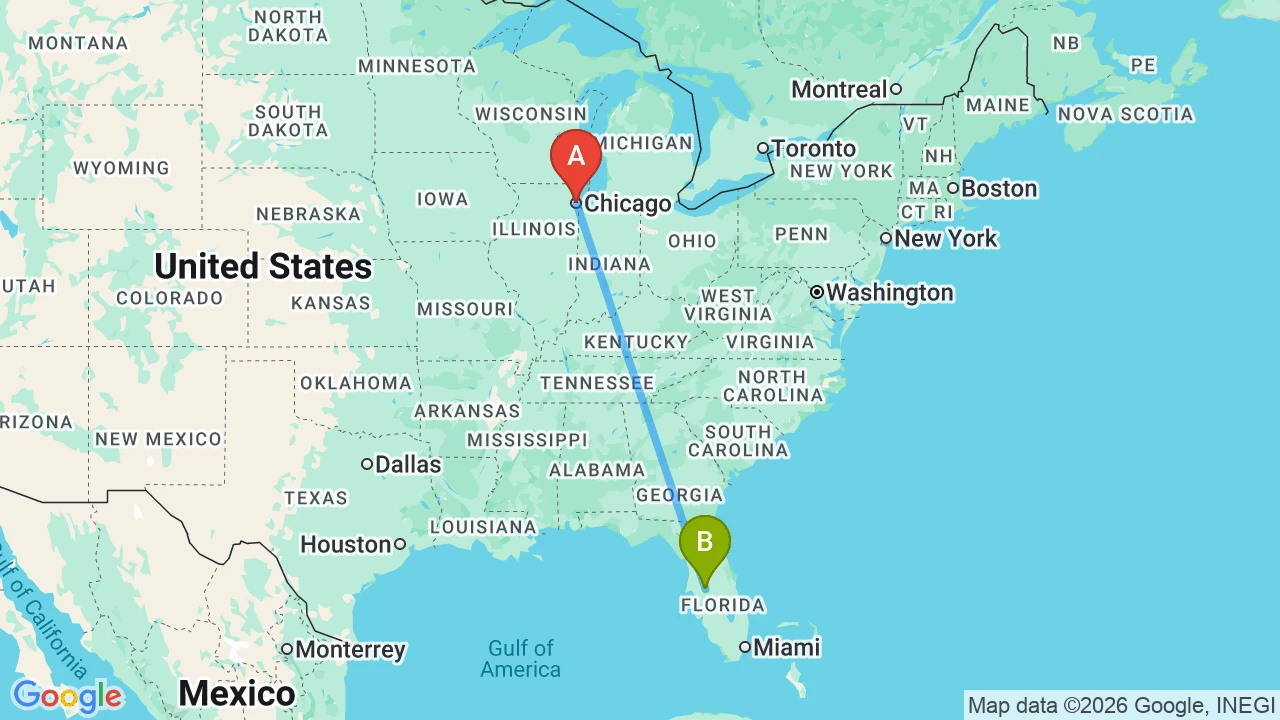
Moving from Chicago, IL to Lakeland, FL: Where Costs and Rhythms Shift
This isn’t a move that saves you money everywhere—it’s a move that redistributes where you feel cost pressure, how you spend your time, and what your day-to-day logistics look like.
Why People Consider This Move
The Chicago-to-Lakeland corridor attracts people chasing lower housing entry costs, milder winters, and a slower pace. But it’s not a simple cost-cutting exercise. What you gain in housing affordability and commute time, you may spend differently on cooling, car dependence, and adapting to a place where transit and walkability look nothing like what you left behind.
Chicago’s median home value sits at $304,500, compared to Lakeland’s $207,800. Rent follows a similar pattern: $1,314 per month in Chicago versus $1,217 per month in Lakeland. But housing is only the entry point. The real shift happens in how you move, how you cool your home, and how much planning your errands require.
This guide explains where cost pressure moves—not whether the move pencils out. It’s written for households trying to understand what changes, what stays expensive, and who tends to feel the transition most.
Where Cost Pressure Redistributes
Chicago’s cost profile is dominated by housing, property taxes, and commute friction. Lakeland’s profile tilts toward cooling, car ownership, and the hidden costs of a place built for driving. Neither city is universally cheaper—they just tax your budget in different categories.
Housing: Lower Entry, Different Obligations
Lakeland’s lower home prices and rents reduce the upfront barrier to entry. A household stretching to afford Chicago’s $304,500 median home may find Lakeland’s $207,800 median more accessible. Renters see a similar dynamic: $1,314 per month in Chicago drops to $1,217 per month in Lakeland.
But ownership in Florida comes with different ongoing obligations. Property insurance tends to be more volatile, and HOA fees in newer developments can be substantial. Chicago’s property tax burden is well-documented, but Lakeland’s insurance and maintenance exposure—especially in a climate with intense heat and occasional storm risk—can surprise movers who assume lower housing costs mean lower total obligations.
Utilities: From Heating to Cooling
Chicago winters demand heating. Lakeland summers demand relentless air conditioning. Electricity rates are lower in Lakeland—15.78¢/kWh versus Chicago’s 18.31¢/kWh—but consumption patterns shift dramatically. In Lakeland, cooling dominates utility bills for much of the year, and households without energy-efficient HVAC systems or good insulation feel the impact quickly.
Natural gas, common in Chicago for heating, is less central in Lakeland’s utility mix. You’ll spend less time worrying about winter heating bills and more time managing summer cooling exposure.
Transportation: Shorter Commutes, Higher Car Dependence
Chicago’s average commute is 34 minutes, and 59.7% of workers face long commutes. Lakeland’s average commute drops to 23 minutes, with only 27.8% experiencing long trips. That’s a meaningful time gain—but it comes with a tradeoff.
Lakeland is built for cars. The city’s pedestrian infrastructure is minimal relative to its road network, and rail transit is absent. Grocery stores, pharmacies, and daily errands are broadly accessible, but you’ll drive to nearly all of them. Chicago’s rail system and walkable pockets let some households reduce car dependence; Lakeland does not.
Gas prices are slightly lower in Lakeland—$2.87 per gallon versus Chicago’s $3.02—but you’ll likely drive more often. Households that relied on Chicago’s CTA or walked to errands will feel this shift in both time and expense.
Income and Employment Context
Chicago’s median household income is $71,673 per year, compared to Lakeland’s $58,290 per year. That’s a significant gap, and it matters when evaluating whether lower housing costs offset other changes. Lakeland’s unemployment rate is 4.2%, slightly better than Chicago’s 5.4%, but the job market is smaller and less diverse. Remote workers and retirees often navigate this move more smoothly than workers dependent on local employment.
Housing and Neighborhood Patterns
Chicago’s housing stock is older, denser, and more vertically mixed. Lakeland’s is newer, lower-rise, and more suburban in form. Both cities show mixed building heights and land-use patterns, but the texture of daily life differs sharply.
In Chicago, walkable pockets and rail access create neighborhoods where car ownership is optional for some households. Lakeland’s neighborhoods are car-dependent by design. Even in areas with good grocery and food access, you’ll drive to reach them. Parking is easier, traffic is lighter, but the trade is less spontaneity and more planning.
Renters in Lakeland may find more single-family rental options and newer apartment complexes, but rental markets in Florida can be less stable than in Chicago, with faster rent increases during high-demand periods. Owners gain lower entry costs but should budget for insurance volatility and the reality that Florida’s housing market can swing quickly.
Lifestyle and Daily Rhythms
Chicago’s rhythm is faster, denser, and more transit-oriented. Lakeland’s is slower, quieter, and car-centric. The shift isn’t just about pace—it’s about how you structure your day.
Commute and Mobility
Lakeland’s shorter average commute—23 minutes versus Chicago’s 34 minutes—gives you time back, but you’ll spend that time differently. Chicago’s rail system and bike infrastructure let some workers avoid driving entirely. Lakeland offers no rail service, and cycling infrastructure, while present, is limited. Remote work is less common in Lakeland (7.0%) than in Chicago (14.6%), so most workers are commuting by car.
Errands and Daily Access
Both cities offer strong access to groceries and food establishments. Chicago’s density means many residents can walk to a corner store or take a short transit trip to a supermarket. Lakeland’s grocery access is broadly distributed, but you’ll drive to nearly every trip. The convenience is there—the spontaneity is not.
Climate and Seasonal Exposure
Chicago’s winters are cold, with extended heating seasons and occasional extreme cold snaps. Lakeland’s winters are mild, with rare freezing nights. But Lakeland’s summers are long, hot, and humid, with extended cooling seasons that dominate household energy use. If you’re sensitive to heat or rely on outdoor activity for recreation, the shift from Chicago’s four-season climate to Lakeland’s near-year-round warmth will reshape your routines.
Outdoor and Green Space
Both cities offer strong park access. Chicago’s lakefront and integrated park system provide dense green space and water access. Lakeland’s parks and water features are plentiful, but the experience is less urban and more suburban. You’ll drive to most parks, and the outdoor season is shaped more by heat and humidity than by cold.
Relocation Logistics and Practical Friction
Moving from Chicago to Lakeland involves more than loading a truck. It’s a shift in systems, expectations, and daily friction points.
What Surprises Movers Most
Households moving from Chicago often underestimate how much they’ll drive in Lakeland. Even with shorter commutes, the lack of transit and walkable errands means more trips, more gas, and more time in the car. Insurance costs—both auto and homeowners—can also surprise movers unfamiliar with Florida’s market.
Cooling costs catch people off guard. Chicago’s summers are warm, but Lakeland’s are relentless. If your new home lacks efficient HVAC or good insulation, summer utility bills can rival or exceed what you paid for winter heating in Chicago.
Timing and Transition
Lakeland’s rental and housing markets can move quickly during peak seasons, and competition for well-located homes can be intense despite lower overall prices. Visiting in person before committing helps, especially for understanding neighborhood form and commute realities that don’t show up on a map.
Remote workers and retirees often adapt most smoothly, as they’re less dependent on Lakeland’s smaller job market and can prioritize housing and lifestyle fit. Families with school-age children should research school access and extracurricular options early, as the infrastructure is present but less dense than in Chicago.
How Place Structure Shapes Daily Life
Chicago’s pedestrian infrastructure and rail service create neighborhoods where daily errands, commuting, and socializing can happen without a car. Lakeland’s structure is fundamentally different. Groceries, pharmacies, and food options are broadly accessible, but you’ll drive to nearly all of them. The city’s bike infrastructure is present but limited, and the pedestrian-to-road ratio is low. This isn’t a walkable city with pockets of car dependence—it’s a car-dependent city with some walkable amenities.
For households used to Chicago’s spontaneity—grabbing dinner on foot, hopping on the L, biking to a park—Lakeland requires more planning. Errands become car trips, and the rhythm of your day shifts from “I’ll walk there” to “I’ll drive there.” The trade is shorter commutes, easier parking, and less congestion, but the cost is a loss of transit optionality and pedestrian convenience.
Frequently Asked Questions
- Is Lakeland, FL more or less expensive than Chicago, IL?
- Lakeland offers lower housing entry costs—both for buyers and renters—but the savings don’t distribute evenly. You’ll spend less on housing upfront and enjoy shorter commutes, but cooling costs, car dependence, and insurance exposure increase. Chicago’s cost pressure concentrates in housing, taxes, and commute time; Lakeland’s spreads across utilities, transportation, and ongoing ownership obligations. Remote workers and retirees often feel the benefit most, while families dependent on local wages may find the income gap (Chicago’s median household income is $71,673 versus Lakeland’s $58,290) offsets housing savings.
- How do housing markets differ between Chicago and Lakeland?
- Chicago’s median home value ($304,500) and rent ($1,314/month) are higher, but the market is more stable and offers more neighborhood diversity. Lakeland’s lower median home value ($207,800) and rent ($1,217/month) reduce entry barriers, but Florida’s insurance volatility and faster rent increases during demand spikes create different risks. Chicago rewards long-term owners with stability; Lakeland rewards buyers who can navigate a more fluid market.
- What will daily life feel like after moving from Chicago to Lakeland?
- Slower, quieter, and more car-dependent. Your commute will likely shorten—23 minutes in Lakeland versus 34 minutes in Chicago—but you’ll drive more often for errands, socializing, and recreation. Chicago’s walkable pockets and rail system let some households minimize car use; Lakeland does not. The climate shift is equally significant: you’ll trade Chicago’s cold winters and heating costs for Lakeland’s long, hot summers and relentless cooling demands.
- When does this move tend to feel easiest or hardest?
- The move feels easiest for remote workers, retirees, and households prioritizing lower housing costs and shorter commutes. It feels hardest for households dependent on local employment (due to Lakeland’s smaller job market and lower median income), families who relied on Chicago’s transit and walkability, and anyone sensitive to heat or humidity. The adjustment period often centers on adapting to car dependence and managing summer cooling costs.
- What are the most common challenges when moving from Chicago to Lakeland?
- Underestimating car dependence, cooling costs, and insurance volatility. Many movers also struggle with the loss of transit optionality and walkable errands. Lakeland’s slower pace and suburban form appeal to some but feel isolating to others, especially those used to Chicago’s density and spontaneity. Families may also find the school and extracurricular infrastructure less dense, requiring more planning and driving.
- Who does this move work best for—and who might struggle?
- This move works best for remote workers, retirees, and households prioritizing lower housing costs, shorter commutes, and milder winters. It’s also a good fit for people who prefer suburban rhythms and don’t mind car dependence. It’s harder for households reliant on local wages (due to the income gap), transit-dependent workers, and anyone who values walkability, rail access, or dense urban amenities. Heat-sensitive individuals may also struggle with Lakeland’s extended cooling season.
Final Thoughts
Moving from Chicago to Lakeland isn’t about cutting costs across the board—it’s about redistributing where you feel pressure and how you spend your time. You’ll likely pay less for housing and spend less time commuting, but you’ll drive more, cool more, and navigate a market with different risks and rhythms.
This move rewards households who can work remotely, who prioritize homeownership entry, and who prefer a slower, car-centric lifestyle. It challenges households dependent on local wages, transit access, and walkable neighborhoods. The climate shift—from Chicago’s cold winters to Lakeland’s long, hot summers—will reshape your utility bills, outdoor routines, and seasonal rhythms.
Before you commit, visit Lakeland in summer to understand the heat and humidity. Drive the commute you’d take daily. Walk (or try to walk) the neighborhood you’re considering. And budget for the categories that rise—cooling, car expenses, insurance—not just the ones that fall.
For more city-specific cost breakdowns, neighborhood profiles, and decision tools, explore the Chicago and Lakeland hubs on IndexYard.
How this article was built: In addition to public economic data, this article incorporates location-based experiential signals derived from anonymized geographic patterns—such as access density, walkability, and land-use mix—to reflect how day-to-day living actually feels in Chicago, IL and Lakeland, FL.