
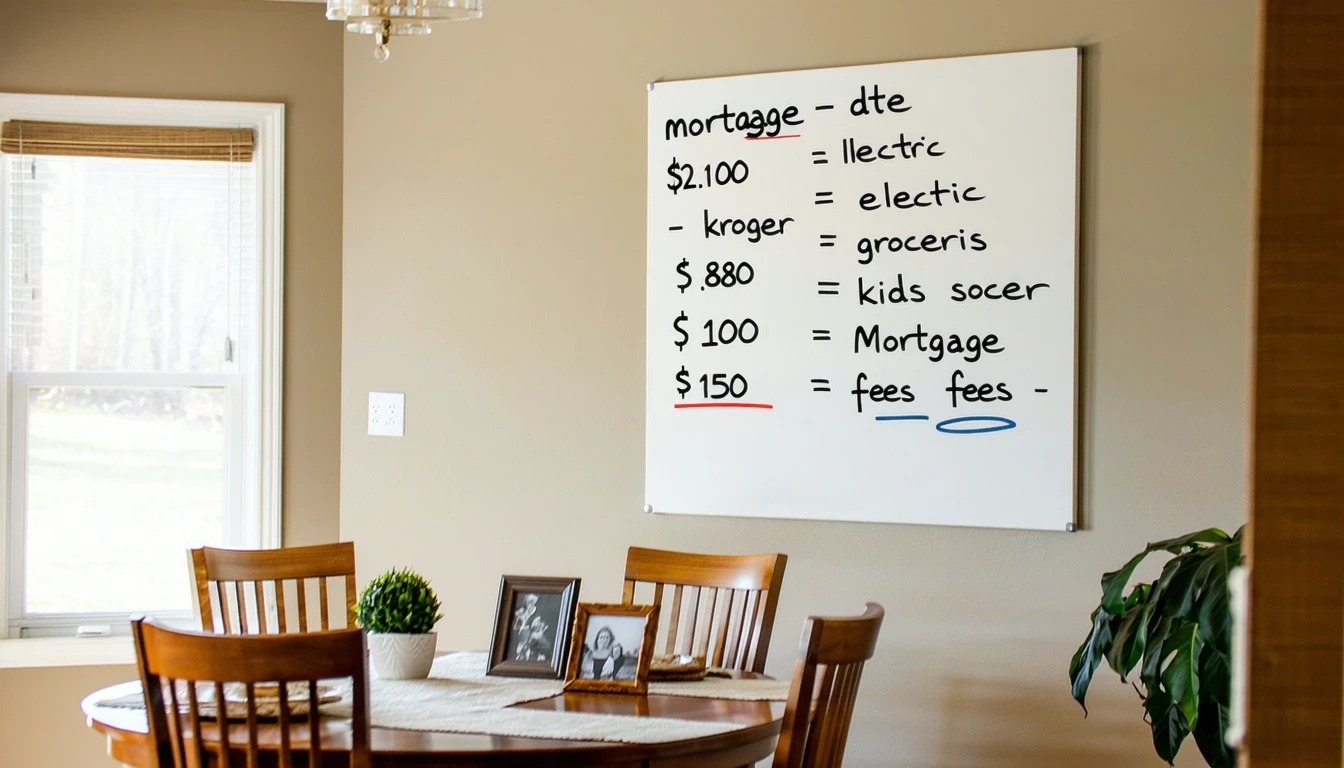
Budgeting Smarter in Bloomfield Township
Understanding the monthly budget in Bloomfield Township starts with recognizing what kind of place this is: a high-income suburban community northwest of Detroit where the median home value sits at $933,000 and the median household income reaches $200,054 per year. Those figures tell you immediately that ownership dominates the housing landscape, and the budget pressures here aren’t about scraping by—they’re about managing substantial fixed costs, navigating a car-dependent errands landscape punctuated by walkable pockets, and absorbing the friction costs that come with maintaining property in a cold-weather climate.
What newcomers typically underestimate is how costs stack after the housing decision is made. The mortgage or rent is visible. What’s less obvious is the compound effect of property taxes on a near-million-dollar home, the seasonal swings in heating bills during Michigan’s long winters, the transportation footprint required to handle groceries and errands in a corridor-clustered retail environment, and the steady drip of homeowner association dues, lawn care, snow removal, and routine maintenance. Bloomfield Township rewards planning and absorbs inefficiency poorly. If you arrive without a clear picture of how these categories interact, the budget can feel surprisingly tight even at high income levels.
A Simple Budget Map: How Costs Behave by Household Type
The table below illustrates how cost behavior and exposure differ across three household types. It does not estimate what each household pays—it describes whether a category is stable or volatile, fixed or flexible, and what drives variance. Where exact category totals aren’t available in the data, the table describes budget behavior directionally.
| Category | Jasmine (single renter) | Sam & Elena (couple) | Ortiz family (2 kids, owners) |
|---|---|---|---|
| Housing (Rent or Mortgage) | Exposure-driven; limited rental inventory means fewer options and less negotiating room | Stable if renting; mortgage fixed but property tax and insurance volatile if owning | Fixed mortgage but size-sensitive property tax and insurance; maintenance episodic |
| Utilities | Seasonal; heating dominates winter months; electricity at 20.46¢/kWh adds moderate summer cooling load | Efficiency-sensitive; natural gas at $11.89/MCF drives winter bills in larger units | Size-sensitive and seasonal; larger homes amplify heating and cooling exposure |
| Food (Groceries + Eating Out) | Flexible; solo shopping reduces waste but increases per-unit costs | Shared; planning reduces per-person cost; corridor-clustered stores require intentional trips | Admin-heavy; meal planning essential; corridor retail means fewer spontaneous top-ups |
| Transportation | Commute-dependent; bus service available but car often needed for errands; gas at $2.99/gal | Commute-dependent; two-car households common; walkable pockets reduce some short trips | Commute-dependent; school runs and activity shuttles add mileage; notable bike infrastructure helps older kids |
| Fees / Friction Costs | Minimal if renting; trash and water often bundled | Moderate; HOA dues and lawn care if owning | Admin-heavy; HOA, lawn, snow removal, seasonal HVAC servicing, water/sewer billed separately |
| Discretionary (life + surprises) | Flexible; integrated parks and water features offer budget-neutral recreation | Flexible; outdoor access high; routine healthcare local (clinics present, no hospital) | Discretionary-compressed; family activities, sports, and specialized healthcare travel required |
| What Changes This Most | Rental availability and commute distance | Home size and dual-commute footprint | Property tax, maintenance cycles, and school/activity logistics |
Methodology: This guide uses only city-level figures provided in the IndexYard data feed for 2026. Where exact category totals aren’t provided, categories are described directionally to show budget behavior rather than a receipt-accurate total.
The Real Cost Drivers in Bloomfield Township
In Bloomfield Township, the budget stress point is rarely one big bill—it’s the stack of small “friction” costs that show up after move-in. Housing anchors everything: the $933,000 median home value translates into substantial monthly mortgage payments, but more importantly, it drives property tax bills that reset annually and homeowner’s insurance premiums that reflect replacement cost, not purchase price. Renters face a different pressure—limited inventory means fewer choices and less leverage, even though rent itself may be stable once secured.
Utilities layer seasonal volatility onto that fixed base. Michigan winters are long and cold, and natural gas at $11.89 per thousand cubic feet becomes the dominant heating expense from November through March. Electricity at 20.46¢ per kilowatt-hour is moderate but adds up during summer cooling months, especially in larger homes. For illustrative context, a household using 1,000 kWh per month would see roughly $205 in electricity charges before fees. Heating a typical home during winter months using 1 MCF of natural gas per month would run approximately $12 per month in gas costs alone, though actual usage varies widely by insulation, thermostat settings, and home size.
Transportation costs in Bloomfield Township are shaped by the corridor-clustered retail environment. Groceries, pharmacies, and everyday errands concentrate along commercial strips rather than within walking distance of most residential streets. While walkable pockets exist and bike infrastructure is notably present, the day-to-day reality for most households involves driving to handle food shopping, medical appointments, and household needs. Gas at $2.99 per gallon is manageable, but the mileage adds up. For illustrative context, a 25-mile round-trip commute in a vehicle averaging 25 miles per gallon, driven five days a week, would consume roughly 20 gallons per month, or about $60 in fuel costs before tolls or parking. Families with school runs, activity shuttles, and dual commutes often find transportation becomes a secondary fixed cost rather than a discretionary one.
Common friction costs in Bloomfield Township include:
- HOA or association dues: Many neighborhoods carry monthly fees that cover common area maintenance, landscaping, and sometimes snow removal or trash service.
- Trash and recycling: Billing structures vary; some areas bundle service into taxes, others bill separately per household.
- Water and sewer: Typically billed separately from rent or mortgage, with seasonal variation depending on lawn irrigation and household size.
- Parking and permits: Generally minimal in suburban areas, but some multifamily complexes charge separately.
- Seasonal upkeep: HVAC servicing before winter and summer, lawn care during growing months, snow removal contracts, and storm prep (gutter cleaning, window sealing) are routine in Michigan climates.
In Bloomfield Township, the budget stress point is rarely one big bill—it’s the stack of small “friction” costs that show up after move-in.
How Households Keep the Budget Under Control (Without Living Like a Monk)
Households that manage budgets successfully in Bloomfield Township focus on controlling exposure and timing rather than chasing savings percentages. The highest-leverage move is aligning housing size with actual need—buying or renting only the square footage you’ll use reduces not just the mortgage or rent, but also property taxes, insurance, heating and cooling loads, and maintenance cycles. Families often face pressure to oversize, but every extra bedroom and bathroom adds ongoing cost that doesn’t reset when kids leave for college or activities shift.
Utility management in a cold-weather climate is about reducing volatility, not eliminating bills. Programmable thermostats, weatherstripping, and seasonal HVAC tune-ups lower peak-month exposure without requiring lifestyle compromise. Shifting high-energy tasks—laundry, dishwashing—to off-peak hours where time-of-use rates apply can smooth monthly bills. The goal isn’t to avoid heating the house; it’s to avoid heating it inefficiently or during the hours when rates spike.
Transportation costs respond to trip consolidation and timing. Households that batch errands into fewer weekly trips rather than making daily runs to corridor retail centers reduce fuel consumption and vehicle wear without feeling deprived. Families with older children benefit from Bloomfield Township’s notable bike infrastructure, which allows some school and activity trips to shift off the car entirely during warmer months. Carpooling for recurring activities—sports practices, music lessons—splits fuel costs and reduces the per-family transportation footprint. The integrated park network and water features provide budget-neutral recreation options that don’t require driving to entertainment venues.
Practical tactics households use to manage monthly budgets:
- Right-size housing to actual occupancy needs, not aspirational or resale-driven square footage
- Schedule HVAC servicing before peak heating and cooling seasons to maintain efficiency
- Batch errands into planned weekly trips to reduce fuel use and spontaneous spending
- Use programmable thermostats to lower heating and cooling during unoccupied hours
- Leverage bike infrastructure and walkable pockets for short trips when weather permits
- Coordinate carpools for recurring kid activities to split transportation costs
- Take advantage of local parks and water features for recreation instead of paid venues
- Plan grocery shopping around weekly sales and avoid top-up trips to corridor stores
FAQs About Monthly Budgets in Bloomfield Township (2026)
What’s the biggest budget surprise for people moving to Bloomfield Township?
The compound effect of property taxes and maintenance on high-value homes. A $933,000 median home value means property tax bills and insurance premiums that feel disproportionate to mortgage payments, and seasonal upkeep—snow removal, HVAC servicing, lawn care—adds friction costs that aren’t obvious until after closing.
How much does the corridor-clustered retail layout affect monthly spending in Bloomfield Township?
It increases transportation costs and reduces spontaneous top-up shopping, which can either help or hurt depending on household discipline. Families that plan weekly grocery runs and batch errands save fuel and avoid impulse purchases; households that make frequent short trips pay more in gas and time, even with prices at $2.99 per gallon.
Is Bloomfield Township affordable for renters in 2026?
Rental inventory is limited, which reduces options and negotiating leverage. The absence of median rent data in the feed suggests a market dominated by ownership, so renters should expect fewer choices and higher competition for available units, even if rent itself stabilizes once a lease is signed.
How do utility bills behave across the year in Bloomfield Township?
Winter heating dominates, driven by natural gas at $11.89/MCF during Michigan’s long cold season. Electricity at 20.46¢/kWh adds moderate summer cooling costs, but the seasonal swing is asymmetric—expect higher bills from November through March, with some relief in spring and fall when neither heating nor cooling is needed.
What’s the best way to reduce transportation costs without giving up flexibility in Bloomfield Township?
Consolidate errands into fewer trips, use walkable pockets and bike infrastructure for short distances when possible, and coordinate carpools for recurring family activities. The bus service provides baseline transit access, but most households find a car necessary for groceries and medical appointments given the corridor-clustered retail layout.
Planning Your Next Step
Bloomfield Township’s monthly budget is shaped by three dominant forces: high housing values that drive property taxes and maintenance exposure, seasonal utility swings rooted in Michigan’s cold winters, and a transportation footprint amplified by corridor-clustered errands. Households that succeed here plan around those realities rather than fighting them—right-sizing housing, managing heating efficiency, and batching trips to reduce fuel and time waste.
If you’re evaluating whether Bloomfield Township fits your budget, start by understanding housing tradeoffs—ownership dominates, and the sticker price is only part of the cost structure. Then dig into how seasonal utility behavior affects your monthly cash flow, and map your errands pattern against the corridor retail layout to estimate your real transportation needs. Finally, price in the friction costs—HOA dues, lawn care, snow removal, water and sewer—that don’t appear on the mortgage statement but show up every month regardless.
The households that thrive in Bloomfield Township aren’t necessarily the highest earners—they’re the ones who understand how costs stack, plan around volatility, and build budgets that absorb Michigan winters and suburban logistics without constant adjustment. If that describes your approach, the high income levels and integrated parks make this a place where quality of life and financial control can coexist. If you prefer walkable density and minimal car dependence, the corridor-clustered errands and limited rental inventory may create friction that even a strong income can’t fully smooth out.
How this article was built: In addition to public economic data, this article incorporates location-based experiential signals derived from anonymized geographic patterns—such as access density, walkability, and land-use mix—to reflect how day-to-day living actually feels in Bloomfield Township, MI.