
Maya and her partner had been saving for two years before they moved to Bloomfield Township. They’d run the numbers, compared salaries, even mapped out a five-year plan. But three months in, they found themselves surprised—not by any single bill, but by how differently their income felt compared to where they’d lived before. The same paycheck that had once provided breathing room now required more deliberate choices. They weren’t struggling, but comfort had become more conditional.
Understanding whether your income fits Bloomfield Township isn’t about hitting a magic number. It’s about knowing which tradeoffs you’ll face, how seasonal swings will test your flexibility, and whether your household structure aligns with how the town actually works day to day.
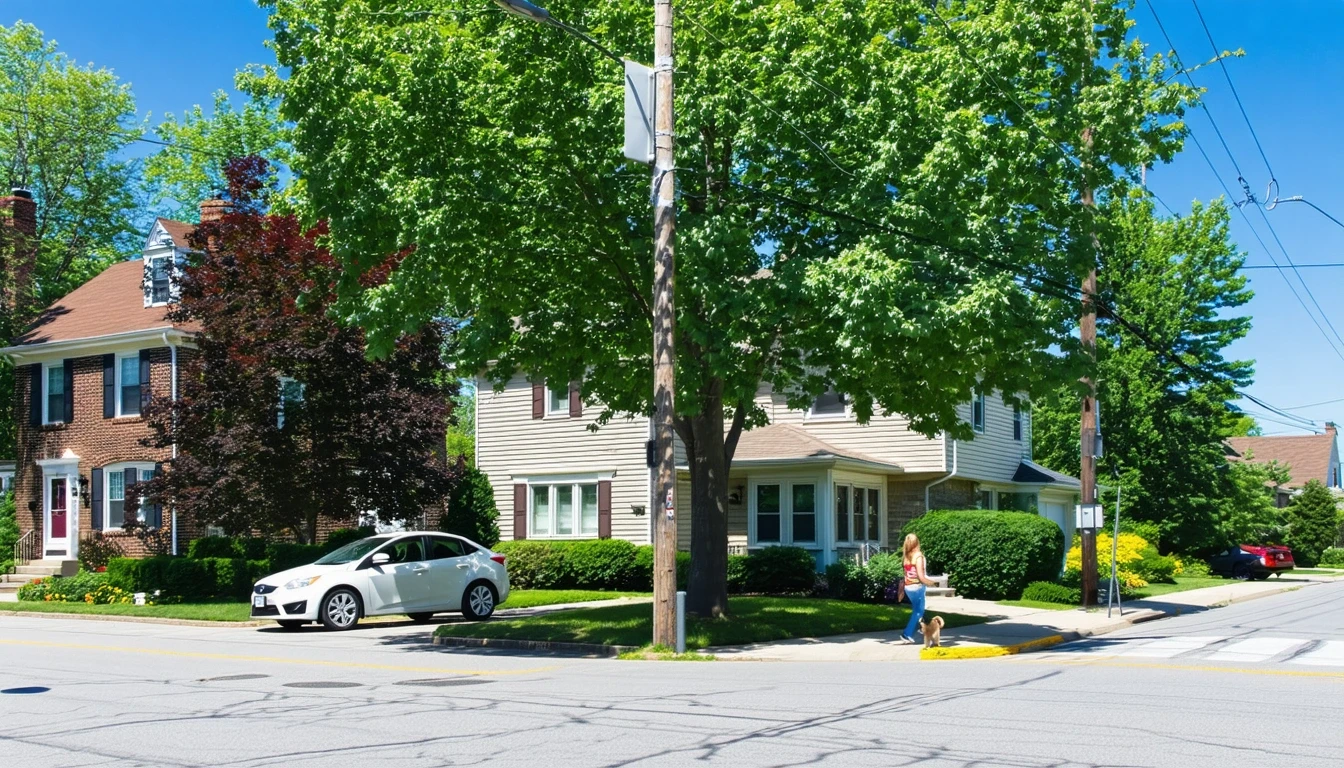
What “Living Comfortably” Means in Bloomfield Township
Comfort here isn’t defined by luxury—it’s defined by choice. It means being able to absorb a higher-than-expected heating bill in January without rearranging other spending. It means deciding where to live based on preference, not just affordability. It means your commute is a matter of time, not whether you can afford the gas. And it means that when something breaks—a car repair, a medical co-pay, an appliance—you can handle it without cascading stress.
Bloomfield Township sits in the Detroit metro, where the median household income is $200,054 per year and the median home value is $933,000. Those figures reflect a community where housing costs anchor everything else. Comfort here requires enough income to make housing a manageable share of your budget, not the dominant one. It also requires enough margin to handle the seasonal utility swings that come with cold winters and the logistics of getting around a place where, despite walkable pockets and notable cycling infrastructure, most households still depend on a car for reliable access to groceries, schools, and healthcare.
Expectations matter as much as income. If you’re used to urban density where errands happen on foot and transit fills the gaps, Bloomfield Township will feel different. Food and grocery options are corridor-clustered rather than broadly accessible, meaning some trips require planning. If you expect suburban ease with low costs, you’ll find the former but not the latter. Comfort here is less about income level in isolation and more about whether your earnings give you enough slack to navigate the town’s structure without constant calculation.
Where Income Pressure Shows Up First
Housing dominates the financial landscape. With a median home value of $933,000, ownership requires either substantial savings, high income, or both. Even households well above the metro median often find that housing pressure limits flexibility elsewhere. Renters face a different squeeze: rental inventory is limited, and competition keeps prices elevated even when ownership feels out of reach.
Utilities add seasonal volatility. Electricity costs 20.46¢/kWh, and natural gas runs $11.89/MCF. During long heating seasons, natural gas bills climb as temperatures drop—and Bloomfield Township sees extended cold stretches where indoor climate control isn’t optional. Households that budget tightly around average monthly costs often feel the pinch in winter, when heating demand spikes and bills follow. Cooling costs matter too, though heating exposure tends to dominate annual volatility.
Transportation costs layer on top. Gas prices sit at $2.99/gal, and while that’s manageable per gallon, the need for a car—and often two in multi-adult households—adds up. Insurance, maintenance, registration, and fuel combine into a fixed cost structure that doesn’t flex with income. The town’s mobility texture includes walkable pockets and bus service, but daily errands and school runs still pull most households toward car dependency. Families especially feel this: school density is low relative to playgrounds, meaning parents often drive farther for education than for recreation.
Healthcare access requires planning. Clinics are present locally, but hospital care means traveling outside the township. For households managing chronic conditions or raising young children, that distance adds time and logistical friction. It’s not a crisis, but it’s a factor that households with tighter schedules or health needs feel more acutely.
How the Same Income Feels Different by Household
Income pressure isn’t uniform—it shifts depending on household composition and how daily logistics unfold.
Single adults often find Bloomfield Township more navigable than families do. One income supports one person, and housing costs—while high—don’t compound with childcare, school commutes, or larger space needs. Walkable pockets and bus service provide some flexibility for errands, though a car remains necessary for reliable grocery access and healthcare. The unemployment rate of 3.6% signals a stable local economy, which helps with job security, but housing still claims a large share of income. Comfort depends on whether that share leaves enough room for savings, occasional travel, and the ability to weather an unexpected expense without stress.
Couples without children benefit from dual income potential, which eases the housing burden and creates more margin for seasonal utility swings. Two adults can share transportation costs, split errands, and absorb volatility more easily than a single earner. The town’s structure—corridor-clustered food access, integrated green space, mixed building heights—suits couples who value outdoor access and don’t need proximity to schools. Comfort here often hinges on whether both partners are working and whether their combined income provides enough flexibility to enjoy the parks, trails, and water features that define much of the township’s appeal.
Families face the most complex pressure. School density is low, meaning parents often drive farther than expected to access preferred schools or programs. Playground density is moderate, so recreational infrastructure exists, but education requires more intentional planning. Grocery runs, clinic visits, and school drop-offs all pull toward car dependency, even in areas with pedestrian infrastructure. Two-car households become the norm, doubling transportation costs. Childcare, extracurriculars, and healthcare co-pays layer on top of housing and utilities. Families at the metro median income often find themselves managing tradeoffs carefully: choosing between home size and location, between saving and spending on activities, between time and money when it comes to commuting.
Households at similar income levels often experience very different pressure depending on whether they have children, how many cars they need, and whether their work allows flexibility in commute timing or remote days. Income alone doesn’t determine comfort—structure does.
The Comfort Threshold (Qualitative)
There’s a point where income stops dictating every decision and starts enabling choice. You cross that threshold when housing becomes a manageable share rather than the dominant one. When a high heating bill in February is annoying but not destabilizing. When you can choose a home based on neighborhood fit, not just monthly payment. When car repairs, medical expenses, or an appliance replacement don’t require rearranging other spending.
Comfort in Bloomfield Township means having enough margin to absorb the town’s cost structure without constant recalibration. It means being able to take advantage of the integrated green space—parks, trails, water features—without feeling like discretionary spending is off-limits. It means your kids can participate in activities without you running monthly calculations on whether it’s affordable. It means you can save, not just survive.
That threshold isn’t a number—it’s a feeling. It’s the difference between managing costs and being managed by them. And it varies by household. A single adult might reach it at a lower income than a family of four, simply because the cost structure is less complex. A couple with no childcare expenses and two incomes might feel comfortable at a level where a single parent would feel stretched. The threshold isn’t about what you earn in absolute terms; it’s about whether what you earn gives you enough slack to live without constant financial vigilance.
Why Online Cost Calculators Get Bloomfield Township Wrong
Most cost-of-living calculators reduce Bloomfield Township to a set of averages: median rent, typical utilities, standard transportation. They spit out a total and call it done. But totals don’t explain why people feel surprised after moving.
Calculators miss the structure. They don’t tell you that food and grocery access is corridor-clustered, meaning some errands require a car even in walkable pockets. They don’t capture the seasonal swing in heating costs or the fact that school density is low, adding commute time and logistics for families. They don’t account for the fact that healthcare access requires leaving the township for hospital care, or that two-car households are the norm rather than the exception.
They also don’t differentiate by household type. A single adult and a family of four get the same output, even though their cost structures and logistical demands are entirely different. Calculators assume you’ll spend the average on everything, but real households don’t work that way. Some people drive more, some less. Some prioritize space, others location. Some have health expenses that require frequent travel; others don’t.
The biggest gap is qualitative. Calculators can’t tell you whether you’ll feel comfortable, whether your income will provide the flexibility you expect, or whether the tradeoffs you’ll face align with your priorities. They give you a number, but they don’t give you a decision framework. And in Bloomfield Township, where housing costs are high and logistics vary by household type, the framework matters more than the total.
How to Judge Whether Your Income Fits Bloomfield Township
Instead of asking “Is my income enough?” ask yourself these questions:
- How much of my income can I commit to housing without feeling trapped? If the answer is “not much,” Bloomfield Township’s housing market will dominate your financial life. If you have flexibility, you’ll have more room to navigate other costs.
- Can I absorb a utility bill that spikes by several hundred dollars in winter? Heating costs rise during extended cold stretches. If that swing would force you to cut back elsewhere, you’ll feel the pressure every year.
- Do I need a car, or two? Most households here do. If you’re a single adult, one car might suffice. If you’re a family, two is common. Can you afford the insurance, maintenance, and fuel for however many vehicles your household requires?
- How sensitive am I to commute time and logistics? School density is low. Grocery access is clustered. Hospital care requires travel. If your time is your limiting factor, those frictions will wear on you. If you have schedule flexibility, they’re manageable.
- Do I expect month-to-month predictability, or can I handle variability? Costs here aren’t static. Heating bills swing seasonally. Car expenses come in lumps. If you need every month to look the same, Bloomfield Township will feel unstable. If you can manage variability, it’s less of an issue.
- What does “comfortable” mean to me? Is it having savings? Being able to eat out without guilt? Sending kids to activities without stress? Your definition determines whether your income is enough, not someone else’s threshold.
These questions won’t give you a yes-or-no answer, but they’ll clarify whether your income and expectations align with how Bloomfield Township actually works.
FAQs About Living Comfortably in Bloomfield Township
Is Bloomfield Township affordable for families?
Affordability depends on income and priorities. Housing costs are high, school density is low, and two-car households are common. Families at or above the metro median often manage, but comfort requires enough income to absorb housing, transportation, and childcare without constant tradeoffs. Families below that threshold may find the cost structure limiting.
Can a single income support a household here?
It can, but it depends on the income level and household size. A single adult with a solid income can make it work, especially without childcare or school logistics to manage. A single parent supporting children will face more pressure, particularly around housing, transportation, and the need for two-car access in many cases. Dual income households have more flexibility.
How much do utilities actually cost in winter?
Natural gas prices sit at $11.89/MCF, and electricity runs 20.46¢/kWh. During long heating seasons, natural gas demand rises, and bills follow. Households in larger homes or older construction may see higher exposure. The swing from low to high months can be significant, and it’s a recurring pressure every year. Budgeting for seasonal peaks matters more than focusing on annual averages.
Do I need a car to live in Bloomfield Township?
Most households do. The township has walkable pockets, notable cycling infrastructure, and bus service, but daily errands—groceries, schools, healthcare—still pull toward car dependency. Food and grocery access is corridor-clustered rather than broadly accessible, and hospital care requires travel outside the township. Single adults might manage with one vehicle and occasional bus use, but families typically need two cars.
What income level feels “comfortable” here?
There’s no single number. Comfort depends on household size, cost structure, and what you expect from your income. A single adult might feel comfortable at a lower threshold than a family of four. Dual-income couples have more margin than single earners. The metro median household income is $200,054 per year, and many households near that level report manageable pressure—but “manageable” varies. Comfort is less about hitting a target and more about whether your income provides enough slack to handle housing, utilities, transportation, and the occasional surprise without constant recalibration.
How this article was built: In addition to public economic data, this article incorporates location-based experiential signals derived from anonymized geographic patterns—such as access density, walkability, and land-use mix—to reflect how day-to-day living actually feels in Bloomfield Township, MI.
Bloomfield Township can work well for some households—but only if expectations match reality. The town offers green space, walkable pockets, and a stable economy, but it demands high housing costs, car dependency for most errands, and the ability to absorb seasonal utility swings. Comfort here isn’t guaranteed by income alone. It’s earned by aligning what you earn with how the town actually operates, and by knowing which tradeoffs you’re willing to make.