
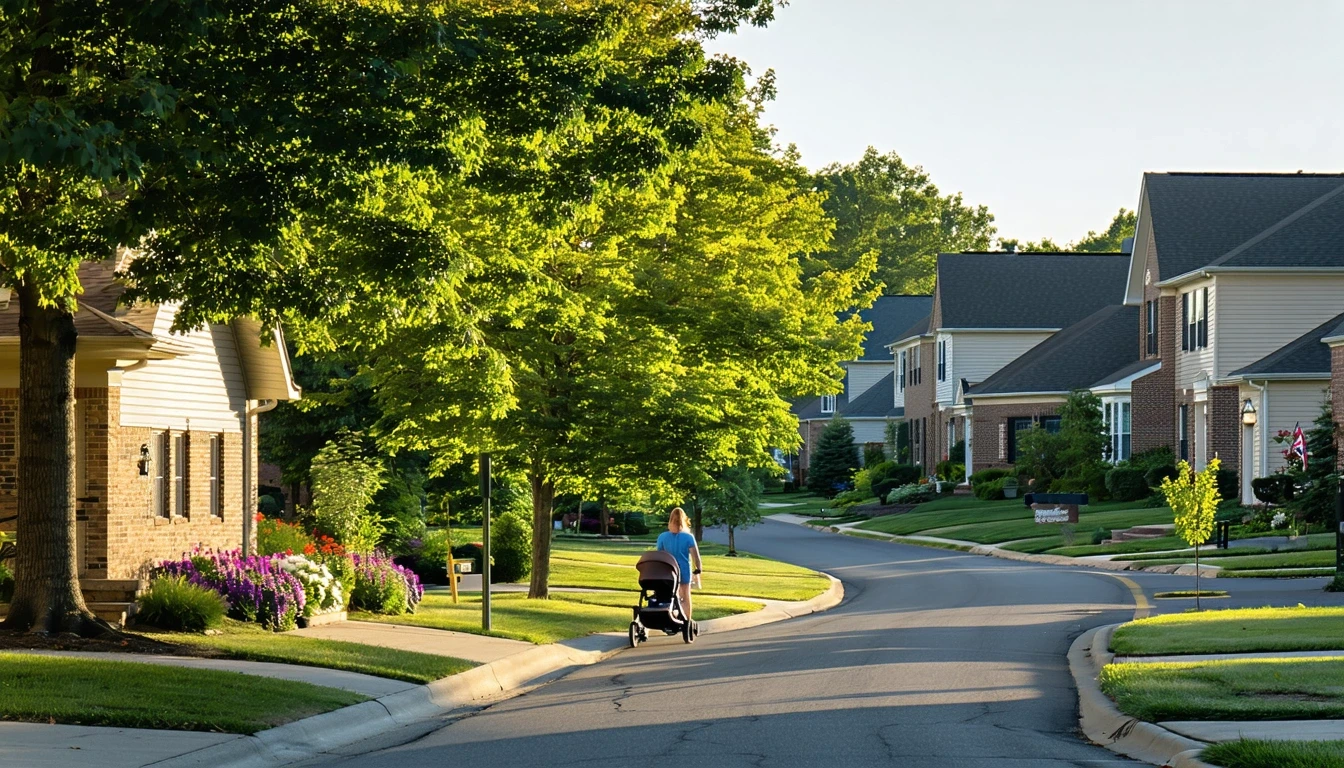
Most people assume Westerville costs more across the board because home values run higher—but that myth collapses the moment you look at rent, commute patterns, and how families actually use space. Canal Winchester and Westerville sit in the same Columbus metro, share the same utility rates, and pull from overlapping job markets, yet the cost experience between them diverges sharply depending on whether you’re renting or buying, how far you drive, and what your household prioritizes in 2026. The decision isn’t about which city is cheaper—it’s about where cost pressure concentrates for your situation and whether you’re more exposed to upfront barriers, ongoing obligations, or time-based friction.
Both cities offer access to suburban infrastructure, low-rise neighborhoods, and family-oriented amenities, but the structure of expenses plays out differently. Canal Winchester leans on longer commutes and higher rent but delivers lower home purchase entry and denser family infrastructure. Westerville shortens the commute, drops rent obligations, but raises the bar for buyers and narrows the margin for households stretching toward ownership. Neither city dominates every category, and the right fit depends entirely on which trade-offs your household can absorb and which costs you can’t negotiate away.
This comparison explains where housing, transportation, utilities, groceries, and fees create different types of pressure in each city—and which households feel those differences most. It’s not a race to the bottom; it’s a map of how the same income feels different depending on where cost shows up first.
Housing Costs
Housing entry and ongoing obligations split in opposite directions between Canal Winchester and Westerville. In Canal Winchester, the median home value sits at $271,900, while median gross rent reaches $1,525 per month. Westerville’s median home value climbs to $320,500, but median gross rent drops to $1,361 per month. For renters, Westerville delivers lower baseline monthly obligations—$164 less per month before utilities or fees—which matters significantly for households managing tight cash flow or prioritizing flexibility over equity accumulation. For buyers, Canal Winchester offers a lower entry threshold, reducing the down payment barrier and monthly mortgage obligations for families ready to commit but constrained by upfront capital.
The rental market structure also behaves differently. Canal Winchester’s higher rent reflects tighter availability in single-family rentals and newer apartment stock, where landlords price for space and access to schools. Westerville’s rental inventory includes older multifamily buildings and more competition among landlords, which keeps rent pressure lower even as purchase prices climb. Renters in Westerville gain immediate monthly savings, but those savings don’t translate into long-term equity. Renters in Canal Winchester pay more each month but often secure larger units or single-family layouts that better accommodate growing families or remote work setups requiring dedicated space.
For first-time buyers, the $48,600 gap in median home value between the two cities translates directly into down payment requirements, closing costs, and monthly mortgage obligations. A household stretching to enter homeownership in Westerville faces higher upfront capital demands and larger monthly payments, even with identical interest rates. Canal Winchester’s lower purchase entry allows buyers to enter the market sooner or preserve cash reserves for maintenance, furniture, or emergency funds. However, buyers in Canal Winchester must account for longer average commutes—30 minutes compared to Westerville’s 25 minutes—which adds time cost and fuel exposure that doesn’t appear in the mortgage statement but compounds over years of daily driving.
| Housing Type | Canal Winchester | Westerville |
|---|---|---|
| Median Home Value | $271,900 | $320,500 |
| Median Gross Rent | $1,525/month | $1,361/month |
Families prioritizing school access and playground density may find Canal Winchester’s infrastructure worth the higher rent or longer commute, especially if they plan to stay long enough for equity gains to offset transportation costs. Single adults or couples without children may prefer Westerville’s lower rent and shorter commute, particularly if they value time flexibility over square footage. Buyers sensitive to upfront costs benefit from Canal Winchester’s lower entry barrier, while buyers with larger down payments and stable income may absorb Westerville’s higher purchase price in exchange for shorter daily commutes and lower long-commute exposure—14.4% in Westerville compared to 25.0% in Canal Winchester.
Housing takeaway: Renters face lower ongoing obligations in Westerville, while buyers encounter lower entry barriers in Canal Winchester. The primary difference isn’t total cost—it’s whether your household is more exposed to monthly cash flow pressure or upfront capital requirements, and whether commute time or family infrastructure weighs more heavily in your daily logistics.
Utilities and Energy Costs
Utility cost structure remains identical between Canal Winchester and Westerville because both cities draw from the same regional grid and natural gas distribution network. Electricity rates sit at 17.85¢ per kWh, and natural gas prices hold at $23.03 per MCF in both locations. This eliminates rate-based differences and shifts the focus entirely to consumption patterns, housing stock characteristics, and household behavior. Families in larger single-family homes face higher baseline usage regardless of city, while apartment dwellers in smaller units experience lower exposure even during peak heating and cooling months.
Seasonal volatility follows the same rhythm in both cities. Winters demand natural gas heating, and summers drive air conditioning loads, but the intensity of exposure depends more on home age, insulation quality, and square footage than on location. Older homes in either city—common in established neighborhoods—tend to leak conditioned air and require more energy to maintain comfort, particularly during extended cold snaps or prolonged heat. Newer construction in both Canal Winchester and Westerville typically includes better insulation, modern HVAC systems, and tighter building envelopes, which reduce baseline consumption and smooth out seasonal spikes.
Household size amplifies utility exposure differently depending on housing type. A family of four in a 2,000-square-foot single-family home in Canal Winchester faces similar heating and cooling loads as the same household in Westerville, assuming comparable home age and layout. However, families in Canal Winchester may occupy slightly larger lots or homes with bonus rooms, finished basements, or attached garages—all of which increase conditioned space and raise energy consumption. Single adults or couples in apartments experience lower utility volatility because smaller units require less energy to heat and cool, and shared walls reduce heat loss in winter and heat gain in summer.
Predictability in utility costs depends less on the city and more on housing choices. Renters in apartments often benefit from landlords covering water, trash, or even gas, which shifts some volatility away from the tenant. Homeowners in either city bear full responsibility for all utilities, plus maintenance on HVAC systems, water heaters, and appliances that directly affect energy efficiency. Households planning to stay long-term in either Canal Winchester or Westerville can reduce exposure through efficiency upgrades—programmable thermostats, improved insulation, or HVAC tune-ups—but those investments require upfront capital and time to generate savings.
Utility takeaway: Utility costs behave identically in both cities at the rate level, so differences in exposure stem entirely from housing type, home age, and household size. Families in larger homes face higher baseline consumption and more seasonal volatility, while apartment dwellers experience more predictable bills. The primary decision factor isn’t which city has lower rates—it’s whether your housing choice amplifies or dampens energy exposure.
Groceries and Daily Expenses
Grocery and daily spending pressure in Canal Winchester and Westerville reflects access patterns, store concentration, and household shopping behavior rather than dramatic price differences. Both cities sit in the same regional price parity zone—an RPP index of 95—which means grocery staples, household goods, and everyday items track closely to each other. The meaningful differences emerge in how households access food, how often they rely on convenience options, and whether their routines push them toward bulk shopping, frequent top-ups, or dining out as a time-saving strategy.
Canal Winchester’s food and grocery establishment density falls into the corridor-clustered category, meaning options concentrate along main roads rather than spreading evenly across neighborhoods. Families planning weekly shopping trips can access big-box stores, discount grocers, and regional chains without difficulty, but quick errands for forgotten items or last-minute ingredients require more intentional travel. This structure rewards households that batch errands and plan meals in advance, but it penalizes those who rely on spontaneous trips or need walkable access to fresh produce and staples. Single adults or couples working long hours may find themselves leaning more heavily on takeout or convenience stores when time pressure overrides cost sensitivity.
Westerville’s grocery access likely follows a similar suburban pattern, with major chains and discount options available but not necessarily within walking distance of every neighborhood. Households in either city benefit from proximity to Columbus-area grocery competition, which keeps prices relatively stable and offers a mix of budget, mid-tier, and specialty options. However, the frequency of shopping trips and the reliance on prepared foods or dining out can shift monthly spending significantly. Families with children managing school schedules, activities, and meal planning face higher grocery volumes and benefit from access to bulk retailers, while single adults or couples may prioritize convenience and proximity over per-unit pricing.
Dining out and convenience spending introduce another layer of variability. Both cities offer local restaurants, coffee shops, and fast-casual chains, but the density and walkability of those options differ. Canal Winchester’s mixed pedestrian infrastructure and corridor-clustered food access mean that grabbing coffee or picking up takeout often requires driving, which adds friction and time cost even if the dollar amount remains modest. Westerville’s shorter average commute and lower long-commute exposure may leave households with slightly more discretionary time, which can either reduce reliance on convenience spending or create more opportunities for spontaneous dining out depending on household priorities.
Grocery takeaway: Price differences between Canal Winchester and Westerville remain minimal due to shared regional pricing, but access structure and household routines determine how much flexibility exists. Families managing larger grocery volumes benefit from planning and bulk access in either city, while single adults or couples sensitive to time cost may feel more pressure in Canal Winchester due to corridor-clustered access. The primary difference isn’t what groceries cost—it’s how much time and planning your household needs to avoid convenience spending creep.
Taxes and Fees

Tax and fee structures in Canal Winchester and Westerville operate at the municipal and county level, but specific rates for property taxes, local income taxes, and recurring fees don’t appear in the available data. What remains clear is that both cities rely on property taxes as a primary revenue source, and homeowners in either location face annual obligations tied to assessed home values, school district levies, and local service funding. The difference in median home values—$271,900 in Canal Winchester versus $320,500 in Westerville—suggests that property tax bills in Westerville likely run higher in absolute terms, assuming comparable millage rates, though the effective burden depends on assessment practices and voter-approved levies.
Homeowners in Westerville absorb higher property tax exposure simply because the tax base starts from a higher assessed value. Even if millage rates align closely between the two cities, a household owning a $320,500 home pays more annually than a household owning a $271,900 home under identical rates. This difference compounds over time and affects long-term affordability for households planning to stay in place for a decade or more. First-time buyers in Canal Winchester benefit not only from lower purchase entry but also from lower ongoing tax obligations, which preserves more monthly cash flow for maintenance, utilities, or discretionary spending.
Renters in both cities remain insulated from direct property tax bills, but landlords pass those costs through in rent pricing. Westerville’s lower median rent may partially reflect older housing stock or different landlord cost structures, but it’s also possible that property tax differences between the cities influence how landlords set baseline rent. Renters don’t see the tax bill directly, but they feel its effects in lease renewals, rent increases, and the baseline cost of securing housing. Households planning to rent long-term should consider how property tax trends in each city might affect future rent stability, even if current rent obligations favor Westerville.
Local fees—trash collection, water, sewer, stormwater management—vary by municipality and sometimes by neighborhood depending on whether services are provided by the city, a private contractor, or a homeowners association. HOA fees in either city can bundle landscaping, snow removal, or shared amenity maintenance, but they also introduce another layer of recurring obligation that doesn’t appear in mortgage or rent calculations. Households comparing homes in HOA-managed communities should account for these fees separately, as they can range from modest monthly amounts to several hundred dollars depending on the services included.
Tax and fee takeaway: Property tax exposure in Westerville likely runs higher due to elevated home values, which affects long-term ownership costs even if millage rates align. Renters in Westerville benefit from lower baseline rent, but property tax trends may influence future rent increases. Homeowners in Canal Winchester face lower entry costs and lower ongoing tax obligations, which preserves cash flow for households sensitive to predictable monthly expenses. The primary difference isn’t structure—it’s magnitude and how that compounds over years of ownership or long-term renting.
Transportation & Commute Reality
Commute patterns and transportation obligations diverge sharply between Canal Winchester and Westerville, and those differences ripple through daily schedules, fuel expenses, and household logistics. Canal Winchester’s average commute sits at 30 minutes, with 25.0% of workers facing long commutes that stretch well beyond that baseline. Westerville’s average commute drops to 25 minutes, and only 14.4% of workers experience long-commute exposure. That five-minute difference and the 10.6-percentage-point gap in long-commute prevalence may sound modest on paper, but over 250 workdays per year, the cumulative time cost and fuel consumption add up significantly.
Households in Canal Winchester face higher car dependence because the city’s mixed pedestrian infrastructure and corridor-clustered errands access mean that most daily trips—work, groceries, school drop-offs, errands—require driving. Bus service exists, but with only 4.7% of workers able to work from home, the vast majority of Canal Winchester residents rely on personal vehicles for commuting. Longer commutes amplify fuel exposure, even with gas prices at $2.58 per gallon, because the distance traveled compounds over weeks and months. Families managing multiple work schedules or school transportation face even tighter time budgets, and the lack of walkable errands access means that even quick trips require planning and driving.
Westerville’s shorter average commute and lower long-commute exposure reduce both time cost and fuel consumption for most households. The five-minute difference per trip translates to nearly an hour per week for a typical commuter, which creates more flexibility for errands, family obligations, or discretionary time. Westerville’s work-from-home percentage sits at 2.3%, slightly lower than Canal Winchester’s 4.7%, but the shorter baseline commute offsets that difference for most households. Families in Westerville still rely on cars for most trips, but the reduced commute friction means less time spent in traffic and lower cumulative fuel expenses over the course of a year.
Transit options in both cities remain limited to bus service, and neither location offers rail access or robust walkable alternatives for daily commuting. Households without reliable personal vehicles face significant barriers in either city, though Westerville’s shorter commutes and slightly more compact layout may offer marginally better access to bus routes. Families managing multiple vehicles—common in suburban households with two working adults or teenage drivers—face higher insurance, maintenance, and registration costs in either location, but those expenses hit harder in Canal Winchester where longer commutes increase wear and fuel consumption.
Transportation takeaway: Canal Winchester’s longer average commute and higher long-commute exposure create more time cost and fuel consumption for most households, while Westerville’s shorter commutes preserve flexibility and reduce transportation friction. Both cities require car dependence for daily life, but the intensity of that dependence—and the cumulative cost in time and fuel—matters more in Canal Winchester. Households sensitive to commute time or managing complex schedules benefit from Westerville’s shorter baseline, while those prioritizing lower housing entry in Canal Winchester must absorb the transportation trade-off.
Cost Structure Comparison
Housing pressure dominates the cost experience in both Canal Winchester and Westerville, but the nature of that pressure differs sharply depending on whether you’re renting or buying. Renters in Westerville face lower monthly obligations—$1,361 compared to Canal Winchester’s $1,525—which creates immediate cash flow relief and more flexibility for households managing tight budgets or prioritizing short-term savings. Buyers in Canal Winchester encounter a lower entry barrier, with median home values at $271,900 compared to Westerville’s $320,500, which reduces down payment requirements and monthly mortgage obligations for families ready to commit but constrained by upfront capital. The housing decision isn’t about which city costs less—it’s about whether your household is more exposed to ongoing monthly pressure or front-loaded capital requirements.
Utilities introduce identical rate structures in both cities, so differences in energy exposure stem entirely from housing type, home age, and household size. Families in larger single-family homes face higher baseline consumption and more seasonal volatility regardless of location, while apartment dwellers experience more predictable bills. The primary utility consideration isn’t which city has lower rates—it’s whether your housing choice amplifies or dampens energy exposure, and whether you’re prepared to absorb seasonal spikes or invest in efficiency upgrades to smooth out volatility.
Daily living and grocery costs track closely between the two cities due to shared regional pricing, but access structure and household routines determine how much flexibility exists. Canal Winchester’s corridor-clustered food access rewards households that batch errands and plan meals in advance, but it penalizes those who rely on spontaneous trips or need walkable access to staples. Westerville likely offers similar access patterns, but the shorter average commute and lower long-commute exposure may leave households with slightly more discretionary time, which can either reduce reliance on convenience spending or create more opportunities for spontaneous dining out depending on priorities.
Transportation patterns matter more in Canal Winchester, where longer commutes and higher long-commute exposure add time cost and fuel consumption that compounds over months and years. Westerville’s shorter baseline commute reduces transportation friction and preserves flexibility for errands, family obligations, or discretionary time. Both cities require car dependence for daily life, but the intensity of that dependence—and the cumulative cost in time and fuel—hits harder in Canal Winchester. Households managing complex schedules or multiple work commutes benefit from Westerville’s shorter baseline, while those prioritizing lower housing entry in Canal Winchester must absorb the transportation trade-off.
The better choice depends entirely on which costs dominate your household’s decision calculus. Renters sensitive to monthly cash flow may prefer Westerville’s lower rent, while buyers constrained by upfront capital benefit from Canal Winchester’s lower purchase entry. Families prioritizing school access and playground density may find Canal Winchester’s stronger family infrastructure worth the higher rent or longer commute, while single adults or couples valuing time flexibility may prefer Westerville’s shorter commute and lower rent. For households where commute time or transportation friction matters more than housing entry costs, Westerville offers a clearer advantage. For households where upfront capital constraints or family infrastructure dominate, Canal Winchester delivers better fit despite higher rent and longer commutes.
How the Same Income Feels in Canal Winchester vs Westerville
Single Adult
Housing becomes the first non-negotiable expense, and in Canal Winchester that means absorbing $1,525 in rent compared to Westerville’s $1,361, which shifts $164 per month away from discretionary spending or savings before utilities or transportation enter the picture. Flexibility exists in grocery planning and dining out, but Canal Winchester’s corridor-clustered food access means that spontaneous errands or quick trips require driving, which adds time cost even when dollar amounts stay modest. The longer average commute in Canal Winchester—30 minutes versus Westerville’s 25—compounds over the work week and reduces discretionary time for errands, socializing, or managing household tasks, making Westerville feel less time-constrained even if income remains identical.
Dual-Income Couple
Housing costs still dominate, but the ability to split rent or mortgage obligations creates more breathing room in either city, and the decision shifts toward whether lower rent in Westerville or lower purchase entry in Canal Winchester aligns better with long-term plans. Commute friction matters more for dual-income households because both partners likely drive to work, and Canal Winchester’s higher long-commute exposure—25.0% compared to Westerville’s 14.4%—means at least one partner may face extended travel time that limits flexibility for errands or shared household logistics. Grocery and daily spending pressure remains manageable in either city, but the time cost of batching errands in Canal Winchester versus the shorter commute buffer in Westerville determines how much discretionary time remains for non-work activities or spontaneous plans.
Family with Kids
Housing and transportation become non-negotiable first, and the trade-off between Canal Winchester’s lower purchase entry and Westerville’s shorter commute intensifies because families need space, stability, and predictable schedules. Canal Winchester’s stronger family infrastructure—high playground density and medium school density—offers tangible value for households prioritizing access to parks and school options, but the longer commute and higher rent mean less flexibility for unexpected expenses or discretionary spending. Grocery volumes rise sharply with children, and Canal Winchester’s corridor-clustered food access requires more planning to avoid convenience spending creep, while Westerville’s shorter commute may preserve slightly more time for meal prep or managing school logistics without relying on takeout or last-minute trips.
Decision Matrix: Which City Fits Which Household?
| Decision factor | If you’re sensitive to this… | Canal Winchester tends to fit when… | Westerville tends to fit when… |
|---|---|---|---|
| Housing entry + space needs | You’re constrained by upfront capital or need lower purchase entry | You’re buying and prioritize lower home values and down payment requirements | You’re renting and prioritize lower monthly obligations over equity accumulation |
| Transportation dependence + commute friction | You value time flexibility or manage complex schedules | You can absorb longer commutes in exchange for lower housing entry or family infrastructure | You prioritize shorter commutes and lower long-commute exposure for daily flexibility |
| Utility variability + home size exposure | You’re managing seasonal volatility or energy consumption in larger homes | You’re prepared to manage energy exposure through home choice and efficiency upgrades | You’re prepared to manage energy exposure through home choice and efficiency upgrades |
| Grocery strategy + convenience spending creep | You rely on frequent errands or need walkable access to staples | You batch errands and plan meals in advance to avoid corridor-clustered access friction | You benefit from shorter commutes that preserve time for meal prep and reduce takeout reliance |
| Fees + friction costs (HOA, services, upkeep) | You’re managing predictable monthly expenses or long-term ownership costs | You benefit from lower home values that reduce property tax exposure over time | You absorb higher property tax exposure in exchange for lower rent or shorter commutes |
| Time budget (schedule flexibility, errands, logistics) | You’re managing multiple work schedules or family obligations | You prioritize family infrastructure and school access over commute time savings | You prioritize shorter commutes and lower time cost for daily logistics and errands |
Lifestyle Fit
Canal Winchester and Westerville both deliver suburban layouts with low-rise housing, family-oriented amenities, and car-dependent infrastructure, but the texture of daily life differs in ways that indirectly affect costs and household logistics. Canal Winchester’s mixed pedestrian infrastructure and corridor-clustered food access mean that most errands, socializing, and recreation require intentional planning and driving, which adds time cost even when dollar amounts stay modest. The city’s strong family infrastructure—high playground density and medium school density—creates tangible value for households with children, offering accessible parks and school options that reduce the need to travel far for outdoor play or educational access. Water features and moderate park density add recreational variety, but the longer average commute and higher long-commute exposure mean that families must balance access to amenities with the time cost of daily transportation.
Westerville’s shorter average commute and lower long-commute exposure preserve more discretionary time for errands, family obligations, or spontaneous plans, which can reduce reliance on convenience spending or create more flexibility for managing complex schedules. The city likely offers similar suburban amenities—parks, schools, local restaurants—but without the same level of playground density or family infrastructure emphasis documented in Canal Winchester. Households prioritizing time flexibility or managing dual-income schedules may find Westerville’s shorter commute more valuable than incremental differences in park access or school density, particularly if they’re willing to drive slightly farther for specialized recreation or educational options. Both cities require cars for most trips, but Westerville’s reduced commute friction means less cumulative time spent in traffic and more margin for managing household logistics without feeling constantly pressed.
Cultural and recreational differences between the two cities remain subtle, as both sit within the Columbus metro and draw from overlapping job markets, retail options, and entertainment hubs. Canal Winchester’s water features and park density offer outdoor access that supports active families or households prioritizing green space, while Westerville’s proximity to Columbus and shorter commute times may offer easier access to urban amenities, dining, or cultural events without requiring a long drive. Newer housing stock in either city tends to reduce utility bills through better insulation and modern HVAC systems, while older homes in established neighborhoods may require more maintenance and energy consumption regardless of location. Lifestyle fit ultimately depends on whether your household values family infrastructure and outdoor access enough to absorb longer commutes and higher rent, or whether time flexibility and lower monthly obligations matter more than incremental differences in playground density or school access.
Canal Winchester offers high playground density and strong family infrastructure, making it well-suited for households with children prioritizing outdoor access and school options.
Westerville delivers shorter average commutes and lower long-commute exposure, preserving more discretionary time for households managing complex schedules or dual-income logistics.
Frequently Asked Questions
Is Canal Winchester or Westerville cheaper for renters in 2026?
Westerville offers lower median gross rent at $1,361 per month compared to Canal Winchester’s $1,525, which creates immediate monthly cash flow relief for renters managing tight budgets or prioritizing flexibility over equity accumulation. The $164 difference matters most for single adults or couples without children who value lower baseline obligations, though renters in Canal Winchester may secure larger units or single-family layouts that better accommodate remote work or growing families. The decision depends on whether lower monthly rent or more space and family infrastructure fits your household better.
Which city has lower home prices for first-time buyers in 2026?
Canal Winchester presents a lower entry barrier for buyers, with median home values at $271,900 compared to Westerville’s $320,500, which reduces down payment requirements and monthly mortgage obligations for households constrained by upfront capital. The $48,600 gap translates directly into closing costs and cash reserves, making Canal Winchester more accessible for first-time buyers ready to commit but lacking large savings. However, buyers in Canal Winchester must account for longer average commutes and higher long-commute exposure, which adds time cost and fuel consumption that compounds over years of daily driving.
How do commute times differ between Canal Winchester and Westerville in 2026?
Canal Winchester’s average commute sits at 30 minutes, with 25.0% of workers facing long commutes, while Westerville’s average drops to 25 minutes with only 14.4% experiencing long-commute exposure. That five-minute baseline difference and the 10.6-percentage-point gap in long-commute prevalence compound over 250 workdays per year, creating more time cost and fuel consumption in Canal Winchester. Households managing multiple work schedules or complex family logistics benefit from Westerville’s shorter commute, while those prioritizing lower housing entry in Canal Winchester must absorb the transportation trade-off.
Do Canal Winchester and Westerville have the same utility rates in 2026?
Yes, both cities share identical utility rates—17.85¢ per kWh for electricity and $23.03 per MCF for natural gas—because they draw from the same regional grid and distribution network. Differences in utility exposure stem entirely from housing type, home age, and household size rather than rate structures. Families in larger single-family homes face higher baseline consumption and more seasonal volatility in either city, while apartment dwellers experience more