
Ann Arbor’s housing market operates under pressures that don’t announce themselves in the listing price. Property taxes, maintenance exposure tied to older housing stock, and the competitive weight of university employment all shape what ownership actually costs here—and those realities often surprise newcomers who arrive expecting a typical Midwestern college town.
The median home value in Ann Arbor sits at $416,500, while median gross rent runs $1,472 per month. Against a median household income of $78,546 per year, these figures place Ann Arbor above the national baseline for housing cost intensity. But the cost structure beneath those numbers—what drives volatility, what stays predictable, and how ownership exposure behaves over time—depends heavily on whether you rent or buy, and what type of housing you choose.
This article explains housing cost behavior in Ann Arbor: how renting and owning differ in risk and control, what apartment and house living actually cost beyond the lease or mortgage, and how local conditions—walkability, transit access, and university-driven demand—change the tradeoffs that matter most.
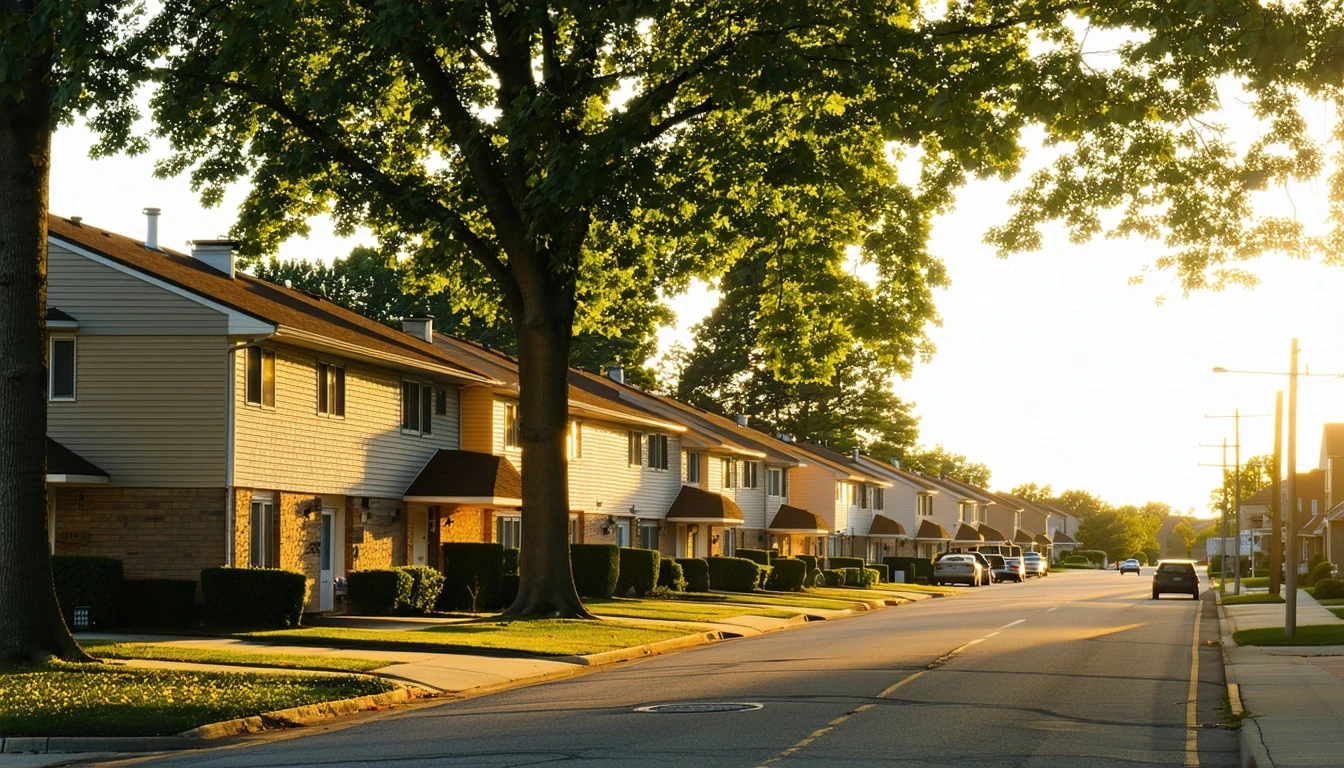
The Housing Market in Ann Arbor Today
Ann Arbor’s housing market is shaped by three overlapping forces: the University of Michigan’s employment and enrollment base, regional commuter demand from Metro Detroit, and a walkable urban core with rail transit access. These factors create sustained competition for both rental and ownership inventory, particularly in neighborhoods close to campus, downtown, or transit stations.
The university anchors demand year-round, not just during the academic calendar. Faculty, staff, graduate students, and medical center employees form a stable renter and buyer pool that keeps turnover high and vacancy low. This isn’t a market where listings sit; properties move quickly, and buyers often face multiple offers even outside peak spring and summer months.
What surprises many newcomers is how much Ann Arbor’s walkability and transit infrastructure reduce the need for car-dependent housing. Pedestrian infrastructure density exceeds typical suburban thresholds, rail service is present, and food and grocery establishments are broadly accessible throughout the city. For renters and first-time buyers weighing convenience against cost, this means that proximity to campus or downtown doesn’t just save commute time—it eliminates entire categories of household logistics and transportation expense.
Home values here reflect that convenience premium. At $416,500, the median home value sits well above the regional baseline, and ownership competition comes not just from local buyers but from professionals commuting to Detroit or Dearborn who value Ann Arbor’s schools, parks, and walkable neighborhoods. For renters, this same demand tightens availability and keeps rent growth steady, though the rental market remains more accessible than ownership for households without substantial savings or dual incomes.
Renting in Ann Arbor
Median gross rent in Ann Arbor is $1,472 per month, a figure that includes rent and tenant-paid utilities but not parking, pet fees, or lease-specific surcharges. Rental availability is concentrated near campus, along transit corridors, and in neighborhoods with mixed-use zoning, where apartments and small multifamily buildings dominate the housing stock.
Renters in Ann Arbor benefit from infrastructure that reduces household friction. Broadly accessible grocery and food options mean most renters can handle daily errands on foot or by bike, and rail transit provides a car-free commute option for those working downtown or near campus. For young professionals and graduate students, this accessibility translates directly into lower transportation costs and fewer logistical tradeoffs—no need to own a car, pay for parking, or budget for maintenance and insurance.
Rental pressure remains consistent year-round, driven by university hiring cycles, medical center employment, and regional professionals seeking walkable alternatives to suburban Detroit. Lease renewals typically reflect this sustained demand, and turnover is frequent enough that landlords face little incentive to hold rents flat. Renters should expect modest annual increases, particularly in neighborhoods within walking distance of campus or downtown.
What renters avoid, however, is exposure to property tax adjustments, major maintenance events, and the long-term cost volatility that comes with ownership. In a city where older housing stock and cold winters drive heating and upkeep intensity, that insulation matters. Renters pay for predictability and flexibility, and in Ann Arbor’s competitive market, that tradeoff often makes more financial sense than stretching to buy.
Owning a Home in Ann Arbor
Ownership in Ann Arbor means taking on cost exposure that doesn’t appear in the purchase price. Property taxes, insurance, maintenance tied to older homes and cold-weather wear, and the competitive pressure of a university-anchored market all shape what ownership actually costs over time.
At a median home value of $416,500, buyers face a substantial upfront barrier. Down payment requirements, closing costs, and the need to compete in a fast-moving market mean that ownership here skews toward dual-income households, established professionals, or buyers with significant equity from a prior sale. First-time buyers often find themselves priced out of walkable neighborhoods near campus or downtown, where home values run higher and inventory turns over quickly.
Property taxes in Ann Arbor fund a well-regarded school system, extensive park infrastructure, and municipal services that support the city’s walkable character. But those taxes adjust over time, and new owners should expect reassessment at purchase to reflect current market value—not the prior owner’s frozen rate. This reset can surprise buyers who budget based on the seller’s disclosed tax bill.
Maintenance exposure in Ann Arbor is driven by two factors: housing age and climate. Much of the city’s single-family stock predates 1980, and older homes carry higher risk of roof replacement, HVAC failure, and foundation or plumbing issues. Cold winters add heating system wear, ice dam risk, and the need for seasonal upkeep that newer construction in milder climates simply doesn’t face. Owners should budget not just for routine maintenance but for the likelihood of major capital expenses within the first few years.
What ownership provides, however, is control and equity accumulation. Fixed-rate mortgages lock in the largest component of monthly housing cost, insulating owners from the rent increases that renters face annually. And in a market with sustained demand and limited inventory, home values tend to hold or appreciate, giving owners a financial stake that renters never build.
Apartment vs House in Ann Arbor — Cost Behavior Comparison
The cost structure of apartment and house living in Ann Arbor differs in ways shaped by the city’s climate, housing stock age, and infrastructure. The table below reflects only those categories where the distinction is meaningful locally—not a universal checklist.
| Expense Category | Apartment | House |
|---|---|---|
| Heating (winter) | Lower exposure; shared walls reduce heat loss | Higher exposure; standalone structure, older systems common |
| Maintenance responsibility | Landlord handles; tenant insulated from capital expenses | Owner bears full cost; older stock increases likelihood of major repairs |
| Property tax exposure | None; embedded in rent but not directly billed | Direct and adjustable; reassessed at purchase |
| Walkability premium | High; most apartments near campus, downtown, or transit | Variable; single-family stock more dispersed, car dependency increases in outer neighborhoods |
| Yard and exterior upkeep | None | Seasonal; snow removal, lawn care, gutter maintenance required |
Why these categories matter in Ann Arbor: Cold winters make heating the dominant utility expense, and older housing stock—common in single-family homes—amplifies that cost. Apartments benefit from shared-wall insulation and landlord-covered maintenance, while houses expose owners to both heating intensity and the likelihood of capital repairs. Walkability is unevenly distributed; apartments cluster near transit and errands, while houses in outer neighborhoods often require car ownership, adding transportation costs that apartment renters avoid.
Categories like water, trash, and internet were excluded because they don’t vary meaningfully by housing type in Ann Arbor—most are billed separately or included in rent regardless of structure.
Utilities & Upkeep Differences
Utility and maintenance exposure in Ann Arbor is driven by climate and housing age, and the difference between apartments and houses is substantial.
Electricity in Ann Arbor costs 20.46¢/kWh, and natural gas runs $11.89 per thousand cubic feet (MCF). For apartment renters, heating costs are moderated by shared walls and smaller square footage; even in older buildings, heat loss is limited compared to standalone structures. Many apartments also include heat in the rent or use centralized systems that spread costs across units, further insulating tenants from seasonal volatility.
House owners face a different reality. Single-family homes—especially older stock built before modern insulation standards—lose heat rapidly during Ann Arbor’s long, cold winters. Heating systems run longer and harder, and natural gas bills can spike noticeably from November through March. Owners also bear the cost of furnace maintenance, filter replacement, and the eventual need for HVAC system replacement, which can run several thousand dollars when older equipment fails.
Maintenance exposure extends beyond heating. Older homes in Ann Arbor face roof wear from ice dams, gutter damage from freeze-thaw cycles, and foundation stress from ground movement. Exterior paint, siding, and window seals degrade faster in cold, wet climates, and owners should expect to address these issues on a shorter cycle than in milder regions. Apartments offload all of this to landlords; houses make it the owner’s problem.
For renters, utility and upkeep costs are predictable and limited. For owners, they’re variable, seasonal, and tied to the age and condition of the property. In Ann Arbor, that difference is not minor—it’s a primary factor in whether ownership makes financial sense.
Rent vs Buy: Long-Term Exposure in Ann Arbor
The decision to rent or buy in Ann Arbor is not a math problem with a single answer—it’s a tradeoff between predictability and control, shaped by how each path exposes households to cost volatility over time.
Renters face annual lease renewals that typically bring modest increases, driven by sustained demand from university employment and regional commuters. Rent growth in Ann Arbor is steady rather than explosive, but it’s also unavoidable; tenants have no mechanism to lock in costs beyond the lease term. What renters gain, however, is insulation from property tax adjustments, major maintenance events, and the unpredictable capital expenses that come with older housing stock. In a city where heating systems fail, roofs need replacement, and cold winters accelerate wear, that insulation has real value.
Owners, by contrast, lock in their largest housing cost—the mortgage principal and interest—at purchase. Property taxes and insurance adjust over time, and maintenance expenses vary with the age and condition of the home, but the core monthly obligation remains fixed. This stability matters most in a competitive market like Ann Arbor, where home values hold and rental demand stays strong. Owners build equity as they pay down the mortgage, and that equity becomes a financial asset that renters never accumulate.
But ownership also means absorbing risk. Property taxes can rise as the city reassesses values or adjusts millage rates. Heating costs swing with winter severity and the efficiency of aging HVAC systems. Roofs, water heaters, and furnaces fail on schedules that don’t align with household budgets, and the cost of replacement falls entirely on the owner. In Ann Arbor, where much of the single-family housing stock predates modern building standards, these events are not rare—they’re predictable over a long enough timeline.
The tradeoff, then, is between renting’s flexibility and predictability versus ownership’s equity accumulation and cost control. Renters avoid the volatility and capital risk of ownership but pay for that avoidance through annual rent increases and no long-term financial stake. Owners take on greater short-term exposure but gain stability, control, and the potential for wealth-building in a market with sustained demand.
For households planning to stay in Ann Arbor long-term, ownership often makes sense despite the upfront cost and maintenance risk. For those with shorter timelines, uncertain employment, or limited savings, renting preserves flexibility and avoids the financial exposure that comes with buying in a competitive, high-value market.
FAQs About Housing Costs in Ann Arbor
Is it better to rent or buy in Ann Arbor?
It depends on how long you plan to stay and whether you can absorb ownership’s upfront and ongoing costs. Renters gain flexibility and avoid maintenance risk, but they face annual rent increases and build no equity. Owners lock in mortgage costs and accumulate equity, but they take on property tax exposure, maintenance volatility, and the capital risk of older housing stock. In Ann Arbor’s competitive market, ownership makes the most sense for households planning to stay five years or longer.
What drives housing costs higher in Ann Arbor compared to other Michigan cities?
University employment, regional commuter demand, and walkable infrastructure all create sustained competition for housing in Ann Arbor. The University of Michigan anchors year-round demand, and the city’s rail transit, pedestrian-friendly neighborhoods, and integrated parks attract buyers and renters willing to pay a premium for convenience. Home values and rents reflect that demand, placing Ann Arbor well above the state baseline.
How much should I budget for utilities in an Ann Arbor apartment vs a house?
Apartments typically see lower heating costs due to shared walls and smaller square footage, and many include heat in the rent. Houses face higher exposure, especially older single-family homes with standalone heating systems. Cold winters drive natural gas usage up noticeably, and owners also pay for furnace maintenance and eventual replacement. Electricity rates in Ann Arbor are 20.46¢/kWh, and natural gas costs $11.89/MCF, but actual bills depend heavily on housing type, age, and insulation quality.
Are property taxes in Ann Arbor higher than surrounding areas?
Property taxes in Ann Arbor fund a well-regarded school system, extensive parks, and municipal services that support the city’s walkable character. While exact rates aren’t provided here, new buyers should expect reassessment at purchase to reflect current market value, which can result in a higher tax bill than the prior owner paid. This reset is a standard feature of Michigan property tax law and should be factored into ownership cost planning.
Does Ann Arbor’s walkability reduce housing costs?
Walkability doesn’t lower housing costs directly—it shifts them. Homes and apartments near campus, downtown, or transit command a premium, but households in those areas often avoid car ownership, parking fees, and the transportation expenses that come with car-dependent suburbs. For renters and buyers who value convenience and can eliminate a vehicle, the tradeoff often results in lower total household costs despite higher rent or mortgage payments.
Making Housing Choices in Ann Arbor
Housing costs in Ann Arbor are shaped by forces that extend beyond the listing price or monthly rent: university-driven demand, walkable infrastructure, cold-weather exposure, and an older housing stock that carries maintenance risk. Renters gain flexibility and avoid capital expenses but face steady rent growth and no equity accumulation. Owners lock in mortgage costs and build wealth over time but absorb property tax adjustments, heating intensity, and the likelihood of major repairs.
The choice between renting and buying—and between apartments and houses—depends on how long you plan to stay, whether you can absorb upfront and ongoing ownership costs, and how much you value control versus predictability. In a competitive market like Ann Arbor, where home values hold and rental demand stays strong, ownership makes sense for households with long timelines and stable incomes. For those with shorter horizons or limited savings, renting preserves flexibility and avoids the financial exposure that comes with buying.
Understanding what drives expenses in Ann Arbor—and how housing fits into the broader cost structure—helps clarify which path aligns with your financial situation and long-term goals. And for those planning a move, weighing pods vs trucks early can reduce the logistical and financial friction of getting here.
How this article was built: In addition to public economic data, this article incorporates location-based experiential signals derived from anonymized geographic patterns—such as access density, walkability, and land-use mix—to reflect how day-to-day living actually feels in Ann Arbor, MI.