
“It’s not what I expected—in a good way. You get the parks, the walkable streets in some areas, the train into Detroit when you want it, but you also get this really strong sense of community you don’t find everywhere anymore.”
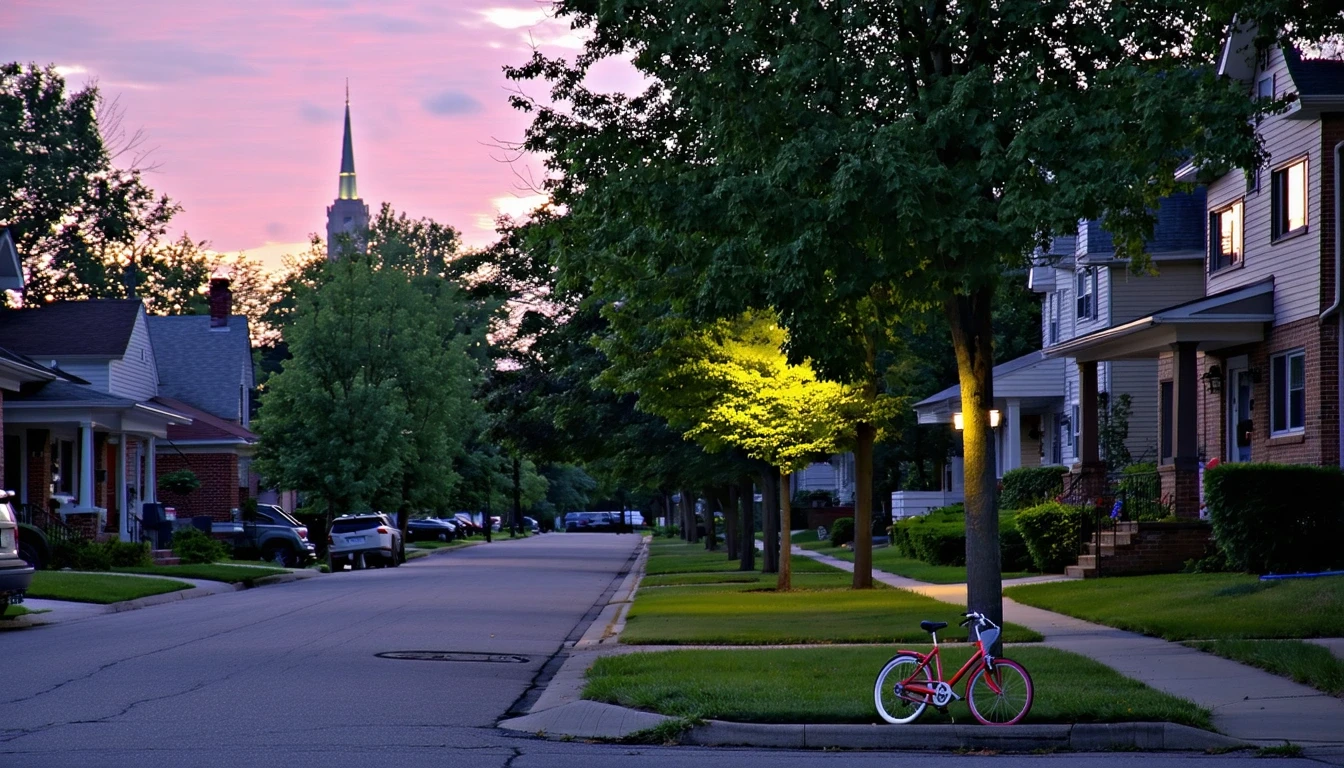
What It Actually Feels Like to Live in Dearborn
Is Dearborn a place where people feel at home, or does it come with tradeoffs that wear on you over time? The answer depends entirely on what you’re looking for—and what you’re willing to navigate. This is a city with deep cultural roots, walkable pockets, and access to green space that exceeds what many suburbs offer. It’s also a place where errands cluster along corridors rather than spreading evenly, where identity is strong enough to feel either welcoming or insular depending on your perspective, and where proximity to Detroit creates constant comparison.
People who thrive here tend to value community cohesion, appreciate neighborhoods where you can actually walk to a park or take the train downtown, and don’t mind that retail and dining concentrate in specific areas rather than scattering across every block. People who struggle tend to expect more dispersed convenience, want a wider variety of nightlife and entertainment without leaving town, or feel friction with the city’s distinct cultural character. Dearborn doesn’t try to be everything to everyone—it has a clear personality, and that’s exactly what makes it feel like a strong fit for some and a mismatch for others.
What People Are Talking About Online
In Dearborn-focused online spaces—local Facebook groups, regional subreddits, neighborhood forums—the emotional tone tends to split between pride and protectiveness. Residents frequently express appreciation for the city’s cultural identity, the quality of parks, and the ability to walk or bike in certain neighborhoods. At the same time, there’s recurring frustration about retail and dining options feeling concentrated rather than neighborhood-accessible, and a sense of fatigue when outsiders reduce the city to a single narrative.
Common discussion themes include:
- Appreciation for strong community ties and cultural institutions
- Debate over development and what growth should look like
- Praise for park access and green space integration
- Frustration with errands requiring intentional trips to specific corridors
- Comparison tension with Detroit and other metro suburbs
- Mixed feelings about transit access—valued by some, underused by others
“The parks here are genuinely great. You don’t have to drive 20 minutes to find a decent trail or a place for kids to play—it’s just part of the city.”
“I love the sense of community, but I do wish there were more sit-down restaurants and coffee shops outside the main strips. It feels like you’re always driving to the same few areas.”
“People who’ve never been here have all these assumptions. It gets old. If you actually live here, you know it’s just a normal city with families, schools, and people going about their lives.”
How Local Coverage Frames the City
Local news and community media tend to frame Dearborn through the lens of identity, development, and regional comparison. Coverage often highlights cultural events, debates over zoning and growth, infrastructure updates, and the city’s role within the broader Detroit metro. The tone is rarely neutral—stories either celebrate community strength and resilience or focus on tension points around change and perception.
Recurring headline themes include:
- “Community Debates What Growth Should Look Like”
- “New Amenities Arrive as City Identity Evolves”
- “Residents Weigh Convenience Against Character”
- “Parks and Green Space Remain a Local Strength”
- “Transit Access Expands Options for Metro Commuters”
The overall framing suggests a city in transition—not in crisis, but navigating the tension between preservation and adaptation. For readers trying to gauge the emotional climate, the takeaway is that Dearborn is neither stagnant nor chaotic; it’s a place where change happens deliberately, and where residents care deeply about the outcome.
What Reviews and Public Perception Reveal
On platforms like Google Reviews, Yelp, and neighborhood apps, Dearborn’s public perception reflects a pattern: people who wanted suburban comfort with urban proximity tend to feel satisfied, while people who expected downtown-style walkability or entertainment variety everywhere tend to feel disappointed.
Positive sentiment clusters around:
- Park quality and accessibility—families and outdoor enthusiasts consistently praise the green space
- Walkable neighborhoods in certain pockets—people appreciate being able to walk to a park, school, or transit stop
- Cultural institutions and community events—residents value the distinct identity and programming
- Proximity to Detroit—those who work or socialize downtown appreciate the rail connection
Critical sentiment focuses on:
- Errands requiring intentional trips—grocery stores and retail concentrate along corridors, not within every neighborhood
- Limited nightlife and entertainment variety—people looking for diverse dining, bars, or late-night options often feel the city falls short
- Perception vs. reality fatigue—long-time residents express frustration with outsiders’ assumptions
- Healthcare access—clinics are present, but the absence of a major hospital locally means some medical needs require travel
The pattern is clear: Dearborn works well for people whose priorities align with what the city offers—community, green space, selective walkability, and cultural strength. It works less well for people who want dispersed convenience, extensive entertainment options, or a more neutral cultural backdrop.
How Dearborn Compares to Nearby Cities
| Dimension | Dearborn | Livonia | Ann Arbor |
|---|---|---|---|
| Overall Vibe | Strong cultural identity, walkable pockets, community-focused | Quiet suburban, car-oriented, family-friendly | College-town energy, walkable downtown, progressive culture |
| Walkability | High in pockets, mixed elsewhere | Low, car-dependent throughout | High downtown, mixed in neighborhoods |
| Transit Access | Rail present, valued by commuters | Minimal, car required | Bus network, some rail access |
| Errands & Retail | Corridor-clustered, intentional trips | Strip malls, dispersed but car-accessible | Downtown-concentrated, neighborhood options |
| Green Space | Integrated, high park density | Present, suburban park model | Integrated, trails and nature access |
| Cultural Tone | Distinct, cohesive, protective | Neutral, low-key, blended | Progressive, academic, diverse |
Dearborn sits between Livonia’s quiet car-dependent suburban model and Ann Arbor’s walkable college-town energy. If you value cultural community, selective walkability, and transit access without needing downtown-level density, Dearborn offers a compelling middle ground. If you want the convenience of dispersed suburban retail without the cultural intensity, Livonia may feel more neutral. If you want a walkable downtown with academic and progressive culture, Ann Arbor delivers that—but at a higher cost and with college-town tradeoffs.
The comparison isn’t about declaring a winner; it’s about helping you predict where your priorities will feel supported versus where they’ll create friction.
What Locals Are Saying
“We moved here for the schools and the sense of community, and we got both. The parks are fantastic, the neighborhoods feel safe, and there’s always something happening culturally. It’s not perfect—I do wish there were more local coffee shops—but it’s been a great fit for our family.” — Family with young children
“I can walk to the park, bike to the library, and take the train downtown when I want to. That’s rare in the suburbs. Yeah, I have to drive to the grocery store, but it’s not a big deal. I like that the city has its own identity.” — Young professional, renter
“It’s quiet, the neighbors are friendly, and I don’t have to worry about much. I’ve been here 30 years and I’ve seen it change, but the core of what makes it a good place to live is still here.” — Long-time homeowner
“I thought I’d love it because it’s close to Detroit, but I underestimated how much I’d miss having restaurants and shops within walking distance of my apartment. Everything’s clustered, so you’re always driving to the same few spots.” — Remote worker, early 30s
“The cultural programming is incredible—festivals, events, community gatherings. If you’re looking for a place with a strong sense of identity and belonging, this is it. If you want bland and generic, look elsewhere.” — Newcomer, relocated for work
“I appreciate the train access, but I honestly don’t use it as much as I thought I would. Most of my errands are local, and those require a car anyway. It’s nice to have the option, though.” — Mid-career professional, homeowner
“People either get it or they don’t. If you’re comfortable with a city that has a distinct personality and you value community over convenience, you’ll probably like it here. If you need everything to be easy and dispersed, you might feel frustrated.” — Retiree, long-time resident
Does Dearborn Feel Like a Good Fit?
Dearborn isn’t a city that tries to appeal to everyone, and that’s part of its strength. It works exceptionally well for people who value cultural cohesion, appreciate walkable neighborhoods with park access, and don’t mind that errands require intentional trips to specific corridors. It works well for families who prioritize schools and community over entertainment variety, and for commuters who value rail access into Detroit without needing to live downtown.
It works less well for people who expect dispersed convenience, want extensive nightlife and dining variety locally, or feel uncomfortable with a strong cultural identity. It’s not the right fit for those who need a major hospital nearby or who want downtown-level walkability without the tradeoffs of urban density.
The city’s emotional profile is one of pride, protectiveness, and intentionality. People who live here tend to feel a strong sense of belonging—or they feel like they’re navigating friction. There’s not much middle ground. If you’re trying to decide whether Dearborn aligns with your priorities, the best question to ask isn’t “Is it happy?”—it’s “Does this city’s personality match mine?”
To explore how these patterns translate into day-to-day costs, housing tradeoffs, or lifestyle requirements, those resources offer additional context for decision-making.
How this article was built: In addition to public economic data, this article incorporates location-based experiential signals derived from anonymized geographic patterns—such as access density, walkability, and land-use mix—to reflect how day-to-day living actually feels in Dearborn, MI.
The perspectives shown reflect commonly expressed local sentiment and recurring themes in public discussion, rather than individual accounts.