
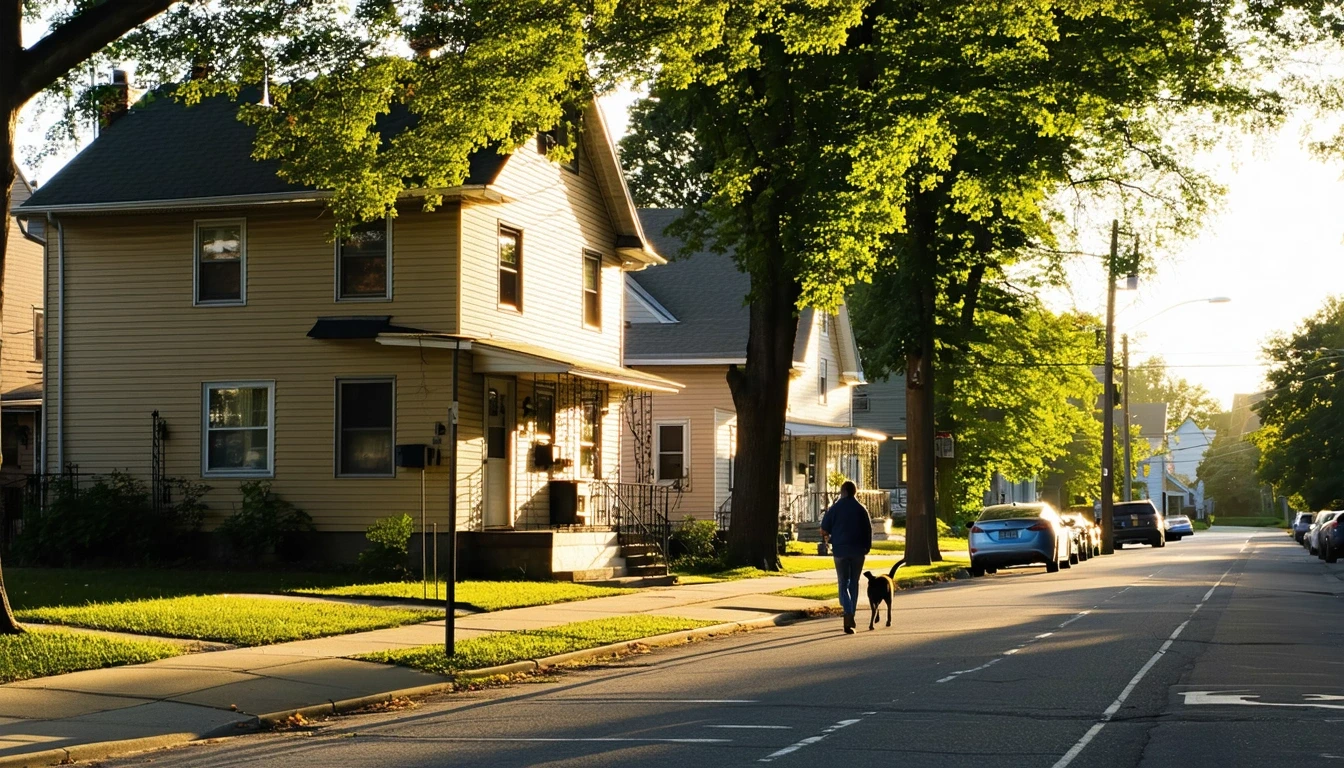
Which city gives you more for your money? Detroit and Livonia sit within the same metro area, share the same regional price environment, and experience the same Michigan winters—but the way costs show up in daily life couldn’t feel more different. Detroit offers lower housing entry barriers, extensive transit infrastructure, and walkable urban pockets, while Livonia provides suburban predictability, more space, and higher median household incomes that cushion ongoing expenses. The decision between them isn’t about which is cheaper overall; it’s about which cost structure aligns with how your household earns, spends, and moves through the day in 2026.
Both cities draw from the same labor market and utility grid, but their housing markets, transportation patterns, and daily logistics operate on entirely different scales. Detroit’s lower home values and rents make entry easier, but income volatility and urban infrastructure demands create different pressures. Livonia’s higher housing costs require more upfront resources, but the suburban form and higher median incomes create more predictable monthly rhythms. Understanding where cost pressure concentrates—and which households feel it most—matters more than comparing totals.
Housing Costs
Detroit’s median home value sits at $66,700, while Livonia’s reaches $249,000—a structural difference that defines the entire housing experience. In Detroit, the entry barrier is exceptionally low for buyers, but the housing stock varies widely in age, condition, and neighborhood infrastructure. Renters in Detroit pay a median gross rent of $989 per month, which reflects a mix of older apartment buildings, converted units, and single-family rentals scattered across neighborhoods with different levels of walkability and transit access. Livonia’s median gross rent of $1,235 per month reflects newer construction, more consistent maintenance standards, and suburban apartment complexes designed around car access and parking availability.
For first-time buyers, Detroit’s housing market offers immediate entry with minimal down payment requirements, but the trade-off often involves older homes that may require updates, repairs, or energy efficiency improvements. Livonia’s housing market demands more upfront capital, but buyers typically gain access to newer single-family homes with modern systems, lower maintenance risk, and more predictable utility performance. Renters in Detroit gain access to urban amenities, transit options, and walkable errands in certain neighborhoods, while Livonia renters trade those conveniences for more square footage, parking, and quieter residential streets.
Families prioritizing space and predictability often find Livonia’s housing structure easier to plan around, even with higher monthly obligations. Single adults or couples who value transit access, walkability, and lower entry costs may find Detroit’s housing market offers more flexibility, especially if they’re comfortable navigating older housing stock and neighborhood variability. The difference isn’t just price—it’s about what kind of housing pressure dominates your decision: entry barrier, ongoing obligation, or long-term predictability.
Housing takeaway: Detroit’s housing costs create lower entry barriers but require more tolerance for variability in stock and neighborhood infrastructure. Livonia’s housing costs demand higher upfront resources but deliver more predictable suburban structure and newer construction. Households sensitive to entry cost may prefer Detroit; households prioritizing space, predictability, and family infrastructure may find Livonia’s higher costs easier to manage with the right income level.
Utilities and Energy Costs

Both cities share the same electricity rate—19.94¢/kWh—but the way utility costs behave depends entirely on housing type, building age, and household size. Detroit’s housing stock skews older, with more multi-unit buildings and urban row homes that may have shared walls, reducing heating exposure but introducing variability in insulation quality and system efficiency. Livonia’s housing stock is newer and dominated by single-family homes, which means more square footage to heat and cool, but also more modern HVAC systems and better baseline insulation. Natural gas pricing differs slightly—$10.66/MCF in Detroit versus $11.89/MCF in Livonia—but the real driver of utility cost exposure is home size, system age, and how much of the year requires active heating.
Michigan winters are long and cold, and heating dominates utility spending from November through March. In Detroit, older homes with original windows, minimal attic insulation, or aging furnaces can experience sharp seasonal spikes, even in smaller units. In Livonia, newer construction and larger homes mean higher baseline usage, but more predictable performance and fewer emergency repairs. Cooling costs matter less in both cities—Michigan summers are warm but not extreme—so air conditioning runs intermittently rather than continuously. Households in Detroit apartments may see lower absolute utility bills due to smaller square footage and shared walls, while Livonia homeowners with 2,000+ square feet face higher baseline costs but more control over efficiency upgrades.
Utility cost exposure varies significantly by household type. Single adults in Detroit apartments may see stable, low utility bills year-round, especially in well-maintained buildings with updated systems. Families in Livonia single-family homes face higher ongoing costs, but those costs are more predictable and easier to manage with programmable thermostats, insulation improvements, and routine maintenance. Older Detroit homes occupied by families or multi-generational households can experience the worst of both worlds: high heating exposure due to inefficiency and limited control over landlord-managed systems. Livonia homeowners gain more control but must budget for higher baseline usage driven by square footage.
Utility takeaway: Detroit’s utility costs are shaped by older housing stock and smaller unit sizes, creating lower baseline costs but higher variability depending on building condition. Livonia’s utility costs reflect newer construction and larger homes, creating higher predictable usage but more control over efficiency. Households in apartments or smaller units may experience lower utility pressure in Detroit; families in single-family homes may find Livonia’s predictability easier to budget around despite higher baseline costs.
Groceries and Daily Expenses
Both Detroit and Livonia share the same regional price parity index—98—meaning grocery prices are slightly below the national baseline. But the way households experience grocery costs depends on access patterns, store density, and how much convenience spending creeps into the weekly routine. Detroit’s food and grocery establishment density exceeds high thresholds, with options broadly accessible across neighborhoods, including corner stores, ethnic grocers, and discount chains. Livonia’s food options are more corridor-clustered, concentrated along major commercial strips, which means more driving between errands and fewer walkable alternatives for quick trips.
In Detroit, households with transit access or walkable neighborhoods can piece together grocery trips across multiple smaller stores, capturing deals and avoiding bulk purchases that require car trips and storage space. In Livonia, the suburban layout encourages larger, less frequent shopping trips to big-box stores, which can lower per-unit costs but increases the temptation to add convenience items, prepared foods, and impulse purchases. Dining out and takeout options are denser in Detroit’s urban core, which can either increase spending (if convenience becomes habit) or reduce it (if cheap, high-quality ethnic food replaces pricier suburban chains).
Single adults in Detroit can keep grocery costs low by shopping frequently, walking to nearby stores, and relying on smaller purchases that match immediate needs. Couples and families in Livonia benefit from bulk buying and warehouse club access, but they also face more pressure to drive for every errand, which adds time cost and increases the likelihood of convenience spending. Families managing larger grocery volumes may find Livonia’s big-box access more efficient, but only if they avoid the convenience creep that comes with car-dependent errands and commercial strip temptations.
Grocery takeaway: Detroit’s broadly accessible food options and walkable density create more flexibility for small, frequent trips and lower convenience pressure. Livonia’s corridor-clustered grocery access favors bulk shopping and car trips, which can lower per-unit costs but increases convenience spending risk. Households sensitive to price flexibility and walkable access may prefer Detroit; households managing larger volumes and prioritizing one-stop efficiency may find Livonia’s structure easier to navigate.
Taxes and Fees
Property taxes, local fees, and recurring obligations differ significantly between Detroit and Livonia, shaped by municipal budgets, service levels, and housing stock age. Detroit’s property tax structure reflects urban infrastructure demands—water, transit, public safety—and older housing stock that may carry higher assessment volatility. Livonia’s property taxes reflect suburban service expectations, including schools, parks, and road maintenance, but are applied to higher home values, which means higher absolute tax bills even if rates are similar. Renters in both cities don’t pay property taxes directly, but landlords pass those costs through in rent, making tax structure an indirect pressure even for non-owners.
Local fees in Detroit can include water, trash, and parking, with some variability depending on neighborhood and service provider. Livonia’s fee structure is more predictable, often bundled into municipal services or HOA dues in newer subdivisions. HOA fees are more common in Livonia, especially in townhome and condo developments, and can range from minimal (covering only landscaping) to substantial (including snow removal, exterior maintenance, and shared amenities). Detroit’s older housing stock rarely includes HOA obligations, but households may face higher maintenance and repair costs due to building age.
Homeowners in Detroit face lower absolute property tax bills due to lower home values, but they may encounter more unpredictability in assessments, water bills, and service interruptions. Homeowners in Livonia pay higher property taxes in dollar terms, but those costs are more stable and easier to budget around. Renters in Detroit benefit from lower rent that reflects lower property tax burdens, while Livonia renters pay higher rent that includes the cost of newer construction, suburban services, and sometimes HOA pass-throughs.
Taxes and fees takeaway: Detroit’s tax and fee structure creates lower absolute costs but more variability in assessments and service-related charges. Livonia’s structure creates higher predictable costs tied to higher home values and suburban service expectations. Homeowners planning to stay long-term may find Livonia’s predictability easier to manage; renters and first-time buyers may find Detroit’s lower tax burden reduces overall housing pressure.
Transportation & Commute Reality
Transportation costs and commute friction differ dramatically between Detroit and Livonia, driven by transit infrastructure, urban form, and daily logistics. Detroit’s pedestrian-to-road ratio exceeds high thresholds, with substantial pedestrian infrastructure in parts of the city, and rail transit service is present, providing access to downtown, Midtown, and regional employment centers. Livonia relies on bus service only, with cycling infrastructure present in limited areas and a car-oriented layout that makes most errands and commutes dependent on personal vehicles. Gas prices are nearly identical—$2.88/gal in Detroit versus $2.95/gal in Livonia—so the real difference is how often you need to drive and whether alternatives exist.
In Detroit, households in walkable neighborhoods with rail access can reduce or eliminate car dependency for commuting, errands, and social activities. This doesn’t just lower gas spending—it reduces insurance, maintenance, parking costs, and the time friction of navigating traffic and finding parking. Livonia’s suburban form assumes car ownership, and most households need reliable vehicles for commuting, grocery trips, school runs, and accessing healthcare or recreation. The bike-to-road ratio in Detroit exceeds high thresholds, meaning cycling is a viable option for some trips, while Livonia’s bike infrastructure is present but less integrated into daily logistics.
Single adults or couples in Detroit who work downtown or in transit-accessible areas can structure their lives around walking, biking, and rail, reducing transportation costs to occasional rideshares or car rentals. Families in Livonia typically need at least one car per working adult, plus the budget for maintenance, insurance, and parking. Commute time matters differently in each city: Detroit’s transit users trade cash cost for time cost, while Livonia’s drivers trade time flexibility for higher vehicle expenses and commute predictability.
Transportation takeaway: Detroit’s rail transit, walkable pockets, and bike infrastructure create real alternatives to car ownership, reducing transportation costs for households who can structure their lives around those options. Livonia’s car-dependent layout requires reliable vehicles and ongoing transportation spending, but offers more predictable commute patterns and parking availability. Households sensitive to car costs and urban access may prefer Detroit; households prioritizing suburban commute predictability and space for vehicles may find Livonia’s structure easier to navigate.
Cost Structure Comparison
Housing dominates the cost experience in both cities, but the pressure shows up differently. In Detroit, the entry barrier is low, but income constraints are high—median household income sits at $37,761 per year, meaning even modest ongoing costs can feel tight. In Livonia, the entry barrier is steep, but median household income reaches $92,458 per year, creating more cushion for predictable monthly obligations. The difference isn’t just about price—it’s about which costs hit first and which households have the income flexibility to absorb them.
Utilities introduce more volatility in Detroit due to older housing stock and variable building conditions, while Livonia’s newer construction creates higher baseline usage but more predictable performance. Grocery costs are shaped by access patterns: Detroit’s broadly accessible food options reduce convenience pressure, while Livonia’s corridor-clustered layout encourages bulk trips that can either save money or increase spending depending on household discipline. Transportation patterns matter more in Livonia, where car dependency is assumed, while Detroit offers real alternatives that can eliminate or reduce vehicle costs for households positioned to use them.
Taxes and fees are lower in absolute terms in Detroit but more variable, while Livonia’s higher property taxes and HOA fees are more predictable and easier to budget around. For renters, Detroit’s lower rent reflects lower property tax burdens and older stock, while Livonia’s higher rent includes the cost of newer construction and suburban services. For homeowners, Detroit’s low entry cost makes ownership accessible, but ongoing maintenance and utility variability create different pressures than Livonia’s higher mortgage but lower repair risk.
Households sensitive to entry cost, transit access, and walkability may find Detroit’s structure more flexible, especially if they can manage income volatility and older housing stock. Households prioritizing space, predictability, and family infrastructure may find Livonia’s higher costs easier to manage with the right income level. The decision isn’t about which city is cheaper—it’s about which cost structure aligns with how your household earns, spends, and moves through the day.
How the Same Income Feels in Detroit vs Livonia
Single Adult
In Detroit, a single adult can secure housing at lower cost, rely on transit and walkable errands to reduce transportation spending, and access urban amenities without needing a car. Flexibility exists in housing choice, neighborhood selection, and how much to spend on convenience versus planning. In Livonia, the same income requires budgeting for higher rent, car ownership, and the ongoing costs of suburban logistics—gas, insurance, maintenance—leaving less room for discretionary spending or savings. The non-negotiable costs hit harder in Livonia because the suburban form assumes car dependency and higher baseline housing obligations.
Dual-Income Couple
In Detroit, a dual-income couple can choose between lower-cost housing with urban access or slightly higher-cost neighborhoods with better walkability and transit, using the income cushion to absorb utility variability or occasional car expenses. Flexibility exists in whether to own one car, two, or none, depending on work locations and lifestyle preferences. In Livonia, the same combined income faces higher housing costs and the expectation of two reliable vehicles, which locks in predictable but substantial transportation spending. The trade-off is more space, newer housing, and less friction in daily logistics, but less flexibility in how to allocate income across categories.
Family with Kids
In Detroit, a family’s income must first cover housing, then navigate the variability of older housing stock, utility spikes, and the logistics of school access and childcare in a more fragmented urban landscape. Flexibility disappears quickly because income constraints are tighter and the cost of managing urban logistics—time, transportation, coordination—adds friction. In Livonia, the same family income faces higher housing and transportation costs upfront, but gains predictability in school access, park availability, and suburban infrastructure that reduces daily coordination burden. The non-negotiable costs are higher, but the structure is more predictable, and the income cushion is typically larger, making it easier to absorb those costs without constant recalibration.
Decision Matrix: Which City Fits Which Household?
| Decision factor | If you’re sensitive to this… | Detroit tends to fit when… | Livonia tends to fit when… |
|---|---|---|---|
| Housing entry + space needs | You need to minimize upfront cost or prioritize urban access over square footage | You can tolerate older housing stock and variable neighborhood infrastructure in exchange for lower entry barriers | You have the income to support higher entry costs and prioritize newer construction, more space, and suburban predictability |
| Transportation dependence + commute friction | You want to reduce or eliminate car ownership or value transit access | You work in transit-accessible areas and can structure errands around walking, biking, or rail | You need reliable car access for commuting and errands and prefer predictable suburban commute patterns |
| Utility variability + home size exposure | You want to minimize baseline utility costs or avoid seasonal spikes | You live in smaller units or apartments with shared walls and can tolerate variability in older building systems | You occupy larger single-family homes and value predictable utility performance from newer construction |
| Grocery strategy + convenience spending creep | You want walkable access to food options or prefer frequent small trips | You value broadly accessible grocery options and can avoid convenience spending through walkable errands | You prefer bulk shopping efficiency and can manage corridor-clustered access without increasing convenience spending |
| Fees + friction costs (HOA, services, upkeep) | You want to minimize recurring fees or avoid bundled service obligations | You can manage older housing stock and variable service costs without HOA obligations | You value predictable fees and bundled suburban services even if they increase ongoing costs |
| Time budget (schedule flexibility, errands, logistics) | You want to reduce time spent on logistics or value walkable convenience | You can trade time cost for cash savings and value the flexibility of urban errands and transit | You prioritize predictable suburban logistics and can absorb higher cash costs for reduced coordination friction |
Lifestyle Fit
Detroit and Livonia offer fundamentally different lifestyle structures, shaped by urban form, transit infrastructure, and daily logistics. Detroit’s walkable pockets, rail transit, and broadly accessible food and grocery options create a lifestyle centered on urban amenities, neighborhood density, and the ability to structure daily life without a car in certain areas. Park density exceeds high thresholds, water features are present, and the building height profile is more vertical, reflecting a mix of historic and modern urban development. Livonia’s low-rise suburban form, bus-only transit, and corridor-clustered errands create a lifestyle centered on space, predictability, and car-dependent logistics, with integrated green space and family infrastructure that supports school access and recreational activities.
For households who value walkability, transit access, and urban culture, Detroit offers more options to reduce transportation costs, access diverse dining and entertainment, and live in neighborhoods with distinct character and density. For households who prioritize space, newer housing, and suburban predictability, Livonia offers quieter residential streets, more square footage, and a lifestyle structure that assumes car ownership but delivers consistent access to schools, parks, and commercial corridors. The lifestyle difference indirectly affects costs: Detroit’s walkability can lower transportation spending, while Livonia’s newer housing stock can lower utility volatility and maintenance risk.
Both cities benefit from Michigan’s integrated green space and water features, but the way households access recreation differs. Detroit’s urban parks and waterfront areas are more accessible via transit and walking, while Livonia’s parks are typically accessed by car and designed around family activities and organized sports. Healthcare access differs as well: Detroit has hospital facilities present, while Livonia relies on clinics and pharmacies for routine care, requiring trips to nearby cities for hospital services. These differences don’t just shape convenience—they shape how much time and money households spend managing daily logistics.
Detroit median household income: $37,761 per year
Livonia median household income: $92,458 per year
Frequently Asked Questions
Is Detroit or Livonia cheaper for renters in 2026?
Detroit’s median gross rent of $989 per month is lower than Livonia’s $1,235 per month, but the cost structure differs significantly. Detroit renters gain access to walkable neighborhoods, rail transit, and urban amenities, which can reduce transportation costs and eliminate the need for a car in some cases. Livonia renters pay more for newer construction, more space, and suburban predictability, but they typically need a car for commuting and errands. The better choice depends on whether you prioritize lower rent and urban access or more space and suburban structure.
How do housing costs in Detroit compare to Livonia for first-time buyers in 2026?
Detroit’s median home value of $66,700 creates a much lower entry barrier than Livonia’s $249,000, making homeownership accessible with minimal down payment. However, Detroit’s housing stock is older and may require updates, repairs, or efficiency improvements, while Livonia’s newer construction offers more predictable maintenance and utility performance. First-time buyers in Detroit gain immediate entry but must tolerate variability in stock and neighborhood infrastructure. First-time buyers in Livonia need more upfront capital but gain access to newer homes with lower repair risk and more consistent suburban services.
Which city is better for families: Detroit or Livonia in 2026?
Livonia’s higher median household income, low-rise suburban form, and family infrastructure make it easier for families to access schools, parks, and predictable residential streets, though housing and transportation costs are higher. Detroit’s lower housing costs and walkable neighborhoods offer more entry flexibility, but families must navigate older housing stock, variable school access, and urban logistics that require more coordination. Families with higher incomes and a preference for suburban predictability may find Livonia easier to manage, while families prioritizing lower entry costs and urban access may find Detroit more flexible.
Do Detroit and Livonia have different utility costs in 2026?
Both cities share the same electricity rate of 19.94¢/kWh, but utility costs behave differently due to housing stock and home size. Detroit’s older, smaller units create lower baseline costs but more variability depending on building condition and system age. Livonia’s newer, larger single-family homes create higher predictable usage but more control over efficiency upgrades. Families in Detroit apartments may see lower absolute utility bills, while Livonia homeowners face higher baseline costs but more stable performance.
Is it easier to live without a car in Detroit or Livonia in 2026?
Detroit’s rail transit, walkable pockets, and bike infrastructure create real alternatives to car ownership, especially for households in neighborhoods with transit access and dense errands. Livonia’s bus-only transit and car-oriented layout make vehicle ownership essential for most households, with limited alternatives for commuting or daily logistics. Households who work in transit-accessible areas and value urban walkability may find Detroit easier to navigate without a car, while Livonia assumes car dependency for nearly all daily activities.
Conclusion
Detroit and Livonia offer fundamentally different cost structures shaped by housing markets, transit infrastructure, and daily logistics. Detroit’s lower housing entry costs, rail transit, and walkable neighborhoods create flexibility for households who can manage income constraints and older housing stock. Livonia’s higher housing costs, suburban predictability, and family infrastructure require more upfront resources but deliver more space, newer construction, and consistent access to schools and services. The decision isn’t about which city is cheaper overall—it’s about which cost structure aligns with how your household earns, spends, and moves through the day in 2026.
Households sensitive to entry cost, transit access, and urban amenities may find Detroit’s structure more flexible, especially if they can tolerate variability in housing stock and utility performance. Households prioritizing space, predictability, and suburban infrastructure may find Livonia’s higher costs easier to manage with the right income level. Both cities offer trade-offs, and the better choice depends on which costs dominate your household budget and which lifestyle structure reduces friction in your daily life.
How this article was built: In addition to public economic data, this article incorporates location-based experiential signals derived from anonymized geographic patterns—such as access density, walkability, and land-use mix—to reflect how day-to-day living actually feels in Detroit, MI.