
‘We moved to Detroit for the schools, but stayed for the neighbors.’
That sentiment captures something essential about life in Detroit — it’s a city where the initial draw often differs from what keeps people rooted. Detroit doesn’t fit neatly into a single emotional category. It’s a place where affordability meets ambition, where revitalization energy coexists with infrastructure gaps, and where neighborhood character varies so widely that two families living three miles apart can describe entirely different experiences of daily life.
For prospective movers trying to predict whether Detroit will feel like home, the answer depends less on the city’s overall trajectory and more on which version of Detroit you’re stepping into — and what tradeoffs you’re willing to embrace.
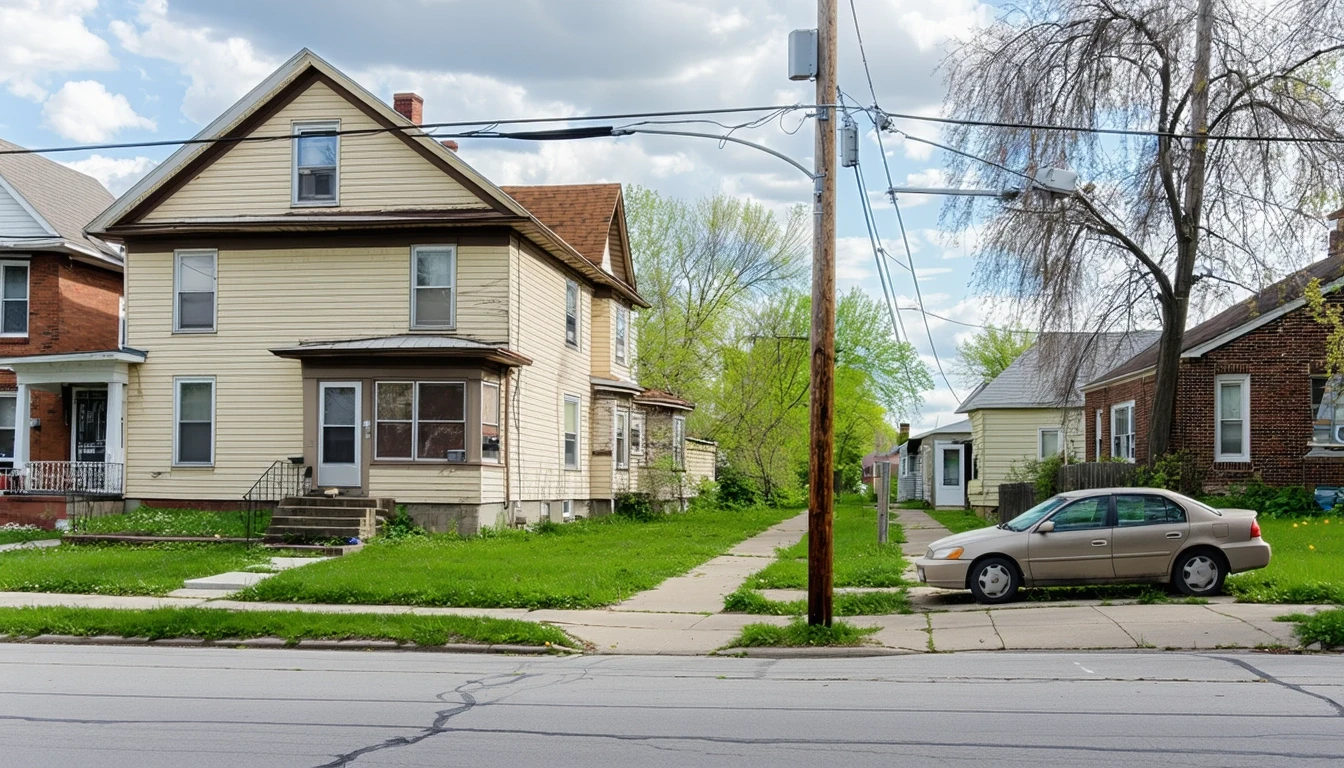
The Emotional Landscape of Detroit
Detroit’s vibe is defined by contrast. In walkable pockets with strong pedestrian infrastructure and transit access, daily life can feel surprisingly urban — groceries, coffee, and errands are accessible on foot or by bike, and the density of parks and water features creates integrated green space that softens the city’s industrial edges. These neighborhoods attract people who value authenticity over polish, who see potential in older housing stock, and who want to be part of a community actively shaping its future.
But Detroit is not uniformly walkable. Outside these pockets, car dependence dominates, and the rhythm of daily life shifts. Errands require planning, commutes stretch longer, and the convenience that some neighborhoods offer simply doesn’t extend citywide. This variation creates a recurring tension: Detroit can feel like a city of opportunity or a city of friction, depending entirely on where you land and what you need from your surroundings.
What tends to feel rewarding here is the sense of community investment. People describe neighbors who show up, who care about their blocks, and who take pride in Detroit’s identity. The affordability — especially in housing — creates space for homeownership that would be out of reach in many comparable metros. And for those drawn to revitalization energy, there’s a palpable sense of being part of something larger.
What tends to feel limiting is the unevenness. Service delivery can be inconsistent. Retail variety doesn’t match what you’d find in more uniformly developed suburbs. And the visible inequality — between neighborhoods that have seen investment and those that haven’t — can be uncomfortable for newcomers unprepared for that reality.
Social Media Buzz in Detroit
On platforms like Reddit, Facebook, and X, Detroit conversations tend to cluster around a few recurring themes: neighborhood recommendations, transit viability, and the emotional experience of watching the city change. The tone is often protective — locals push back against oversimplified narratives, whether overly negative or overly optimistic.
One common thread: “Detroit isn’t one place. Where you live matters more here than in most cities.” That sentiment appears again and again, as residents try to help newcomers understand that choosing a neighborhood isn’t just about housing stock or commute time — it’s about choosing a lifestyle structure.
Another frequent theme: “I love what this city is becoming, but I wish the progress felt more evenly distributed.” There’s pride in Detroit’s revitalization, but also frustration that investment hasn’t reached all corners equally. People celebrate new amenities and infrastructure improvements, but they also express fatigue when those changes feel concentrated in a few high-visibility areas.
A third pattern: “If you’re willing to be patient and flexible, Detroit rewards you.” This shows up in discussions about housing searches, service delays, and community-building. The implication is clear — Detroit fits people who see tradeoffs as part of the deal, not as deal-breakers.
How Local Coverage Frames the City
Local news and community outlets tend to frame Detroit through the lens of transformation and identity. Coverage doesn’t ignore challenges, but it often emphasizes resilience, creativity, and civic engagement. The tone is less about declaring victory or defeat and more about documenting a city in motion.
Recurring headline-style themes include:
- “Neighborhoods Debate What Growth Should Prioritize”
- “New Transit Options Expand Access in Select Areas”
- “Residents Weigh Affordability Against Service Gaps”
- “Community Groups Push for More Equitable Investment”
- “Detroit’s Creative Economy Draws New Talent”
These frames reflect a city that’s neither stuck nor fully transformed — it’s somewhere in between, and that in-between state shapes how people experience daily life. For some, that’s energizing. For others, it’s exhausting.
Review-Based Public Perception
On platforms like Google, Yelp, and Nextdoor, Detroit’s public perception splits along expectation lines. People who moved to Detroit expecting urban texture, walkability, and community character tend to leave positive reviews. People who expected suburban consistency, extensive retail, or uniform infrastructure tend to express disappointment.
Praise often focuses on:
- Neighborly engagement and block-level community
- Affordable homeownership and housing variety
- Access to parks, riverfronts, and green space in many areas
- Walkable errands and transit options in select neighborhoods
- Cultural amenities and creative energy
Complaints often center on:
- Inconsistent service delivery (trash pickup, street maintenance)
- Neighborhood-to-neighborhood inequality in infrastructure quality
- Limited retail variety compared to suburban peers
- Car dependence outside walkable pockets
- Uncertainty about long-term stability in some areas
Neighborhood variation is a constant theme. Newer planned areas and revitalized districts receive praise for walkability and amenities, while older pockets that haven’t seen recent investment generate more mixed feedback. The gap between these experiences is wide enough that it shapes how people describe the city overall.
Comparison to Nearby Cities
| Dimension | Detroit | Ann Arbor | Grand Rapids |
|---|---|---|---|
| Overall Vibe | Urban authenticity, revitalization energy, uneven progress | College-town polish, intellectual culture, higher cost | Midsize stability, family-friendly, steady growth |
| Walkability | Strong in pockets, car-dependent elsewhere | Broadly walkable, bike-friendly throughout | Mixed, improving in downtown core |
| Affordability | Low housing costs, accessible homeownership | High housing costs, competitive rental market | Moderate costs, balanced affordability |
| Community Feel | Invested, protective, neighborhood-focused | Transient, student-influenced, culturally active | Stable, family-oriented, civic-minded |
| Transit Access | Rail present, bus service, car still common | Bus-focused, bike infrastructure strong | Bus-only, car-dependent in most areas |
Detroit, Ann Arbor, and Grand Rapids each offer distinct emotional profiles. Detroit rewards people who value affordability, authenticity, and the energy of a city redefining itself — but it requires flexibility and patience with unevenness. Ann Arbor fits those who prioritize walkability, cultural amenities, and intellectual community, and who can absorb higher housing costs. Grand Rapids appeals to families seeking stability, steady growth, and a more uniform suburban-to-urban blend without Detroit’s intensity or Ann Arbor’s price premium.
If you’re drawn to urban revitalization and don’t mind navigating neighborhood variation, Detroit offers something neither Ann Arbor nor Grand Rapids can match. If you need predictability and consistent service delivery, Grand Rapids may feel more comfortable. If walkability and cultural density matter most and cost is secondary, Ann Arbor becomes the natural fit.
What Locals Are Saying
“I live in one of the walkable neighborhoods, and I honestly forget I own a car sometimes. I bike to the grocery store, walk to coffee, take the train downtown. It’s not like this everywhere in Detroit, but where I am, it works beautifully.”
“We bought a house here for what a down payment would’ve cost us in Ann Arbor. The tradeoff is that some city services are inconsistent, and we’ve learned to be more self-reliant. But the neighbors are incredible, and we’re building something together.”
“Detroit feels like a city that rewards people who are willing to invest emotionally, not just financially. If you’re looking for a place that’s already polished, this isn’t it. But if you want to be part of shaping a community, it’s hard to beat.”
“I moved here for work and expected it to be temporary. Three years later, I’m still here. The affordability gave me breathing room I didn’t have before, and the creative energy is real. But I also know people who left because the unevenness wore them down.”
“The biggest adjustment was realizing that Detroit isn’t one experience. My friend lives in a neighborhood with great walkability and transit, and I’m in an area where I drive everywhere. We’re both in Detroit, but our daily lives look completely different.”
“I appreciate what Detroit is trying to become, but I wish the progress felt faster and more widespread. Some neighborhoods have seen real investment, and others feel stuck. It’s hard not to notice that gap.”
“If you’re the kind of person who needs everything to work perfectly all the time, Detroit will frustrate you. But if you can roll with imperfection and focus on the bigger picture, it’s a city that gives back what you put into it.”
Does Detroit Feel Like a Good Fit?
Detroit doesn’t offer a single, uniform emotional experience. It’s a city of pockets — some walkable and transit-rich, others car-dependent and service-light. It’s a place where affordability creates opportunity, but where infrastructure unevenness requires patience. It’s a community that rewards investment and flexibility, but that can feel exhausting for those who need consistency and predictability.
This city tends to work for people who value authenticity over polish, who see potential in revitalization energy, and who are comfortable with neighborhood variation. It fits families seeking affordable homeownership and strong community ties, urban pioneers drawn to creative culture, and transit users who land in the right pockets. It appeals to those who want to be part of shaping a city’s future, not just inhabiting a finished product.
Detroit tends to frustrate people who expect uniform suburban infrastructure, extensive retail variety, or consistent service delivery across all neighborhoods. It’s not the right fit for those uncomfortable with visible inequality or those who need every system to work seamlessly from day one.
If you’re trying to decide whether Detroit aligns with your needs, start by exploring where money goes in daily life here, understanding the housing landscape, and mapping your own priorities against the city’s emotional tradeoffs. Detroit isn’t for everyone — but for those it fits, it offers something rare: affordability, community, and the chance to be part of a city writing its next chapter.
How this article was built: In addition to public economic data, this article incorporates location-based experiential signals derived from anonymized geographic patterns—such as access density, walkability, and land-use mix—to reflect how day-to-day living actually feels in Detroit, MI.
The perspectives shown reflect commonly expressed local sentiment and recurring themes in public discussion, rather than individual accounts.