
A first-time renter in Deptford Township looking at a one-bedroom apartment near the rail line will likely face rent around $1,452 per month—the township’s median—before utilities. That figure buys access to the Philadelphia metro job market without the capital outlay of ownership, but it also means navigating a housing market where location within the township determines whether errands require a car or can be managed on foot. For a buyer, a median home value of $235,800 opens the door to ownership at a price point accessible to households earning near the township’s median income of $90,995 per year, but it also means taking on property tax exposure, maintenance responsibility, and the long-term cost behavior that comes with owning in New Jersey’s suburban corridor.
Understanding what drives expenses in Deptford Township requires looking beyond the headline rent or purchase price. The township’s mixed mobility texture—where some areas support walking to errands while others require driving—means housing choice directly affects transportation costs and daily logistics burden. Rail service to Philadelphia creates flexibility for commuters, but grocery and food options cluster along corridors rather than spreading uniformly, so proximity to those corridors changes how often you need a car for routine tasks. Families benefit from strong school and playground infrastructure distributed across the township, but ownership in this market means managing the cost volatility that comes with property taxes, aging housing stock, and the seasonal utility swings typical of the Mid-Atlantic climate.
This article explains how housing costs behave in Deptford Township—not what you can afford, but what you’re exposed to when you rent or buy here, and how that exposure changes depending on where in the township you live and what type of housing you choose.
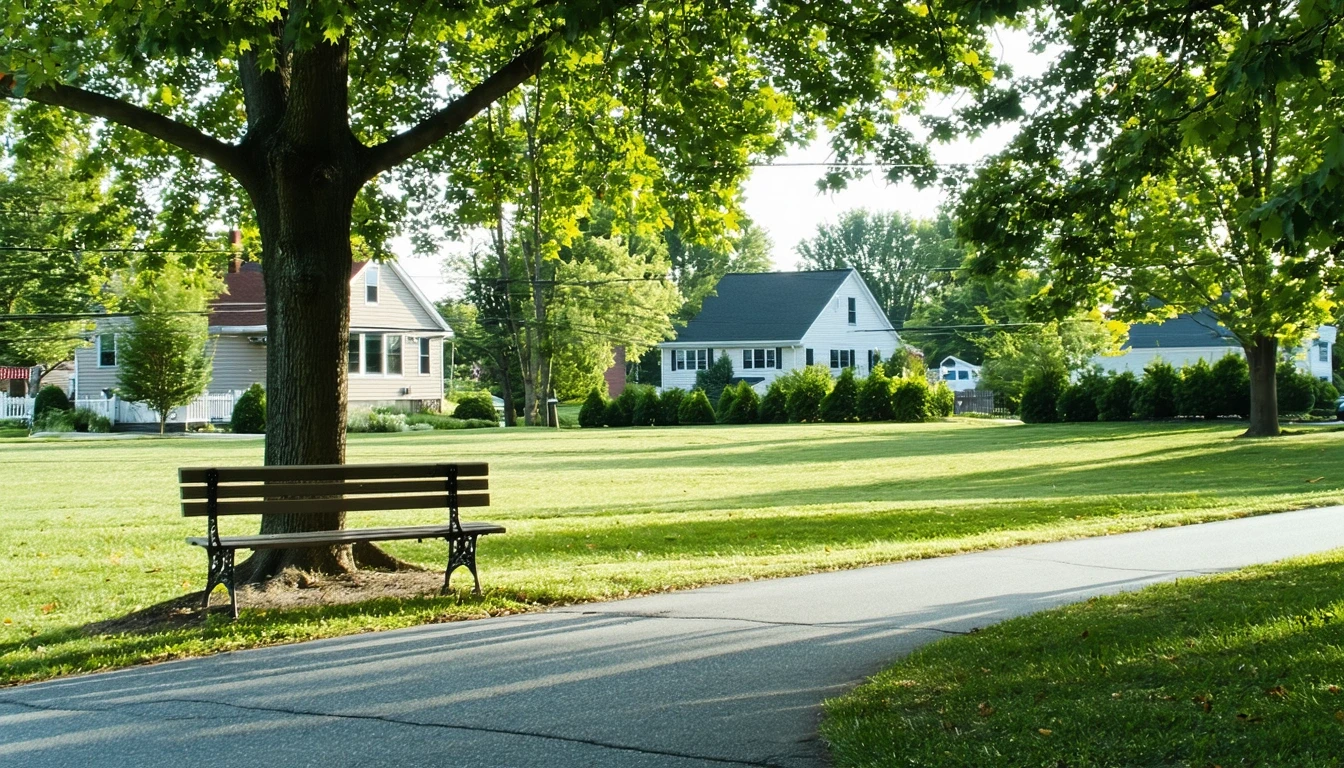
The Housing Market in Deptford Township Today
Deptford Township sits in the inner ring of the Philadelphia metro, close enough to the city for rail commutes but far enough out to offer single-family homes at prices well below urban cores. The township’s housing market reflects its role as a suburban commuter base: ownership is accessible to middle-income households, but the cost structure rewards those who understand how New Jersey’s property tax system, aging housing stock, and infrastructure patterns shape long-term expenses.
What newcomers often misunderstand is that Deptford Township is not uniformly walkable or car-dependent—it’s mixed. Some neighborhoods sit near corridors where grocery stores, pharmacies, and clinics cluster, making it possible to run errands on foot or with short drives. Other areas require a car for nearly every task. That variability means two households paying similar rent or purchase prices can experience very different transportation costs and daily friction depending on where they land within the township’s boundaries.
The township’s rail connection to Philadelphia gives it an edge over purely car-dependent suburbs, but it doesn’t eliminate the need for a vehicle. Most residents still drive for work, errands, and family logistics. The 25-minute average commute reflects a mix of short local trips and longer hauls into the metro core. For buyers, this means evaluating not just the home price but also how location affects commute time, gas spending, and the ability to manage daily tasks without constant driving.
Compared to denser parts of the metro, Deptford Township offers lower entry costs and more space per dollar, but it also means taking on the maintenance, tax, and utility exposure that comes with suburban ownership. The township’s housing stock skews older, which can mean lower purchase prices but higher upkeep costs as systems age. Buyers who focus only on the mortgage payment without accounting for taxes, repairs, and seasonal utility swings often underestimate what ownership actually costs here.
Renting in Deptford Township
At $1,452 per month, the median gross rent in Deptford Township represents a substantial share of income for single earners, but it remains accessible to dual-income households or individuals earning near the township median. Rent at this level typically covers a one- or two-bedroom apartment, though size, condition, and proximity to transit or commercial corridors vary widely.
Rental pressure in Deptford Township is shaped by its position in the Philadelphia metro. The township attracts renters who want suburban space and rail access without paying urban rents, but the rental stock is not evenly distributed. Apartments and rental homes cluster near major roads and commercial zones, which means renters often face a tradeoff: pay more for proximity to errands and transit, or accept a lower rent and plan for more driving.
Because grocery and food options cluster along corridors rather than spreading uniformly, renters who prioritize walkability need to focus their search on specific parts of the township. Those willing to drive for errands gain access to a wider range of rental options, often at lower prices, but they also take on higher transportation costs and more time spent managing logistics. For renters without a car, location within the township becomes a critical factor—not all neighborhoods offer the same access to transit, groceries, or services.
Renters in Deptford Township avoid property tax exposure and major maintenance costs, but they still face utility bills that swing with the seasons. Mid-Atlantic summers bring sustained heat, and winters require heating, so renters in older buildings or units without efficient systems should expect noticeable seasonal variation in electricity and gas bills. Landlords typically don’t cover utilities, so renters need to budget for those swings on top of rent.
Rental stability in the township depends partly on the broader metro market. When Philadelphia rents rise, Deptford Township becomes more attractive to renters priced out of the city, which can tighten availability and push rents upward. Renters who plan to stay long-term should anticipate that rent renewals may reflect metro-wide pressure, not just local conditions.
Owning a Home in Deptford Township
A median home value of $235,800 places Deptford Township in the accessible range for households earning near the township’s median income, using standard affordability heuristics. That price point typically buys a single-family home with a yard, though age, condition, and location within the township vary. Ownership at this level means taking on not just the mortgage but also property taxes, insurance, maintenance, and the long-term cost behavior that defines suburban homeownership in New Jersey.
Property taxes in New Jersey are among the highest in the country, and while the exact rate for Deptford Township is not specified here, buyers should expect taxes to represent a significant share of total housing costs—often rivaling or exceeding the mortgage payment itself. Unlike rent, which bundles most housing costs into a single monthly figure, ownership separates mortgage, taxes, insurance, and upkeep into distinct line items, each with its own volatility and exposure.
Taxes in New Jersey tend to rise over time, driven by municipal budgets, school funding, and infrastructure needs. Buyers who lock in a mortgage payment at a fixed rate still face tax increases that compound over the years, so the predictability of ownership is partial, not absolute. For households planning to stay long-term, understanding how taxes behave locally—and how reassessments or municipal budget changes might affect future bills—is essential.
Maintenance exposure in Deptford Township reflects the age and type of housing stock. Many homes were built decades ago, which means buyers should anticipate costs for roof replacement, HVAC upgrades, plumbing repairs, and other systems that wear out over time. Newer construction or recently renovated homes reduce near-term maintenance risk, but they often command higher purchase prices. Buyers who prioritize a lower entry cost may find themselves managing deferred maintenance or aging systems within the first few years of ownership.
Homeowners associations are present in some neighborhoods, particularly in newer developments or townhome communities, but they are not universal. Where HOAs exist, they add a monthly or annual fee that covers shared amenities, landscaping, or exterior maintenance. Buyers should confirm whether an HOA applies to a property and what services it covers, as fees can range from minimal to substantial depending on the community.
Ownership in Deptford Township offers stability and control that renting does not—fixed mortgage payments, the ability to renovate or modify the property, and insulation from landlord decisions—but it also means absorbing the full cost of everything that breaks, wears out, or needs upgrading. For households with the income and savings to manage those costs, ownership provides long-term predictability. For those stretched thin by the purchase price alone, the hidden costs of taxes, maintenance, and utilities can create financial pressure that renting avoids.
Apartment vs House in Deptford Township — Cost Behavior Comparison
The table below compares cost behavior between apartments and single-family houses in Deptford Township, focusing only on categories where the distinction is meaningful given local conditions. Generic differences that apply everywhere are omitted.
| Expense Category | Apartment | House |
|---|---|---|
| Heating & Cooling | Shared walls reduce exposure; smaller square footage limits seasonal swings | Full exposure to Mid-Atlantic summers and winters; larger square footage amplifies utility costs |
| Maintenance Responsibility | Landlord or HOA covers most repairs; tenant handles minor issues only | Owner absorbs all costs for roof, HVAC, plumbing, and aging systems common in older NJ housing stock |
| Property Taxes | Embedded in rent; tenant does not pay directly or experience annual increases | Paid directly by owner; subject to New Jersey’s high baseline and upward pressure over time |
| Transportation Integration | More likely located near corridors with clustered errands and rail access; reduces car dependency | Often in residential-only zones; requires driving for most errands and increases fuel and vehicle costs |
| Outdoor Maintenance | None; landlord or HOA handles landscaping and snow removal | Owner responsible for lawn care, snow removal, and seasonal yard upkeep |
Why these categories? Deptford Township’s mixed mobility texture and corridor-clustered errands mean apartment location often reduces transportation costs, while houses in residential zones increase car dependency. The township’s older housing stock and New Jersey’s high property taxes make maintenance and tax exposure particularly relevant for single-family homeowners. Mid-Atlantic seasonal swings affect heating and cooling costs more in larger, detached homes than in apartments with shared walls. Categories like insurance or internet service are omitted because they do not vary meaningfully by housing type in this market.
Utilities & Upkeep Differences
Utility and maintenance costs in Deptford Township vary more by housing type and age than by any single rate or price. The township’s Mid-Atlantic climate brings warm, humid summers and cold winters, so both cooling and heating drive seasonal utility swings. Apartments, with smaller square footage and shared walls, experience less extreme swings than single-family homes, where full exposure to outdoor temperatures and larger interior spaces amplify costs.
Electricity in New Jersey is priced at 22.98¢ per kWh, which sits above the national average and reflects the state’s infrastructure and regulatory environment. For context, a typical household using 1,000 kWh per month would face an illustrative bill around $230 before fees and taxes, though actual usage varies widely based on home size, insulation, and cooling or heating needs. Apartments typically use less electricity due to smaller square footage and shared walls that buffer temperature extremes. Single-family homes, especially older ones with less efficient insulation or aging HVAC systems, often see higher usage and more pronounced seasonal variation.
Natural gas, priced at $14.66 per MCF, is used primarily for heating in winter months. For context, a household using 1 MCF per month during heating season might see an illustrative bill around $15 for the gas itself, before delivery fees and taxes. Homes with gas heat face noticeable winter bill increases, while apartments with shared walls or smaller footprints see smaller swings. Renters in apartments often benefit from reduced heating exposure, while homeowners in single-family houses absorb the full cost of keeping a larger, detached structure warm through the winter.
Maintenance exposure in Deptford Township reflects the age of the housing stock. Many homes were built decades ago, so buyers should anticipate costs for roof replacement, HVAC upgrades, water heater failures, and plumbing repairs. Apartments shift most of this burden to landlords or HOAs, so renters avoid the unpredictability of major system failures. Homeowners, by contrast, need to budget for both routine upkeep—lawn care, gutter cleaning, seasonal weatherization—and unexpected repairs that can run into thousands of dollars.
Outdoor maintenance is a non-issue for apartment renters but a recurring cost for homeowners. Lawn care, snow removal, and seasonal yard work require either time or money, and in a township where many homes sit on larger lots, the burden is not trivial. Homeowners who prefer to outsource these tasks should factor in the cost of landscaping services, which add to the baseline expense of ownership.
The township’s mixed urban form—where residential and commercial land use coexist—means some neighborhoods have better access to services and shorter distances to errands, which can reduce transportation costs and time spent driving. Homeowners in residential-only zones often face longer drives for groceries, pharmacies, and other routine needs, which increases fuel costs and vehicle wear. Apartment renters, more likely to be located near commercial corridors, may find they can walk or make short drives for errands, reducing transportation exposure.
Rent vs Buy: Long-Term Exposure in Deptford Township
The choice between renting and buying in Deptford Township is not a simple math problem—it’s a question of which cost structure and risk profile fits your household’s income stability, time horizon, and tolerance for volatility. Renting offers predictability in the short term but exposes you to rent increases and landlord decisions. Buying offers long-term stability but shifts all maintenance, tax, and system failure risk onto you.
Renters in Deptford Township pay a fixed monthly amount that covers housing but not utilities. That rent can rise at renewal, and while New Jersey has some tenant protections, rent increases in the Philadelphia metro often reflect regional market pressure rather than local conditions alone. Renters avoid property tax exposure, major maintenance costs, and the capital risk of ownership, but they also forgo the equity-building and stability that ownership provides. For households with uncertain income, short time horizons, or limited savings, renting reduces risk and preserves flexibility.
Buyers in Deptford Township lock in a mortgage payment—often at a fixed rate—but they do not lock in total housing costs. Property taxes in New Jersey rise over time, driven by municipal budgets, school funding, and infrastructure needs. Maintenance costs are unpredictable and increase as homes age. Insurance premiums can shift with market conditions. Utilities vary with the seasons, and in a climate with both hot summers and cold winters, those swings are noticeable. Buyers who focus only on the mortgage payment often underestimate the cumulative exposure of taxes, upkeep, and system replacements over a decade or more.
Ownership in Deptford Township rewards households with stable income, long time horizons, and the financial capacity to absorb unexpected costs. The township’s median home value of $235,800 is accessible to middle-income buyers, but the ongoing costs—taxes, maintenance, utilities—require a buffer beyond the down payment and closing costs. Buyers who stretch to afford the purchase price without reserving funds for repairs, tax increases, or seasonal utility spikes often find themselves financially constrained within the first few years of ownership.
Renters who stay long-term face cumulative rent increases that can exceed the cost of ownership over time, but they also avoid the risk of a major system failure, a tax reassessment, or a housing market downturn that traps them in a property they can’t afford to sell. Buyers who stay long-term benefit from fixed mortgage payments and eventual equity, but they also absorb every cost increase—taxes, insurance, utilities, repairs—without the option to move as easily as renters can.
The township’s mixed mobility texture and corridor-clustered errands mean location within Deptford Township affects the rent-versus-buy calculus. Renters who prioritize walkability and transit access may pay higher rent but save on transportation costs. Buyers in residential-only zones may pay less for the home but face higher transportation costs and more time spent driving. Both groups need to account for how location affects daily logistics, not just housing costs.
For families, the township’s strong school and playground infrastructure makes ownership appealing—it offers stability, control, and the ability to stay in one place as children grow. But families also face higher utility and maintenance costs in single-family homes, and the financial pressure of ownership can be significant if income is unstable or savings are thin. Renters with families sacrifice some stability but gain flexibility and avoid the risk of being locked into a property that becomes unaffordable.
How this article was built: In addition to public economic data, this article incorporates location-based experiential signals derived from anonymized geographic patterns—such as access density, walkability, and land-use mix—to reflect how day-to-day living actually feels in Deptford Township, NJ.
FAQs About Housing Costs in Deptford Township
What is the median rent in Deptford Township, NJ?
The median gross rent in Deptford Township is $1,452 per month, which typically covers a one- or two-bedroom apartment before utilities. Rent varies by location within the township, with higher prices near transit and commercial corridors and lower prices in residential-only zones that require more driving for errands.
How much does it cost to buy a home in Deptford Township?
The median home value in Deptford Township is $235,800, which places ownership within reach of middle-income households earning near the township’s median income of $90,995 per year. Buyers should also budget for property taxes, maintenance, insurance, and utilities, which add significantly to the total cost of ownership over time.
Are property taxes high in Deptford Township?
Property taxes in New Jersey are among the highest in the country, and Deptford Township is no exception. While the exact rate is not specified here, buyers should expect taxes to represent a substantial share of total housing costs, often rivaling or exceeding the mortgage payment. Taxes tend to rise over time, so long-term owners should anticipate increases driven by municipal budgets and school funding needs.
Is it better to rent or buy in Deptford Township?
The answer depends on your income stability, time horizon, and tolerance for cost volatility. Renting offers short-term predictability and flexibility but exposes you to rent increases and landlord decisions. Buying offers long-term stability and equity-building but shifts all maintenance, tax, and system failure risk onto you. Households with stable income and long time horizons benefit most from ownership, while those with uncertain income or short time horizons may find renting reduces risk.
How do utility costs differ between apartments and houses in Deptford Township?
Apartments, with smaller square footage and shared walls, experience less extreme seasonal utility swings than single-family homes. Houses face full exposure to Mid-Atlantic summers and winters, and larger interior spaces amplify heating and cooling costs. Homeowners in older houses with aging HVAC systems or poor insulation often see the highest utility bills, while apartment renters benefit from reduced heating and cooling exposure.
Making Housing Choices in Deptford Township
Housing costs in Deptford Township are shaped by the township’s role as a suburban commuter base in the Philadelphia metro, its mixed mobility texture, and the long-term cost behavior of ownership in New Jersey. Renters face moderate but not prohibitive rent levels, with location within the township determining how much they rely on a car for errands and commuting. Buyers gain access to ownership at a price point accessible to middle-income households, but they also take on property tax exposure, maintenance responsibility, and the seasonal utility swings that come with single-family homes in a Mid-Atlantic climate.
The township’s rail access and corridor-clustered errands mean housing choice directly affects transportation costs and daily logistics burden. Families benefit from strong school and playground infrastructure, but ownership in this market requires financial capacity beyond the down payment—reserves for taxes, repairs, and unexpected costs are essential. Renters who prioritize flexibility and lower risk may find that renting preserves financial breathing room, while buyers who plan to stay long-term and can absorb cost volatility gain stability and equity over time.
For more on how housing fits into the broader cost structure of living in Deptford Township, see the guide to monthly expenses and budget planning. If you’re weighing a move to the area, the article on moving logistics and cost tradeoffs can help you plan the transition.